


This story was originally published by CalMatters. Sign up for their newsletters.
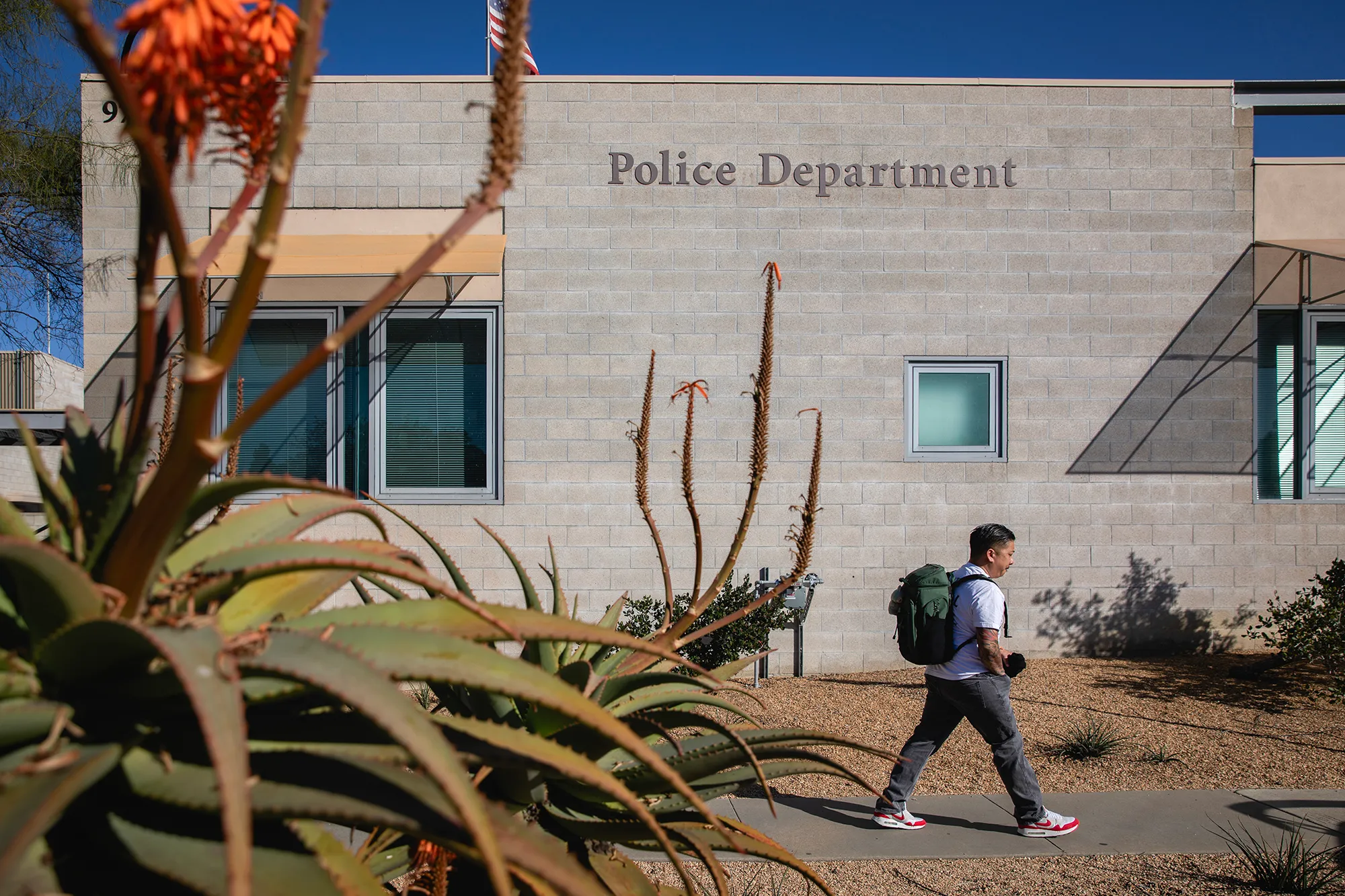
A California public university cut ties with a federal program that paid for campus police to aid Border Patrol, within weeks of CalMatters revealing the decade-long partnership.
Operation Stonegarden, a grant managed by the Department of Homeland Security, allocates an average of $11 million each year for California law enforcement agencies to work with U.S. Customs and Border Protection and its subagency Border Patrol on border security missions. Dozens of police forces throughout the state receive the grant, including campus police at UC San Diego, a recipient since around 2012.
On Feb. 10, a CalMatters article explained how UC San Diego police used the grant to patrol sections of the coastline near campus, which quickly set off an uproar among students who felt it placed undocumented and international students at risk. By Feb. 26, after students emailed complaints and threatened to hold a public rally, student Aryan Dixit said the campus police chief, Lamine Secka, agreed to leave the grant program in a one-on-one meeting.
Melinda Battenberg, a spokesperson at UC San Diego, declined to confirm whether campus police left the grant program. However, internal emails sent in March from a university vice chancellor, Niraj Dangoria, to Patrick Velasquez, a retired university employee and Chicano education advocacy leader, that were reviewed by CalMatters additionally confirmed that the college intended to cease using the grant and has no plans to reapply in the future. In May, Lt. Michael Gonzales of the San Diego County Sheriff’s Office, which manages Stonegarden-funded operations in the San Diego area, told CalMatters the university will not be involved in future grant operations.
Concern quickly spread
Daniel Negrete, a fourth-year business economics student at UC San Diego, said he found it “crazy” his campus maintained a working relationship with Border Patrol.
Once the news broke, there was a lot of on-campus concern, he added. Students at a Feb. 18 anti-ICE walkout criticized the university’s relationship with Homeland Security, according to UC San Diego’s student newspaper, The Guardian.
“I was… shocked that the university was letting this happen,” Negrete said. “There’s no way that at least someone in higher administration wasn’t aware of this.”
According to a 2025 grant document, Operation Stonegarden enhances collaboration between federal and local law enforcement to secure borders. The program also promotes information sharing, including through regular meetings and mandatory reports.
Since its 2006 founding, the grant has raised concerns about privacy and adherence to California’s sanctuary law. The Electronic Frontier Foundation, a privacy advocacy group, asked President Donald Trump to end Stonegarden in a 2025 memo, adding that surveillance technology companies encourage police to join the program to get them to buy their products.
Patrick Dobbins, a UC San Diego police sergeant and the university’s designated Stonegarden coordinator, told CalMatters in November 2025 that the university used the grant to pay for officers to work overtime on border patrols. He added that the grant was used to promote health and safety.
Every year since 2020, Homeland Security requested grant recipients to prioritize training officers as immigration agents, though that is illegal in California under the sanctuary law. In 2025 and 2026, became the grant’s overall emphasis.
Dangoria wrote in a March email to Velasquez that the university’s Stonegarden funds are used “for operations focused on drug and human trafficking and not immigration enforcement.”
However, Negrete said he was bothered by a 2025 Office of Inspector General audit that found only 15% of Stonegarden funds are used for drug enforcement and that, according to Homeland Security, drug interdiction is “incidental” to Stonegarden operations.
“The position that this is an innocent program and simply taking drugs off the streets is not true,” Negrete said.
In Riverside County, most traffic stops carried out for Stonegarden in 2023 and 2024 by county sheriff’s officers resulted in “intel development” even when, as in most cases, no drugs were seized and no crime was committed. The sheriff’s department disclosed activity reports to CalMatters through public record requests, though other police agencies refused to provide the reports, stating that they are federal property.
Battenberg said UC San Diego police can view but not access reports once they are submitted to Homeland Security, and did not answer whether UC San Diego could disclose its reports through record requests.
Campus advocacy response
On Feb. 17, Dixit contacted Secka, the campus police chief, by email, requesting to schedule a meeting regarding “critical student concerns” about campus police utilizing Homeland Security grants. At the time, Dixit, an economics and cognitive science student, served in student government as the 2025-26 associate vice president of Diversity, Equity and Inclusion, and was the president of the Students’ Civil Liberties Union, a nonprofit organization encouraging youth advocacy. Dixit copied Assistant Chief Frank Johnson and the police department’s general administrative contact on the email.
Dixit received no response, he told CalMatters.
On Feb. 24, the Students’ Civil Liberties Union teamed up with the Ellis Collective, a research group directed by Negrete, and announced a rally scheduled for Feb. 26 to protest campus police getting money from the Department of Homeland Security.

After the announcement, Dixit said, Secka agreed to meet with him for a one-on-one discussion a day before the protest. The two debated various issues to find places of compromise, and Secka told Dixit that the UC San Diego Police Department would halt participation in Stonegarden and not re-apply for it the next year, Dixit said.
Secka did not respond to repeated interview requests from CalMatters.
On Feb. 26, about 100 students attended the demonstration, and speakers condemned the university’s long-standing practice of working with federal immigration authorities.
San Diego State University police received 2013 Stonegarden funding while Secka was the interim police chief there. That university is not listed in any available funding documents more recent than that. Amanda Stills, a public information officer for San Diego State’s police department, said the funds supported drug interdiction efforts.
Statewide funding increases
Other agencies continue to collaborate with Homeland Security, which increased California’s Stonegarden allotment from $12.1 million in 2025 to $13.4 million for 2026, per a recent grant document.
As of 2025, sheriff’s departments from 11 counties receive funding, including Riverside, Los Angeles, San Diego, Orange, San Luis Obispo, Santa Barbara, Ventura, Monterey, San Mateo, San Bernardino and Imperial. Dozens of smaller police agencies have joined in as well, alongside state agencies like the Department of Fish and Wildlife and Department of Parks and Recreation.
In Fiscal Year 2024, the Los Angeles Interagency Metropolitan Police Apprehension Crime Task Force — known as L.A. IMPACT — joined Stonegarden. The task force investigates major crimes, especially involving narcotics, and possesses some of the state’s most extensive surveillance resources, according to the Attorney General’s office. It’s comprised of about 75 sworn officers from 48 local and state police agencies, a full list of which has not been made public previously.

Michael Burke, L.A. IMPACT’s executive director, told CalMatters that the task force’s Stonegarden activities are limited to drug trafficking investigations in Los Angeles.
Community weighed in
UC San Diego police had not released any public statements about the grant by March.
So on March 2, a local coalition of educators called the San Diego Chicano/Latino Concilio on Higher Education, which advocates for Latino student success, pressed UC San Diego Chancellor Pradeep Khosla directly in an email.
Velasquez, the coalition’s co-chair, argued that Stonegarden distracts police from campus safety and promotes surveillance by authorizing purchases of search cameras and data-collecting devices. He also noted that Dobbins told CalMatters campus officers do not enforce immigration law, but use the patrols to search for migrants that cross the border on panga boats.
Also unsettling, Velasquez told the chancellor, is that civilians cannot obtain information about Stonegarden from local police.
Finally, Velasquez argued, since a 2025 grant document from Imperial County encourages police to apprehend all “criminal aliens” suspected of violating immigration law, Latino students might be targeted on the basis of their appearance or language spoken. The coalition demanded the university leave the program, Velasquez wrote.
Dangoria, the vice chancellor, confirmed in a March 4 emailed response to Velasquez, reviewed by CalMatters, that university police would not reapply for the grant, also stating that campus police have followed a decade-old UC policy barring campus police from working with ICE or detaining people based on suspected undocumented immigration status.
In the 2025 interview, Dobbins told CalMatters that UC San Diego had participated in Operation Stonegarden every year since about 2012.
Dangoria stated in her email that university police have not participated in Stonegarden activities since 2024, which the university’s Communications team affirmed. The 2024 funding agreement states operations would last from April 2025 to February 2027.
Dangoria wrote in another message to Velasquez on March 11 that the police department might apply for other Homeland Security grants not related to immigration enforcement, “as DHS oversees many federal agencies, including the Federal Emergency Management Agency.” Stonegarden is run by FEMA.
“I want to reiterate that UC San Diego is deeply committed to cultivating and maintaining a campus environment that is safe and welcoming for all members of our community, regardless of immigration status,” Dangoria wrote.
Phoebe Huss is a contributor with the College Journalism Network, a collaboration between CalMatters and student journalists from across California. CalMatters higher education coverage is supported by a grant from the College Futures Foundation.
This article was originally published on CalMatters and was republished under the Creative Commons Attribution-NonCommercial-NoDerivatives license.
