


- The world’s largest meat company is pursuing a $2.5 billion investment that could reshape Nigeria’s agricultural sector.
- Critics are calling for greater transparency about this plan and point to JBS’ legacy in the Amazon of deforestation, land grabbing, forced labor, invasions of Indigenous territories, intimidation and violence against small-scale farmers, among other concerns.
- “The central issue is not whether Nigeria should welcome investment, but whether a project of this scale will be subjected to the level of transparency, scrutiny, and due diligence needed to ensure that its benefits do not come with avoidable environmental and human rights costs,” argues an expert with Climate Rights International.
- This article is a commentary. The views expressed are those of the author, not necessarily of Mongabay.
Nigeria may soon become the site of one of the largest livestock investments in its history. JBS, the world’s largest meat company, is pursuing a reported $2.5 billion investment that could reshape parts of the country’s agricultural sector. The proposal has been welcomed by many for its potential economic benefits, but before it moves forward, Nigerians deserve clear answers about what it could mean for communities, land, water, and the climate.
Much of the discussion around the project has focused on jobs, agricultural development, food security, and economic opportunity. Those are important goals. But there is another dimension that deserves far greater scrutiny: Methane.
JBS is not simply the world’s largest meat producer. It is also responsible for more methane emissions than ExxonMobil and Shell combined, according to estimates published by Greenpeace in 2024. JBS undoubtedly disputes these figures, but the broader point is difficult to ignore: When measured by climate impact, the world’s largest livestock companies increasingly belong in the same conversation as the world’s largest fossil fuel companies.
Methane rarely attracts the same public attention as carbon dioxide, yet it is responsible for roughly a third of the warming the world is experiencing today. Because it traps far more heat than carbon dioxide over the short term, cutting methane emissions is widely seen as one of the fastest ways to slow near-term climate change. Much of the public debate focuses on oil and gas. But industrial livestock production is also a major source, accounting for much of the human-caused methane emissions globally.
For a company whose climate footprint is tied to both methane emissions and concerns about cattle-driven deforestation, expansion on this scale raises a broader question: Can livestock production continue growing rapidly while governments simultaneously promise deep emissions cuts? That question is no longer confined to oil, gas, and coal. It increasingly applies to industrial agriculture as well.
Nigeria has enormous agricultural potential but is also grappling with rising temperatures, water stress, floods, droughts, and growing food security challenges linked to climate change. Those pressures make the details of any large-scale agricultural investment especially important.
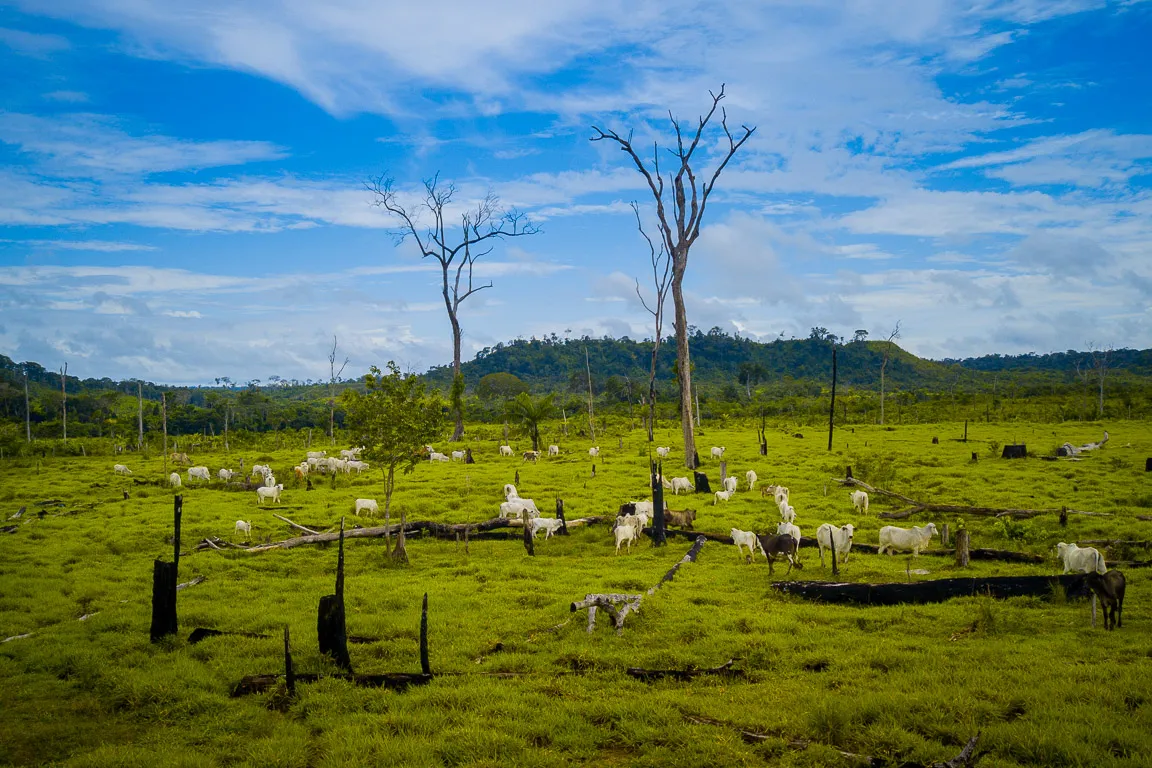
My organization Climate Rights International’s report, Before It’s Too Late, documented how cattle expansion and cattle-driven deforestation in Brazil have been associated with land grabbing, forced labor, invasions of Indigenous territories, intimidation, threats, and violence against Indigenous peoples, small-scale farmers, and other rural communities. The report also found that cattle and leather linked to recently deforested areas continued entering supply chains despite years of corporate commitments intended to prevent exactly those outcomes. In other words, the existence of sustainability policies did not necessarily prevent harmful practices on the ground.
These findings do not mean the same harms will occur in Nigeria, or that JBS cannot operate responsibly. Taken together, the company’s methane footprint, supply-chain controversies, and disputed climate claims help explain why its expansion plans warrant particularly close scrutiny. They also highlight the risks that should be assessed before large-scale expansion occurs.
The lesson from Brazil and other controversies involving the company is not that negative outcomes are inevitable, but that environmental and human rights risks are far easier to prevent than to remedy after the fact. That is why the details of the proposed investment matter.
Nigerian officials have said that Niger State will make available 1.2 million hectares (almost 3 million acres) of land for the project, an area larger than Jamaica. Public details remain limited, but the scale of the proposed land allocation alone raises important questions about land, water, and community impacts.

The need for transparency is particularly important in a project of this scale. Transparency International’s 2024 Corruption Perceptions Index ranked Nigeria 140th out of 180 countries. The ranking does not speak to this deal specifically, but it underscores why major land and investment decisions should be accompanied by robust public disclosure and scrutiny.
Those questions are especially important because many parts of Nigeria, including Niger State, have experienced deadly conflicts linked to competition over land and water. Across the country, conflicts between farmers and pastoralists — cattle herders who move livestock in search of pasture and water — have often been driven by disputes over access to land and water.
How will such a large industrial livestock investment affect those dynamics? Will it reduce pressure on land by modernizing production, or intensify competition over land and water resources? What will happen to small-scale farmers and cattle herders competing against a global corporation with enormous financial and political influence?
Nigeria is not the Brazilian Amazon, but some of the underlying risk factors are familiar: Contested land rights, climate pressures, governance challenges, and communities whose livelihoods depend on vulnerable land and water resources.
Large-scale agricultural investments have a mixed record across Africa. Some have generated jobs and infrastructure, while others have been associated with land conflicts, inadequate consultation, environmental damage, and threats to local livelihoods. International human rights standards are clear that companies should identify, prevent, and address adverse human rights impacts connected to their operations and business relationships.
These risks do not mean investment should be avoided. Nigeria needs investment, jobs, and economic opportunity. But responsible investment requires transparency, meaningful consultation, robust environmental safeguards, and rigorous human rights due diligence.
So far, many questions about JBS’ plans remain unanswered. Greenpeace Netherlands recently initiated legal action seeking disclosure of information about JBS’ climate, environmental, and human rights impacts, including information related to its planned expansion in Nigeria. The organization argues that greater transparency is needed before expansion proceeds.

The central issue is not whether Nigeria should welcome investment, but whether a project of this scale will be subjected to the level of transparency, scrutiny, and due diligence needed to ensure that its benefits do not come with avoidable environmental and human rights costs.
The company has also faced accusations of overstating its climate credentials. In 2024, New York’s attorney general sued JBS USA, alleging that its headline commitment to achieve “net zero” emissions by 2040 lacked a credible plan and misled consumers. JBS disputed the allegations, but the case reinforced concerns that some of the company’s environmental promises have moved faster than its ability to deliver meaningful emissions reductions.
JBS’ plans in Nigeria provide an early test. The company has an opportunity to demonstrate that growth does not require repeating the environmental and human rights failures associated with cattle expansion elsewhere. But that will require a level of transparency, due diligence, and accountability that critics argue has so far been lacking.
The answers to these questions will matter first and foremost for the communities, farmers, and pastoralists who may be affected by the project. But they will also help determine whether one of Nigeria’s largest agricultural investments becomes a model for responsible development, or a warning about the costs of getting it wrong.
Felix Horne is a senior expert at Climate Rights International and has two decades of experience investigating the human rights and environmental impacts of fossil fuel development, mining, and climate change.
See related coverage:
Meat giant JBS silently ditches bolder environmental targets in latest review
Brazil prosecutors launch suit against meatpacking giant JBS over beef tied to slavery-like labor
Now on Wall Street, JBS eyes growth amid scrutiny on deforestation & graft
Cite this article
Felix Horne (2026). Before giant meat producer JBS expands to Nigeria, people deserve answers (commentary). Mongabay Conservation news. DOI: https://doi.org/10.66709/news-324939

