


The U.S. and Israeli war against Iran has intensified again. It continues to undermine long-term U.S. national interests by wreaking havoc on Iran’s critical civilian infrastructure and putting the entire Persian Gulf region’s economy and environment in grave danger.
U.S. President Donald Trump promised to support Iranian protesters, but he has dealt a blow to the Iranian people’s ability to overthrow the regime by conducting the war as if it is a war against the entire nation of Iran rather than the current regime in power. Targeting critical infrastructure will mean devastation for tens of millions of Iranians living in a country already on the brink of environmental collapse.
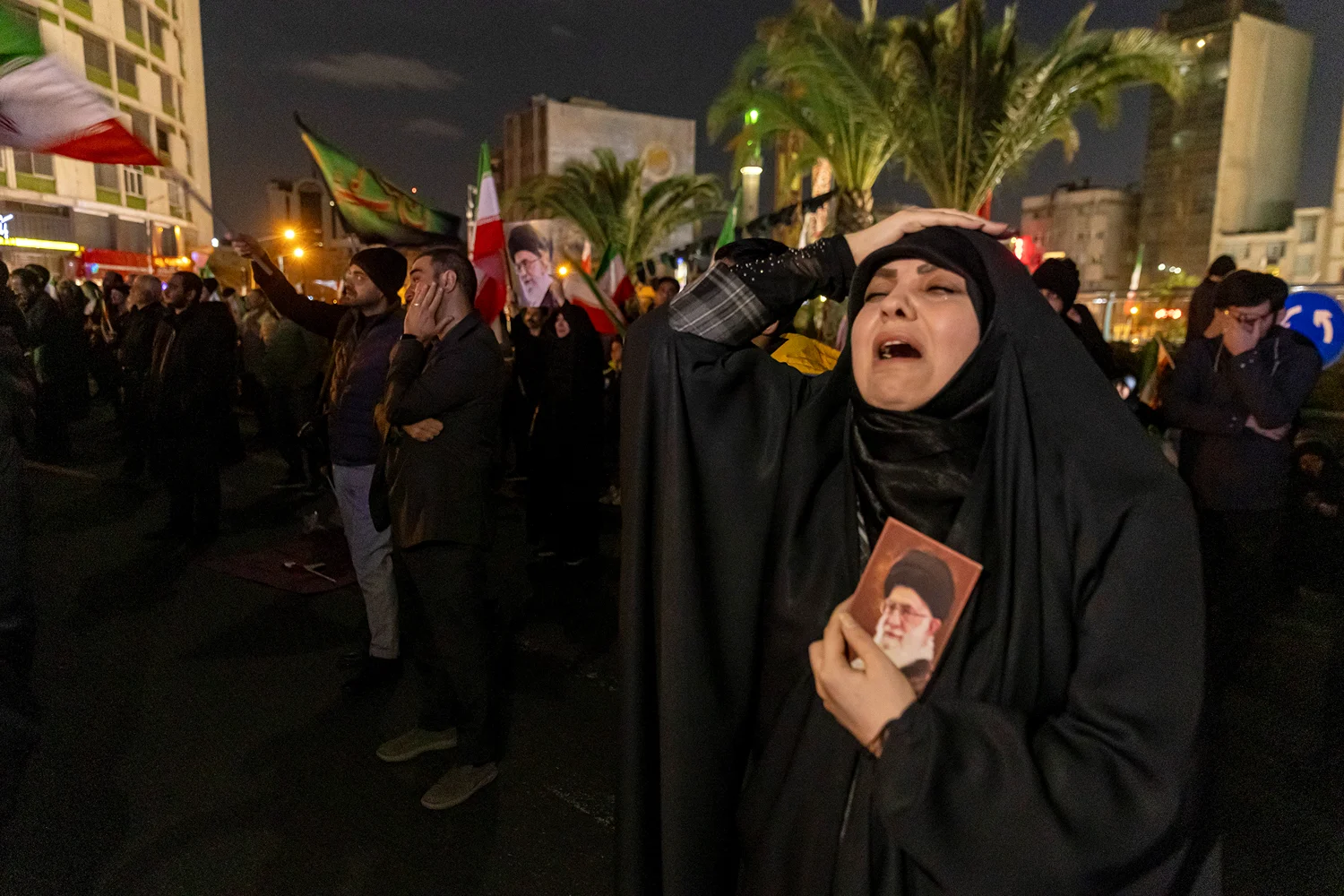
Millions of Iranians despise the Islamic Republic. Only six months ago, they rose up against it, and thousands of them were massacred by the regime. Some Iranians supported the war initially in the hope that the United States and even Israel would help them finish what their uprising had started. But a war that has been devastating to the civilian population has helped the regime to portray itself as Iran’s national defender rather than its occupier.
The Islamic Republic has managed not only to survive the war but to inflict significant damage to the U.S. military and rattle the global economy. The Tehran regime has also sent a clear and dangerous message by its attacks on U.S. and allied bases across the Persian Gulf: It will destroy energy and water infrastructure necessary to the survival of tens of millions of people in the Gulf Cooperation Council (GCC) states if Iran’s critical infrastructure is targeted.
Ironically, Trump promised that “help [was] on its way” when thousands of unarmed protesters were massacred in January. His war against Iran, however, has only created more hardship for ordinary people, especially in the southern region abutting the Persian Gulf and Strait of Hormuz.
The U.S. and Israeli military assaults have been particularly devastating for smaller communities across Iran, many of which are ardently opposed to the regime but are bearing the brunt of the current conflict.
The United States claims it is targeting military sites, but the roads, bridges, and railways in southern Iran it is hitting are not only used by the Iranian military but also the civilian population. The attacks may be intended to disrupt the movement of Iranian troops and weapons near the Strait of Hormuz, but the same roads and bridges carry food, fuel, medicine, and other necessities for ordinary people.
Other targets are even worse. A mid-July U.S. airstrike damaged the desalination facility in Bonji in western Jask county, part of a wider assault on infrastructure along Iran’s southern coast. The damage to the facility resulted in about 10,000 people losing access to drinking water.
The consequences were immediate. Groundwater is scarce along this arid stretch of coastline, and many communities depend heavily on desalinated seawater. Twenty villages lost their water supply for a few days, in the height of the summer, while provincial authorities began delivering water by tanker and drawing from alternative sources.
Tankers can provide temporary relief, but they cannot fully replace a municipal system serving scattered villages. During extreme heat, demand rises just as the transportation and storage of water become more difficult.
Bonji shows why attacking infrastructure is so dangerous. Such strikes can impose immediate suffering on civilians while leaving hardened and bunkered military forces capable of continuing the war. Water, electricity, transportation, food, and health systems are closely connected. Damage to one can quickly spread to the others.
Alarmingly, the attack on Iran’s infrastructure has been met by retaliatory attacks against neighboring GCC states that host U.S. bases. For example, the Iranian regime attacked Kuwait’s power and water infrastructure, shutting down several generating units and starting a fire at a desalination facility.
The damage in Kuwait may not produce widespread water cuts yet, but the danger is clear. In one of the hottest and driest regions on Earth, a desalination plant is a lifeline. Iran has also struck water and power facilities in Bahrain and earlier in the war Saudi Arabia’s energy infrastructure. The GCC states rely heavily on desalination plants for their water needs, and the Islamic Republic has demonstrated the capability to damage or destroy much of the GCC’s desalination and water infrastructure.
This cycle of violence is undermining civilians on both sides of the Persian Gulf rather than leading to the overthrow of the regime. The regime has spent decades moving its most sensitive nuclear and military assets underground, relatively safe from U.S. bombs. The Fordow enrichment complex, for example, was built beneath a mountain, and newer underground facilities like Pickaxe Mountain have been excavated around Natanz.
Underground bases are not limited to Iran’s military and nuclear facilities. In a recent interview, Foreign Minister Abbas Araghchi implied that the tunnels and underground facilities were regularly used by the regime’s high-level decision-makers.
Iran’s underground military infrastructure further complicates any effort to distinguish strategic targets from civilian systems surrounding them.
The regime developed much of its tunneling capacity through ostensibly civilian work. Over several decades, the country acquired tunnel-boring machines and built up excavation expertise through metro systems, mines, dams, and inter-basin water-transfer projects. Khatam al-Anbiya Construction Headquarters, the Islamic Revolutionary Guard Corps’ engineering arm, and companies owned or controlled by it have played major roles in Iran’s dam, water-transfer, tunneling, pipeline, transportation, and other infrastructure projects.
The machinery and expertise used to excavate a water-transfer tunnel or metro line can also be used to build an underground missile or nuclear facility. The same ambiguity applies to the infrastructure serving those sites. Roads, electrical lines, pipelines, and water systems may support a strategic facility while also serving nearby communities. Destroying them can cut essential services for civilians without destroying what lies beneath the mountain.
This is why U.S. attacks intended to weaken the regime can instead destroy essential civilian systems without eliminating the deeply buried facilities they are meant to target.
Several independent Iranian water-management engineers familiar with major excavation projects have told us they suspect that equipment and tunnels officially associated with mining, water-transfer, and metro projects may also have been used to build military and nuclear facilities.
Last year, sources told us about links between water projects and nuclear facilities such as Fordow. Khatam al-Anbiya and its subsidiaries have operated across the civilian, nuclear, and military sectors, allowing expertise and equipment to move between them. That institutional overlap would have made it possible for engineering expertise and equipment developed for civilian projects to be used in sensitive military or nuclear construction.
Iran’s nuclear facilities do not exist in isolation. They depend on water, electricity, roads, communications, and specialized supply chains that may also serve nearby cities, farms, and industries. In 2006, the Isfahan governor’s office reported that 6.5 million cubic meters of water had been transferred to a nuclear facility.
Attacking nuclear-related infrastructure directly creates huge risks of its own. The consequences depend heavily on the facility and the materials stored there, but damage to an operating reactor, chemical-processing plant, cooling system, or nuclear-material storage site could release radioactive or toxic substances. The International Atomic Energy Agency has repeatedly warned that attacks on nuclear facilities undermine nuclear safety and could have consequences beyond Iran’s borders.
Even when there is no release of radioactive material, war can interrupt inspections, destroy monitoring equipment, scatter records, and make it harder to account for nuclear material. Bombing may delay parts of the program without eliminating the expertise or political incentive behind it. It may instead persuade Iranian leaders that future facilities must be built deeper underground, spread across more locations, and hidden more carefully from inspectors.
Technical knowledge survives bombing. Power grids, hospitals, bridges, water-treatment plants, and public trust are much harder to rebuild.
Destroying civilian infrastructure also weakens the ability of Iranians to organize, rebuild, and pursue fundamental political change. People consumed by the search for water, food, medicine, fuel, and shelter have little time or strength left for democratic mobilization. Authoritarian governments understand how to use scarcity, fear, and dependence to tighten their grip.
Washington should abandon trying to force regime change by military action. The current war has proved to be counterproductive, as it has set back the organic revolutionary Iran ascendant before the war. The U.S. should avoid targeting drinking water, sanitation, health, and civilian energy systems. It should also ensure that sanctions and military operations do not obstruct emergency repairs or the delivery of medicines, water-treatment chemicals, spare parts, generators, and other supplies needed to keep essential civilian services operating.
Otherwise, attacks on water and power will become a normal form of retaliation across a region that cannot survive them. The danger is even greater when confronting a regime that has repeatedly shown itself willing to pursue a scorched-earth strategy, sacrificing the country’s infrastructure and its people to preserve its own power. Weakening a government and breaking a country are not the same thing.
Regimes can fall, and armies can withdraw, but poisoned aquifers, collapsed power grids, and destroyed water systems can condemn civilians to displacement, disease, and poverty for generations. A war presented as an attempt to change who governs Iran must not destroy the systems that make the country governable. If the stated goal is to give Iranians a better future, that future cannot be built on the ruins of the systems they need for survival.
