


There has been so much turbulence above water in the Strait of Hormuz and now the Red Sea that you’ll be forgiven for missing big news about what is going on under the waves. The United States has created a new Marine Minerals Administration, which will administer the mining of minerals from the seabed in domestic waters. But American firms, with the government’s blessing, are also speeding ahead with plans for mining in international waters, even though the U.N. Convention on the Law of the Sea (UNCLOS) bans such unilateral mining.
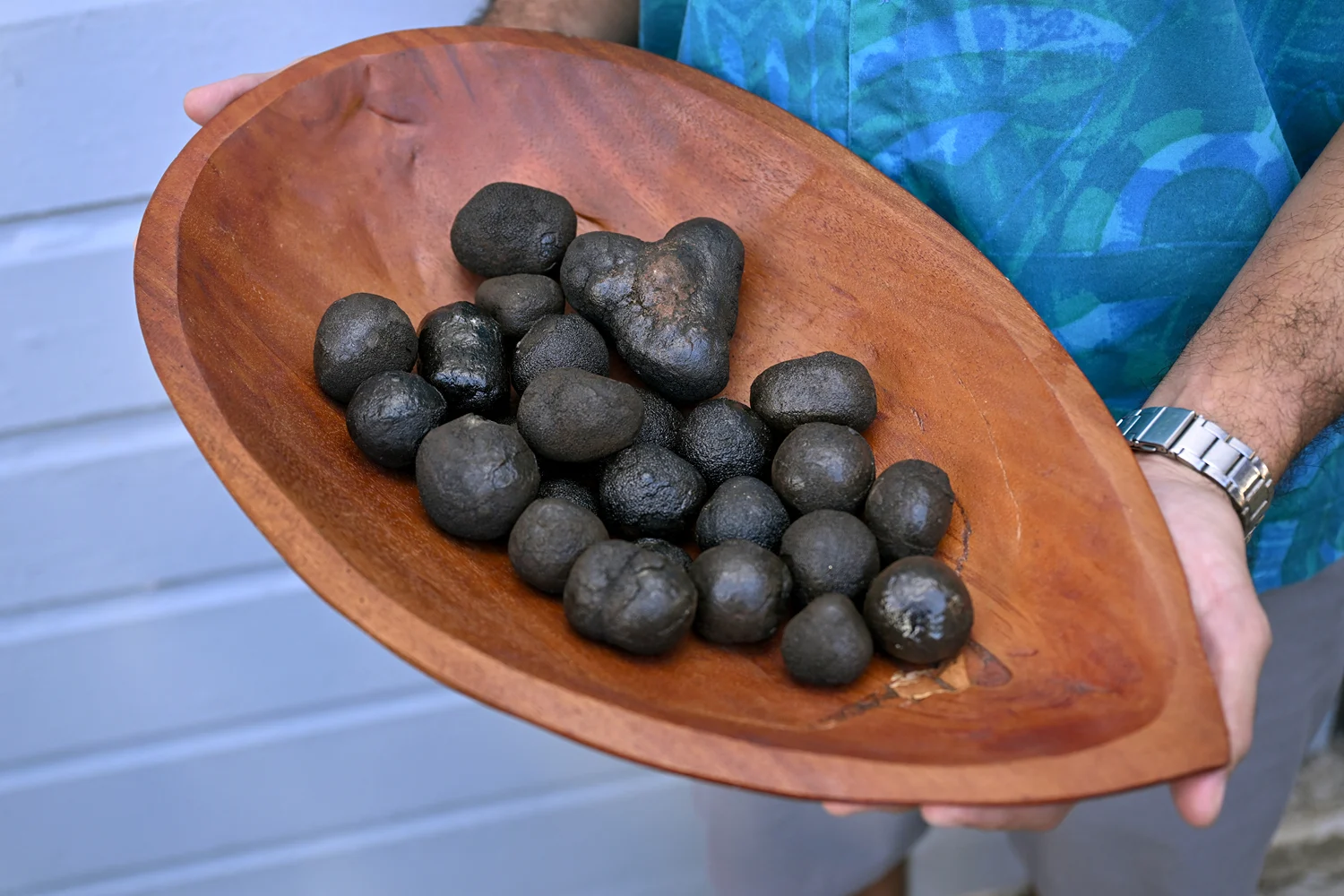
The seabed is home to tantalizingly vast quantities of minerals. They reside in potato-sized polymetallic nodules, which contain nickel, copper, manganese, cobalt, and, most alluringly, rare earths. Explorers and entrepreneurs have dreamt about mining them since seabed exploration began more than a century ago. Their desire is understandable because the nodules are plentiful. The Clarion-Clipperton Zone (CCZ), a vast expanse between Hawaii and Mexico, is home to an estimated 21.1 billion dry tons of the nodules—more than any other part of the world.
There has been so much turbulence above water in the Strait of Hormuz and now the Red Sea that you’ll be forgiven for missing big news about what is going on under the waves. The United States has created a new Marine Minerals Administration, which will administer the mining of minerals from the seabed in domestic waters. But American firms, with the government’s blessing, are also speeding ahead with plans for mining in international waters, even though the U.N. Convention on the Law of the Sea (UNCLOS) bans such unilateral mining.
The seabed is home to tantalizingly vast quantities of minerals. They reside in potato-sized polymetallic nodules, which contain nickel, copper, manganese, cobalt, and, most alluringly, rare earths. Explorers and entrepreneurs have dreamt about mining them since seabed exploration began more than a century ago. Their desire is understandable because the nodules are plentiful. The Clarion-Clipperton Zone (CCZ), a vast expanse between Hawaii and Mexico, is home to an estimated 21.1 billion dry tons of the nodules—more than any other part of the world.
Most of the nodules are situated in international waters like the CCZ, where the depth of the ocean protects them from sedimentation and where the chemistry of the water speeds growth. (Most of the nodules are thought to have begun growing between eight and 32 million years ago.) Closer to shore, in countries’ exclusive economic zones and territorial waters, the nodules are far less abundant.
No one knows what would happen to the seabed, and to marine life, if the world began systematically mining the nodules. Fortunately, mineral resources on land are so plentiful that there hasn’t been a business case for the stressful and expensive work of deep-sea mining. The world’s nations, though, knew that future technology, or the exhaustion of accessible resources, might change that. When adopting UNCLOS in 1982, they agreed that mining in international waters would only be allowed if, and when, the convention’s signatories collectively decided that it was safe to mine the seabed and worked out how the mining could proceed equitably.
Since no nation owns international waters, the signatories also set up an agency, the International Seabed Authority, that would convene negotiations regarding potential mining and oversee it if UNCLOS signatories agreed that it should proceed. To date, they have made no such decision, and the only mining permitted in international waters is for exploration and research purposes.
But the specter of geopolitics now haunts the seabed, too. With the West fundamentally dependent on China for rare earths, the United States has hit on a theoretical solution to make itself independent: deep-sea mining.
In April 2025, U.S. President Donald Trump signed an executive order permitting U.S.-based companies to mine in international waters. In the order, Trump instructed his administration to “expedite the process for reviewing and issuing seabed mineral exploration licenses and commercial recovery permits in areas beyond national jurisdiction,” which meant in international waters. An enthusiastic company was already standing by to apply for such a U.S. license. The implications were vast. (Read all about it in my book Undersea War, which will be released in October.)
Now, the U.S. government has further accelerated its focus on seabed mining. On July 10, the U.S. Interior Department released a statement bearing the obscure title of “Order No. 3451.” It was signed by Interior Secretary Doug Burgum, and its content was more exciting than its title. The opening reads: “This Order reunifies the Bureau of Ocean Energy Management (BOEM) and the Bureau of Safety and Environmental Enforcement (BSEE) into a single Bureau—the Marine Minerals Administration (MMA).”
“MMA will be responsible for all aspects of the Department’s offshore energy and mineral resource management and conservation, safety oversight, environmental enforcement and related activities on the [Outer Continental Shelf],” the statement announced.
The MMA wasted no time. Six days after its creation, it proposed a “lease sale” of seabed off American Samoa. “Advancing this notice is an important step toward building a secure domestic critical minerals supply chain, strengthening U.S. economic and national security, and ensuring America can compete and win in the 21st century,” Matt Giacona, the MMA’s acting director, said in the announcement.
The outer continental shelf, which includes the waters around American Samoa, counts as U.S. waters. The creation of the MMA, though, raises questions. If the MMA will only oversee activities on the outer continental shelf, then who will oversee the deep-sea mining green-lit by Trump’s executive order? Will the MMA’s mandate eventually be expanded?
An MMA spokesperson said that the National Oceanic and Atmospheric Administration continues to administer “provisions of the Deep Seabed Hard Mineral Resources Act (DSHMRA) related to hard mineral resources (i.e., polymetallic nodules) located in international waters.” They also said that the lease sale off American Samoa was triggered by an “unsolicited request related to potential offshore mineral leasing near American Samoa.”
Mining on the continental shelf is legal because it’s within the exclusive economic zone. But the real prize is the deep sea since that’s where most of the nodules are. And for mining to make commercial sense, it has to involve significant volumes. (That’s leaving aside the massive technical demands.)
Unsurprisingly, the world has reacted with alarm to the United States’ deep-sea mining efforts. Even though the United States has not ratified UNCLOS, its unilateral decision to mine in international waters goes squarely against the treaty, and it opens the door for an equally ambitious China to also begin mining in international waters.
So far, a few companies have filed applications or expressed interest to mine the deep sea under the new U.S. rules, which will expedite the licensing of such projects. But no one is certain when the massive quantities of nodules needed to liberate the United States from its dependence on China might reach land or where they would be processed. A near-monopoly on rare-earth processing, not access to the minerals themselves, is what gives China such a chokehold on rare earths.
If the United States succeeds in its quest for polymetallic nodules, and China and perhaps other countries follow, what will be the outcome for marine life and the order on the world’s oceans? Nobody knows.
