


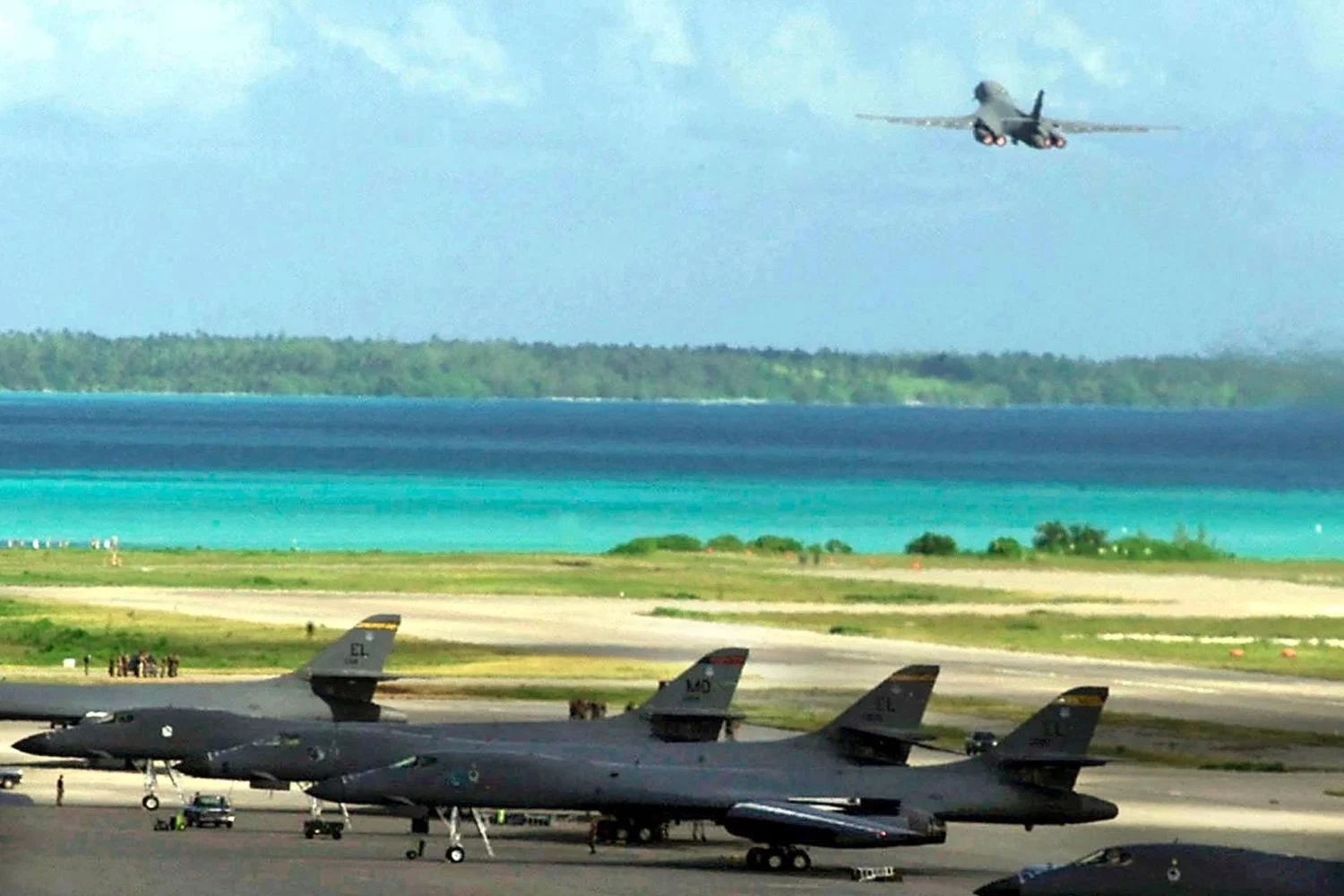
Rarely does such a tiny island cause such a fuss, but this has certainly been the case with Diego Garcia. Situated in the central Indian Ocean as part of the Chagos archipelago, Diego Garcia is a British-administered atoll claimed by Mauritius. It hosts a sprawling U.S.-British military base with key naval, air, space, communications, and logistics facilities. Throughout much of the Cold War, Diego Garcia served as a critical node to counter Soviet movements across the Indian Ocean and as an enabler to conduct operations in South Asia, Africa, the Middle East, and beyond.
After nearly two years of negotiations, London and Port Louis agreed in 2024 to transfer sovereignty over Diego Garcia and the rest of the Chagos archipelago to Mauritius, and they formalized the arrangement in May 2025. (The Chagossians remain divided over their homeland’s political future and were largely excluded from the negotiations.) Under the treaty, British and American forces would retain access to their base on Diego Garcia under a 99-year lease from Mauritius, with an option to extend the arrangement for another 40 years.
At first, the Trump administration supported the deal. In May 2025, Secretary of State Marco Rubio said that “this agreement secures the long-term, stable, and effective operation of the joint U.S.-UK military facility at Diego Garcia.” He highlighted U.S. President Donald Trump’s personal endorsement, adding that “President Trump expressed his support for this monumental achievement during his meeting with Prime Minister [Keir] Starmer at the White House.”
But on Jan. 20, Trump abruptly reversed course. In a Truth Social post, he berated Britain for committing “an act of GREAT STUPIDITY,” adding, “There is no doubt that China and Russia have noticed this act of total weakness.” It appears there were two developments that led to his change of heart. First, while Trump was intensifying his campaign to acquire Greenland from Denmark, he was angered by Britain’s (and other European countries’) defense of Danish sovereignty over the island. He seems to have seen a through line to Diego Garcia, leading him to argue that Europeans were simply too weak to protect their strategically important territories. The second event involved British Conservative leader Kemi Badenoch, who reportedly raised objections to the Chagos agreement with U.S. House Speaker Mike Johnson on Jan. 19. Johnson subsequently spoke with Trump, whose outburst came the next day.
The saga unfortunately didn’t end there. On Feb. 17, the U.S. State Department reiterated support for the deal—but the very next day, Trump publicly urged Starmer to abandon the agreement, questioning the validity of Mauritius’s claims and warning against relying on a long-term lease. In his post, Trump urged “DO NOT GIVE AWAY DIEGO GARCIA,” invoking the potential need to use the island for military operations against Iran. Indeed, Tehran recognized Diego Garcia’s strategic value and fired two ballistic missiles toward it in March, although neither struck the island. Finally, when asked by a reporter about Diego Garcia during a September meeting with the new British prime minister, Andy Burnham, Trump reiterated his opposition to the sovereignty agreement, saying, “I don’t support it. I think it’s a terrible deal.”
The Trump administration’s back-and-forth over the Chagos agreement has already caused significant problems. In April, London suspended efforts to implement the agreement with Mauritius, and a few weeks ago, Port Louis threatened legal action if Britain does not move forward with the signed treaty. There is no easy off-ramp from the dispute. On the one hand, Britain has committed to ending its colonial administration of the Chagos archipelago and intends to honor the agreement with Mauritius. On the other hand, the joint military base on Diego Garcia and long-standing bilateral arrangements governing its operation mean that London cannot realistically move forward without Washington’s consent. Trump’s intervention has also deepened divisions among Chagossians. Some welcome his decision to hold up the deal because they distrust Mauritius, while others believe Trump is standing in the way of unification.
Trump’s intervention also risks complicating America’s relationships in the Indian Ocean, particularly with India, which supports Mauritian sovereignty over the Chagos archipelago. New Delhi welcomed the original agreement as a “milestone achievement” and a “positive development for the region” and “the culmination of the process of decolonization of Mauritius.” At the same time, India has little interest in seeing the American military base on Diego Garcia weakened, particularly given shared concerns about China’s growing regional presence. Trump has put New Delhi in an awkward spot, forcing it to balance its long-standing support for Mauritius with its strategic partnership with Washington.
China, meanwhile, sees an opportunity to criticize U.S. interference and strengthen its own standing with Mauritius, with which it has cultivated close economic and strategic ties. Just days before Trump’s shift of position in January, Chinese Ambassador to Mauritius Huang Shifang denounced the separation of Chagos from Mauritius as an example of “hegemonic mentality” and reaffirmed Beijing’s support for Mauritian sovereignty over the islands.
The Chagos treaty prohibits other military forces in the archipelago without British approval, but concerns persist in Washington and London that Beijing could eventually seek access through civilian or dual-use facilities, as it has done in other island states. Enforcing the treaty’s safeguards in this regard would depend on continued cooperation between Britain and Mauritius.
Mauritius, Britain, and many in the international community believe that the deal eliminates one of the remaining vestiges of colonialism, leaving the United States under Trump on the wrong side of history. Transferring sovereignty over Diego Garcia to Mauritius would not fundamentally alter operation of the joint military base, which would remain under British and U.S. control under a paid lease arrangement. Even if Mauritius wanted to take control of the base, it lacks the military capability to do so.
Trump’s intervention reinforces China’s narrative that Washington disregards the sovereignty of smaller states when its strategic interests are at stake. It also gives smaller and middle powers across the Indian Ocean another reason to value Beijing as an alternative strategic partner in the region. Indeed, in trying to protect Diego Garcia, Washington has scored yet another own goal.
