


Togo is cosponsoring a proposal to review commercial whaling quotas, drawing criticism from whale conservation groups. The draft resolution was submitted for discussion at the upcoming 70th meeting of the International Whaling Commission (IWC), which will be held Sept. 27 to Oct. 2.
Togo was the only African nation to support the proposal, which was spearheaded by the Caribbean island nation Antigua and Barbuda. Neither of these countries conduct commercial whaling themselves.
In response, the West and Central African Coalition for Whales which facilitates dialogue about whaling among African nations, issued a public statement calling on governments to remove support initiatives that weaken international whale protections or revive commercial whaling.
The resolution “is hard to reconcile with West and Central African priorities, where no country conducts commercial whaling and where the urgent issues are bycatch, habitat degradation and the protection of marine ecosystems,” Colonel Abba Sonko, a Senegalese wildlife conservation expert and representative of Senegal’s CITES Management Authority, told Mongabay via email.
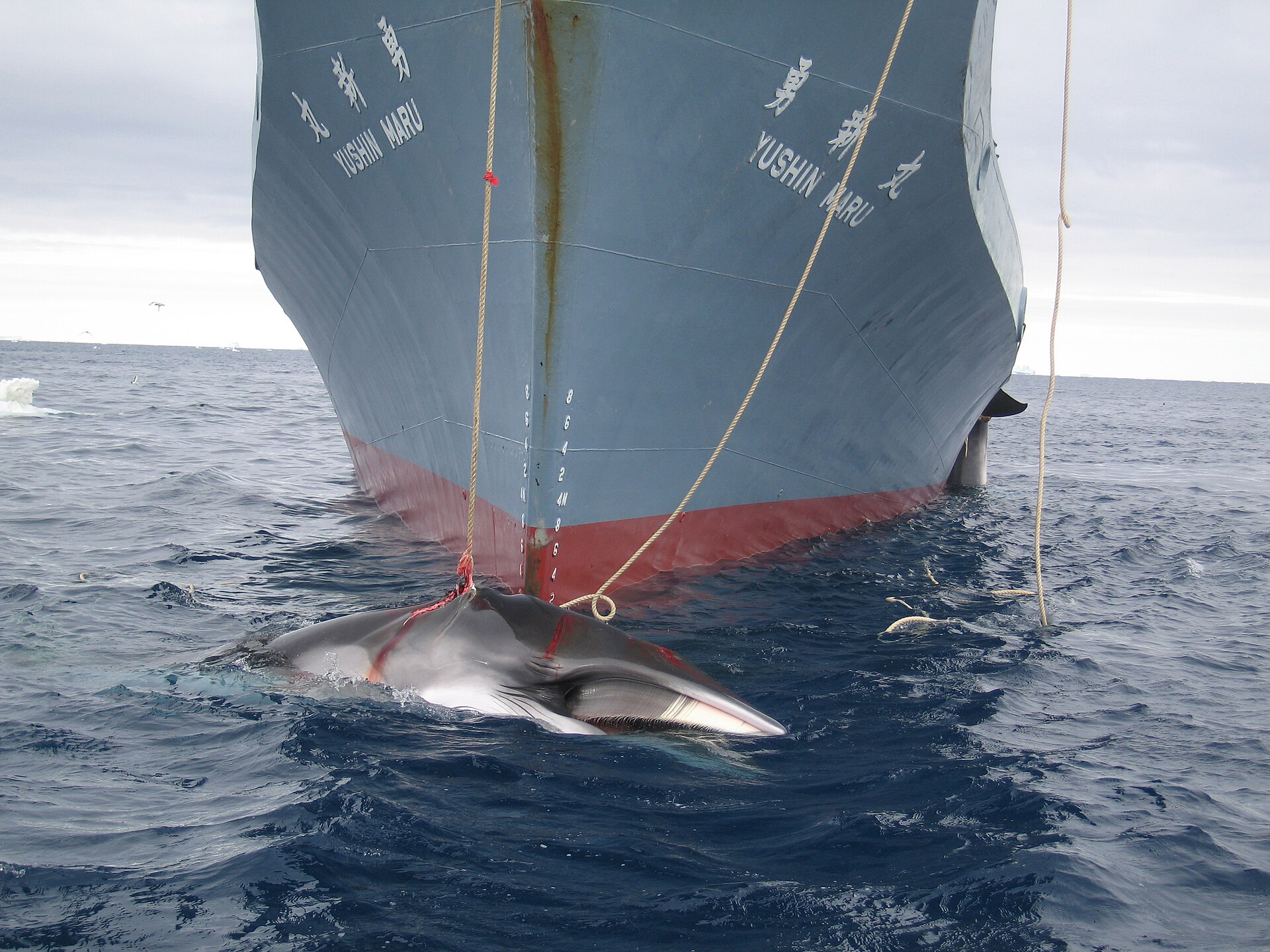
In 1986, the IWC global moratorium on the exploitation of whales went into effect and set catch limits for all whales to zero. However, a few countries, including Japan, Norway and Iceland, continue whaling.
Togo’s support of the recent proposal is not the first time an African nation has backed a review of whaling. Countries such as Senegal, Guinea and Côte d’Ivoire have endorsed similar proposals before and played a key role in blocking the creation of a South Atlantic Whale Sanctuary between Latin America and Africa, which was first evaluated 25 years ago.
According to Sonko, West African countries do not hunt whales, nor do their populations rely on whale meat for food security.
“On the contrary, whales are increasingly valuable alive: they support marine tourism and associated coastal livelihoods, while also playing important ecological roles that contribute to the productivity and resilience of healthy ocean ecosystems,” he said, adding that protecting whales would better serve the long-term interests of coastal communities in West Africa.
Mongabay contacted the Togolese government to better understand their position but did not receive a response by the time this article was published. However, in the past, Japan has admitted to using aid money to persuade developing countries to support commercial whaling within the IWC.
Domestically, Togo recently listed several whales and other cetaceans as nationally recognized threatened species, including Antarctic minke whales (Balaenoptera bonaerensis) and Bryde’s whales (Balaenoptera brydei), which are currently still commercially hunted, mostly by Japan and Norway.
The Togolese government’s position has raised concerns among members of civil society and the scientific community, several of whom have signed the West and Central African Coalition for Whales public statement.
Sonko said the coalition has formally asked the Togolese government to clarify its position, “urging them to reconsider the co-sponsorship before IWC70.”
Banner Image: A whale captured by a Japanese harpoon vessel in 2008. Image by Customs and Border Protection Service, Commonwealth of Australia via Wikimedia Commons (CC BY 3.0 AU).
