


- In July, Mongabay published a feature investigation and video report about deforestation in southeastern Liberia dude to cacao cultivation.
- The remote region contains some of West Africa’s last intact rainforests, many of which are under threat due to the emergence of the cacao industry there.
- Liberian journalist James Giahyue told Mongabay that poverty and the involvement of local politicians are helping to drive deforestation there.
In 2024, the price of cacao on world markets spiked dramatically, nearly quintupling from what it had been a year earlier. Prices have since dropped, but along with a land crunch in Côte d’Ivoire, the world’s top producer of the commodity, the prospect of high financial rewards have helped to drive a rapid expansion of new plantations in the forests of southeastern Liberia.
This region contains some of West Africa’s last intact rainforest. The land on which these plantations are being developed is customarily owned by local communities, and many of their residents have been eager to reap the rewards of the cacao market. Handshake deals between them and migrants from neighboring Côte d’Ivoire and Burkina Faso is now driving a wave of deforestation.
“The people of the southeast, where you have a lot of forests, have realized or seen that cocoa can give them more money than they get from other traditional things like charcoal burning and subsistence farming,” says Liberian journalist James Giahyue. “It’s like a new phenomenon, and a new opportunity.”
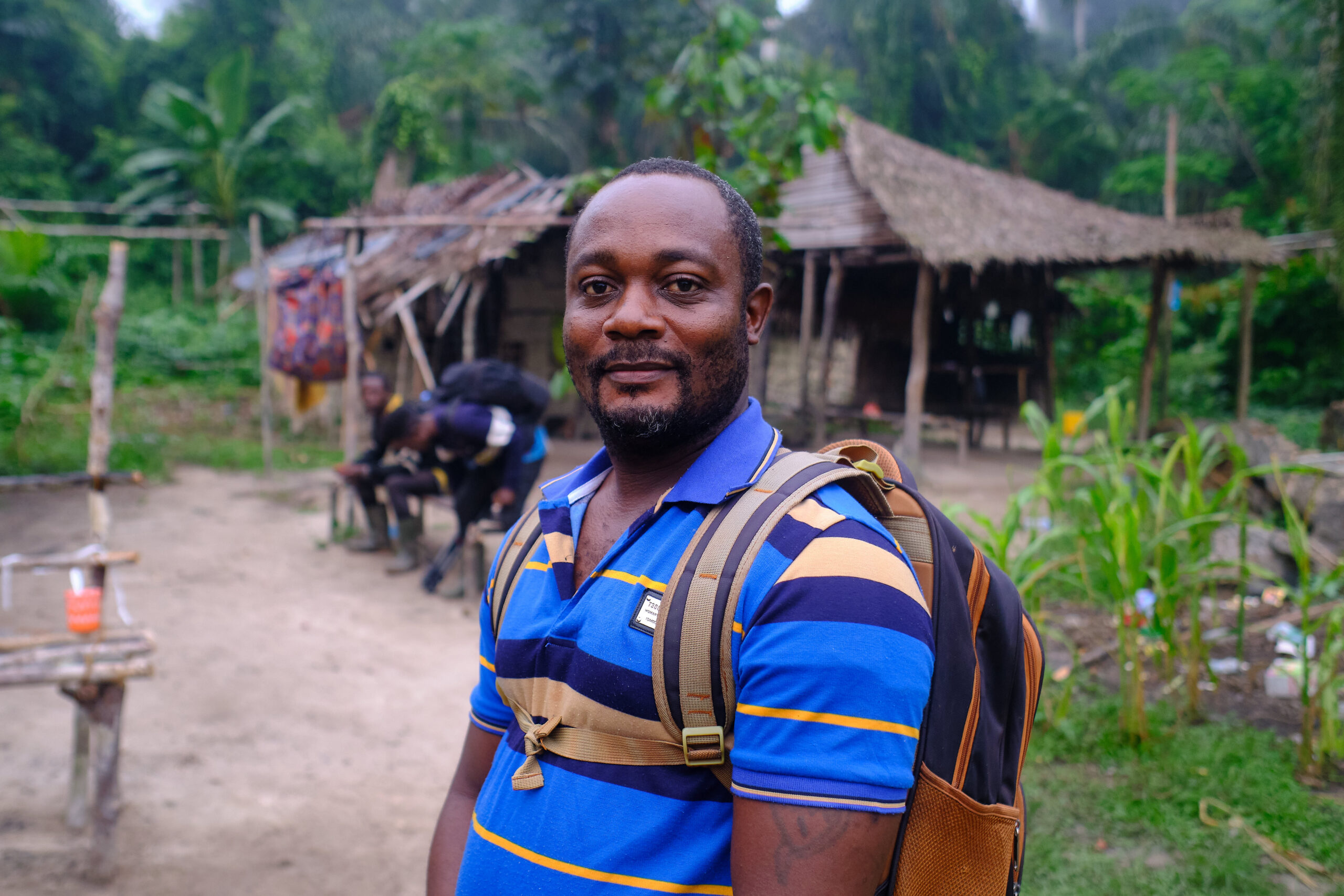
As editor-in-chief of news outlet The DayLight, Giahyue has guided extensive coverage of environmental issues in Liberia. He was an integral member of a Mongabay reporting team that published an investigation into deforestation there this past July. He spoke to Ashoka Mukpo from his base in Monrovia. The following interview has been lightly edited for clarity.
Mongabay: A big part of the cocoa story in Liberia is migration. So many of these cocoa workers that we met are Ivorian or Burkinabè. Has their presence created any kind of backlash in Liberia?
James Giahyue: Of course it has. In towns and villages the dynamics have changed, the demography has changed. In some there are even more Burkinabès than local Liberian people. Women have started to have children by these Burkinabè men. So there are social issues.
Then you also have the issue of competition for cocoa warehouses. [Originally], local Liberian people were the ones who had cocoa warehouses. The planting was left to the Burkinabè [workers], while the Liberians took care of the warehousing. But now Burkinabè are also involved in warehousing. They are also involved in public transportation, motorcycles, and because of that, it’s causing friction. Some Liberians are saying, “Hey, you are taking away our jobs.” The motorcycle taxi drivers are saying the same thing. These are things that I have documented.
The Liberia Refugee Repatriation Commission recently published a report where it said there were 140,000 Burkinabè in the southeast, and a majority of them were in Grand Gedeh [county]. A lot of things are going to change.
Mongabay: I’ve heard that there have already been some conflicts over land and that kind of thing. What do those look like?
James Giahyue: We’ve documented multiple cases where lives have been lost to these conflicts. Sometimes they are between Burkinabè and locals, sometimes two Burkinabè groups, sometimes two local groups.
But everything involves cocoa.
Mongabay: And this is because land ownership isn’t always straightforward, right?
James Giahyue: [Cocoa] is inheriting all of the traditional problems we’ve had with land. The Land Rights Act of 2018 gave community people the right to own their land. But the government hasn’t surveyed those lands or demarcated them between communities. So it hasn’t solved some very long-standing land conflicts between towns and towns, districts and districts, all kinds of things.
And with the Burkinabè, the situation with the cocoa now, people know that their lands are even more expensive, more valuable than they ever thought. So a very old land matter that was not causing any problems will now be a big issue because somebody understands that an additional 5 acres could bring in more cocoa revenue.
Mongabay: You’ve documented several cases where politicians and other powerful figures are involved in expanding cacao plantations. Could you talk a little bit about that?
James Giahyue: The politicians have not just stood and watched. They are also part of this new cocoa boom, if you call it that. In one case, we documented the involvement of the superintendent of Grand Gedeh county, Mr. Alex Grant, with cocoa farming. We’ve heard similar things with other politicians of Grand Gedeh county, and this same trend is going [to other southeastern counties] as well.
They are kind of tricking communities into signing deals that will benefit them. Mr. Grant acquired more than 500 acres [200 hectares] of community land just to turn it over to a [cocoa] businessman. The acquisition of the land did not follow the legal process. And the community people we interviewed, they said they did not even know that there was a deal between this politician and this businessman.
Mongabay: Some government officials seem to think the emergence of Grand Gedeh’s new cacao industry is a good development, right?
James Giahyue: The government is clear that there will be no encroachment on forestry concessions, proposed protected areas, and community forests. The government is clear on that.
But we’ve also seen maneuvering by the [Forestry Development Authority] to remove huge portions of forest lands from proposed protected areas, like what’s happening in the Kwa proposed protected area right now.
I cannot say for sure that the government has one approach when it comes to cocoa.

Mongabay: Have you seen anybody in Grand Gedeh say no to cocoa?
James Giahyue: There’s just one exception, which is the Bloquia [Community Forest]. Other than that, the entire Grand Gedeh is falling for cocoa. We at The DayLight paid a visit there to spend a day or two and talk to them. Grand Gedeh has nine community forests. Of them, eight have now been converted to cocoa farmlands.
Bloquia is the only community that has said, “We are not going to do this. We are going to continue to protect the forest, and we are going to also protect the Kwa proposed protected area.”
Mongabay: Do you know why?
James Giahyue: They said they felt close to the forest.
Sampson Zammie, who is the chief officer of the Bloquia Community Forest, said the forest was a supermarket. It was a drugstore or a medicine store — they would get herbs from there — and they wanted to turn that over to the future generation. They didn’t want to destroy everything.
Mongabay: The incoming EU Deforestation Regulation, which will block the import of any product linked to deforestation after 2020 into the bloc, seems like it could become a big problem for Liberia’s new cacao growers. Do you think the government understands that it’s possible that they could completely lose access to Europe, which is by far the biggest consumer of Liberian cocoa?
James Giahyue: Nobody is going to talk the local community out of cocoa conversion. They are going to convert forests into cocoa farmlands. That is clear.
They will do it legally or illegally. They will risk everything because they see that cocoa can transform lives.
Now it is the government’s responsibility to engage these communities, and if they are making an EUDR point, they have to make it consistently. There’s huge opposition here from people who want to plant cocoa.

Mongabay: It seems really unpredictable how this is all going to shake out.
James Giahyue: Look at logging and forestry in Liberia. We have laws that prohibit people doing a lot of things. You’ve got to source the logs properly. You’ve got to give the communities their benefits. But all these things are on paper.
Recently the EU voted to strike down the Voluntary Partnership Agreement [on the legal timber trade] with Liberia. Why did they do that? Because the agreement wasn’t working. The reality of the industry doesn’t [line up] with all those strictures written in the laws.
I see the same thing happening with the EUDR situation. You have a very nice law. The cocoa should be legally sourced, and we shouldn’t use child labor. We shouldn’t do this. We shouldn’t do that. Very fine law, can help any country.
But how does that translate? How does that message go to local farmers, and what mechanism does the government have to ensure that the EUDR is enforced when it has not even enforced many other laws in Liberia?
I don’t like to sound pessimistic. I’m an optimist, but I also like to be real.
Banner image: James Giahyue, editor-in-chief of The DayLight, a Liberian environmental news magazine. Image by Ashoka Mukpo/Mongabay.
Feedback: Use this form to send a message to the author of this post. If you want to post a public comment, you can do that at the bottom of the page.
Cite this article
Ashoka Mukpo (2026). ‘They will do it legally or illegally’: Interview with James Giahyue on Liberia’s cocoa boom. Mongabay Conservation news. DOI: https://doi.org/10.66709/news-327377

