


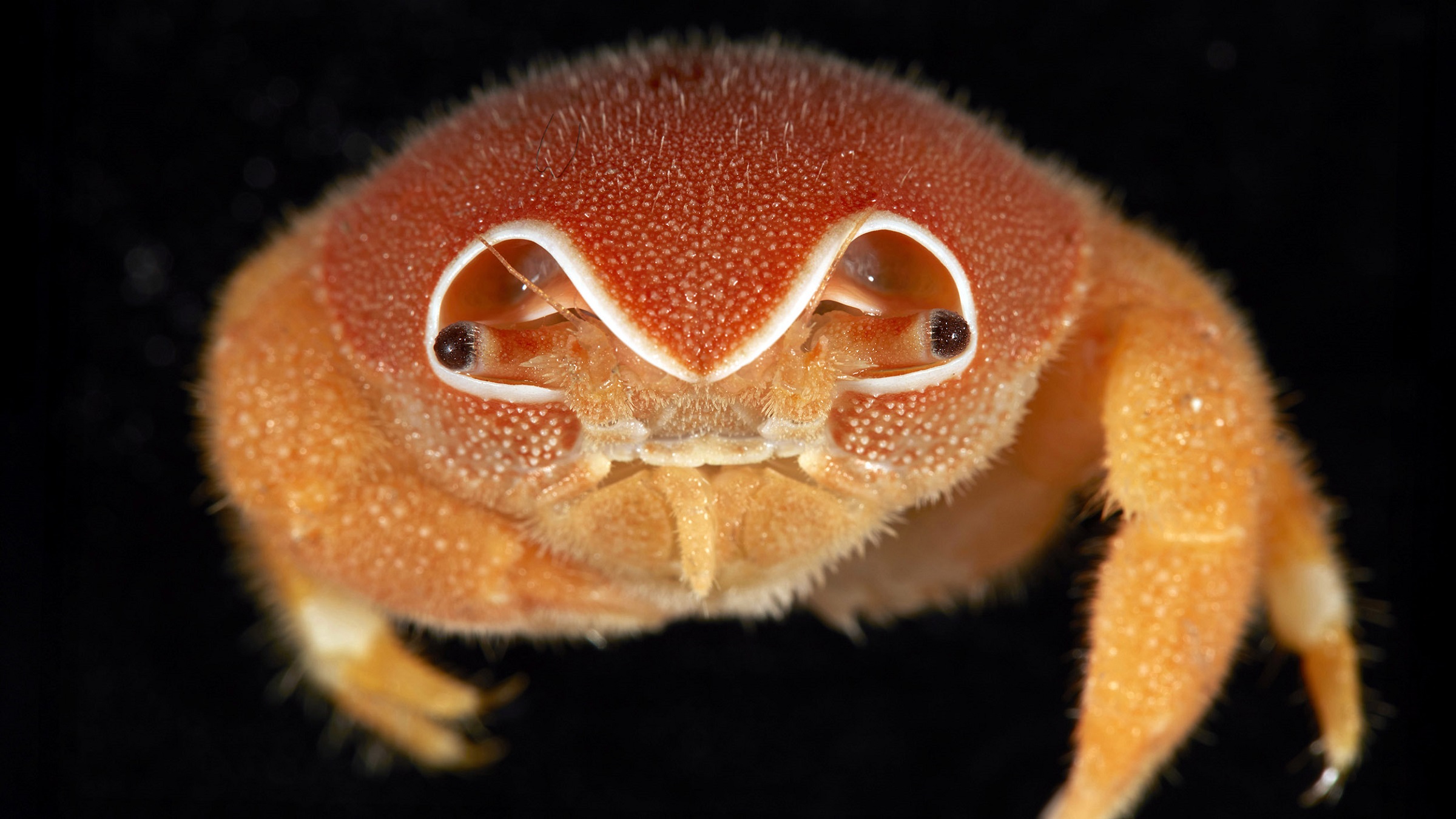
- A new study details a deep-sea expedition near the remote Christmas and Cocos islands, where researchers visited unexplored seamounts and identified 149 previously unknown marine species, including black corals, sea worms, sea cucumbers and a variety of fish.
- At a site they dubbed “The Shark Tooth Graveyard,” researchers discovered around 1,000 shark teeth, covering more than 22 million years of evolution.
- Researchers from institutions in Australia, New Zealand, Canada and the U.S. surveyed the seafloor down to 5,431 meters (17,818 feet), where conditions are cold, dark and high-pressure with limited food options for benthic species.
- Deep-sea research is notoriously challenging, but scientists stress the importance of exploring these ecosystems as they face growing threats from warming oceans, pollution, overfishing and deep-sea mining.
The Indian Ocean accounts for about a fifth of global ocean area, with 90% of it reaching deeper than 1,000 meters (3,280 feet). Yet compared to the Pacific and Atlantic, its deep-sea biodiversity is relatively understudied — particularly the seamounts of the ocean’s central eastern region.
An expedition that surveyed dozens of these volcanic underwater mountains around the Christmas and Cocos islands, located southwest of the Indonesian island of Jakarta between Australia and Sri Lanka, has revealed remarkable marine animal biodiversity along the Indian Ocean seafloor. Published in Deep-Sea Research Part II: Topical Studies in Oceanography in June, the resulting study details 149 new species, including a sea cucumber from the genus Oneirophanta, a new fish from the greeneye family (Chlorophthalmus), and a parasitic barnacle from the genus Rhizolepas.
Researchers surveyed at depths ranging from 94 to 5,431 m (308 to 17,818 ft), mapping a dark abyssal seafloor punctuated by 40 to 120-million-year-old volcanic seamounts that can be up to 70 kilometers (43 miles) across. They had never been studied before, study lead author Tim O’Hara, a marine scientist at Museums Victoria in Melbourne, told Mongabay.
“People had been around the islands in shallow water before, but no one had looked at life in the deep. It was a massive hole in the data,” O’Hara said.

Mapping remote underwater mountains
Getting to these sites required time. The islands are so remote that, leaving from Darwin on the northern coast of Australia, it took nearly seven days to arrive at Christmas Island. Cocos is roughly 960 km (nearly 600 mi) southwest of Christmas.
The islands are external territories of Australia. In 2020, two years before establishing them as the Indian Ocean Territories Marine Parks, the Australian government approved the expedition to better understand their marine biodiversity.
The international team of 33 researchers began by mapping the seafloor and 22 seamounts in 2020 — including the Green Eye, named after the fish family Chlorophthalmus found there. These massive underwater mountains rise at least 1,000 m (nearly 3,300 ft) above the seafloor and interrupt deep-sea currents, creating a nutrient oasis for filter feeders and other animals.
To conduct deep-sea research, Australia’s Commonwealth Scientific and Industrial Research Organisation commissioned a custom-built research vessel, the RV Investigator, in 2014. Previously, Australia had primarily focused on studying coastal waters off the country’s mainland, only reaching a depth of 3,000 m (9,842 ft), according to O’Hara. The Investigator expanded the team’s research capacity, allowing them to survey depths reaching 5,000 m (3.10 mi).

Life in the depths
O’Hara told Mongabay that one of the most intriguing aspects of the expedition was discovering new seamounts. One included a caldera, a bowl-shaped crater that forms after a volcanic eruption. In a nod to J.R.R. Tolkien’s The Lord of the Rings, the researchers named this caldera the Eye of Sauron — as its center resembles an eye. They discovered it at a depth of 3,103 m (10,1803 ft), and a distance of 282 km (175 mi) from Christmas Island.
While researchers did not sample the caldera, they did collect from the seamounts and found that species assemblages gradually shifted as they went deeper.
Living at these depths is difficult. “It’s dark, it’s cold,” Jim Barry, a senior scientist at the Monterey Bay Aquarium Research Institute in the U.S. state of California who was not involved in the study, told Mongabay. Animals here depend on material sinking from the surface for food.
This is where seamounts may help, Barry added. “If you’re on a seamount, as this current is coming by and hits the seamount, that flow accelerates across the top,” he said. “If you’re a filter feeder that needs food, you may be able to optimize feeding by positioning yourself in an area where the currents are faster.”

More than 22 million years of evolution
To collect these species, the researchers primarily used a beam trawl, a 4 m (13 ft)-wide beam with a long net attached. The Investigator pulled it forward with an 8 km (5 mi)-long wire so that it dragged along the seafloor at a walking pace. The net mainly caught jellyfish and worms. A smaller, conical net, 1 m (3 ft)-long and half a meter (1.5 ft)-wide and attached above the other net, caught tiny crabs, lobsters and other crustaceans that the larger net missed.
Researchers recorded footage with a deep-towed camera and collected data on temperature, salinity, and amount of dissolved oxygen in the water. They also collected environmental DNA — genetic material shed by organisms — revealing the species in the area. Researchers found 1,059 species in total and have identified 149 new to science.
“I am just amazed that every time we go somewhere and look carefully, we discover so many new species in the deep sea,” Barry said. “One of the surprises to me was all the fish.” Twenty-three had not been previously identified in Australian territorial waters, according to the study.
O’Hara said the most memorable find was the 1,000 shark teeth pulled up during the last trawl along the Cocos Abyssal Plain, covering more than 22 million years of evolution. The teeth included those of great white sharks (Carcharodon carcharias), mako (Isurus oxyrinchus), tiger (Galeocerdo cuvier) and even prehistoric Megalodon (Otodus megalodon) fossils. At the site, which researchers named “The Shark Graveyard,” they also found polymetallic nodules (manganese nodules), including within the shark teeth. These mineral-rich rocks are highly sought after in deep-sea mining and used in electric vehicle batteries, wind turbines and renewable energy.

Future research and threats
Since this expedition, O’Hara told Mongabay, other scientists are exploring seamounts in the Coral Sea Marine Park off Australia’s northeast coast and a German research vessel, Sonne, is examining the seafloor structure off the east coast of New Zealand.
As oceans face threats from climate change, including rising surface ocean temperatures, marine heatwaves, overfishing and deep-sea mining — which all impact benthic ecosystems — deep-sea research remains important, according to O’Hara and Barry.
“It is the last frontier,” O’Hara said. “We really need to know how the deep sea works. We can’t see it from the surface; no one experiences the deep sea except a few people [who] go down [in] submarines. I’d love to go further out in the Indian Ocean.”
Banner image: A sponge crab (Sphaerodromia brizops) collected at the Muirfield Seamount, southwest of the Cocos (Keeling) Islands. Image courtesy of Benjamin Healley/Museums Victoria.
Citations:
Thomas, E. A., Bond, T., Kolbusz, J. L., Niyazi, Y., Swanborn, D. J., … Jamieson, A. J. (2024). Deep-sea ecosystems of the Indian Ocean >1000 M. Science of The Total Environment, 957, 176794. doi:10.1016/j.scitotenv.2024.176794
O’Hara, T. D., Ahyong, S. T., Alderslade, P., Bray, D., Criscione, F., Davey, N., … Williams, A. (2026). Faunal community ecology of central-eastern Indian Ocean Seamounts. Deep Sea Research Part II: Topical Studies in Oceanography, 227, 105651. doi:10.1016/j.dsr2.2026.105651
O’Hara, T. (2024). Geomorphology and oceanography of central-eastern Indian Ocean seamounts. Deep Sea Research Part II: Topical Studies in Oceanography, 218, 105415. doi:10.1016/j.dsr2.2024.105415
Feedback: Use this form to send a message to the editor of this post. If you want to post a public comment, you can do that at the bottom of the page.
Cite this article
Emma Smith (2026). Scientists discover 149 new deep-sea species at remote Indian Ocean seamounts. Mongabay Conservation news. DOI: https://doi.org/10.66709/news-327357

