


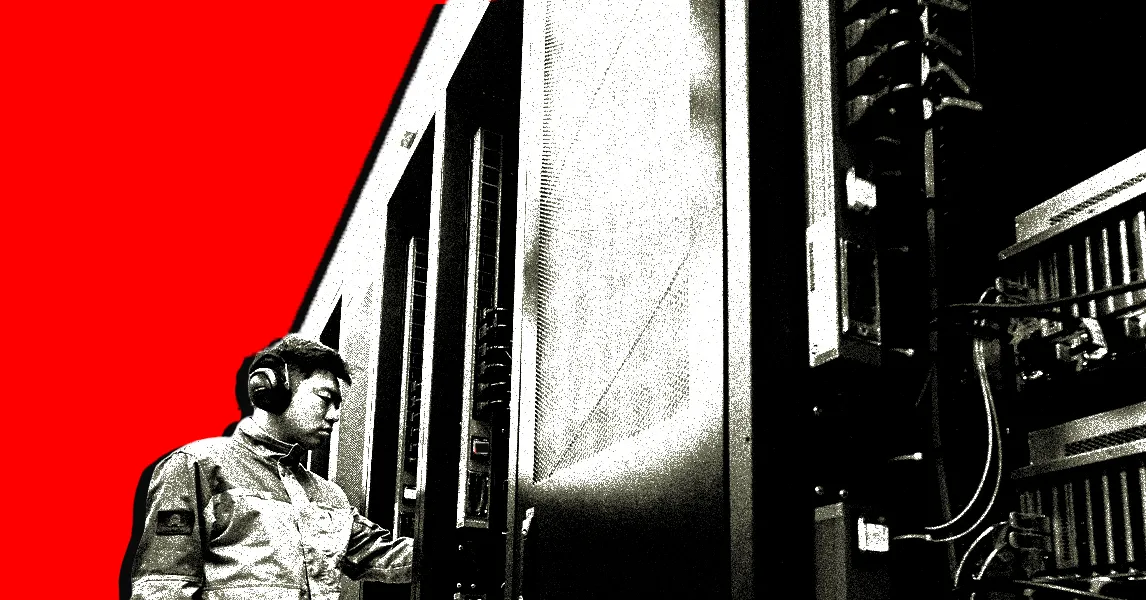
Travel just two hours west of Beijing by train, and you’ll find yourself surrounded by the rolling grasslands and ancient cinder cones of Inner Mongolia. This vast, arid land has long been China’s capital of sheep farming and coal mining, but over the last few years, it has become the hottest place in the country to build an AI data center.
In Ulanqab, a city in Inner Mongolia home to about 1.5 million people, nearly 100 data centers have been opened or begun construction since 2016. Chinese companies have pledged to build projects with a combined estimated capacity of 12.5 gigawatts in the city, and over 70 percent of the total commitments have been announced in just the last year, making it one of the fastest growing compute clusters in Asia, according to a research note published by Goldman Sachs last week. For comparison, OpenAI’s $500 billion Stargate Project is set to reach only 10 gigawatts of total capacity when it’s complete.
Chinese companies are flocking to Ulanqab for a number of reasons. The city sits at high elevation on the Inner Mongolian Plateau and has long, cold winters, which means data centers there don’t need to use as much energy to stay cool. It’s also relatively close to Beijing, so data can be transmitted to China’s populous regions with minimum latency. But the most enticing factor has to do with costs. Electricity is cheaper in Inner Mongolia than almost anywhere else in China, driven by both the strong growth of wind and solar energy and an abundant supply of coal.
What’s also interesting is who is building these data centers. For the first time, Chinese AI companies are making big investments in their own infrastructure, rather than renting compute from cloud companies. DeepSeek is reportedly building a massive AI data center in Ulanqab, as are ByteDance, Alibaba, and Xiaohongshu. For years, Chinese AI companies have spent far less on building physical infrastructure than their American peers, despite developing a number of popular AI models with impressive capabilities. The Ulanqab data center boom signals that now they are finally starting to catch up.
There’s just one problem: finding enough water. Ulanqab is about as dry as Denver, getting only roughly 14 inches of rain each year. The local government is already struggling to provide enough water to meet resident demand—before many of the planned data center projects are even up and running. Last month, the local water company in Ulanqab was forced to turn off several waterworks for seven hours each night to mitigate peak demand. The data centers being built in the city will need less water in the winter—weather data from the local government of Ulanqab shows they only require additional water for cooling during two months out of the year—but all of the new infrastructure could still pose a significant environmental challenge for the region.
The Boonies
Inner Mongolia has been a data center hot spot for at least a decade, long before the current AI boom. Huawei built its first one in Ulanqab in 2016, and Apple followed suit three years later. In 2021, the area was designated as one of the main hubs of a country-wide government project dubbed “Eastern Data, Western Compute,” which aims to build data centers in the Western hinterlands of China.
There was one major drawback, though. Because they are located far from China’s populous eastern coast, these data centers initially faced high latency rates when transferring data to the majority of users. As a result, they were initially largely relegated to backup storage—until AI gave them a new purpose. “With the rise of AI in 2022, there was the realization that actually, those remote data centers could be well-utilized for model training,” says Andrew Stokols, a professor at Singapore Management University who studies China’s compute infrastructure. A training run for an AI model can take months and doesn’t require much real-time tinkering, so latency is less of an issue.
Relatively speaking, Ulanqab is also not really that far away. Inner Mongolia is much closer to Beijing and other major metropolitan areas in China than any Western data center hub is. And it’s now connected by two dedicated fiber optics cables built in 2017 and 2019 that reduced average latency speeds to less than five milliseconds, fast enough to support real-time data exchanges like AI inference.
