


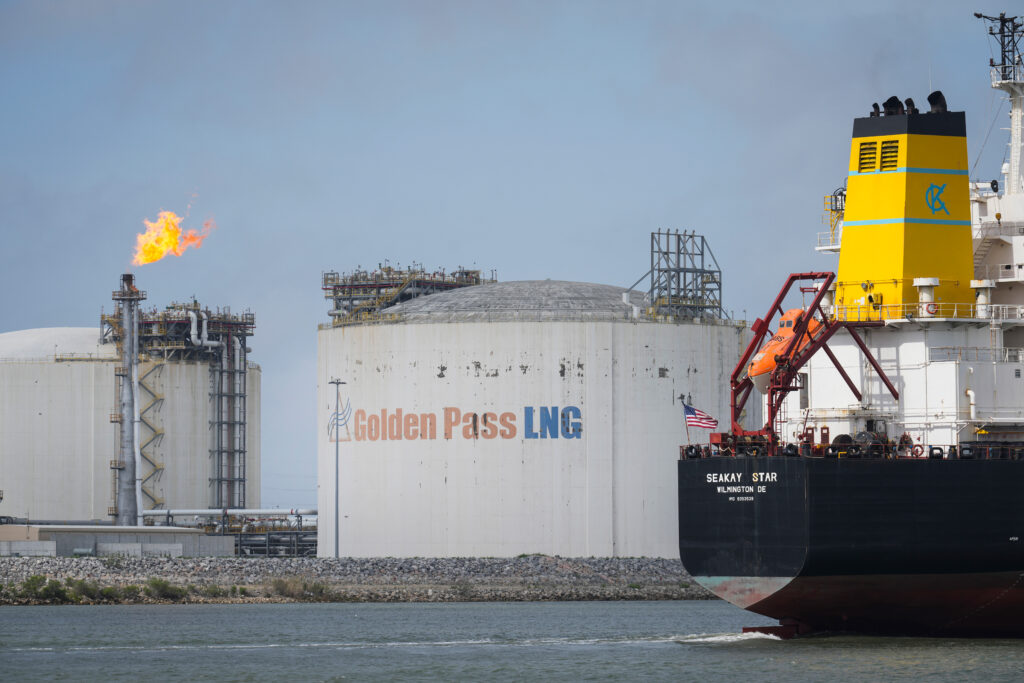
For companies looking to export natural gas, the last few years have brought both feast and famine. The growth has been so fast that some efforts have struggled to secure financial backing. There are simply more proposed projects than there is demand to buy their gas.
The Trump administration has been working to tilt the scales, however, spending billions in taxpayer funds to try to push projects over the finish line.
Since July 2025, federal agencies have pledged more than $4 billion to prop up American liquefied natural gas, or LNG. President Donald Trump has also used tariffs, executive orders and other means to pressure governments and energy companies to invest in LNG projects and to speed their approvals.
The unprecedented federal support comes as LNG growth is reshaping the nation’s energy and climate future. Exports are the fastest-growing source of demand for U.S. natural gas, and they are driving a rise in drilling that has pushed production to a record high. By 2050, gas exports are expected to more than double, the Energy Information Administration said, helping push natural gas production potentially 20 percent to 40 percent higher than today.
The expansion comes at a time when the impacts of accelerating climate change are becoming deadlier and more costly, driving wildfires, heat waves and storms across the globe. Meanwhile, the LNG boom is sending a surge of new pollution into the Louisiana and Texas communities where it is concentrated.
“This massive buildout of LNG is extremely harmful from both a climate and a public health perspective,” said Talia Calnek-Sugin, a senior policy advocate at the Natural Resources Defense Council.
Natural gas is primarily methane, a potent greenhouse gas that leaks into the atmosphere when companies drill and pipe the fuel to markets. LNG terminals consume large amounts of energy to supercool the gas; the terminals themselves burn 7 percent to 15 percent of the methane they buy in order to convert it into a liquid, according to the Energy Information Administration. That process also releases hundreds of tons of harmful air pollutants each year.
“If you care about methane pollution, if you care about fracking, you have to understand the role that LNG exports play in driving the financial investments into increasing more gas production in the United States,” said Tyson Slocum, director of the energy program at Public Citizen, a consumer advocacy group. “It’s the biggest driver.”
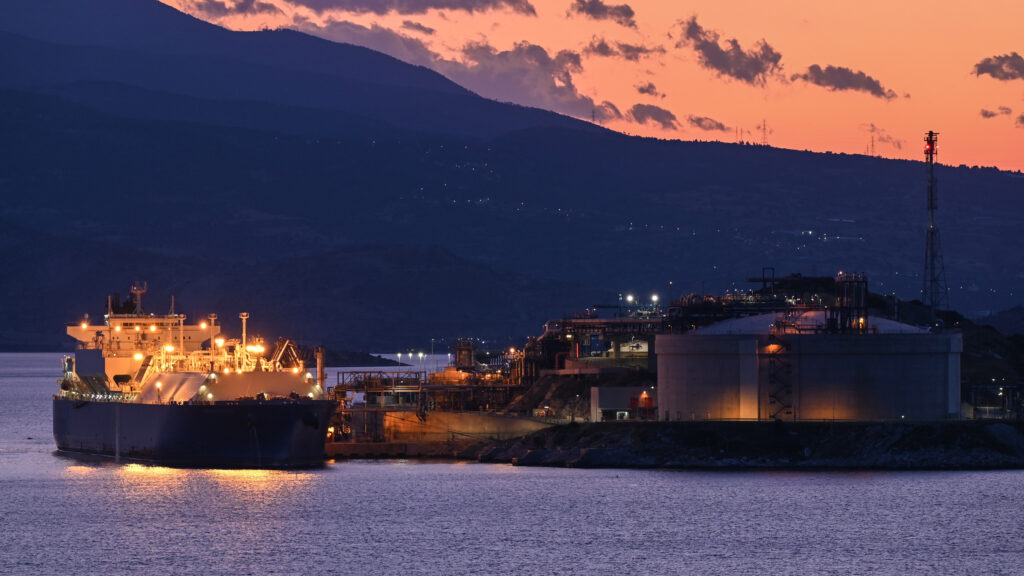
While support for LNG has come from Democratic and Republican administrations, direct subsidies have accelerated sharply during Trump’s second term. The money has come in the form of loan guarantees, insurance or other investment from the U.S. Export-Import Bank and the U.S. International Development Finance Corp., or DFC, primarily to bolster purchases of American gas.
The Export-Import Bank first supported LNG in the waning days of the first Trump administration, and completed at least three deals under President Joe Biden. Since July 2025, however, the bank has announced five deals worth a combined $2.7 billion. The DFC has announced an additional $1.5 billion.
The subsidies have an outsized impact because they aim to draw larger flows of private capital, said Kate DeAngelis, deputy director for economic policy at Friends of the Earth. LNG terminals cost billions to build. One of the biggest hurdles is securing financing, with developers needing to convince banks the projects will pay back loans over decades. Subsidies can help advance projects that might not otherwise proceed, by providing a financial backstop if buyers fall through. They also lower borrowing costs.
Over the last year, the Export-Import Bank provided $2.3 billion in insurance to back purchases by Bahamian, Egyptian and Turkish energy companies. In July 2025, it bolstered LNG purchases by the trading firm Trafigura, by providing $360 million in insurance to European banks so they would lend money to Trafigura.
In June, the DFC announced its “single largest project investment” ever, a $1.5 billion “investment platform” that would take debt and equity stakes in energy projects in South and Southeast Asia, which it said would expand imports of U.S. gas to the region.
Meanwhile, the Department of the Interior has struck deals with energy companies to cancel offshore wind power leases—after the Trump administration pulled multiple levers to kill projects—and invest in LNG instead. This month, the department returned $1.2 billion to RWE, a German energy company, which agreed to acquire a $900 million stake in a Louisiana LNG complex that is under construction and looking to expand. Two other deals potentially directed as much as $1.7 billion from offshore wind into LNG projects, though it’s unclear how much, if any, of that figure represents investments the companies weren’t already planning to make.

Environmental and consumer advocacy groups say the deals contribute to higher electricity bills, by canceling projects that would have sent power into the grid and supporting ones that send gas overseas.
One LNG firm also received a $370 million payout from the IRS this year by taking advantage of a tax credit meant to encourage the use of alternative fuels in motorboats.
“The Trump administration is pulling out the stops for fossil fuel supports across the board, and they’re getting very creative,” Slocum said.
Many LNG projects also receive billions of dollars worth of state and local tax breaks, too.
Taylor Rogers, a White House spokesperson, said, “President Trump promised to prioritize reliable, affordable, and secure energy sources like U.S. natural gas—he has delivered.” Rogers added that with the offshore wind deals, “The Trump Administration simply refunded the money these companies previously paid to the federal government so that they could redirect their capital from expensive, unreliable offshore wind leases toward affordable, reliable natural gas projects. This is a better use of these funds for the American people.”
A DFC official said the agency contributes to energy security and long-term economic growth. “DFC financing supports American energy dominance which positions the United States as a leading global supplier of reliable and secure energy and advances U.S. strategic interests by helping allies and partners diversify their energy supplies.”
The Export-Import Bank did not respond to requests for comment.
Fred Hutchison, chief executive of LNG Allies, which represents gas companies and exporters, said his industry provides allied countries an alternative to gas from Russia and the Middle East. Most U.S. LNG exports go to Europe, which is trying to wean itself from Russian gas. Hutchison also argued that countries will release less climate pollution by importing American LNG because it will replace coal and dirtier sources of gas.
Some research suggests otherwise. The International Energy Agency said U.S. LNG exports, among the most carbon-intensive in the world, are only moderately less climate polluting than coal. Other studies suggest LNG could be worse than coal, depending on how much methane leaks into the air.
This story is funded by readers like you.
Our nonprofit newsroom provides award-winning climate coverage free of charge and advertising. We rely on donations from readers like you to keep going. Please donate now to support our work.
Either way, the coal-versus-gas question may be the wrong one to ask. While there is evidence that high gas prices and lower LNG availability caused by the U.S. war against Iran have supported coal use in China, there is little evidence that countries are replacing coal with LNG. A recent report from BloombergNEF, an energy research firm, projects that most new LNG demand in Asia will replace oil, not coal. There is also the question of whether countries will use LNG instead of renewable energy, which would be far cleaner.
In a report released in December 2024, the Department of Energy said U.S. LNG growth would increase global emissions, though there was significant uncertainty over how much.
A Thumb on the Scale
While the federal government has already spent billions supporting LNG, far more money could flow to a proposal that has been in the works for years. Alaska LNG would carry gas from the Arctic through an 800-mile pipeline to a new terminal south of Anchorage. Its developer has estimated it would cost $44.5 billion to $54.5 billion.
Alaska Gov. Mike Dunleavy has been pushing the state Legislature to approve a tax package that he and developers say is critical to the project’s success. If that state support is secured and Alaska LNG were to proceed, it could be eligible for tens of billions in additional federal financing.
The Infrastructure Investment and Jobs Act of 2021, better known as the bipartisan infrastructure bill, included a clause that set up Alaska LNG to receive up to $31.5 billion in loan guarantees from the Department of Energy.
“One of the big worries we have is that the U.S. LNG industry is purposely trying to flood the international market with cheap LNG now, so that developing countries invest in gas.”
— Talia Calnek-Sugin, Natural Resources Defense Council
And it could potentially claim some $7 billion annually in federal tax credits over 12 years under a program to support carbon capture and storage. Because the gas it would use contains a high amount of carbon dioxide, the project would need to remove the CO2 anyway. The tax credit would allow the company to reap billions in doing so, even if it injects the CO2 into oil fields to increase production on Alaska’s North Slope.
Federal officials have been pushing to complete Alaska LNG for years, including under the Biden administration, but Trump administration officials have declared it a priority. Energy Secretary Chris Wright last year told reporters that his department would “probably support it” with credit or other financing.
The biggest hurdle for Alaska LNG, and many other projects, is that analysts say the boom in gas export projects is speeding ahead of demand. While banks might worry that a glut would result in bankruptcies and defaults, environmental advocates have a different fear.
“One of the big worries we have is that the U.S. LNG industry is purposely trying to flood the international market with cheap LNG now, so that developing countries invest in gas,” said Calnek-Sugin of NRDC. “Then they’re locked into dependence.”
The BloombergNEF report projected that LNG supply will outpace demand later this decade, but that the resulting low prices will then create new demand, especially in Asia.
“It’s not a free market that’s determining whether renewables make more economic sense or LNG makes more economic sense,” Calnek-Sukin said. “There are all these ways that’s being distorted, in order for Trump to support his friends in the fossil fuel industry, and it’s taxpayer dollars that are going to support it.”
About This Story
Perhaps you noticed: This story, like all the news we publish, is free to read. That’s because Inside Climate News is a 501c3 nonprofit organization. We do not charge a subscription fee, lock our news behind a paywall, or clutter our website with ads. We make our news on climate and the environment freely available to you and anyone who wants it.
That’s not all. We also share our news for free with scores of other media organizations around the country. Many of them can’t afford to do environmental journalism of their own. We’ve built bureaus from coast to coast to report local stories, collaborate with local newsrooms and co-publish articles so that this vital work is shared as widely as possible.
Two of us launched ICN in 2007. Six years later we earned a Pulitzer Prize for National Reporting, and now we run the oldest and largest dedicated climate newsroom in the nation. We tell the story in all its complexity. We hold polluters accountable. We expose environmental injustice. We debunk misinformation. We scrutinize solutions and inspire action.
Donations from readers like you fund every aspect of what we do. If you don’t already, will you support our ongoing work, our reporting on the biggest crisis facing our planet, and help us reach even more readers in more places?
Please take a moment to make a tax-deductible donation. Every one of them makes a difference.
Thank you,

Reporter, New York
