



- Mongabay Latam marks ten years of providing daily environmental news across Spanish-speaking Latin America, with stories distributed through a broad network of mainstream and independent media partners.
- Its locally led reporting has documented environmental change across some of the world’s most biologically and culturally diverse landscapes, while placing Indigenous peoples and other affected communities at the center of the coverage.
- Investigations by the bureau and its partners have contributed to government interventions, land restitution, enforcement action, and greater scrutiny of illegal mining, deforestation, organized crime, and other environmental threats.
- These achievements reflect the work of Mongabay Latam’s staff, contributors, and media partners throughout the region, supported by funders who have sustained independent public-interest journalism.
When Mongabay Latam began publishing in 2016, the decision felt like a logical next step. Mongabay Indonesia, launched four years earlier, had shown that a locally led, local-language newsroom could build an audience for sustained environmental reporting. Spanish offered the chance to apply that approach across a region extending from Mexico through Central America and the Andes to Chile and Argentina. The political and ecological conditions varied widely, but the need was similar: important environmental stories were going unreported, or receiving attention only after a crisis became difficult to ignore.
Latin America and the Caribbean are the most biologically diverse region on Earth, holding nearly half of the world’s tropical forests and unusually large shares of its mammals, birds, fish, insects, reptiles, amphibians, and plants. The Spanish-speaking countries in Mongabay Latam’s coverage area include some of the richest parts of the Amazon rainforest, the tropical Andes, Mesoamerica, the Chocó, and the eastern Pacific. These landscapes face growing pressure from mining, agriculture, infrastructure, organized crime, and climate change.

I was also drawn to the region’s cultural and intellectual range. Latin America has produced many responses to these pressures, including Indigenous territorial governance, community forestry, new legal approaches to nature, and locally designed conservation programs. A regional news service could document environmental damage while also examining how people were responding to it.
Mongabay Latam’s staff and contributors built the newsroom that followed. Editors developed the judgment, relationships, and institutional memory needed to cover a region consistently. Reporters, photographers, videographers, and data specialists worked across borders, sometimes in places where environmental reporting carries substantial risk. Some of the strongest stories came from journalists who understood local history and could recognize when a dispute in one place reflected a wider pattern.
One of the bureau’s most important accomplishments has been the establishment of a daily environmental news service spanning Spanish-speaking Latin America. Its coverage includes forests, oceans, wildlife, science, Indigenous rights, environmental crime, and responses to ecological decline. The stories are also freely available for republication. The bureau has formed more than 90 partnerships with other media outlets, carrying its stories into national newspapers, regional publications, and independent newsrooms. This has allowed environmental reporting to reach readers who might never visit a specialist site.
These partnerships also supported more ambitious investigations. Illegal timber moves through regional supply chains. Wildlife trafficking networks connect forests, cities, ports, and overseas markets. Drug trafficking and other illicit industries contribute to deforestation across parts of Central America and the Amazon. By working with outlets such as the Latin American Center for Investigative Journalism (CLIP), Animal Político, Rutas del Conflicto, Plaza Pública, and El Espectador, these powerful working partnerships enabled the investigations to have a greater impact beyond national borders.

Some investigations produced clear responses. Reporting with Plaza Pública identified a clandestine airstrip in Guatemala’s Laguna del Tigre National Park, and authorities later ordered its destruction. Investigations into illegal mining on Amahuaca Indigenous land and Awajún territory in Peru was followed by multiple government interventions. Reporting on forest loss in Bolivia’s San Rafael Municipal Reserve prompted the local mayor to seek action from national authorities. A probe by Mongabay Latam and Rutas del Conflicto documented the illegal occupation of land by Mennonite settlers in Colombia. After a senator cited the findings and called for action, Colombia’s National Land Agency confirmed that the land would be returned to the state and titled to Sikuani Indigenous communities.
Journalism was one part of each of these outcomes. A report can supply evidence, bring scattered facts together, or draw attention to a problem that officials have neglected. Prosecutors, Indigenous organizations, civil society groups, public officials, and local communities determine what follows. Mongabay Latam’s contribution has often been to provide information that they can verify and use.
The bureau has also adopted new methods for environmental reporting. Its Amazon Airstrips investigation, produced with Earth Genome, combined satellite imagery, artificial intelligence, drone footage, official records, field reporting, and more than 60 interviews. The team identified 67 clandestine airstrips used for drug transport in the Peruvian Amazon, many near Indigenous territories and reserves for people living in voluntary isolation. The project prompted responses from public institutions and Indigenous organizations and later received the

The investigation brought wider attention to communities living with the consequences of the drug economy. This reflects a consistent feature of Mongabay Latam’s coverage. Environmental stories in the region often concern public security, political power, livelihoods, health, and control over territory. The bureau has treated Indigenous leaders, local scientists, park guards, fishers, farmers, and environmental defenders as central sources and actors.
The work has also contributed to the development of environmental journalism in the region. Contributors have gained experience in investigations, satellite analysis, data reporting, multimedia production, and cross-border collaboration. Partner outlets have gained access to specialized coverage that would often be costly to produce independently. The resulting body of work provides a continuing record of environmental change across countries that are usually covered separately.
A regional newsroom requires patient editing, travel, security planning, legal review, data access, and time for reporters to build trust with sources. Much of this work is invisible to readers. Foundations, institutional supporters, and individual donors have made it possible by funding public-interest journalism without determining its conclusions. I am deeply grateful for their support. It has allowed the bureau to pursue stories whose importance cannot always be captured through audience figures.
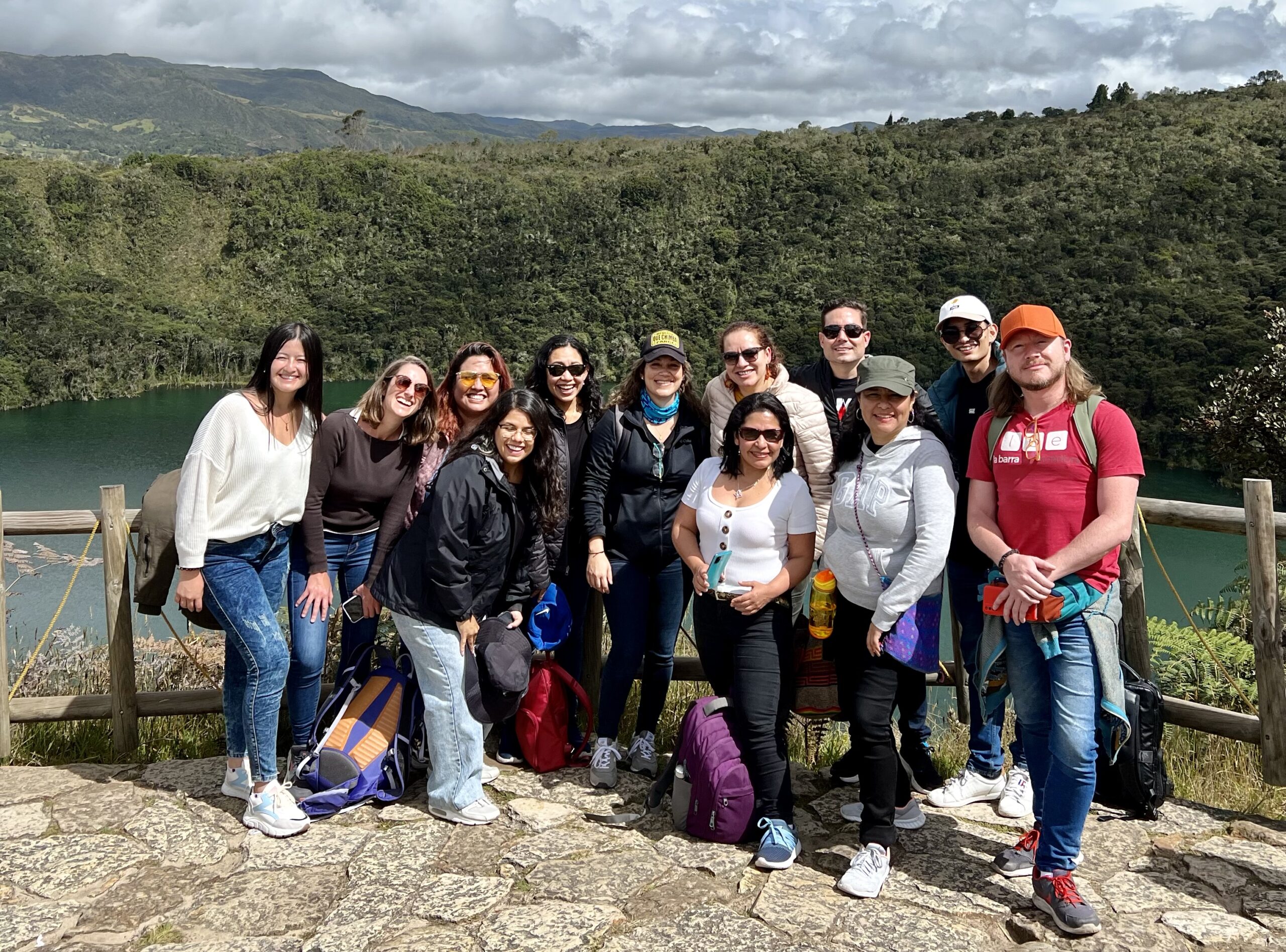
The greatest credit belongs to Mongabay Latam’s present and former staff, its contributors across the region, its media partners, and the sources who shared their knowledge, sometimes under difficult circumstances. They established the bureau’s standards and reputation through the accumulated work of hundreds of investigations, daily news reports, interviews, videos, and field assignments.
Ten years of reporting provide a substantial record, although many of the pressures that led to the creation of Mongabay Latam have intensified. The bureau will need to continue adapting its reporting, formats, and distribution while preserving the local knowledge and editorial rigor on which it was built.
Its purpose remains the same: to report consistently from places where environmental change is reshaping lives, make the evidence accessible, and ensure that the people closest to those changes are included in the account. That was the rationale for establishing Mongabay Latam in 2016, and it continues to guide the bureau ten years later.
Banner image: Cerros de Mavecure in Colombia’s Guainía in July 2026. Photo by Rhett Ayers Butler / Mongabay
