


Welcome to Foreign Policy’s Southeast Asia Brief.
The highlights this week: China is making ground on Taiwan in the region, Prabowo swings by Russia again, and Thailand sends mixed messages about AI.
A Shift in Stance on Taiwan
China is making ground on Taiwan in Southeast Asia.
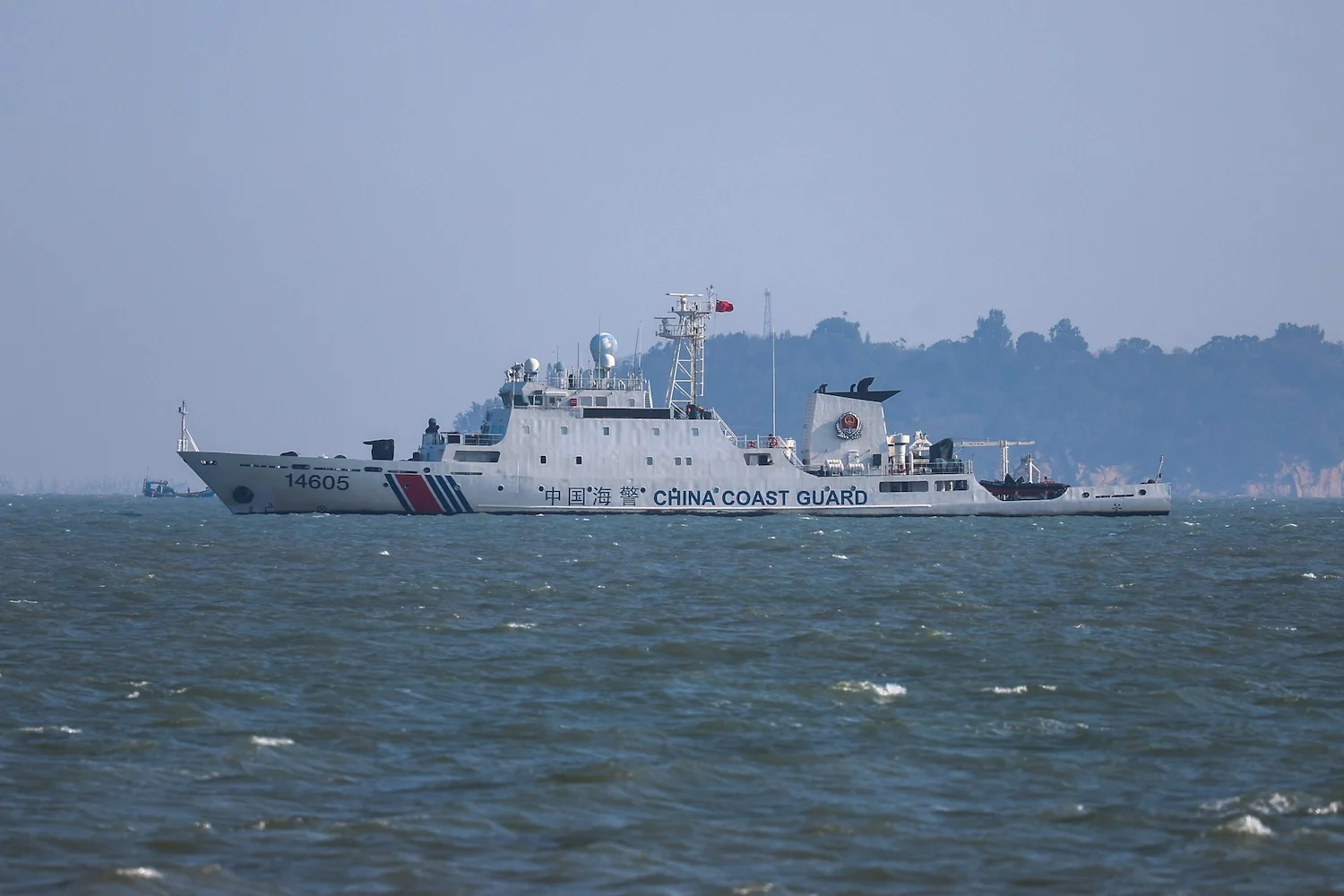
The issue swam into view last month. First, the Indonesian navy performed a joint exercise with the Chinese navy off the east coast of Taiwan—which it then hastily downplayed.
A few days later, on Aug. 16, Al Jazeera aired an interview with Malaysian Prime Minister Anwar Ibrahim, in which he made comments suggesting sympathy with China taking military action against Taiwan.
“I always take Malaysia as an example. If one province decides to break away, do we use force? I think I will protect the sanctity and unity of the nation,” Anwar said when asked if he would condemn China using force against Taiwan.
Anwar subsequently walked back these comments, emphasizing that a peaceful approach was best.
However, while his comments were unusually strong, they reflect a slow drift from Malaysia toward Beijing’s line on the matter.
Just compare Malaysia and China’s joint statements past and present. One in 2014 affirmed that “Taiwan is an inseparable part of China” but also pointedly mentioned support for “peaceful reunification.” But in 2024 and again in 2025, there was no specific mention of peace.
Other countries have also dropped mentions of peace. Joint statements with Cambodia included it last in 2019 but not since 2022.
Thailand has also subtly shifted its position. In 2023, statements simply recognized “Taiwan as an inalienable part of China.” In 2025, new language appeared declaring that Thailand would not “support any call for the independence of Taiwan,” and in 2026, it “firmly supported peaceful reunification.”
The Philippines, while keeping to the “one China” policy, has usually taken a stiffer line on potential force against Taiwan. This reflects its closeness to the United States and its own strong stance against China in the South China Sea. However, this year has seen President Ferdinand Marcos Jr. soften somewhat.
Taiwan has attempted to bolster its position. In 2016, it launched the New Southbound policy, aimed at deepening diplomatic ties with the Association of Southeast Asian Nations (ASEAN) and India.
The ideological resonance of democracy can also cultivate sympathies in the region. From 2020 to 2021, citizens of Thailand, Myanmar, Taiwan, and Hong Kong expressed solidarity with one another in the face of authoritarian pressure from China and domestic governments.
Taiwan also sometimes pushes back. In July, Cambodia was removed from Taiwan’s visa-privilege programs, which all other ASEAN members are part of, because of its repeated “inappropriate statements denigrating Taiwan’s sovereignty.”
Still, overall, the various diplomatic moves toward China’s position in the region show Taiwan has lost ground.
Do these shifts in wording, stray comments, and ill-judged exercises add up to anything substantive though?
Some might argue no. Whatever Anwar says, all Southeast Asian nations are acutely aware that an invasion of Taiwan would be, at best, an economic catastrophe for the region. At worst, it could suck in the United States, turning the area into a charnel house—and that’s before we even consider nuclear risk.
Furthermore, most Southeast Asian countries continue to maintain strong relations with Taiwan, covering trade, investment, and migration of Southeast Asian workers. So long as these beneficial ties persist, Southeast Asian countries are unlikely to take actions such as blocking flights carrying Taiwan’s president or denying Taiwanese citizens entry to their countries, as some African countries have done.
However, it is undeniable that China clearly sees such shifts as valuable and puts a lot of effort into achieving them. As analyst Aniello Iannone rightly pointed out, China will be quoting Anwar’s statements and citing Indonesia’s actions as precedents.
The shift underscores that with China rising and the United States erratic, a number of countries in Southeast Asia are recalibrating their approach along the edges.
Russia again. Indonesian President Prabowo Subianto visited Russia last week, his fourth visit to Russia since he assumed office in October 2024 and his second this year after dropping by in April.
It seems this is one of his favorite countries to visit—only France and the United Arab Emirates have also received four visits, and only one country, Malaysia, has had five. Russia maybe gets another half-point as Prabowo also met President Vladimir Putin during a visit to Beijing in September 2025.
So, what does Prabowo have to show for this concerted shuttle diplomacy?
In December 2025, Indonesia inked a free trade deal with the Eurasian Economic Union—a grouping consisting of Russia, Armenia, Belarus, Kazakhstan, and Kyrgyzstan.
But this time around, not much new was announced. Speaking at the Eastern Economic Forum in Vladivostok, Russia, on Sept. 3, Prabowo declared, “For Eurasian businesses, Indonesia is a natural entry point to ASEAN.” Concrete results, though, were thin on the ground—still, Prabowo talked up potential cooperation on energy for both oil and gas and nuclear.
On Moscow’s side, a warm relationship with Jakarta, even if results are for now a little thin, is good to have. Since its full-scale invasion of Ukraine torched relations with Europe, Russia has worked hard to strengthen diplomatic ties in other parts of the world, including Southeast Asia.
Yes to AI, no to data centers. On Friday, Thailand announced that it was pausing 166 data center projects, more than 45 of which were already under construction.
The government has stressed that this is a temporary measure while it sorts out regulations for issues such as data centers’ use of water and power and where they can be built. This fits into a regionwide trend where citizens of countries across Southeast Asia have, as in the United States, grown skeptical of the benefits of having data centers in their backyards.
However, the stance is slightly at odds with the Thai government’s enthusiastic embrace of artificial intelligence in other areas. On Aug. 31, it launched the TH-AI Passport, which offers free access to a suite of AI tools for up to 5 million Thais. Uptake seems to have been limited, though, with only 1.5 million people signed up and around 110,000 active users. The suite of tools aren’t anything special, either.
One area Thailand has done well with in AI is investments and exports. In the first half of 2026, Thailand attracted 886 billion baht (about $27 billion) related to AI and data centers. Electronics exports have also boomed.
Arrests, bail, and heart attacks. It was a week of dramatic arrests in the Philippines. First came Friday’s arrest order of Vice President Sara Duterte on charges of having threatened to have the president and his wife assassinated, something she is also currently being impeached for.
She posted bail on Saturday, which she said was necessary for her personal safety.
“I have no trust in the police. I have no trust in the courts. I do not feel safe at all,” Duterte told media as she left court. She added that “if I die tonight,” the police would “wash their hands and call it an accident.” She also accused Marcos of harassment.
Then on Monday, former House Speaker Martin Romualdez, a cousin of Marcos, was charged with plunder over his role in the sprawling flood corruption scandal that has consumed Philippine politics. He is personally accused of the misappropriation of 7.4 billion pesos (about $118 million).
Reportedly, when he learned of this, Romualdez suffered a “cardiovascular event” and was taken to a private hospital in Manila. On Monday, he was arrested in his hospital bed.
Meanwhile, the jobless rate in the Philippines has hit a four-year high.
A satellite view of the Anak Krakatoa volcano in Indonesia’s Sunda Strait on July 15.Gallo Images/Orbital Horizon/Copernicus Sentinel Data 2026 via Getty Images
The recent eruption of the Anak Krakatoa volcano and five other volcanoes came as Indonesia also battled enormous wildfires and the fallout of a recent earthquake.
Meanwhile, Ulta Levenia, a so-called expert on terrorism and geopolitics attached to the Office of the President, suggested the simultaneous explosions were suspicious and could be caused by (what else) foreign interference. She postulated the nefarious root could be the U.S. HAARP project, which studies the ionosphere, and linked this to Prabowo having just met with Putin.
Thanks for sharing, Ulta…
FP’s Most Read This Week
A Vietnamese tradition of ceremonially entombing whale corpses washed onto the shore is giving conservationists new insights into the country’s historical biodiversity, Anne Pinto-Rodrigues writes in Nikkei Asia.
Lethwei, or the art of nine limbs, is Myanmar’s traditional martial art. As civil war rages, it continues to thrive, Agence France-Presse reports.
Indonesia’s richest family has quietly moved over $1 billion overseas as it worries about politics at home, by Chanyaporn Chanjaroen, Harry Suhartono, and Pui Gwen Yeung in Bloomberg.
In Focus: Anti-Indian Racism Worries Singapore
On Sunday, Singaporean Prime Minister Lawrence Wong spoke out against racial prejudice in Singapore and in particular anti-Indian sentiment.
Singapore is ethnically diverse, though with a Chinese majority, and the People’s Action Party (PAP), which has ruled the city-state since independence, has long worried about the potential for communal tensions.
Two incidents pushed these concerns to the fore.
First, floods in Nepal left nine Singaporean citizens missing. Racist online comments suggested that the missing were likely ethnically South Asian so were not real Singaporeans or could be ignored.
Second, news that Air India was seeking money from investors prompted racist speculation about the ethnically Indian CEO of Temasek, Singapore’s state investment fund. Temasek is a majority shareholder of Singapore Airlines, which owns a stake in Air India.
In June, the government also raised concerns about the promotion of racist comments on social media suggesting ethnic Indians were displacing Chinese in Singapore. It said these comments likely originated on a China-based social media platform.
Responding to the latest incidents, K. Shanmugam, Singapore’s home minister and coordinating minister for national security, said on Sept. 5 that lately, “there have been more racist comments, particularly when it comes to Indians in Singapore.”
He called such comments “shameful, nasty, and totally unacceptable.” He further added that while he was not sure if the recent anonymous online comments came from Singaporeans, the people behind them should be “unmasked and dealt with.”
In his Facebook post on Sunday, Wong also condemned “racist” and “anti-Indian” comments: “Singapore has held together because we have consistently rejected attempts to divide us along racial or religious lines.”
The PAP has historically done a creditable job managing inter-ethnic relations. However, issues remain; ethnically Indian and Chinese friends of mine in Singapore note quieter prejudices persist, especially on issues such as interracial relationships and at work.
Still, the overall trend has been toward acceptance. In 2025, nearly 20 percent of marriages in Singapore were inter-ethnic, up from 7.6 percent in 1990.
