


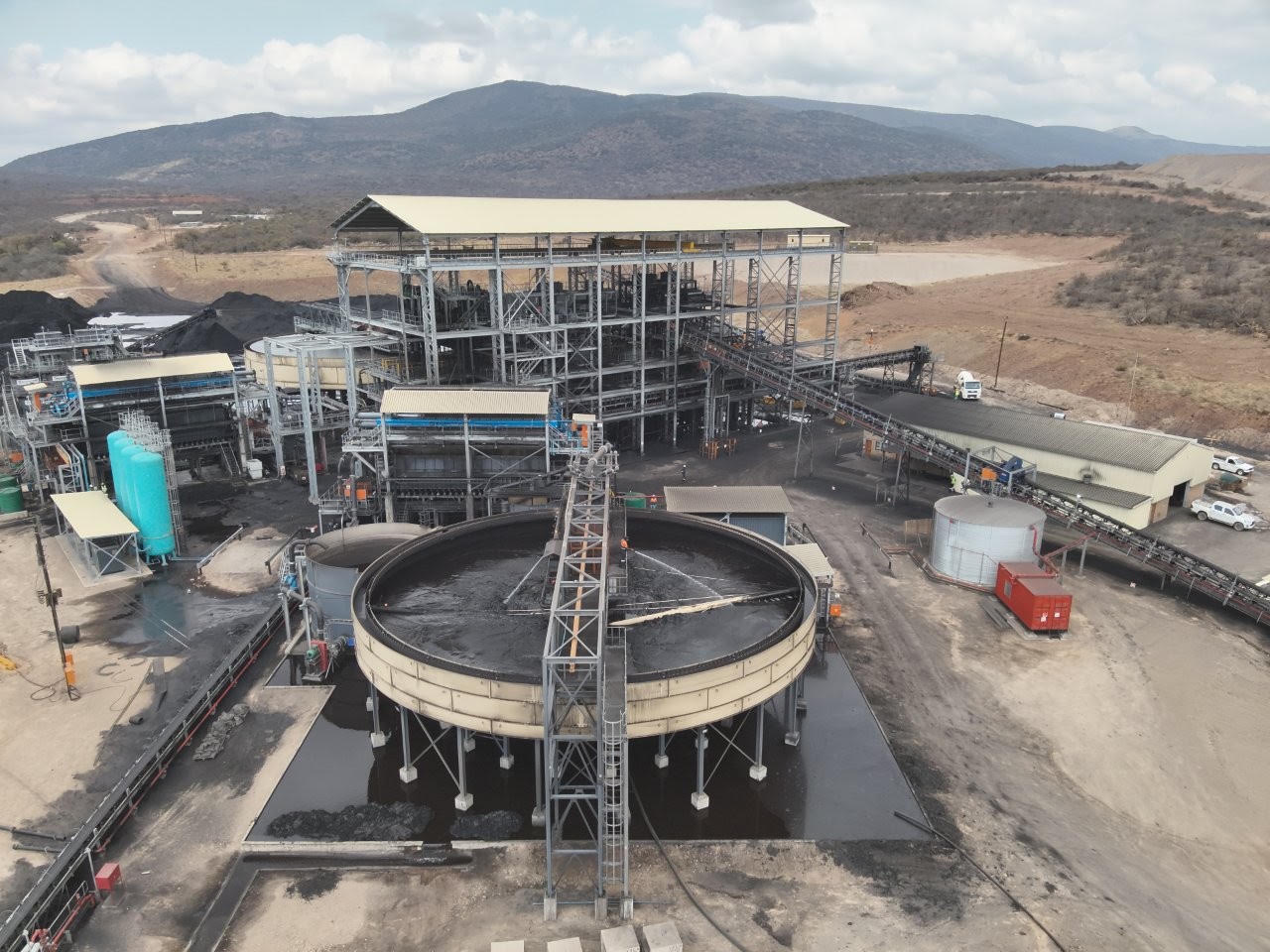
- Chinese-controlled MC Mining is advancing its Makhado coal mine toward full production within South Africa’s Vhembe Biosphere Reserve, amid concerns over habitat destruction and the pressure its substantial water demand could place on already scarce regional supplies.
- A 2021 appeal against an amendment to its environmental authorization remains unresolved, with appellants saying the mine cannot lawfully continue; the company disputes this interpretation, arguing that the underlying environmental authorization is valid.
- A disputed water-supply agreement has increased the mine’s reliance on groundwater in an already water-stressed region.
- Makhado is part of wider development plans centered around the Musina-Makhado Special Economic Zone, raising concerns about cumulative environmental impacts and growing pressure on regional water supplies.
A Chinese-controlled coal mine in South Africa’s Limpopo province is moving toward full production even as a legal challenge mounted by a coalition of community members and environmental groups remains unresolved amid concerns about water security in the region.
Kinetic Development Group controls MC Mining, whose Makhado hard-coking-coal project is expected to reach steady-state operation by the end of the year. Earlier this year, the Hong Kong-listed Kinetic group acquired a 51% stake in MC Mining for $90 million.
The open-cast mine lies within the Vhembe Biosphere Reserve, which includes the Mapungubwe Cultural Landscape, a UNESCO World Heritage Site, and the Ramsar-designated Makuleke wetlands. Environmental groups say clearing for the mine has destroyed sensitive habitat, including protected baobab and marula trees native to the region’s savannas and woodlands.
Contested environmental authorization
Makhado’s developers first received an environmental authorization, or EA, in August 2013. This original authorization has been amended several times over the years, and one such amendment has become highly controversial.
In May 2021, the then-Department of Mineral Resources and Energy (DMRE) amended the Makhado EA to remove a condition that required mining to begin by a fixed deadline. In June 2021, a coalition of community, farming, and environmental groups appealed the decision to remove the deadline. (The DMRE has since become the Department of Mineral and Petroleum Resources.) The appellants argued the DMRE had effectively given the project an open-ended authorization without proper public participation or an updated assessment of environmental and climate impacts.
Under South Africa’s laws the appeal should have been decided by Sept. 9, 2021.

More than five years later, however, no decision has been made by the Department of Forestry, Fisheries and the Environment (DFFE), which is responsible for deciding the appeal. Despite this, mining has begun. The DFFE says the delay resulted from a dispute over the appellants’ attempt to submit additional information after lodging their appeal.
The DFFE told Mongabay the appeal suspends only the DMRE’s May 26, 2021, amendment and does not invalidate the underlying EA.
The appellants’ attorney, Christo Reeders, disagrees. He says that because the appeal was submitted in time, under Section 43(7) of the National Environmental Management Act, the entire EA is suspended and not merely the amendment.
In an August 2025 statement, MC Mining rejected claims that its EA had been suspended and that it was mining illegally. It maintained that it continued to operate within South Africa’s licensing framework.

Water security risks
Beyond questions about its permits, one of the biggest environmental risks posed by the project is worsening water insecurity.
MC Mining has reported that the mine and associated infrastructure will require up to 2.6 million liters (687,000 gallons) of water a day, or nearly a billion liters (250 million gal) a year. A report by South African and Swiss civil-society groups Bench Marks Foundation and Bread for All warned that the mine threatened to deepen water insecurity in a region where local livelihoods depend on scarce water resources.
The mine in far northern Limpopo lies in a catchment where groundwater is extensively used. The Department of Water and Sanitation (DWS) says more surface water has been allocated to users than the system can reliably supply.
The seasonal Limpopo River has low flows during dry periods, limiting the reliability of surface water. North of the mine, the town of Musina is subject to water rationing. Only 14 of its 35 boreholes are operating; others, damaged by heavy rains, remain inaccessible for repairs. Leaks in ageing infrastructure add to pressure on the town’s supply.

Makhado’s water use license relied heavily on local farmers transferring 1.7 billion to 1.9 billion liters (450 million to 500 million gal) a year from the authorized volumes of water allocated to them for irrigation from the Nzhelele Dam. That agreement is now in dispute because MC Mining failed to compensate farmers for their water entitlements as agreed or install a pipeline network to reduce losses from the ageing canal system, says Peter Nicholson, owner of Alicedale Citrus Farm in northern Limpopo.
The DWS says the mine’s water-use license remains valid. But the dispute with farmers has left the mine more reliant on groundwater than the original supply arrangement envisaged.
MC Mining has since commissioned an eastern groundwater wellfield to supply its coal-handling and preparation plant, and plans to bring a western wellfield online before the end of the year. The firm says it expects groundwater flowing into the mine’s open pits from surrounding aquifers to meet all of its operational needs after about 18 months.
However, pumping water from the pits would continue to lower surrounding groundwater levels, and supplementary water from the Nzhelele Dam may still be required for future expansion.
Environmental non-profit organization Living Limpopo has warned that extensive coal mining and industrial development poses “a catastrophic threat to local water resources.” The plan to source water from the Limpopo River, its tributaries, and local groundwater “will severely impact farming, rural households and small-scale farmers who rely on these water sources,” says its director, Lauren Liebenberg.

Wider industrial plans
Makhado is intended to supply coking coal for Kinetic’s wider metallurgical operations in the Musina-Makhado Special Economic Zone (MMSEZ), an industrial development project backed by the South African government. Kinetic has obtained environmental approval for a ferrochrome smelter within the zone, and is advancing a coke plant with an annual capacity of 3 million metric tons.
While the Makhado mine doesn’t lie within the MMSEZ, and the projects are progressing through separate approval processes, they’ve nonetheless raised questions about how their combined demands on water and their cumulative environmental effects are being assessed.
Government planning documents project a regional water deficit of 133 billion liters (35 billion gal) a year under a fully developed MMSEZ scenario. Hydrologists and environmental groups have also warned that proposed dams on the Limpopo system could affect downstream communities and ecosystems, including the northern part of the famed Kruger National Park.
“Makhado is recklessness made flesh: its planned water supply relied on a deal that collapsed, yet it is entering production while ever more fantastical schemes are proposed to extract scarce water, leaving frontline communities utterly forsaken,” says Living Limpopo’s Liebenberg.
Banner image: The Makhado mine’s coal-handling and processing plant (CHPP). Image courtesy of MC Mining.
Feedback: Use this form to send a message to the author of this post. If you want to post a public comment, you can do that at the bottom of the page.

