


- In recent years, a series of high-profile investigations implicated the Chinese fleets targeting squid in international waters in illegal fishing practices, environmental violations, and poor working conditions, including forced labor and deaths at sea.
- The revelations received widespread public attention, including from elected officials in the U.S. and Europe.
- A Mongabay analysis shows that the largest Western markets have continued to import Chinese squid products in large quantities, raising concerns about regulatory gaps and lack of transparency and consumer awareness.
- The most recent evidence of problems in the Chinese squid industry came in a June 2026 report by U.K.-based NGO Environmental Justice Foundation that covers a five-year investigation, including interviews with more than 400 fishers who worked on Chinese squid-fishing vessels in three oceans.
In recent years, a series of high-profile investigations implicated the Chinese fleets targeting squid in international waters in illegal fishing practices, environmental violations, and poor working conditions, including forced labor and deaths at sea. They’ve also identified abusive working conditions in Chinese squid-processing factories.
The revelations received widespread public attention, including from elected officials in the U.S. and Europe. Yet a Mongabay analysis shows that Western markets have continued to import Chinese squid products in large quantities. The findings raise concerns about regulatory gaps, lack of transparency and consumer awareness, and the difficulty of adopting effective measures to prevent products linked to abuses from entering the market.
“For us, the main problem is that the product, in this case from the Chinese fleet, enters the European market and is difficult to distinguish,” Edelmiro Ulloa, director of the Vigo Shipowners’ Cooperative in Spain, told Mongabay. According to Ulloa, the Spanish fleet, which is based in Vigo and fishes for squid primarily in international waters off Argentina, faces unfair competition.
“On Chinese vessels, the working conditions are not only poor, but truly worrying,” he said. According to Ulloa, differences in production standards, including lower labor costs, result in Chinese squid prices being as much as 40% lower than Spanish squid prices.
In 2025, China was the world’s leading exporter of frozen squid and cuttlefish products, which represent the vast majority of international trade in these species, with a total export value of $1.6 billion, according to data from ITC Trade Map, a database of global trade data. Data from China’s customs data portal show that although Japan was the main importer of frozen squid and cuttlefish from China that year, with imports worth $231 million, Western markets have been increasingly important. The United States took second position in 2025, with imports worth around $196 million, and Spain took third position, with imports worth $165 million. (Squid and cuttlefish are grouped together in international trade data.)
Evidence of abuses
The most recent evidence of problems in the Chinese squid industry came in June 2026. U.K.-based NGO Environmental Justice Foundation (EJF) published a report documenting irregularities in Chinese fleets targeting squid in international waters across three oceans. The report gathers the findings of a five-year investigation, based on photographic and video evidence, as well as interviews with more than 350 Indonesian and 80 Filipino fishers who worked on 249 fishing vessels, most of them operating under the Chinese flag.
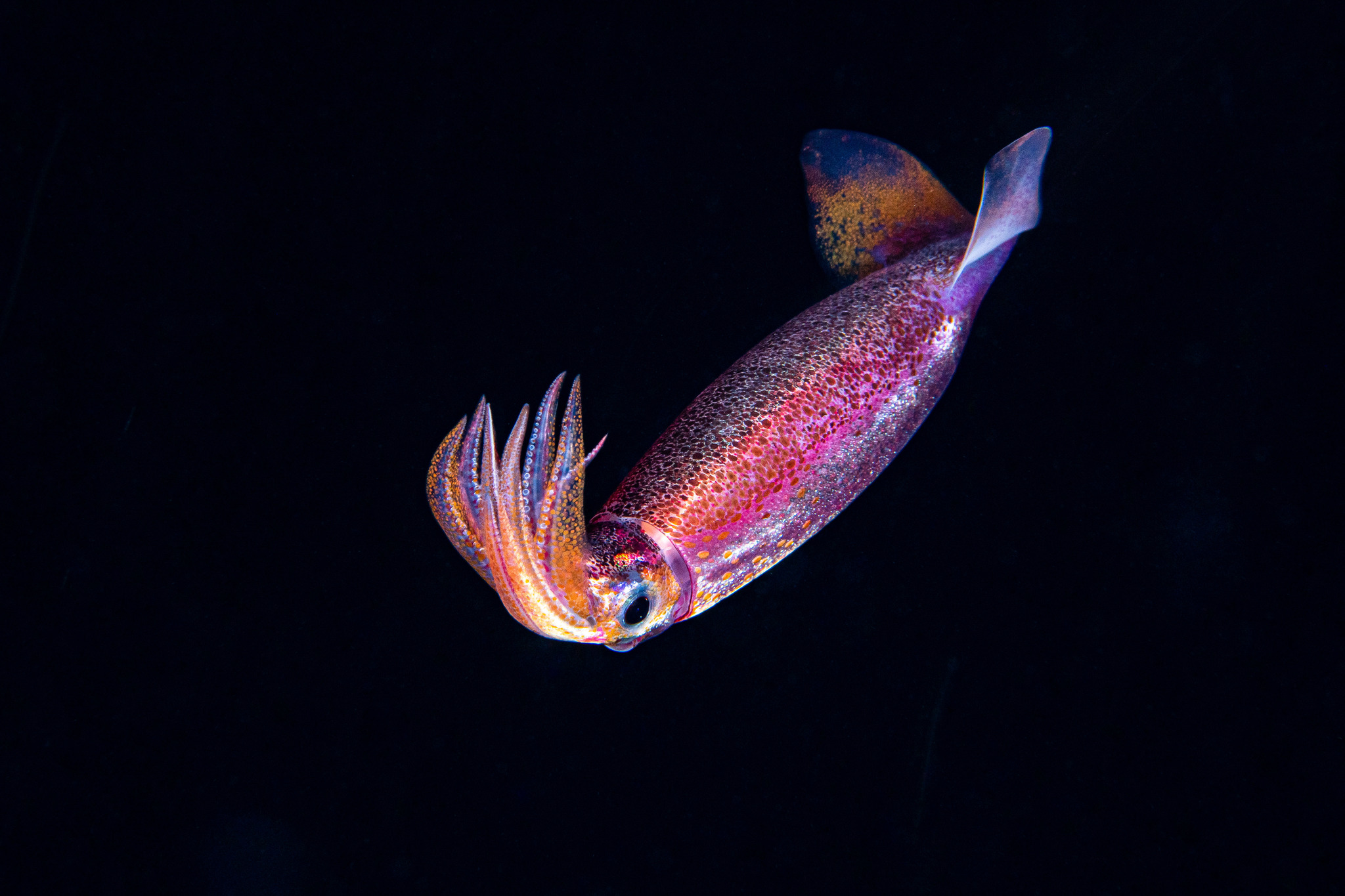
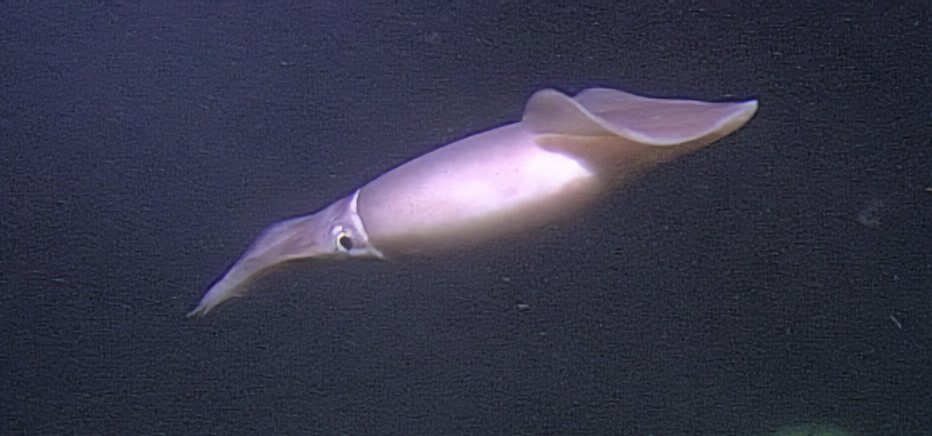
“Now we have the full picture,” Jesús Urios Culiañez, an ocean policy expert at EJF, told Mongabay. The NGO’s latest report builds on its previous analyses of the Argentine shortfin squid (Illex argentinus) fishery in the Southwest Atlantic Ocean and the jumbo flying squid (Dosidicus gigas) fishery in the Southeast Pacific Ocean, while also providing new evidence on the purpleback flying squid (Sthenoteuthis oualaniensis) fishery in the Northwest Indian Ocean.
According to EJF, these three fisheries together supply approximately 60% of the global squid catch. The group says they’re also characterized by similar patterns of illegal, unreported, and unregulated (IUU) fishing, shark finning, and captures of vulnerable megafauna such as dolphins, turtles, and whale sharks, as well as grave worker abuses, including forced labor and deaths at sea.
“For me what is more heartbreaking is the deaths on board,” Urios Culiañez said. Across the three fisheries during the 2020-2025 study period, the report documents deaths of 25 workers aboard 20 different Chinese squid-fishing vessels. These deaths are attributable in some cases to accidents, but more often to malnutrition (including at least nine cases of beriberi, a disease linked to vitamin deficiency), to inadequately treated medical conditions such as appendicitis, and even to suicides and one homicide, according to Urios Culiañez.
“Some of these bodies were just thrown to the sea,” he said. “This is very serious, and these deaths could be avoided.”
Irregularities and abuses against workers in the Chinese distant-water fishing fleet have also been documented since 2020 by U.S.-based nonprofit the Outlaw Ocean journalism project. Its founder, veteran journalist Ian Urbina, presented the findings to the U.S. Congressional-Executive Commission on China (CECC) in 2023 and to the European Parliament in June 2026.
“The ships that primarily produce the calamari are distinctly brutal,” Urbina told Mongabay in an interview. “They stay at sea much longer, and so sometimes these crews … the deckhands are on board for two years, never stepping on shore, and that pushes the limits of what can be ethical.”
The fisheries bureau of the Chinese Ministry of Agriculture and Rural Affairs (MARA) did not respond to Mongabay’s requests for comment. One of the few public responses to EJF’s or Outlaw Ocean’s investigations came during a press conference in February 2025, when a Chinese Foreign Ministry spokesperson, Lin Jian, said China carries out offshore fishing in accordance with laws and regulations, NBC News reported.
In June 2026, Mao Ning, another Foreign Ministry spokesperson, commented on U.S. tariffs on Chinese imports, telling the press, according to a the ministry website, that “There is no such thing as ‘forced labor’ in China, and we oppose using it as a pretext for political manipulation.”

The growth of the Chinese fleet
China produces the most squid of any nation. According to the United Nations’ Food and Agriculture Organization, in 2023 its catches amounted to 1.1 million metric tons, about a third of the global catch.
In international waters in the South Pacific, the number of ships known as jiggers, which target jumbo flying squid, increased from 302 vessels in 2016 to 528 in 2023, 522 of which were Chinese-flagged, according to data from the South Pacific Regional Fisheries Management Organisation, which manages the fishery. In the Southwest Atlantic, EJF estimated 298 vessels were present in 2024, 143 of them (48%) Chinese-flagged.
In the Northwestern Indian Ocean, according to the latest EJF report, the squid-targeting fleet “has grown explosively over the past decade despite being almost entirely undocumented in official catch data.” The report states that purpleback squid fishing in this area began with 30 vessels in 2015 and reached 279 vessels in 2019; 361 vessels were repeatedly operating there between 2020 and 2025, most of them Chinese-flagged.
This fishery is where the report found the most prevalent abuses. EJF interviewed crew members from 82 vessels operating there; crew from 62% of them reported shark finning and crew from 66% of them reported catching vulnerable megafauna, including dolphins, turtles, and whale sharks. Meanwhile, 93.5% of the 153 interviewed fishers reported experiencing or witnessing at least seven of the 12 indicators of forced labor, including passport retention (107 fishers), withheld wages (128 fishers), and abusive working and living conditions (133 fishers).


East-West exports
Although the pattern of abuse on Chinese squid fleets began coming into focus in 2020, exports of frozen squid and cuttlefish from China to the United States have increased steadily, rising from 19,400 metric tons worth $59 million in 2020, to 32,200 metric tons worth $196 million in 2025, according to information from China’s customs data portal. This upward trend continued despite the Trump administration’s imposition of a 30% tariff on all seafood imports labeled “origin of China” in June 2025. ITC Trademap data confirm this trend. While U.S. trade data show an opposite trend, it’s not comparable to the Chinese and ITC Trademap data because it only includes products labeled with China as the country of origin, which omits, for example, squid caught by other fleets but processed in Chinese factories.
According to Urbina, since the investigations started coming out, “there’s been a lot of supply chain accountability.” Many companies, particularly in the U.S. and Europe, have begun conducting stricter checks on their suppliers, no longer relying solely on certifications, he said. However, he noted that the problem is still far from being solved: “There’s always an incentive to find efficiencies, price savings, cheaper labor, cheaper ways of doing things.”
A similar trend occurred in Europe. According to the Chinese customs data, exports of frozen squid and cuttlefish from China to Spain, Europe’s biggest squid importer, more than doubled from 16,200 metric tons worth $64 million in 2020, to 37,100 metric tons worth $165 million in 2025. ITC Trademap data and European import data confirm this trend.

Interconnected production streams
The specter of forced labor does not entirely spare Europe- and U.S.-based companies, which often enter into joint ventures with Chinese firms for the cleaning and processing of squid caught by their own fleets. “There may be collaboration agreements between Spanish and Chinese companies,” Ulloa said.
Squid-processing plants in China have also been the subject of Outlaw Ocean investigations into workers’ rights abuses published since 2023. “When you look at how that work is done, in China, what we found is a lot of state-sponsored forced labor,” Urbina said. The investigations alleged two forced-labor programs involving Uyghur minority workers and North Korean workers in fish-processing factories in China.
According to Urbina, some of these plants process squid “not just coming off Chinese ships but also coming off Spanish, Italian and French ships.” This European-caught squid is shipped to China frozen, then thawed, processed, refrozen, and exported back to Europe. The same pattern can also occur with squid caught in the United States.
The Chinese government did not respond to our requests for comment. In 2023, however, the state-run Xinhua news agency published an editorial referring to the Outlaw Ocean investigation, calling allegations of human rights abuses against Uyghur workers a “maliciously fabricated narrative [that] has served as a reckless political tool to contain China.”
In 2023, the industry organization China Aquatic Products Processing and Marketing Alliance issued a statement in response to the Outlaw Ocean’s processing-plant investigations. It was titled “‘Forced labor’ is a fabricated story” and said the allegations have no “factual basis.” The group said it had “conducted prompt investigations into the Chinese companies mentioned, finding no evidence of forced labor.”
One of the companies accused by the Outlaw Ocean project of using forced labor in its processing facilities, Dalian Rich Enterprise Group, exports seafood products, including squid, to more than 60 countries. The company provides Western traders with certifications from the Marine Stewardship Council (MSC) and the Sedex Group that claim to exclude the presence of illegal fishing and forced labor. Mongabay reviewed these certifications.
Susannah Henty, a spokesperson from the MSC, did not comment on the specific case, but in a written statement said that “every company that sells MSC certified seafood is also independently audited” by third-party organizations, which “evaluate whether our requirements are met.” Olivia Thomson, spokesperson for the Sedex Group, did not answer Mongabay’s questions about their auditing process. The Dalian Rich Enterprise Group also did not answer Mongabay’s requests for comment.

Regulatory gaps
Both the EU and the U.S. have regulations or regulatory projects aimed at protecting consumers from imported seafood linked to IUU fishing or labor abuses.
A regulation targeting IUU fishing has been in force in the EU since 2008, allowing the European Commission to issue yellow or red cards to countries deemed at risk, thereby restricting or banning seafood imports. Currently, five countries have red cards (Cambodia, Cameroon, Comoros, St. Vincent and Grenadines, and Trinidad and Tobago) and eight have yellow cards (Ecuador, Ghana, Liberia, Panama, Senegal, Sierra Leone, St. Kitts and Nevis, and Vietnam). China has never been issued either one. In an email to Mongabay, a European Commission spokesperson, who declined to be named, citing commission policy, said this regulation does not address labor standards; they also could not disclose whether the commission had ever opened any investigations into the Chinese fishing fleet.
According to Ulloa, China receives lighter scrutiny due to commercial considerations. “The [European] Commission is very rigorous in enforcing the regulation, but less so with China,” he said. “With China, there is laxity in the EU’s enforcement of the regulation, for strategic reasons.”
The European Commission spokesperson denied this. “The carding of non-EU countries is a measure of last resort in cases of insufficient cooperation by them in the fight against IUU fishing. The IUU Regulation does not provide for any relaxation of European regulations or preferential treatment on combating IUU fishing,” they said, adding that the EU meets with China in a dedicated working group on combating IUU fishing.
An EU regulation banning products made with forced labor will take force in December 2027. In another email, a different European Commission spokesperson said this regulation is not specific to the fishing sector and could lead to measures against individual companies but not countries, following investigations by the commission.
In the U.S., seafood traceability has been “getting more attention than ever before” from agencies such as U.S. Customs and Border Protection, the U.S. Food and Drug Administration, and the National Marine Fisheries Service, according to Peter Quinter, who leads the U.S. customs and international trade practice at Miami-based law firm Gunster. In some cases, these investigations rely on DNA analysis of imported products, and the agencies “have the authority, under both US and international law, to conduct investigations into alleged forced labor of any crew involved in the catching of that squid or processing in another country,” Quinter told Mongabay.

In July 2024, the U.S. Department of Homeland Security (DHS) announced it had added seafood to the list of high-priority sectors under the Uyghur Forced Labor Prevention Act, a law in force since 2021 and intended to block imports of goods produced with forced labor in China.
On May 28, 2025, in what appears to be the most recent U.S. government action blocking Chinese squid imports linked to a specific entity, DHS’s Customs and Border Protection agency, acting under the Tariff Act of 1930, directed officers at all U.S. ports to detain “seafood, including but not limited to squid” harvested by the Chinese-flagged squid jigger Zhen Fa 7, which operates in the Southwest Atlantic, “based on reasonable suspicion that the vessel uses forced labor to harvest such seafood.”
However, as with the EU, the U.S. has opportunities to close gaps through which squid of dubious provenance may be entering the country, advocates say. In January 2025, the U.S. Congress began considering the Stop Illegal Fishing Act, a bill that remains under review and seeks to strengthen enforcement against illegal fishing while improving seafood supply chain transparency.
Moreover, the country’s Seafood Import Monitoring Program (SIMP), widely considered to be at the forefront of seafood import risk management globally, currently excludes squid. In 2022, the government proposed expanding the program to hundreds of additional species, including squid and cuttlefish. But it reversed course in 2023 and withdrew its proposal.
“SIMP covers about half of all seafood imports into the United States,” Rachel Hager, head of public affairs at the National Marine Fisheries Service, also known as NOAA Fisheries, which runs SIMP, told Mongabay in an email. “NOAA Fisheries is implementing its SIMP action plan to improve the program’s effectiveness in targeting high-risk shipments.” She did not respond directly to a question from Mongabay about the exclusion of squid from the regulation and the possibility of adding it in the future.

Consumer awareness
A peculiar aspect of Chinese squid exports to Western markets is their invisibility to consumers, who can easily buy or consume them without realizing it. This stems from certain loopholes in labeling regulations in both the U.S. and Europe.
While both systems require origin labeling, this requirement does not always apply to common squid products. For instance, there are no origin indications on restaurant menus, nor on packaged products containing multiple species. Furthermore, many frozen squid products processed in China without a “substantial transformation” could bear a different country of origin on its label.
The bocadillo de calamares, or fried calamari sandwich, is one of Madrid’s best-known dishes, but in three bars Mongabay visited for this investigation, the origin of the calamari was not indicated on the menu, nor were the staff able to provide any information.
In Europe, additional information about species, catch area, and fishing gear is required for fresh and frozen seafood, but not for seafood served in restaurants or used as an ingredient in pre-prepared packaged foods.
For a study published in March in the journal Food Control, scientists conducted DNA analyses of 50 frozen and prepackaged squid products sold in 13 grocery stores in Los Angeles, California.
“We picked up 10 different species of squid,” Damien Willette, an ecologist at Loyola Marymount University in the U.S., who led the study, told Mongabay in an interview. “And all of them, by law, can simply be called ‘squid.’”

A similar DNA study published in June of packaged squid rings in Spain found labeling often omitted geographic origin and clear species names, and packages often contained multiple species.
“The use of ‘umbrella terms’ such as ‘squid’ obscures species diversity and can hinder both fisheries management and informed consumer choice,” Carmen Sotelo, a researcher at the Spanish government’s Institute of Marine Research in Vigo and lead author of the study, told Mongabay in an email. “Providing precise species information would improve transparency and allow consumers to make more sustainable decisions.”
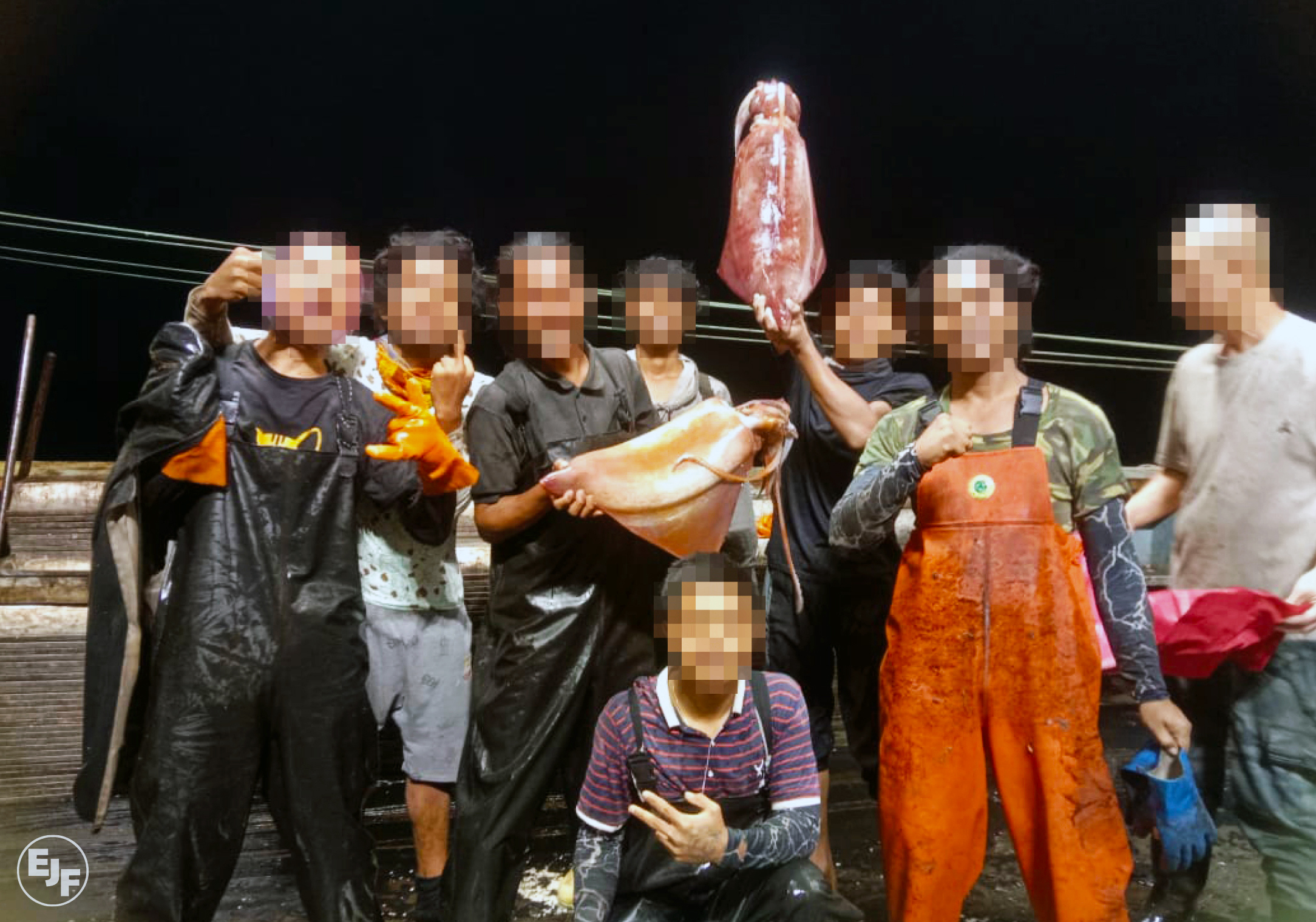
Banner image: Fishers pose with squid on a Chinese squid-fishing vessel in the Northwest Indian Ocean. Images courtesy of Environmental Justice Foundation.
This investigation was produced with the support of Journalismfund Europe. Guillermo Cid contributed to the research for this article.

South Korea strengthens migrant fisher protections. Advocates are not impressed
Citations:
Willette, D. A., & Joaquin, M. L. (2026). DNA barcoding and metabarcoding reveal labeling accuracy and species substitution in squid and surimi from Los Angeles markets. Food Control, 181, 111733. doi:10.1016/j.foodcont.2025.111733
Sotelo, C. G., Sanchez, A., Correa, B., Perez Testa, M., & Perez-Martín, R. I. (2026). Are squid rings made from squids? Amplicon-sequencing HTPS method to identify cephalopod species in processed squid products. Food Control, 184, 112028. doi:10.1016/j.foodcont.2026.112028
FEEDBACK: Use this form to send a message to the editor of this post. If you want to post a public comment, you can do that at the bottom of the page.
Cite this article
Francesco De Augustinis (2026). Chinese squid tied to labor abuses finds an easy route into Western markets. Mongabay Conservation news. DOI: https://doi.org/10.66709/news-332241

