


- A family of Siraya activists in Taiwan is a major driving force behind the revival of their ancestral language — more than a hundred years after it was last spoken.
- The work to revitalize the Siraya language, which began more than 20 years ago, helped secure the community’s legal recognition as Taiwan’s 17th Indigenous group.
- The story of the Siraya language’s revitalization began as a love story between Siraya activist Uma Talavan and Filipino musician Edgar Macapili.
- While she could not understand a Dutch missionary’s Siraya translation of the Gospel of Matthew, her husband recognized similarities between the Siraya language and his mother tongue, Bisaya, both of which belong to the Austronesian language family.
TAINAN, Taiwan — Since she was old enough to understand it, Uma Talavan has known she belongs to the Indigenous Siraya people.
She knew almost nothing of her ethnicity, however, the identity of which was dissolved by centuries of forced assimilation, save for a handful of words her parents used to speak. In search of “who she is,” as she puts it, the Siraya activist decided to bring her language back to life nearly 200 years after it died out.
“Language is an extremely important part of a people’s soul,” she says. “It lets us know the past and connect it to the present.”
Her work to revitalize the Siraya language, which began more than 20 years ago, helped secure the community’s legal recognition as Taiwan’s 17th Indigenous group. Uma Talavan, her activist father Wan Cheng-hsiung, also known as Cheng-hiong Talavan, and other members of the community traveled from Tainan to Taipei to attend a ceremony announcing the recognition on July 30.
The Siraya, one of Taiwan’s Austronesian-speaking Indigenous peoples, are the largest of the Pingpu groups, the peoples who have traditionally inhabited the island’s lowland plains and coastal areas. When the Dutch arrived in southern Taiwan in the 17th century, the Siraya were the first people they came into contact with.
The story of the Siraya language’s revival begins as a love story. In 1992, Uma Talavan met her future husband, Edgar Macapili, during a stay in the Philippines. Both musicians, they grew close playing music together at a local church. After settling in Taiwan, Macapili wanted to help his wife reclaim her lost identity.
Uma Talavan and her father got hold of a copy of the Gospel of Matthew translated into Siraya by a Dutch missionary during the Dutch colonial period from 1624 to 1662.
When she showed it to her husband, they had a breakthrough: He recognized similarities between the Siraya language and his mother tongue, Bisaya, an Austronesian language spoken in the central and southern Philippines.
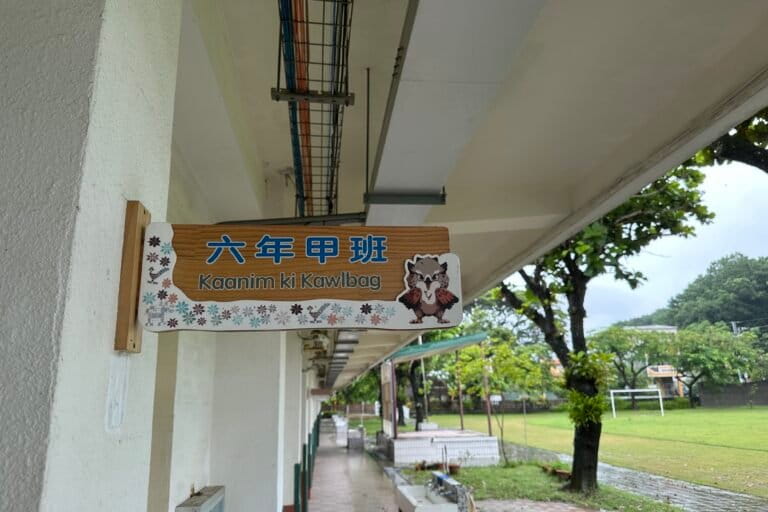
“We felt like we were witnessing a miracle,” Uma Talavan, 62, tells Mongabay in a classroom at Koupi Experimental Elementary School, the first school where learning Siraya is mandatory, in Tainan, a city in southern Taiwan.
Her 63-year-old husband nods in agreement.
“We deciphered every word of the religious text one by one and translated them into English, then we published the first Siraya dictionary in 2008,” Macapili says.
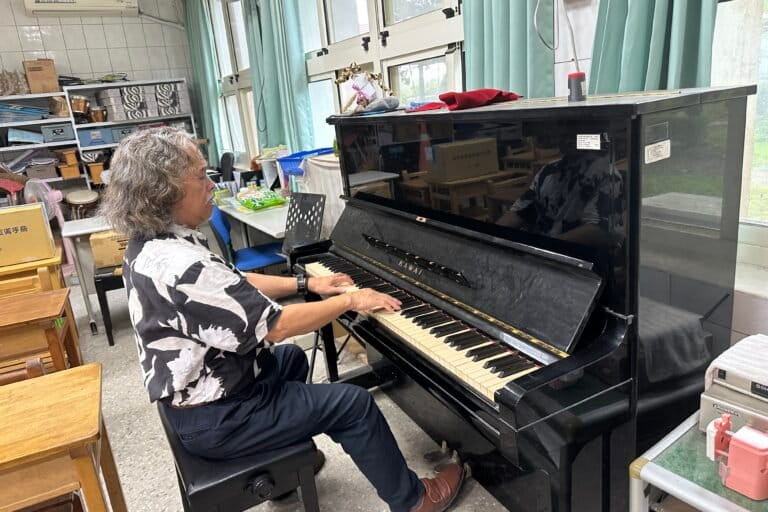
“As a composer, I took the Siraya texts and set them to music. Children learned Siraya that way, by singing. We wrote songs to teach counting, for instance, and we scaled up that teaching method.”
According to Uma Talavan, 45 teachers, all trained by her and her husband, currently teach Siraya at 26 schools across Taiwan. Activists hope the legal recognition will help them access more state support to develop the language.
For the pioneering family, the recognition of the Siraya and the revival of its language is a story of generational transmission.
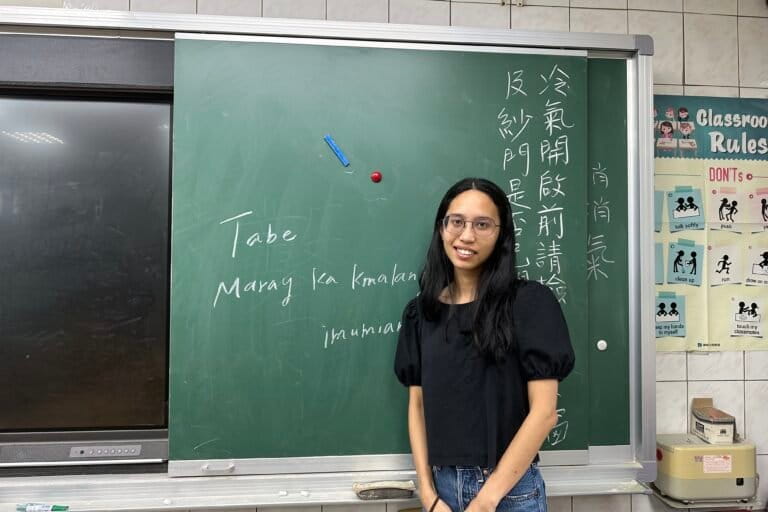
“It’s a very young language, and for now it’s mostly spoken by children; it isn’t yet used in daily life,” says Lici Talavan, the couple’s younger daughter.
The 28-year-old has become a Siraya-language teacher, a job she juggles alongside her anthropology studies at Tsing Hua University in Taipei.
Lici Talavan says that her elder sister, Euphony Talavan, has spoken to her children in Siraya since they were babies. “They speak it better than I do now,” the proud aunt adds, noting that “they are the first generation to speak revitalized Siraya” from birth.
Beyond academia
The study of Siraya used to be confined only to academic research. “Researchers weren’t interested in revitalizing the language,” Lici Talavan says. “That was a path our family chose to take, becoming Siraya people who speak Siraya.”
Karl Alexander Sander Adelaar, a linguist specializing in Austronesian languages, concurs. “There was criticism from Taiwanese academia,” says Adelaar, who is an honorary principal fellow at the University of Melbourne’s Asia Institute. “Researchers saw the revitalization of Siraya as a big joke.”
He was involved in reviving the language after he received an email from Macapili in the 2000s, asking for his help. Although convinced the Indigenous language was doomed to be forgotten, he says, the Dutch linguist traveled to Taiwan.
“I knew Siraya people had once lived around Tainan, but I thought they’d all become Chinese, and that anyone who remembered having Siraya ancestors probably wouldn’t want to talk about it,” Adelaar tells Mongabay.
Under the Qing dynasty, Japanese rule and the Kuomintang regime, Pingpu Indigenous communities, including the Siraya, were coerced and pushed to assimilate far more forcefully than their highland counterparts. Because of this, the Pingpu people were considered not “Indigenous” enough to qualify for official status.
The use of the Siraya language declined, with linguists considering it “extinct”, meaning no native speakers, by the 19th century. Siraya activists, however, prefer to call it “dormant”.
Adelaar says he remembers how emotional the Siraya people were when they witnessed the fruit of their language revival.
“When Edgar Macapili invited me to present a 100-page Siraya grammar book to the community, people started crying,” he says. “These were people who’d had their past taken from them, and suddenly, there was a book. Suddenly, they had a history, and it had been given back its dignity. That kind of weeping is something I never expected to witness.”
Because a language’s phonology can’t be reconstructed from written texts alone, the revitalized Siraya of the present is not the same as the Siraya of centuries past. However, the academic says he believes this isn’t important.
“The language can’t be resurrected 100%, because you don’t even know how it was spoken hundreds of years ago,” Adelaar says. “What matters most is the emotion, the sense of belonging, and the soul of a community rediscovered.”
Teaching language to parents
In October 2022 — 12 years after Uma Talavan filed an administrative lawsuit — Taiwan’s Constitutional Court issued a landmark ruling, paving the way for the Siraya and other Pingpu groups to be officially recognized as Indigenous.
Among the arguments presented to the top court was the Siraya’s linguistic revitalization work, which activists believed helped convince the justices to rule in their favor.
In October 2025, lawmakers finally passed the Pingpu Indigenous Peoples Status Act, and nine months later, the cabinet conferred official status on the Siraya.

Since Aug. 13, Siraya people have been able to apply to register as Indigenous, a process undertaken by Uma Talavan and her family. There is no official data on how many people of Siraya descent are in Taiwan. But the Tainan city government, long supportive of their legal fight, recorded more than 11,800 people as Siraya in 2016.
To register as Indigenous, Silia Pan, a Siraya-language teacher at the 106-year-old Koupi School, had to trace her lineage back to Japanese colonial rule between 1895 and 1945.
In household registries from that era, the Siraya were classified as shú (cooked), a category adopted from the Qing dynasty that was applied primarily to lowland Indigenous populations considered “assimilated”. If the residence recorded at the time matches one of the sites now recognized as former Siraya settlements, that combination of factors is enough to file a claim for recognition as Indigenous.
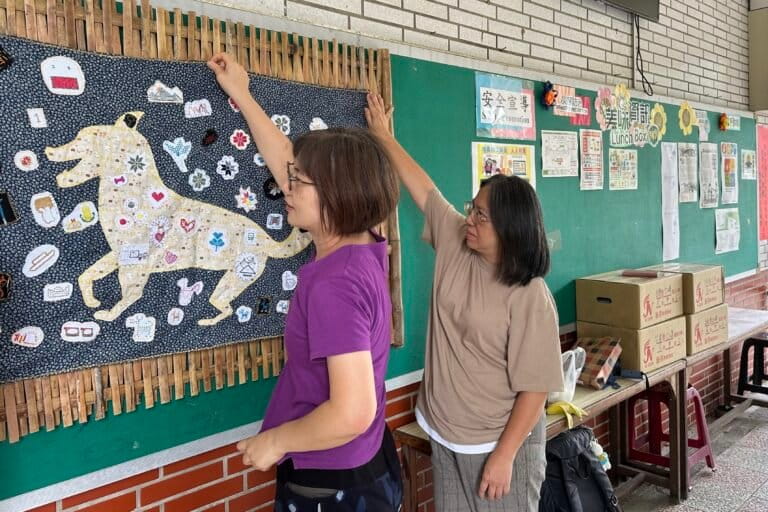
“I’m proud to have fought to be recognized and taken into account by the state,” says 54-year-old Silia Pan, who recently made an application to register as Siraya.
After learning Siraya from Uma Talavan and Macapili, she says she taught it to her son and her father.
“It’s something quite extraordinary that this is happening in our time: Children teaching their language to their parents,” she says. “We’re learning the language of our ancestors together, and it brings us closer.”
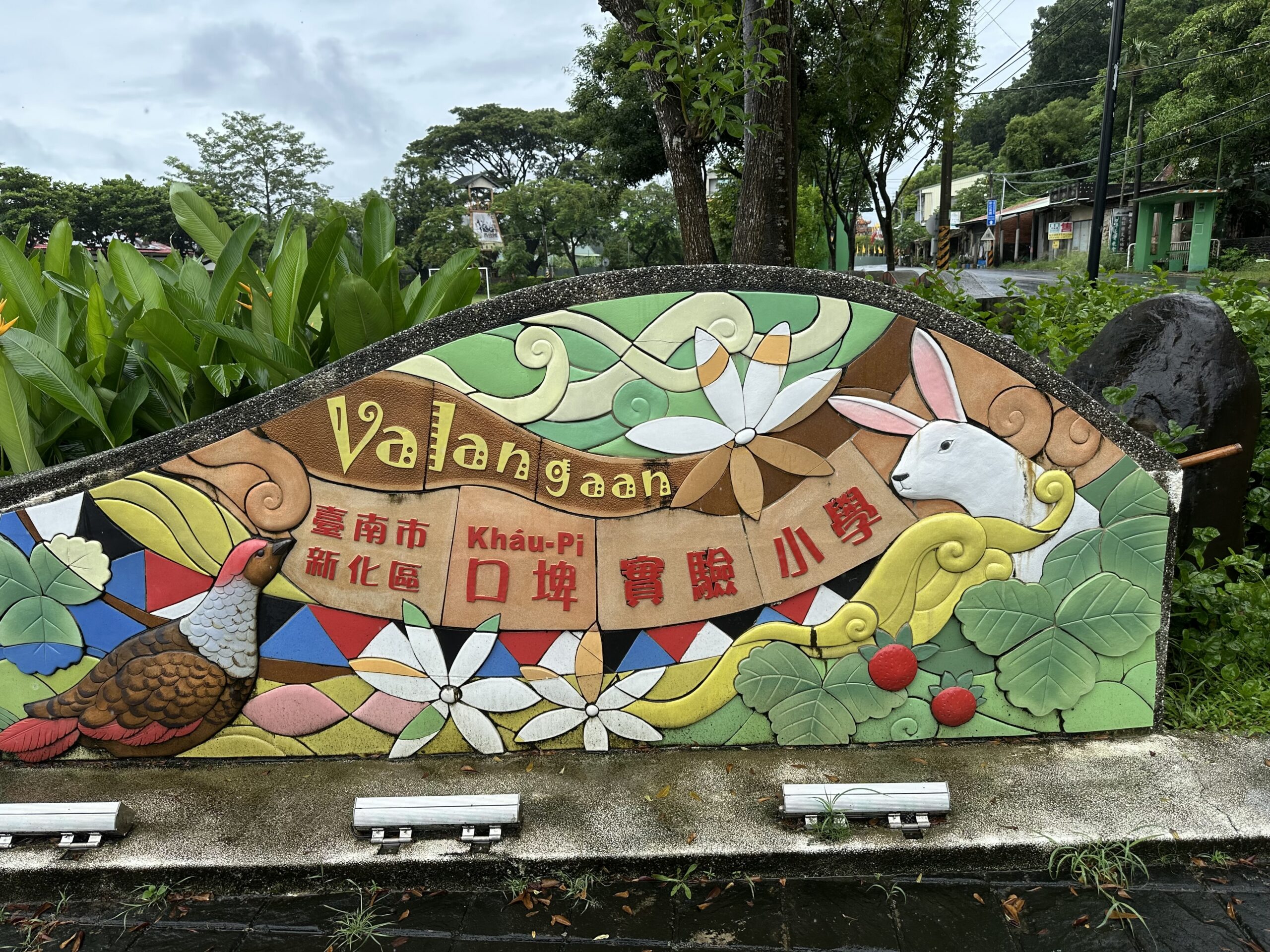
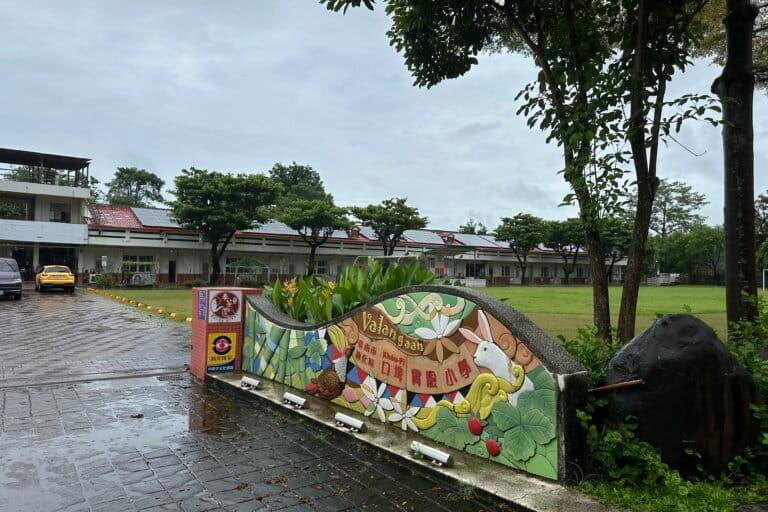
Banner image: A wall at the entrance of Koupi Experimental Elementary School, the first school where learning Siraya is mandatory, displays the school’s name in Chinese and Siraya. Image by Aylin Ho for Mongabay.
Siraya gain recognition as Taiwan’s 17th official Indigenous group
Cite this article
Aylin Ho (2026). Siraya language, deemed ‘extinct’ over a century ago, finds its voice again in Taiwan. Mongabay Conservation news. DOI: https://doi.org/10.66709/news-327805

