

Close Menu
NCIJ Network NCIJ Network
    What's Hot

    U.S.-Canada Trade Talks Aim to Avert Another Tariff War

    August 20, 2026

    Kyiv’s Dormition Cathedral is Revived After Russian Drone Strike

    August 20, 2026

    Paris St-Germain move game after heat damages Parc des Princes pitch

    August 20, 2026
    Facebook X (Twitter) Instagram
    Trending
    • U.S.-Canada Trade Talks Aim to Avert Another Tariff War
    • Kyiv’s Dormition Cathedral is Revived After Russian Drone Strike
    • Paris St-Germain move game after heat damages Parc des Princes pitch
    • Reform’s new economic adviser has called for end of pensioners’ triple lock | Reform UK
    • Leaders attack ‘demotivating’ plan to make pupils who fail GCSEs retake maths and English | Education
    • The US Treasury is buying long bonds, but not very many
    • Someone targeted security researchers using a fake crypto conference as a lure
    • Hackers poison arrayref Rust crate to push infostealer malware
    • About
      • Our Team
      • Editorial Policy
      • Editorial Independence
      • International Support
    • Trust & Standards
      • AI Usage Policy
      • Conflict of Interest Policy
      • Corrections Policy
      • Ethics Policy
      • Fact-Checking Policy
      • Source Protection
    • Get Involved
      • Guide for Sources
      • Support Independent Journalism
    • Legal
      • Cookie Policy
      • Privacy Policy
      • Terms of Use
    Facebook X (Twitter) Instagram
    NCIJ Network NCIJ Network
    Thursday, August 20
    • Home
    • World
    • Ai
    • Business
    • Politics
    • Health
    • Crypto
    • Science
    • Technology
    • Cybersecurity
    • Defense & Security
    • Economy
    • Energy
    • Europe
    • More
      • Fact Check
      • Investigations
      • Opinion & Analysis
      • Environment
    NCIJ Network NCIJ Network
    Home»Science

    Scientists say the human family tree may need a major rewrite

    NCIJ NETWNCIJ NETWORKBy NCIJ NETWNCIJ NETWORKAugust 20, 2026 Science No Comments3 Mins Read
    Share
    Facebook Twitter LinkedIn Pinterest Email

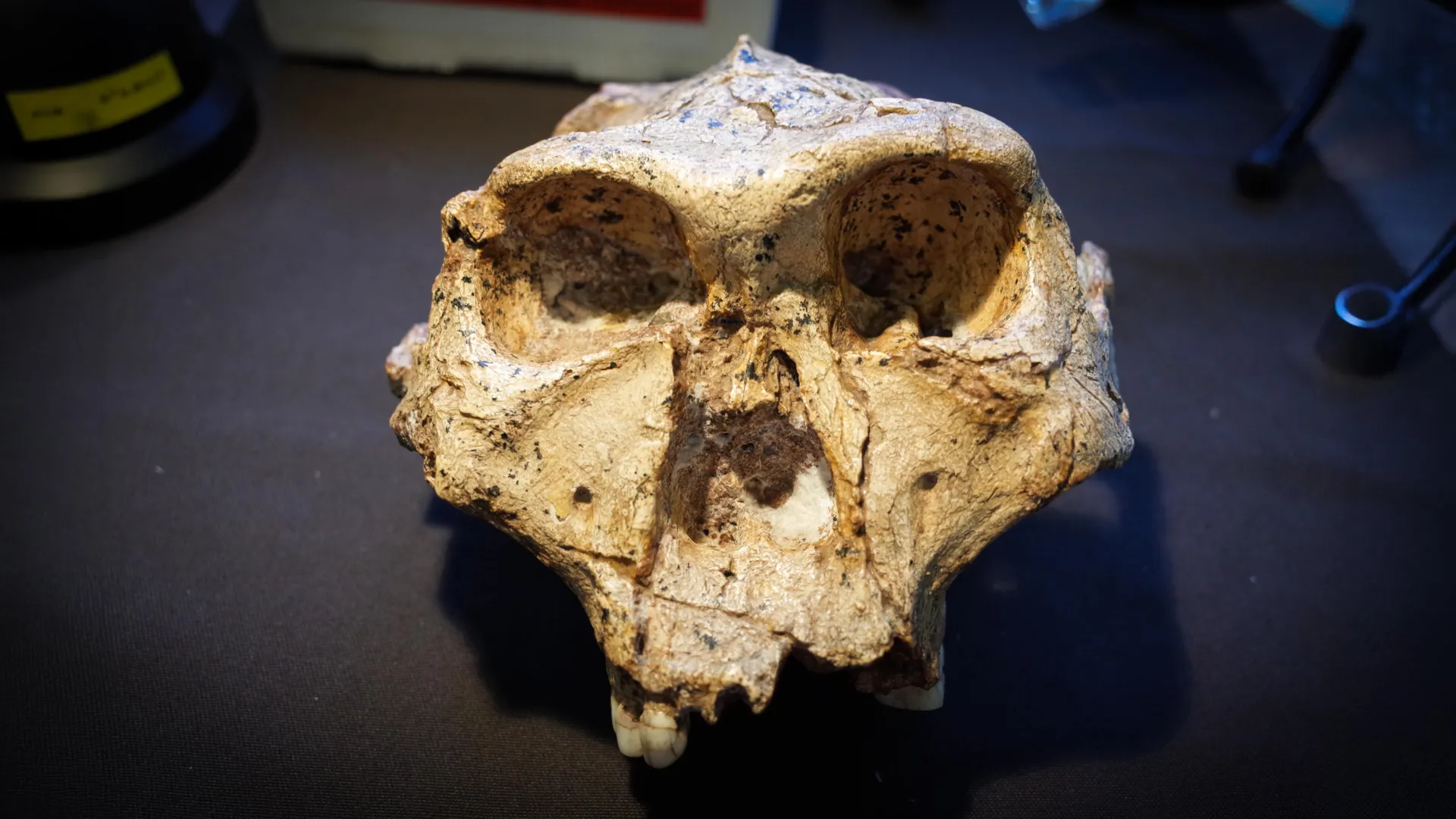
    New research from Monash University suggests that recent discoveries about human evolution are challenging the traditional system scientists use to name and classify our ancestors.

    The research, published in the American Journal of Biological Anthropology, calls for a major reconsideration of human taxonomy. It proposes placing all human species and closely related fossil relatives from the past 4-5 million years within the genus Homo.

    Human evolution is often depicted as a relatively simple sequence of distinct species, beginning with ape-like ancestors, continuing through Australopithecus and early members of Homo, and eventually leading to Homo Sapiens living today.

    However, the fossil record reveals a much more complicated evolutionary history. As new fossils are discovered, many of the features once used to clearly separate humans from their close relatives have become increasingly difficult to define.

    New Discoveries Blur Human Evolutionary Boundaries

    Lead researcher Dr. Ian Towle, a Research Fellow at the Monash Biomedicine Discovery Institute, said recent findings are making the existing classification system less useful and less accurate. That includes the way scientists categorize species within Homo as well as Australopithecus and Paranthropus, all of which lived during the past 5 million years.

    “Recent fossil discoveries and advances in evolutionary and genetic analysis make this an ideal time to reconsider whether our traditional taxonomy still accurately reflects human evolution,” Dr. Towle said.

    “These groups do not necessarily represent distinct evolutionary branches, or ‘clades’, and differences in behavior and ecology once used to distinguish them have also become increasingly difficult to maintain.

    “I propose expanding Homo to include these other groups to provide a more accurate and stable way to represent the complex evolutionary relationships revealed by the growing fossil record.”

    How Scientists Classify Evolutionary Relationships

    Over the past 50 years, advances in the understanding of evolution have significantly changed the way scientists organize and classify life.

    Modern taxonomy, the science of naming and classifying organisms, increasingly attempts to reflect actual evolutionary relationships by grouping species according to shared ancestry.

    Human evolution, however, has been slower to adopt this approach.

    In recent decades, scientists have increasingly sought to classify organisms according to genuine evolutionary groups, or clades, that contain a common ancestor and all of its descendants.

    Traditionally, members of the Homo genus have been identified using traits such as large brains, advanced tool use, and certain anatomical and behavioral characteristics.

    Those distinctions have become less clear. Scientists now know that some members of Homo had very small brains, while evidence suggests that Paranthropus and Australopithecus were also capable of complex behaviors.

    A Proposal to Expand the Genus Homo

    Dr. Towle argues that moving Australopithecus and Paranthropus species into Homo could create a more consistent picture of human evolutionary history. It could also reduce the need to repeatedly redefine groups as new fossils are uncovered and scientists gain a better understanding of our ancestors.

    “The more we learn about our ancestors and close fossil relatives, the more we realize how complex and non-linear our family tree is,” Dr. Towle said.

    “Expanding the Homo genus to also include species of Australopithecus and Paranthropus will allow us to account for differences without regularly reclassifying particular groups.”

    Family human major Rewrite Scientists tree
    NCIJ NETWNCIJ NETWORK
    • Website

    Keep Reading

    An Uncommon Drifter in the Denmark Strait

    Schizophrenia’s lost brain connections follow a surprising pattern

    Iranian woman was involved in 1979 hostage crisis. Her son and his family were detained by ICE for it

    NASA Data Feeds River Forecasts as Snow Drought Effects Linger

    NASA Selects University Teams to Help Advance Aviation Research

    Italy’s migrant detention hubs in Albania undermine human rights, says Amnesty – POLITICO

    Add A Comment
    Leave A Reply Cancel Reply

    Editors Picks

    U.S.-Canada Trade Talks Aim to Avert Another Tariff War

    August 20, 2026

    Kyiv’s Dormition Cathedral is Revived After Russian Drone Strike

    August 20, 2026

    Paris St-Germain move game after heat damages Parc des Princes pitch

    August 20, 2026

    Reform’s new economic adviser has called for end of pensioners’ triple lock | Reform UK

    August 20, 2026
    Latest Posts

    New Dysphoria DDoS botnet spreads to 200k devices worldwide

    July 28, 2026

    OpenAI’s biggest threat may just be open AI

    July 28, 2026

    6 Takeaways From Michigan’s Senate Debate Between Abdul El-Sayed and Haley Stevens

    July 28, 2026

    Subscribe to News

    Get the latest sports news from NewsSite about world, sports and politics.

    NCIJ Network is an independent digital news platform delivering trusted investigative journalism, European and global news, in-depth analysis, and fact-based reporting with accuracy, transparency, and integrity.

    Facebook X (Twitter) Instagram Pinterest YouTube

    U.S.-Canada Trade Talks Aim to Avert Another Tariff War

    August 20, 2026

    Kyiv’s Dormition Cathedral is Revived After Russian Drone Strike

    August 20, 2026

    Paris St-Germain move game after heat damages Parc des Princes pitch

    August 20, 2026

    Subscribe to Updates

    Get the latest creative news from FooBar about art, design and business.

    Type above and press Enter to search. Press Esc to cancel.