


When is a licence not a licence? When it’s a new licence that is an old licence. After months of faffing around – there were the small matters of a party conference and a byelection to negotiate first – the government finally gave the go-ahead to drilling in the Jackdaw gasfield in the North Sea. What swung it wasn’t so much the irresistible excitement of creating 27 new jobs and securing 2% of the UK’s gas supply for the next 10 years, it was the politics. If other countries were going to carry on drilling then we might as well do so, too.
There would still be the same amount of greenhouse gases created and we wouldn’t have to rely on anyone else for our gas supply. Though we would for the other 98%. Small steps and all that. At a time of global insecurity and rising energy costs, it was time to drill, baby, drill. So the inconvenience of a Labour manifesto that promised no new North Sea licences could be rethought. It was now merely re-allowing a licence that had already been granted and then deemed unlawful by the courts. AKA dancing on the head of the pin.
Donald Trump greeted the decision with wild enthusiasm. Though he appeared to be under the impression Jackdaw would be drilling for oil and would turn the UK into a land of plenty overnight. No one in the UK could quite bring themselves to enlighten him. Fair to say, that not everyone in the UK was quite so thrilled. Not least Ed Miliband, the former energy secretary, and Miatta Fahnbulleh, the current one.
Miatta had sought permission to be as far away as possible from Westminster for prime minister’s questions and the subsequent ministerial statement on Jackdaw. So she had taken the trouble to go all the way to Aberdeen to make a television statement that she could have made in her own department. And she is the one worried about her carbon footprint.
Only it turns out that any amount of emissions is a price worth paying for a minister anxious not to have the hypocrisy of her former opposition to Jackdaw replayed to her by many of her own backbench MPs. Life comes at you fast when you’re a politician climbing the greasy ministerial pole. You find yourself in some awkward places, the most awkward being the House of Commons. Hence the – ahem – unfortunate diary clash.
The speaker was less than impressed. Lindsay Hoyle sounded as if he had swallowed a fistful of amphetamines and steroids and was mid-roid rage. He only just stopped short of calling the Labour frontbench a bunch of fucking fucks. Maybe he was just having a bad day.
For decades now, governments of all colours have been going out of their way to make sure that junior ministers take the flak to save their bosses the embarrassment of an hour’s humiliation at the dispatch box. The parliamentary equivalent of droit de seigneur. Lindsay demanded assurances this would never happen again, and the junior energy minister Michael Shanks duly nodded sheepishly. Not that he cared. He mainlines oil for breakfast. Inside, he was just counting down the seconds till the speaker had calmed down a bit. And then carried on as normal. Of course it will happen again. Maybe even next week.
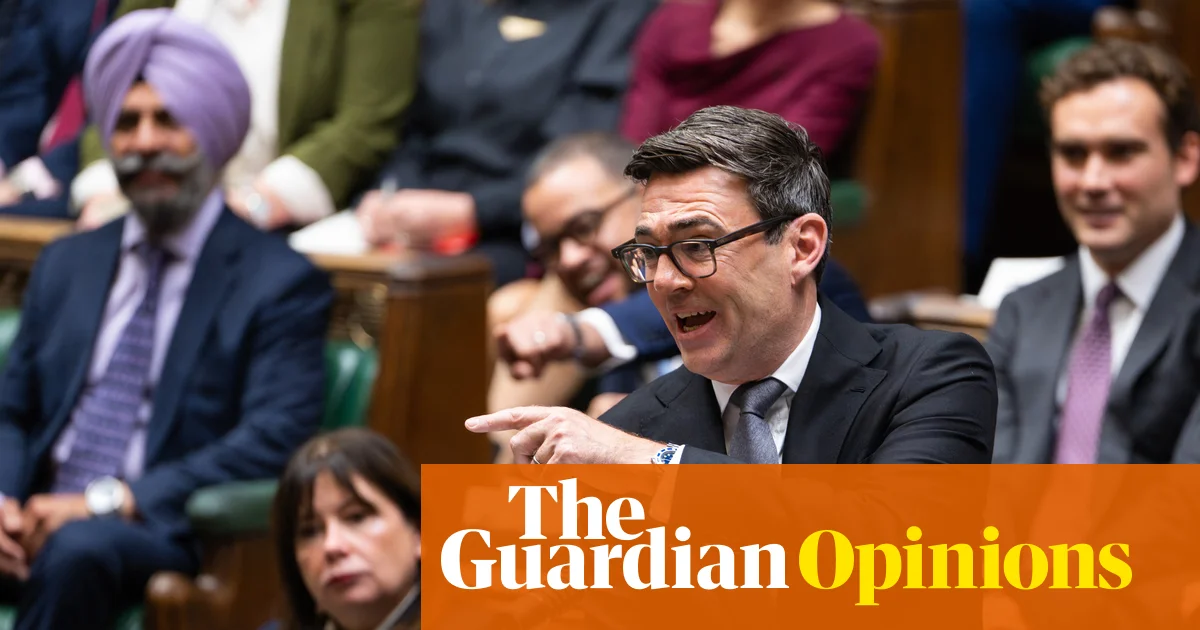
PMQs itself also took on a familiar look, with Kemi Badenoch unable to make any inroads into Andy Burnham. You could even sense her frustration. There were times when she could get under Keir Starmer’s skin, but now both she and the Labour party have seen him off, she is faced with Mr Congeniality.
Against him, Kemi’s attack lines feel half-arsed. Not properly thought through. Everything she tries just bounces off him. He seems almost untouchable. Mostly because he’s a better politician, but also because he has the air of a reasonable grownup. Someone you feel is doing his best and comes across as someone you can trust. Well. As close to honest as you get in Westminster.
By contrast, Kemi feels like a second-rate opportunist. She tried making something of Labour taking years to approve the Jackdaw licence, a charge that rather melted away when Burnham pointed out we could have been drilling ages ago if the Tories had bothered to get the necessary legalities right in the first place. This was about putting pragmatism before ideology, Andy insisted. Fair enough. Though expect him to say precisely the opposite when it comes to the Rosebank oilfield. Then ideology will take precedence over pragmatism. Fahnbulleh had already as good as confirmed that Rosebank was dead in the water.
For the rest of PMQs, it was Kemi who was dead in the water. Seemingly having no other real questions she wanted to ask. It felt like she was sulking. Or underprepared. Her pre-budget attack lines went nowhere. First Andy pointed out that he was the only one with a plan to ditch the triple lock and sort out social care – still more vibes than policy – and ended by making fun of Liz Truss’s forthcoming new book on the mini-budget.
It wasn’t her who had screwed the country, apparently. Liz had been captured by the Blob. But it could have been any number of the current members of the shadow cabinet. Including the shadow chancellor who was part of the Trusster’s team. Incidentally, Liz was due to be interviewed by a robot on Wednesday afternoon at a Lincolnshire fair. But how would we know which was which?
That just left time for Burnham to take one question from a Labour backbencher about the ITV exposé of Reform. Though Nigel Farage had already left the chamber by then, so he couldn’t get all heated and declare that it was all a London plot and that it was perfectly normal for people to be as racist as possible in the comfort of their own homes. It was political correctness gone mad.
As if by telepathy, Zia Yusuf had chosen just that moment to post a video on social media in which he expressed his immense sadness that the media had stooped so low. He would be reporting ITV to the police, he insisted, because they had betrayed the racist code of honour.
How could everyday racists feel comfortable expressing their racism in the workplace if they couldn’t be sure that their colleagues weren’t undercover journalists looking to expose them? The world had gone mad. Who would have guessed that deep down, Zia – the man even the Reform elite have come to hate – was a snowflake at heart.
