


- A proposed expansion of an Elk Valley Resources’ coal mine in southeast British Columbia is moving through the environmental assessment process despite concerns over pollution.
- Decades of coal mining in the valley has led to harmful selenium concentrations and loads downstream, in British Columbia and the U.S. states of Montana and Idaho.
- While EVR is making progress in line with the Elk Valley Water Quality Plan, current actions are inadequate to mitigate the selenium pollution crisis, according to researchers and experts from the Confederated Salish and Kootenai Tribes and BC nonprofit Wildsight.
- Proponents of the mine expansion point to the substantial contribution the mines make to federal, provincial and regional economies.
The Elk Valley in southeast British Columbia is home to Canada’s four largest coal mines. With a proposed mine expansion moving through environmental assessment, people on both sides of the Canada-U.S. border worry the valley’s decades-old pollution problem could get even worse.
Industrial coal mining in the Elk Valley goes back more than 50 years. The valley’s mines, currently owned by Elk Valley Resources (EVR), supply 77% of Canada’s metallurgical coal, a grade of coal used in steel making, according to a 2024 report produced for EVR. The vast majority of this coal was exported to Asia.
EVR’s largest mine, Fording River Operations (FRO), is expected to run out of coal within a decade. The proposed Fording River Extension (FRX) would open 2,031 hectares (5,019 acres) on Castle Mountain, adjacent to the existing mine, and operate for about 35 years. The FRX is currently moving through a coordinated federal-provincial environmental impact assessment. Three proposed new coal mines, not linked to EVR, are also currently in the environmental assessment process.
Proponents maintain the FRX is necessary to sustain economic benefits post FRO-closure, such as gross domestic product contributions, payments to governments and jobs.
Others question the wisdom of expanding mining whilst unabated pollution threatens ecosystems, wildlife and livelihoods across the region.
The Ktunaxa Nation Council, representing Ktunaxa First Nations in Canada, has opposed the FRX moving to environmental assessment, citing concerns over water quality and lack of progress on reclamation at current mines, according to a letter submitted to the BC government. “…contemplating an expansion while compliance has yet to be achieved is not acceptable,” the letter states.
Simon Wiebe, mining lead for Wildsight, a BC-based nonprofit, said the proposed expansion would exacerbate existing environmental problems in the valley.
“We have major concerns about water quality, we have major concerns about land usage and even the feasibility of land reclamation in this area,” Wiebe told Mongabay in a video call.

A transboundary pollution problem
EVR’s mines employ mountaintop removal to access coal seams, creating massive volumes of waste rock, stored in pits. When precipitation falls on waste rock, selenium, a trace mineral, leaches into surface- and ground-water. The mining process also releases nitrates and other contaminants into the watershed.
Mine-affected water drains into the Fording and Elk rivers, which flow into the Kootenay River at the transboundary Koocanusa Reservoir. From there, the Kootenay loops through the U.S. states of Montana and Idaho — where it is sometimes referred to as the Kootenai River — before crossing back into BC.
While selenium is essential to life, the trace mineral becomes highly toxic at even slightly elevated concentrations, linked to deformities and reproductive failure in fish and aquatic organisms, and bioaccumulating up the food chain.
Numerous studies have documented dramatic decreases in water quality downstream of the mines: Selenium concentrations in the Elk River and the Koocanusa Reservoir exceeded Canadian and U.S. water quality guidelines for multiple years. Selenium concentrations were 10 to 100 times higher than in unaffected waterways, with selenium transported up to 575 river kilometers downstream of the mines. Downwind ecosystems are also at risk from coal-derived polycyclic aromatic compounds (PACs). These PACs include carcinogenic polycyclic aromatic hydrocarbons (PAHs), with concentrations in sediments exceeding guidelines set by the Canadian Council of the Ministers of the Environment.
Numerous studies have documented dramatic decreases in water quality downstream of the mines. This includes: selenium concentrations in the Elk River and the Koocanusa Reservoir exceeding Canadian and U.S. water quality guidelines for multiple years; selenium concentrations 1-2 orders of magnitude higher than in unaffected waterways; and selenium transported up to 575 river kilometers downstream of the mines. Downwind ecosystems are also at risk, with coal dust carrying carcinogenic polycyclic aromatic compounds (PACs), even across the continental divide.

Pollution from the BC mines threatens downstream ecosystems — and needs to be cleaned up before anyone contemplates an expansion, Rich Janssen, head of the Confederated Salish and Kootenai Tribes’ natural resources department, told Mongabay in a video call.
“Why would you grant an expansion of the mines when you haven’t even figured out how to control the selenium and nitrate pollution in the current mines?” Janssen said. “[T]he effects on the water … in Canada, then ultimately downstream into the United States, is just not adequate for protection of the resources that we hold dearly.”
The ongoing pollution crisis threatens westslope cutthroat trout (Oncorhynchus clarkii lewisi), bull trout (Salvelinus confluentus), and other fish and aquatic species. It also puts recovery programs for endangered Kootenai River white sturgeon (Acipenser transmontanus) and burbot (Lota lota) at risk, and interferes with the Tribes’ use of cultural resources, Janssen said.

“We have subsistence fisheries that we partake in up there. And I always tell people to be very cautious … if you decide to eat those fish,” Janssen said.
Fly fishing is big business in Montana, with the Kootenai watershed a major destination, Derf Johnson, deputy director at the Montana Environmental Information Center (MEIC), a nonprofit, told Mongabay by video call.
Outfitters are concerned and have sent Johnson images of fish with missing gill plates and other hallmarks of selenium poisoning. The situation is becoming a “slow-rolling disaster” for Montanans and the sport fishing industry, he said.
EVR has invested significantly in water treatment, Chris Stannell, communications manager for EVR told Mongabay by email, and is making “significant progress” in-line with the Elk Valley Water Quality Plan (EVWQP), implemented in 2014. The company website states that treatment facilities can remove 95% to 99% of selenium from treated water.
The catch is they don’t — and can’t — treat all mine-affected water, said Wiebe from Wildsight. He said the treatment plants only capture a portion of surface water, and groundwater contamination is not addressed by current technology.
“They’re never going to get that [treatment] number to 100%,” Wiebe said.

Reclamation isn’t enough, experts say
Wiebe also noted that the FRX would destroy key wildlife habitat in a valley already deeply scarred by industry.
Castle Mountain’s high-altitude grasslands are one of only three remaining winter forage habitats for the area’s bighorn sheep (Ovis canadensis). A highly threatened population of grizzly bears (Ursus arctos horribilis) also frequents the mountain’s avalanche chutes to feed.
Though the FRX proposal includes plans for staggered reclamation, these sensitive habitats can never be brought back, Wiebe said.
“We’re losing enormous amounts of land to these mines. And there’s no guarantee that it’ll ever be anything similar,” he said.
In March, Wildsight asked the Canadian government to appoint an independent review panel to look at the FRX, alongside the coordinated federal and provincial environmental impact assessment.
MEIC, along with 32 other organizations and businesses in Montana, Idaho and BC made a similar call in a separate letter. The hope is that an independent review panel would bring a more robust and transparent process, according to Wiebe and others.
“We don’t want this to sort of be shuffled under the rug again,” Johnson added.
The coordinated federal-provincial impact assessment is “rigorous, transparent and evidence-based,” a spokesperson from the Impact Assessment Agency of Canada told Mongabay by email. The assessment will cover things like water quality, cumulative effects, transboundary pollution, and more, with ample opportunities for Indigenous and public participation, the spokesperson said.
A spokesperson from the BC Environmental Assessment Office also noted, by email, that the assessment will be supported by a technical advisory committee, with federal and provincial governments making independent decisions following the coordinated assessment.

Resource-based communities are ‘mine dependent’
The Elk Valley coal mines make substantial contributions to national, provincial and regional economies
As the valley’s largest mine, the FRO contributed 4% of Canada’s, and 21% of BC’s, mining-sector GDP, and paid 330 million Canadian dollars ($234 million) to governments in 2024, according to a report commissioned by EVR. The FRX will help sustain those economic benefits, proponents say.
“[I]f the FRX Project does not proceed, existing production and employment at Fording River Operations would start to decline in the early-2030s, followed by the ramp down and closure,” Stannell with EVR said in an email.
The FRX will directly support 1,027 jobs, according to the company, with about 750 of workers drawn from Elk Valley communities.
The District of Elkford, population 2,750, is the closest community to the proposed FRX, sitting just 30 km (19 mi) from the FRO and 8 km (5 mi) from EVR’s Greenhills mines.
The mines have provided well-paid steady employment for over three generations, a rarity in today’s world, District of Elkford Mayor Steve Fairbairn told Mongabay by video call. EVR also makes direct financial contributions to municipal districts in the valley; for Elkford, these make up 52% of the municipal tax base, Fairbairn said.
“Economically, it is in the best interest of the District of Elkford that this mine [expansion] goes through,” Fairbairn said.

Fairbairn said he does have concerns about mining’s environmental impact, but commends EVR’s development of new water treatment technologies. Keeping the mines running is the best way to ensure progress continues, he added. “I have confidence that if governments keep their thumb on it, the companies will continue to work on it,” Fairbairn said.
Still, Fairbairn acknowledged that resource-dependent communities like Elkford have a “best-before” date. Ever since the town was founded in 1971, the district council has been talking about how to diversify, according to Fairbairn.
“The reality is, right now, we are mine dependent,” he said.
That best-before date could come sooner than some expect.
With steel-making technologies evolving, the future of metallurgical coal is “fairly limited,” Chris Bataille, a global fellow at the Columbia University Center on Global Energy Policy, and adjunct professor at Simon Fraser University in BC, told Mongabay by video call.
By 2050, nearly half of steel is expected to come from recycled sources, according to a 2025 Lund University report, co-authored by Bataille. Air pollution is also a growing concern in Asian manufacturing hubs, a major destination for BC’s metallurgical coal; burning coal is a major source of nitrogen oxide (NOx) pollution.

“When you start telling people that NOx levels can literally affect children’s IQ and can kill seniors, that starts to really matter,” Bataille said.
Bataille acknowledged that no-one knows how quickly demand will fall; but projects like the proposed FRX risk becoming ‘stranded assets,’ he said.
For those concerned about lasting environmental impacts, some chances aren’t worth taking.
“It’s not just a question of jobs, it’s not just a question of money, it’s a question of ‘what sort of world do we want to live in?’” Wiebe said.
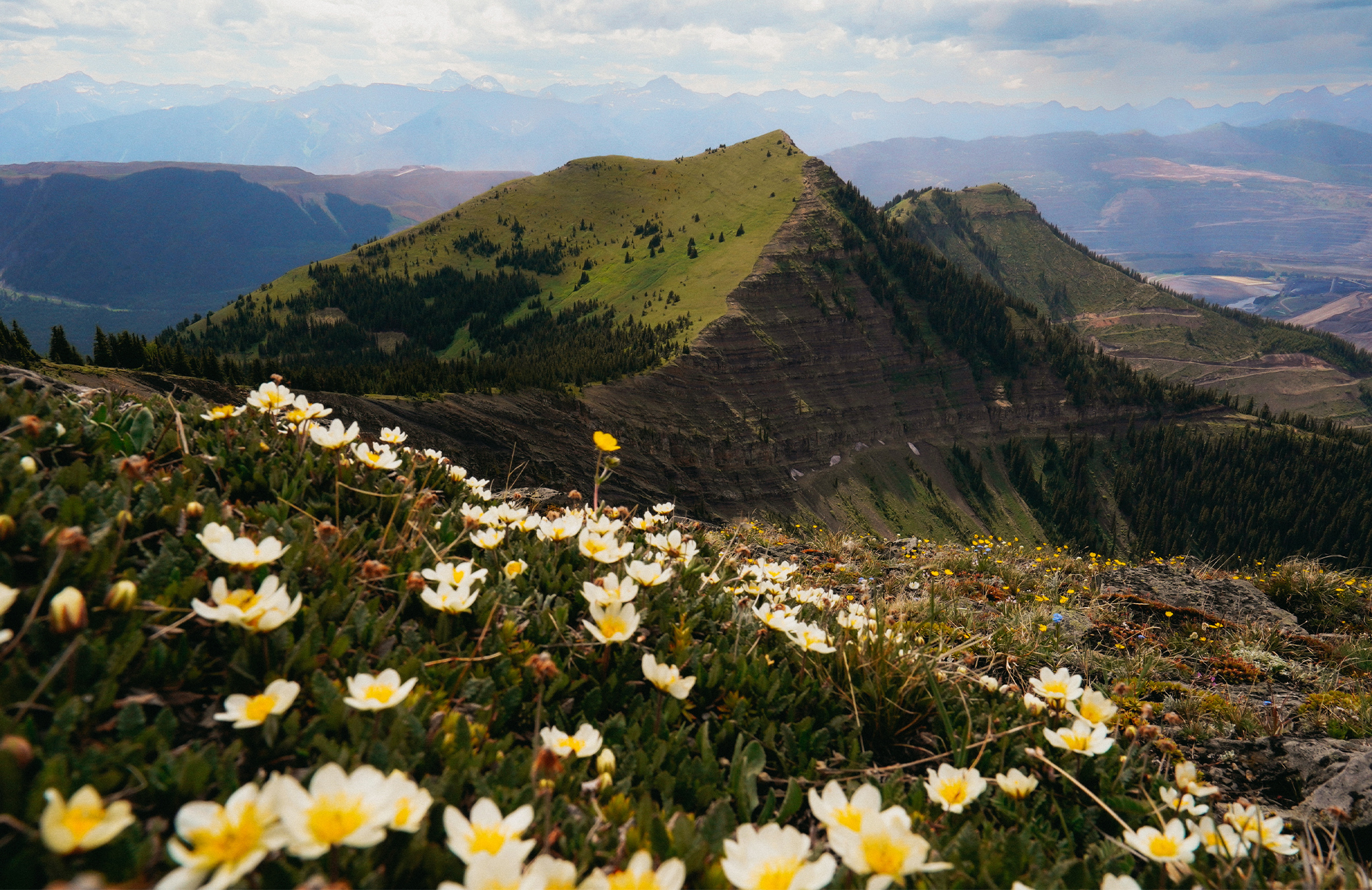
Banner image: High altitude grasslands on Castle Mountain. The proposed FRX mine expansion would destroy habitat for sensitive and threatened wildlife, in a valley already heavily impacted by industrial activity. Image by Siobhán Winters/Wildsight.
FEEDBACK: Use this form to send a message to the editor of this post. If you want to post a public comment, you can do that at the bottom of the page.
Citations:
Storb, M. B., Bussell, A. M., Caldwell Eldridge, S. L., Hirsch, R. M., & Schmidt, T. S. (2023). Growth of coal mining operations in the Elk River Valley (Canada) linked to increasing solute transport of Se, NO3–, and SO42–into the transboundary Koocanusa Reservoir (USA–Canada). Environmental Science & Technology, 57(45), 17465-17480. doi:10.1021/acs.est.3c05090
Cooke, C. A., & Drevnick, P. E. (2022). Transboundary atmospheric pollution from mountaintop coal mining. Environmental Science & Technology Letters, 9(11), 943-948. doi:10.1021/acs.estlett.2c00677
Foster, M. J., Storb, M. B., Blake, J. M., Schmidt, T. S., Nustad, R. A., & Bussell, A. M. (2024). Evidence of long-range transport of selenium downstream of coal mining operations in the Elk River Valley, Canada. Environmental Science & Technology Letters, 11(8), 856-861. doi:10.1021/acs.estlett.4c00222
