


Founder’s Briefs: An occasional series where Mongabay founder Rhett Ayers Butler shares analysis, perspectives and story summaries.
The world’s largest remaining stretches of undisturbed forest are shrinking. Fires now cause more of the loss than logging, while mining and oil and gas development have moved close to the top of the list.
That’s the conclusion of a new analysis from the World Resources Institute, based on data developed with researchers at the University of Maryland, U.S., and the nonprofit Greenpeace. The report examines “intact forest landscapes,” large blocks of forests that show no readily detectable signs of industrial activity or fragmentation.
Their global extent has fallen by more than 15%, or 195 million hectares (482 million acres) between 2000 and 2025, an area roughly the size of Mexico.
Canada, Russia, and Brazil contain almost two-thirds of the remaining intact forests. They also recorded the largest reductions.
Fires have become a major driver of recent decline in intact forest area, accounting for almost 40% of the reduction between 2020 and 2025, up from 21% during 2000-2013. Logging, previously the leading cause, accounted for around one-fifth since 2020. Mining, drilling, and exploration contributed nearly 19%, making extractive industries the third-largest cause.
The figure for extractive industries requires some explanation. While agriculture remains the main cause of global deforestation, mines and oil wells directly clear a relatively small area. However, the WRI analysis measures the loss of intact forests: A road, pipeline, seismic line, or mining corridor can divide a large forest block into smaller pieces. Much of the surrounding forest may remain standing, but the area no longer qualifies as intact.
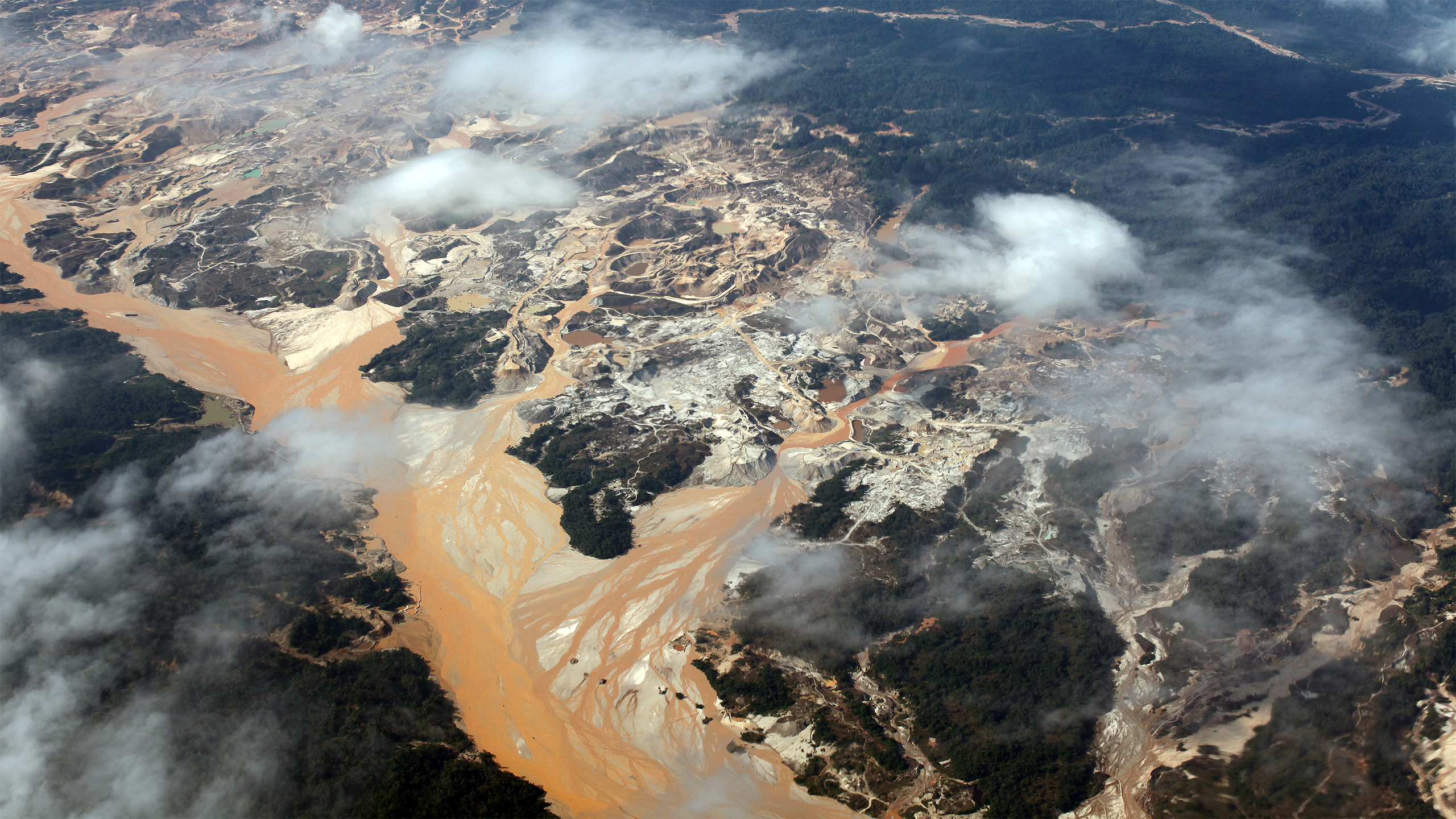
This effect is especially important in remote regions. In Russia, expanding oil and gas infrastructure has divided large areas of boreal forest. In South America, gold mining has spread farther into forest regions, often accompanied by roads, settlements, and other activity. Previous research has found that extractive concessions overlap extensive areas of intact tropical forest.
The 19% contribution of mining, drilling, and exploration therefore covers fragmentation and industrial intrusion as well as direct clearing. It does not suggest that mining and drilling cause almost one-fifth of all forest loss.
Roads built for extraction can also allow logging, farming, settlement, and further mining to follow. Their effects often extend beyond the original project. Fires may become more likely as forests are opened and human activity increases.
WRI’s exact estimate has not yet been independently replicated. Research across tropical countries supports its broader finding that mining can drive both direct and indirect forest loss. Extractive development is placing increasing pressure on large forests that remain relatively free of industrial disturbance. Once roads and other infrastructure divide them, restoring the scale and continuity that defined them becomes difficult.
Banner image: Overhead view of the Rio Huaypetue gold mine in the Peruvian Amazon. Image by Rhett A. Butler/Mongabay.

