


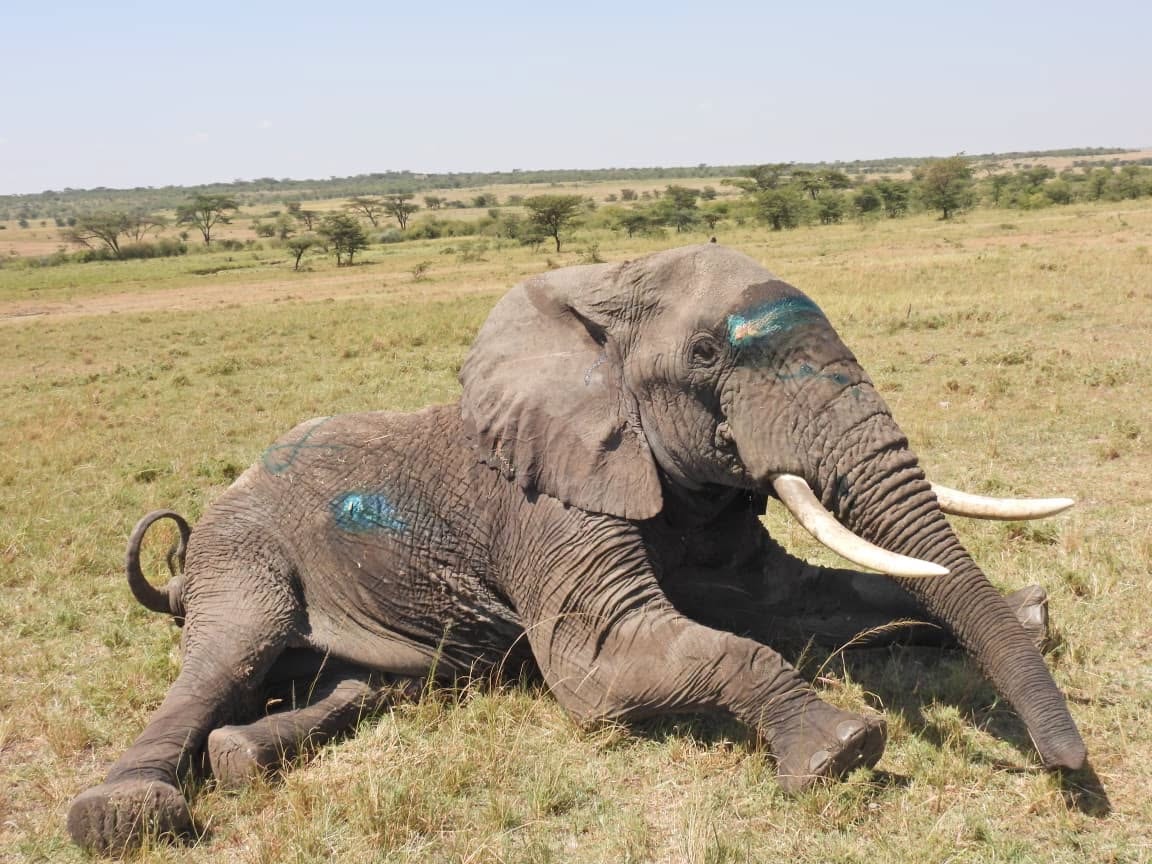
Kenya Wildlife Service (KWS) is investigating the deaths of 15 elephants in the Amboseli savannah ecosystem, near the border with Tanzania. KWS told Mongabay that some preliminary laboratory investigations have found a toxic substance in the dead elephants.
The animals were found between June 24 and July 24, 2026, at the Kimana Sanctuary and Kuku Ranch, an area at the crossroads between three national parks in southern Kenya.
“Ten elephants exhibited similar clinical signs, including partial paralysis that left them unable to stand before dying within one to two days,” KWS communications Director Duncan Wanyama said in a statement provided to Mongabay. “The remaining five carcasses were too decomposed or had been scavenged, making it impossible to establish the cause of death. The condition primarily affected adult females and their calves, with only one adult male reported.”
The University of Nairobi detected a toxic substance in the elephant samples they tested. However, test results from Government Chemist, a Kenyan national lab, were negative for toxic substances. “Further quantitative analysis is underway,” KWS stated.
Some elephants were equipped with tracking devices, and authorities were alerted to the deaths when the tracked animals stopped moving, Wanyama told Mongabay in a phone call. He said investigations, including analysis of water sources and other resources, were underway to determine if the elephants were exposed to a common source.
“The condition observed is confined to the affected elephants, and there is no indication that it is transmissible to humans,” Wanyama said.
Meanwhile, local leaders want answers. “We have never seen something like this. We want a report stating exactly what killed our elephants,” Joseph ole Lenku, the governor of Kajiado County, where Amboseli is located, said at a public event.
At the same time, the International Fund for Animal Welfare (IFAW) has called for sustained investment in services to support wildlife.
“This incident is deeply alarming. It reminds us just how vulnerable wildlife remains to emerging and often unpredictable threats,” IFAW Kenyan country director Ben Wandago said in a statement provided to Mongabay. “When we lose elephants on this scale, the impact reaches far beyond a single herd. It affects the resilience of the entire ecosystem and reinforces why we must continue investing in science, monitoring, and collaborative conservation efforts.”
Benson Leyian is the CEO of Big Life Foundation, a conservation organization operating in the mostly Maasai-owned land surrounding Amboseli National Park. He told Mongabay that decades of community-centered conservation had virtually eliminated elephant poaching in Amboseli.
“Aside from losses during periods of severe drought, we haven’t seen a cluster of elephant deaths like this for some time, so it is certainly a cause for concern,” he said.
The KWS says it has intensified surveillance across the area and continues to monitor elephant populations closely. No elephant deaths have been reported in the last week.
Banner image: An elephant at Amboseli National Park in Kenya. Image courtesy of KWS.
