


From the seafloor to turtle stomachs, scientists are finding plastic everywhere they look for it. Now, researchers in Japan have found plastic thermally adhered to coral rubble, an amalgamation they’ve termed “plasticoral,” according to a new study. The finding is raising concerns about potential ocean chemical leaching, habitat degradation and a new way for microplastics to enter the marine environment, they say.
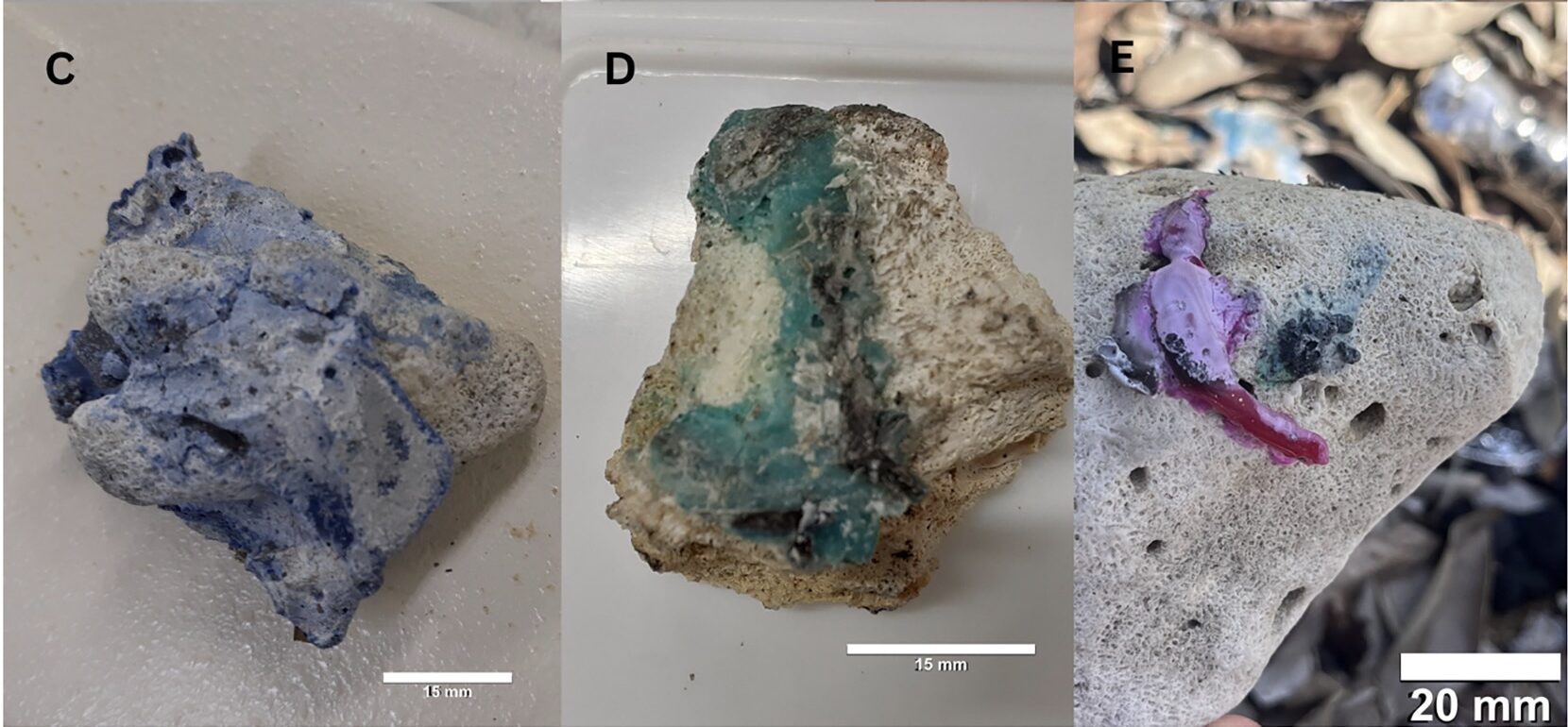
Ifenna Ilechukwu, first author of the study with the University of Ryukyus in Japan, and his colleagues found five pieces of “plasticoral” on three different beaches during a routine marine litter survey on Japan’s Okinawa Island in August 2024.
“We did not set out to discover plasticoral,” Ilechukwu told Mongabay in an email.
Researchers have previously described plastiglomerates, melted plastic debris fused with rocks, wood or other natural materials.
However, when the team found coral rubble with plastic not just stuck on the surface but permanently adhered to it, they knew they’d found something unusual.
Plasticoral is a subset of plastiglomerates, however, “plasticorals represent something different,” Ilechukwu said. “The melted polymers literally liquidized and conformed to the intricate, porous skeleton of the coral rubble.”
Researchers suspect the plastic was burned into the rubble by a beach fire, though further research is needed to confirm that, Ilechukwu said.
Laboratory analysis found that four of the plastic samples were polyethylene, commonly used for single-use bottles. One sample was polypropylene, a more rigid plastic used in food containers and bottle caps. Both are among the most common types of plastic found in oceans and can soften and deform when heated, the study notes.
Burning plastic can release a cocktail of chemicals including cancer-causing dioxins and fine particulates, which pose serious health risks for both people and wildlife. Burning can also cause plastic to quickly break down into microplastic, which can more easily enter the environment and food chain.
The team found the plasticoral on coral rubble on the beach, not living coral in the sea. However, rubble can provide habitat for tiny invertebrates that live in its nook and crannies, while algae and sponges can colonize coral surfaces, creating microhabitats used by fish and other larger organisms. When plastic is melted into the surface of rubble it “may not function effectively as natural substrates,” Ilechukwu said.
Estimates suggest upwards of 199 million tons of plastic are currently in the world’s oceans. Microplastics can be found nearly everywhere on the planet, leading scientists to suggest the Earth is in a new geological era referred to as the “Plasticene.”
Ilechukwu said plasticoral could “potentially represent an early stage in the transition from transient plastic litter to a more persistent, lithified sedimentary record of the Plasticene in tropical reef environments.”
The research team hopes to work with other researchers and the public to document litter of all kinds, including plasticoral.
“Let us keep protecting our environment, it is all we have,” Ilechukwu said.
Banner image: Plasticoral collected from Okinawa beaches. Image courtesy of Ilechukwu et al., 2026.
