

Close Menu
NCIJ Network NCIJ Network
    What's Hot

    Windows 11 out-of-band update fixes audio glitch and other bugs – grab it now

    September 17, 2026

    Nunchux AI Introduces VC-Attention: A Training-Free Low-Bit Attention Kernel That Speeds Up Video Diffusion Transformers

    September 17, 2026

    AI made software development unrecognizable. Is cybersecurity next?

    September 17, 2026
    Facebook X (Twitter) Instagram
    Trending
    • Windows 11 out-of-band update fixes audio glitch and other bugs – grab it now
    • Nunchux AI Introduces VC-Attention: A Training-Free Low-Bit Attention Kernel That Speeds Up Video Diffusion Transformers
    • AI made software development unrecognizable. Is cybersecurity next?
    • US Bitcoin reserve bill passes House Committee
    • Passion Meets Precision at NASA’s Flight Research Lab
    • A New Bill Could Help Obstruct Future Energy Efficiency Standards for Home Appliances—and Repeal Old Ones
    • Modi and Xi’s Meeting Caps a Detente – Foreign Policy
    • US interest rates raised for first time in three years
    • About
      • Our Team
      • Editorial Policy
      • Editorial Independence
      • International Support
    • Trust & Standards
      • AI Usage Policy
      • Conflict of Interest Policy
      • Corrections Policy
      • Ethics Policy
      • Fact-Checking Policy
      • Source Protection
    • Get Involved
      • Guide for Sources
      • Support Independent Journalism
    • Legal
      • Cookie Policy
      • Privacy Policy
      • Terms of Use
    Facebook X (Twitter) Instagram
    NCIJ Network NCIJ Network
    Thursday, September 17
    • Home
    • World
    • Ai
    • Business
    • Politics
    • Health
    • Crypto
    • Science
    • Technology
    • Cybersecurity
    • Defense & Security
    • Economy
    • Energy
    • Europe
    • More
      • Fact Check
      • Investigations
      • Opinion & Analysis
      • Environment
    NCIJ Network NCIJ Network
    Home»Science

    Passion Meets Precision at NASA’s Flight Research Lab

    NCIJ NETWNCIJ NETWORKBy NCIJ NETWNCIJ NETWORKSeptember 17, 2026 Science No Comments4 Mins Read
    Share
    Facebook Twitter LinkedIn Pinterest Email

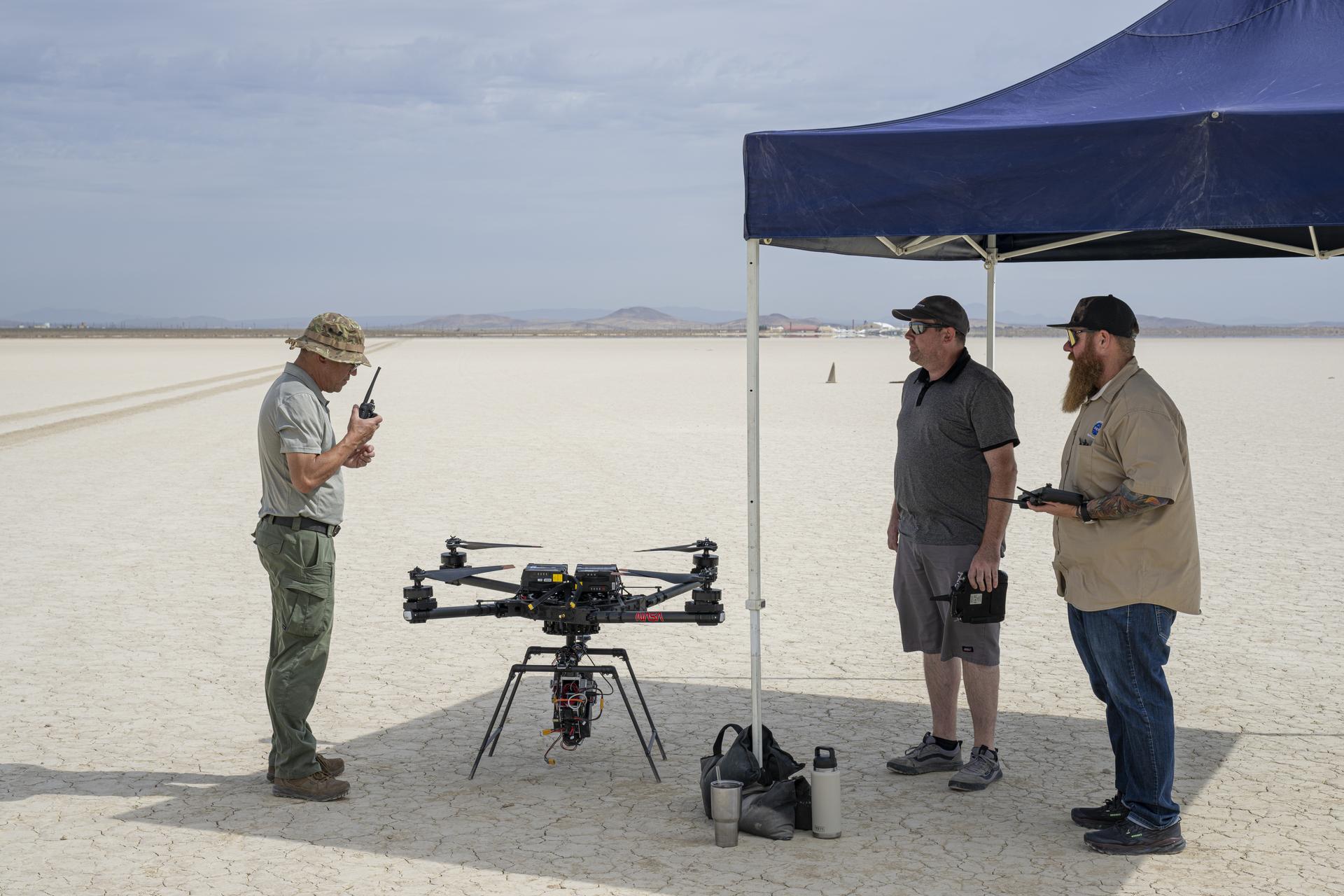
    Long before they helped shape NASA’s future aerospace breakthroughs, Derek Abramson, Justin Hall, and Justin Link were in their garages and homes building radio‑controlled aircraft, testing new ideas, and flying their creations at hobby events. That early passion now fuels the work of NASA’s Dale Reed Subscale Flight Research Laboratory at the agency’s Armstrong Flight Research Center in Edwards, California.

    At NASA Armstrong’s subscale flight lab, the team turns that lifelong enthusiasm into mission-focused innovation. The laboratory supports research that ranges from advanced navigation systems for future landings on the Moon and Mars to emerging aeronautics concepts that need quick, low-cost evaluation. NASA’s small, remotely piloted and autonomous aircraft allow engineers to explore ideas that could be difficult, risky or expensive to test at full scale.

    Abramson, Hall, and Link play key roles in that work. Abramson serves as the laboratory’s chief engineer. Hall is the chief pilot. Link is a drone pilot. Together, they integrate emerging aerospace technologies with the lab’s subscale aircraft fleet and, when needed, design and build aircraft or flight experiments to evaluate new concepts.

    Abramson’s expertise, built through service in the U.S. Navy and the aerospace industry, centers on technical oversight, management, and system design. Hall is known for creative approaches to problem solving and uses practical methods to address technical challenges and maintain flight safety. Link specializes in designing and fabricating research vehicles and draws on extensive hands-on experience to understand what works, and what does not, in flight. 

    On weekends, the team often tinkers in their garages or hangars building radio-control aircraft, researching hobby trends, or exploring new technologies. You might see them flying their creations at hobby events or attending trade shows. Their passion for flight brought Abramson, Hall, and Link together years before they one-by-one joined NASA more than a decade ago, though each discovered that spark in a different way.

    Abramson’s interest began as a child with rubber-band powered stick and tissue aircraft and radio-controlled models. His early aviation pursuits led to his first solo flight while in high school and a pilot’s license. In the Navy, he worked on multiple aircraft, including EA-6B and the F-18, as an avionics technician. As an engineer, he supported the B-1 and CV-22 Osprey aircraft flight tests. As an intern at NASA Armstrong, he used his operational and engineering experience on remotely piloted and autonomous aircraft.

    Hall’s interest grew after seeing historic aircraft including the Mach 3 SR-71 fly over his elementary school playground and watching Space Shuttle Challenger land from above his dad’s shoulders. He has built and flown model and remotely piloted aircraft for as long as he can remember. His reputation flying radio-controlled hobby aircraft at fly-ins and trade events led to an offer to fly subscale aircraft at NASA.

    Link was five years old when he built balsa-wood aircraft with his dad and flew them in a field near their home. As he grew older, his hobby expanded to include radio-controlled cars, boats, helicopters, and aircraft. Aviation runs deep in Link’s family. His great grandfather served in the U.S. Army Air Corps, his grandfathers served in the U.S. Air Force, and his dad was an Air Force avionics technician. Link raced sailplanes, competed with scaled warbird aircraft, and was encouraged by family and friends to pursue an aviation profession. He has worked with large drones for more than 11 years, focusing on research and development, composite materials, and specialized fabrication methods.

    Together, the team applies its experience and knowledge in rapid design, fabrication, integration and flight testing to bring new ideas to flight. Their work continues to support NASA’s missions across aeronautics, science, and exploration.

    Flight lab meets NASAs Passion Precision research
    NCIJ NETWNCIJ NETWORK
    • Website

    Keep Reading

    Scientists recreated what mice saw from brain activity alone

    Scientists find the whole grain “sweet spot” for better heart health

    Stanford Researchers Release Paper2Agent: Turning Research Papers Into AI Agents That Reproduce Results and Run on New Data

    A 240-million-year-old fossil just changed the dinosaur timeline

    Scientists find an immune “false alarm” that may drive rapid aging

    These mice have human (nerve cells) on the brain

    Add A Comment
    Leave A Reply Cancel Reply

    Editors Picks

    Windows 11 out-of-band update fixes audio glitch and other bugs – grab it now

    September 17, 2026

    Nunchux AI Introduces VC-Attention: A Training-Free Low-Bit Attention Kernel That Speeds Up Video Diffusion Transformers

    September 17, 2026

    AI made software development unrecognizable. Is cybersecurity next?

    September 17, 2026

    US Bitcoin reserve bill passes House Committee

    September 17, 2026
    Latest Posts

    What is Trump Media’s Truth API and why is it controversial?

    August 4, 2026

    How ProPublica Tested Hundreds of Omaha Homes for Lead — ProPublica

    August 4, 2026

    Golar LNG raises $600 million loan with FLNG business expansion in mind

    August 4, 2026

    Subscribe to News

    Get the latest sports news from NewsSite about world, sports and politics.

    NCIJ Network is an independent digital news platform delivering trusted investigative journalism, European and global news, in-depth analysis, and fact-based reporting with accuracy, transparency, and integrity.

    Facebook X (Twitter) Instagram Pinterest YouTube

    Windows 11 out-of-band update fixes audio glitch and other bugs – grab it now

    September 17, 2026

    Nunchux AI Introduces VC-Attention: A Training-Free Low-Bit Attention Kernel That Speeds Up Video Diffusion Transformers

    September 17, 2026

    AI made software development unrecognizable. Is cybersecurity next?

    September 17, 2026

    Subscribe to Updates

    Get the latest creative news from FooBar about art, design and business.

    Type above and press Enter to search. Press Esc to cancel.