


If you’re worried about next week’s budget, then now is your time to chill out. Because Kemi Badenoch has all the answers. The chancellor, John Healey, has been living rent free in the leader of the opposition’s head for the past few weeks. Lucky man. More than that, she has been perched on his shoulder while he sits at his desk in the Treasury and tries to make the sums add up.
And – SPOILER ALERT – Kemi has now read the whole speech that hasn’t yet been written and is in a position to give her budget reply more than a week ahead of time. Opposition by telepathy. Or wish fulfilment. If things don’t work out for her in her current job she could apply to be the next Mystic Meg.
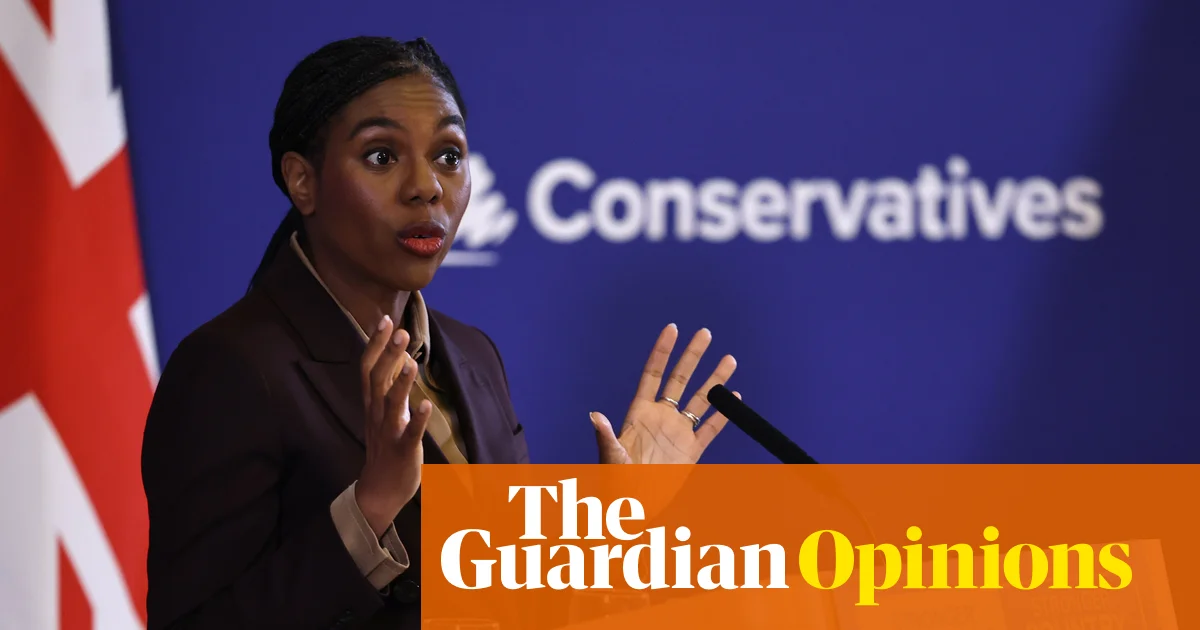
In a plush room in Westminster on a wet Tuesday morning, Kemi was giving her verdict in front of an adoring crowd of invited Tory members. They cheered every word. Which was kind. Because she won’t be getting that kind of reception next week. Nobody could be worse than Rachel Reeves, she began. Rachel had been the She-Devil who had implemented £70bn of tax rises. But wait. There was someone worse than Reeves. And that was Healey. Logic is not Kemi’s strongest point.
No matter. Healey would be worse because he would do less. Fiscal dialecticism. Yup, the chancellor was going to stand up for an hour and say absolutely nothing. Make no changes to anything. This didn’t seem very likely, but we had to take it on trust.
Kemi was John Healey’s brain. And Healey doing nothing was worse than Rachel doing something. It sounded as if Kemi rather missed the tax rises after all. But she had a further warning. The Marxist International Monetary Fund were completely wrong to praise the government for its efforts to reduce the deficit. At best, they had been duped by Healey, at worst they were trying to bankrupt the country.
Here’s what was going to happen. Labour were going to introduce some fictional cuts to benefits that would never be implemented. Because deep down what Labour MPs really wanted was for everyone to live in a country where they could pick up £80,000 a year in benefits. The sign of a functioning nirvana was a world where everyone could be paid not to work. It didn’t seem to have occurred to Kemi that the reason the benefits bill was so high was primarily because the Conservative government in which she had served had increased them substantially during her time in office. And also because many benefits, such as pensions, she was unwilling to cut herself.
Labour was doing the wrong things for the wrong reasons, she said. This opened up several philosophical lines of inquiry. Ontologically speaking, was it better to do the wrong things for the right reasons, even if the results were the same? Or what happened if you did the right things for the wrong reasons? Would you then have to negate everything regardless of the outcomes?
It turned out that I wasn’t the only one struggling with Kemi’s reasoning. When it came to the questions from the media, several reporters wondered why, if the welfare cuts that she was proposing were so easy to make, previous Tory governments hadn’t got round to making them earlier. And was it just our imagination, or were the same cuts being used to pay for several different items on the country’s balance sheet?
Kemi didn’t miss a beat. The cuts she was proposing were the ones Rishi Sunak would have made if he hadn’t been interrupted by the general election that he himself called. It was all very unfortunate. The Tories had been on the brink of success and if only they had had another couple of weeks, everything would have been hunky dory. Tax breaks for the wealthy and benefits cuts for those that need them, that was the Tory way.
Then the reverse ferret. Although she had been in previous Conservative governments, she had never inhaled. She had kept her fingers crossed and her mouth shut. Previous prime ministers had taken wrong steps. But sometimes the bravest thing a cabinet minister can do is to do and say nothing. And no one had been braver than Kemi.
“In case you hadn’t noticed,” she said patronisingly to one journalist, “we are under new management.” Only it feels very much like the old management. Kemi was still saying nothing her predecessors wouldn’t have said. It was just one of life’s sadnesses that the scales had only fallen from her eyes when the Tories had been booted out of office.
Down in Plymouth, Reform was regrouping after yet another weekend of bad headlines. And the party members who had assembled for the rally didn’t look entirely enthused when the first person sent on stage to act as cheerleader was the charisma-free Danny Kruger. The man who is meant to act as the brains of the party, despite appearing spectacularly dim.
“I don’t want to whine,” he said, before going on to do just that. The ITV exposé was just a bit unfortunate, he went on, because he was sure most Reform supporters weren’t racist. “There is no room for that kind of behaviour in the party.” Some of the audience looked a bit disappointed by that. They thought they had been guaranteed a welcome.
After a brief and entirely forgettable number from Honest Bob Jenrick – even Reform members think he seems a wrong ’un – out came Nigel Farage. He seemed like a man with the cares of the world on his shoulders. A man who could sense the tide was going out. There was no energy about him as he rolled through a collection of his greatest hits. Forgetting where he was, he even called Plymouth, Portsmouth. That drew a few boos. People like to think they matter a little bit.
Nige was just tired and bored of himself. Disappointed with a world that had promised him so much and was now crumbling before him. Hell, why hadn’t the riots even spread to this country? Then he could blame lefties and foreigners. He tried to pass off the stories of racism and financial unorthodoxy as just one offs. Every self-respecting party has a few racists. He didn’t sound as if he believed a word of it. And ITV had exposed a 70% hit rate of undesirables. Those aren’t outliers.
Come the end, Nige couldn’t wait to see the back of Portsmouth. Or wherever he was. And it felt as though for much of the audience the feeling was entirely mutual.
