


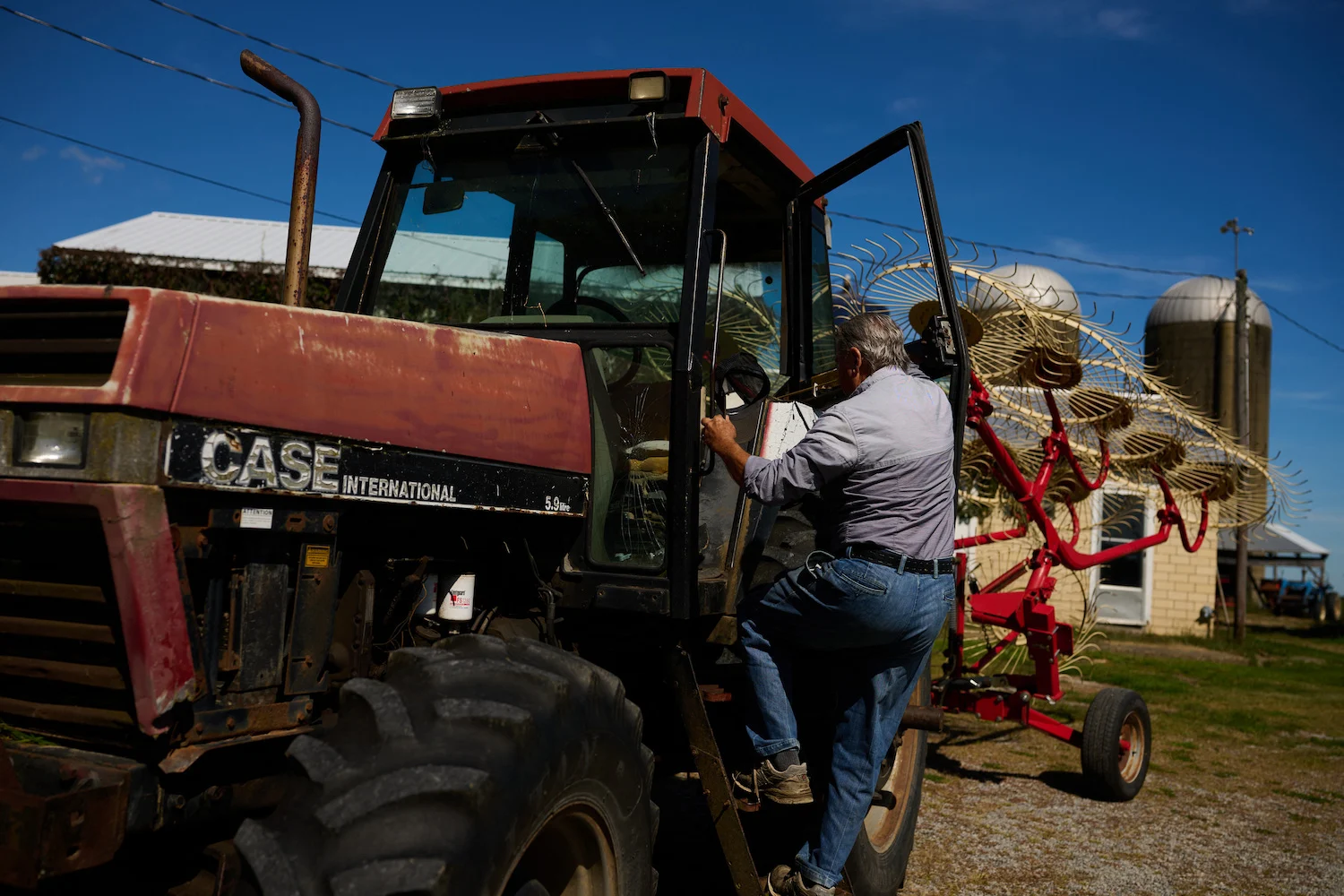
As U.S. voters head into the final stretch of a high-stakes midterm campaign, President Donald Trump is making his last pitch to a key constituency that has been pummeled by the economic fallout of the Iran war: American farmers.
At a rally in Kansas on Monday, Trump unveiled an $8 billion economic aid package to pacify farmers, who have for months weathered surging diesel and fertilizer prices driven by the war and disruptions to the Strait of Hormuz. The bailout will cover one-time payments for farmers and aims to shield them against market reactions and higher input costs, according to the U.S. Department of Agriculture (USDA).
“When the Republicans win, we will pass even more funding for our farmers,” Trump said at the rally for Sen. Roger Marshall, who is up for reelection in Kansas. “We love our farmers.”
By announcing the aid package now, the Trump administration appears to be currying favor with a beleaguered base at a critical moment. But the bailout may be a Band-Aid fix. The Iran war remains the key driver of the global energy crunch, and Trump’s other attempts to drag down diesel prices—including a controversial bid to import Russian diesel—have done little to reassure Americans.
“Unless the underlying problem is resolved, farmers are going to continue to face high costs for diesel,” said Joe Glauber, a former chief economist at the USDA. “This is a temporary thing that is very transparent, and it’s aimed to get voters to vote Republican in November.”
Even as the prices of key commodities have risen in recent months, farmers have faced squeezed margins as the costs of diesel and fertilizer have soared to stubborn highs. It’s not just the disruptions from the Iran war, either. American farmers have also lost valuable market share as a result of Trump’s trade chaos, dating back to the trade war with China during his first term.
As farm bankruptcy filings have risen, so has farm debt, which has more than doubled in the last two decades and is now at a record high of more than $600 billion.
“The challenges farmers face right now are all the bitter fruit of bad policies by the Trump Administration,” Christopher Barrett, an agricultural economist at Cornell University, wrote in an email to Foreign Policy.
All those pressures appear to be taking their toll on the bloc, which has traditionally voted Republican. Polling suggests that frustration with the Trump administration’s policies has grown among farmers. A September survey from Purdue University’s Ag Economy Barometer found that only 48 percent of respondents believed the United States is headed in the “right direction.” In July 2025, when the question was first asked, that figure was 74 percent.
More than half of the survey’s respondents cited higher input costs as a top concern. Respondents were also largely pessimistic about their future financial prospects, with 35 percent saying they expected their operations to be worse off financially one year from now, compared to 22 percent with more positive expectations.
“Farmers are a pretty small population in terms of the overall electorate but in certain races could be very critical,” Glauber said. Longtime red states such as Kansas and Texas, for example, are now seeing highly competitive Senate races, making their states’ rural vote even more decisive.
The $8 billion bailout announcement drew a welcome but somewhat muted response from the American Farm Bureau Federation (AFBF), the country’s biggest general agriculture lobbying group. “We appreciate President Trump and [Agriculture] Secretary [Brooke] Rollins recognizing that higher diesel prices have squeezed farmers’ bottom lines,” AFBF President Zippy Duvall said in a statement.
The aid package only adds to a mountain of financial support offered to farmers by the Trump administration. Even before this bailout was announced, government funding to the agriculture sector was expected to reach about $55 billion in 2026 alone, including an $11 billion funding request still pending approval by Congress. It remains unclear when the latest one-time payments will be delivered.
On average, government payments account for some 30 percent of net farm income right now, Glauber said. Though no one would turn down a check from the federal government, he said, the underlying problems are still unresolved—and no one wants to be too reliant on Uncle Sam.
Farmers would “much rather get a good return from the market and not have to depend on government payments,” Glauber said. “Right now, they are very much dependent.”
