


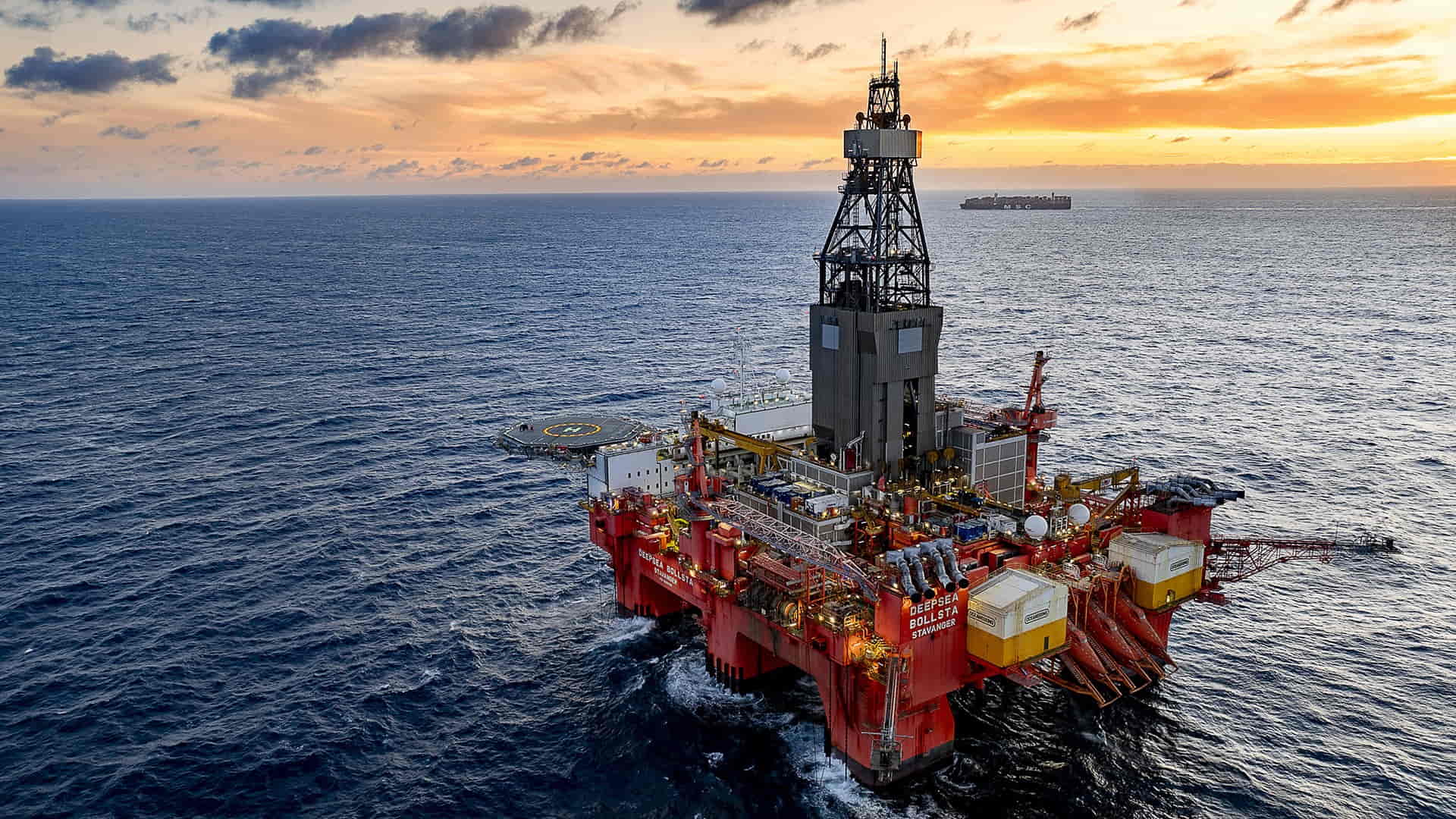
Frode Skarstein, Senior Vice President for Exploration and Production West at Equinor, underlined: “This confirms that the area around the Oseberg field remains very attractive. We plan to quickly tie the discovery back to existing subsea facilities and produce the volumes through the Oseberg Sør platform. By making use of already paid for infrastructure we achieve good resource utilisation and competitive barrels.”
Equinor emphasizes that Norwegian oil and gas are essential to the European energy security, as Norway covers 20% of Europe’s oil needs and 30% of its gas needs. Since production from existing fields is declining as they mature, the firm elaborates that maintaining high activity levels and reliable energy supplies will require continued exploration and development of marginal discoveries near existing infrastructure.
This is the reason why the company plans to drill 200 near-field exploration wells and deliver around 75 subsea developments toward 2035. Equinor’s ambition is to maintain production of 1.3 million barrels of oil equivalent per day on the Norwegian Continental Shelf in 2035, with around 70% of this to come from new wells and developments.
Gunnar Nakken, Senior Vice President for Projects and Subsea on the NCS, highlighted: “To bring these discoveries on stream, we must radically change how we plan and develop subsea projects.
“Our aim is to halve both costs and the time from discovery to production through simpler and faster processes, more standardisation, repeatable solutions and more extensive use of industry standards. We expect the partnership to make an investment decision for Grimsnes as early as next summer, with production within three years.”
The Norwegian giant believes that faster execution also means that development concepts to a greater extent will be planned prior to exploration drilling and points out that Grimsnes will most likely be developed with two or three wells in a standard four-slot template.
The discovery will now be matured rapidly toward a decision to continue, and procurement of subsea production equipment is planned early next year, well before the project has been sanctioned. As the equipment is standardized, it can be redeployed elsewhere if a project is not sanctioned by the partnership or approved by the authorities.
Equinor is the operator of the production license, with a 50% ownership interest, while its partners, Petoro and TotalEnergies EP Norge, hold the remaining 40% and 10% stakes, respectively. This license contains the Tune field, which came on stream in 2002.
The Oseberg Sør platform in the North Sea came on stream in 2000. The Oseberg Sør field, which consists of several structures south of the Oseberg field, has been developed with an integrated drilling, accommodation, and production platform with a steel jacket.
The J, K, and Stjerne subsea installations are tied back to the Oseberg Sør platform, and Grimsnes is planned to be tied back to the Stjerne subsea installation. The oil is transported via the Oseberg field centre and the Oseberg transport system to the Sture terminal.
