


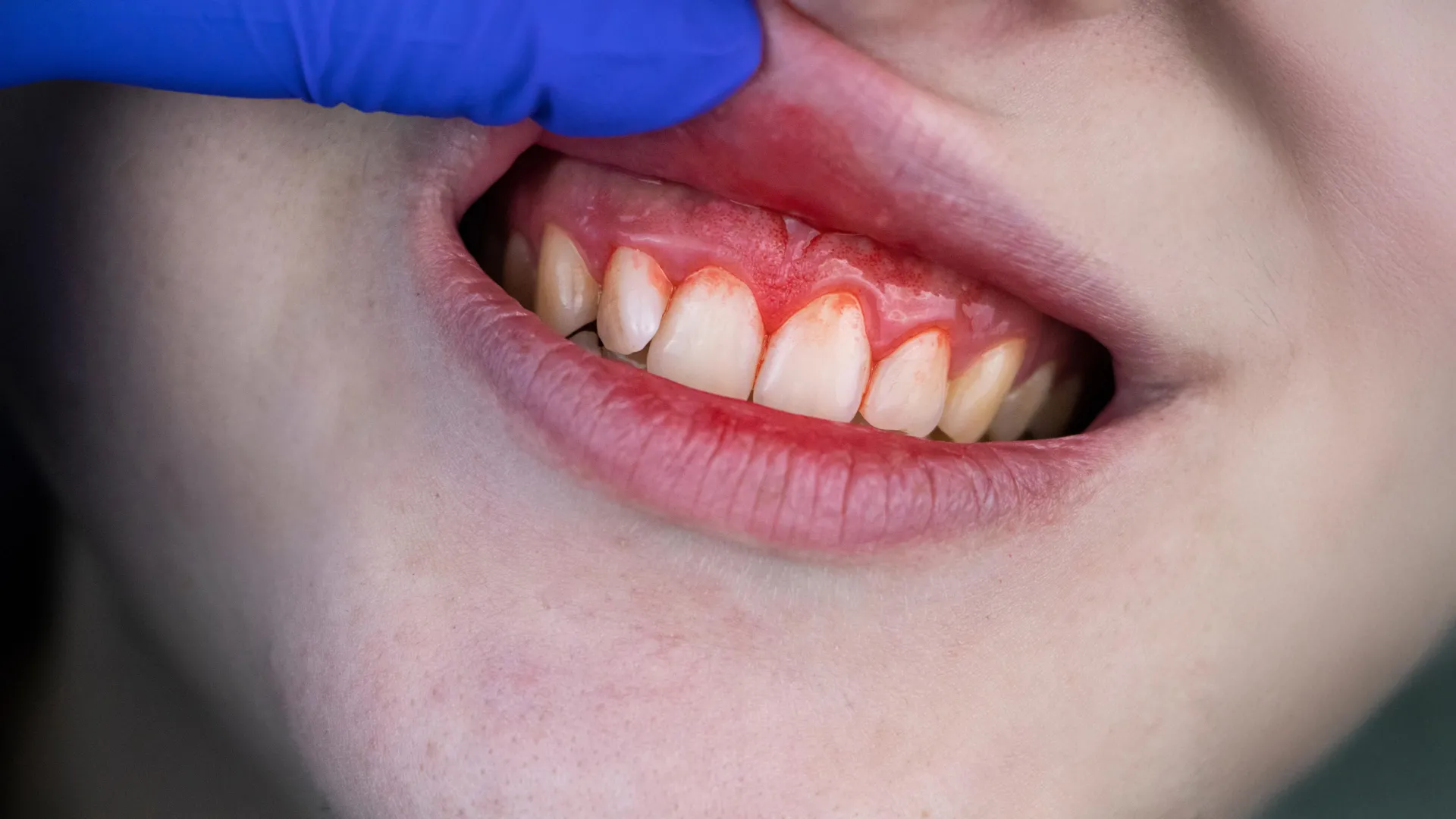
Researchers in Japan have developed a promising new treatment for gum disease that kills harmful bacteria while leaving beneficial microbes unharmed. Unlike conventional approaches that can eliminate both good and bad bacteria, the new therapy is designed to target specific microbes responsible for damaging gums and the bone that supports teeth.
Developed by scientists at Nagoya University, the treatment combines antibodies obtained from egg yolks with near-infrared light. Early experiments in human cell cultures and mice suggest that it could offer a more precise way to combat periodontitis, a serious form of gum disease that can eventually lead to tooth loss. The findings were published in the Journal of Translational Medicine.
Why Conventional Gum Disease Treatments Can Cause Problems
The human mouth contains a complex community of microorganisms, many of which play important roles in maintaining oral health. Problems can arise when harmful bacteria multiply and disturb this delicate balance.
One particularly troublesome species is Porphyromonas gingivalis (P. gingivalis), which scientists classify as a keystone pathogen. This means it can have an outsized influence on the surrounding microbial community, even when it is not especially abundant. By promoting inflammation and disrupting the normal balance of oral bacteria, it can contribute to the destruction of the bone that holds teeth in place.
Treating periodontitis often involves eliminating the bacteria responsible for the infection. However, some existing antimicrobial treatments do not distinguish between harmful organisms and microbes that help maintain a healthy mouth.
“Current treatments for periodontitis, including antibiotics and antimicrobial photodynamic therapy (aPDT), eliminate both pathogenic and beneficial oral bacteria,” said Kazuhide Sato, one of the corresponding authors and a lecturer at Nagoya University. “These approaches often disrupt the entire oral microbial ecosystem and can also release lipopolysaccharide (LPS), an endotoxin that may exacerbate inflammation.”
Scientists Adapt Cancer Therapy to Target Gum Disease Bacteria
To overcome these limitations, the Nagoya University team turned to a technology originally designed to treat cancer. Known as near-infrared photoimmunotherapy, it uses antibodies linked to a light-sensitive dye to recognize specific targets. Once the compound attaches to its intended target, exposure to near-infrared light activates the dye and produces a damaging effect.
The researchers adapted this strategy to attack P. gingivalis without unnecessarily disturbing other oral bacteria. Their approach relies on IgY, a type of antibody collected from the egg yolks of hens that have been immunized against the pathogen.
Egg yolk antibodies offer a practical advantage because they can be produced in large quantities at relatively low cost. This could make them an attractive option for developing targeted treatments that are affordable and scalable.
The resulting technology, called near-infrared photo-antibacterial targeting therapy (NIR-PAT²), was developed by researchers at Nagoya University Graduate School of Medicine. The team included first author Hiroshi Maruyama, Professor Hideharu Hibi, and corresponding authors Sato and Kiyoshi Sakai.
To determine whether the treatment could destroy harmful bacteria while protecting healthy tissue, the researchers tested it in human cell cultures and mice. They also compared its effects with those of conventional antimicrobial therapies.
Light-Activated Antibodies Destroy Harmful Bacteria
Laboratory experiments showed that the antibody and dye combination attached specifically to P. gingivalis. Other bacterial species and healthy human gum cells were left unaffected.
When the researchers illuminated the targeted bacteria with near-infrared light, the activated dye damaged their outer membranes, ultimately killing them.
Microscopic examination revealed an important difference between this technique and conventional antimicrobial light therapy. Bacteria exposed to the new treatment developed tiny openings in their membranes but largely maintained their overall shape. By contrast, conventional antimicrobial photodynamic therapy caused the bacteria to break apart completely.
The distinction matters because destroying bacterial cells can release substances that contribute to inflammation. Preserving the overall structure of the targeted bacteria, even after killing them, could help limit this unwanted effect.
The researchers also examined how the treatments affected healthy human gum cells. Their targeted therapy caused no detectable harm to these cells, while conventional antimicrobial photodynamic therapy produced cellular damage and slowed healing.
New Treatment Reduces Bone Loss in Mice
The team next investigated whether these laboratory findings would translate into meaningful improvements in gum disease.
In mice with periodontitis, the experimental therapy significantly reduced the loss of alveolar bone, the part of the jawbone that surrounds and supports teeth. Preventing this type of bone deterioration is especially important because advanced periodontitis can loosen teeth and eventually cause them to fall out.
Analysis of the animals’ saliva revealed another encouraging result. The treatment reduced P. gingivalis while preserving beneficial Streptococcus bacteria, helping maintain a healthier balance of microorganisms in the mouth.
Conventional antibiotics and antimicrobial photodynamic therapy, on the other hand, eliminated both harmful and beneficial bacteria in the experiments, causing broader disruption to the oral microbial community.
“Results demonstrated that, unlike antibiotics or standard light therapy, this approach selectively removes the primary pathogenic species while preserving the remainder of the oral bacterial community,” Sato said.
Together, the findings suggest that targeting individual disease-causing bacteria could help control gum disease while avoiding some of the unintended consequences of broader antimicrobial treatments.
AI Could Help Develop More Precise Gum Disease Treatments
Although the early results are promising, the researchers recognize that periodontitis is a complex disease involving multiple bacterial species. Eliminating P. gingivalis alone may not be sufficient to treat every case.
To address this challenge, the team plans to use artificial intelligence (AI) to examine publicly available information about oral bacteria. By identifying other important microorganisms and studying how different species interact, they hope to uncover additional targets for future therapies.
The researchers also see potential implications beyond oral health. Periodontitis has been linked to several other medical conditions, including rheumatoid arthritis and diabetes.
Understanding the relationships between oral bacteria and these conditions could eventually help scientists identify which patients are most likely to benefit from specific treatments. AI analysis may play a role in making those decisions and guiding the development of more personalized approaches to gum disease.
For now, the therapy remains experimental, with its effectiveness demonstrated in laboratory studies and mice rather than human clinical trials. However, the findings point toward a possible future in which treating gum disease means selectively removing harmful bacteria instead of disrupting the entire microbial community that helps keep the mouth healthy.
