


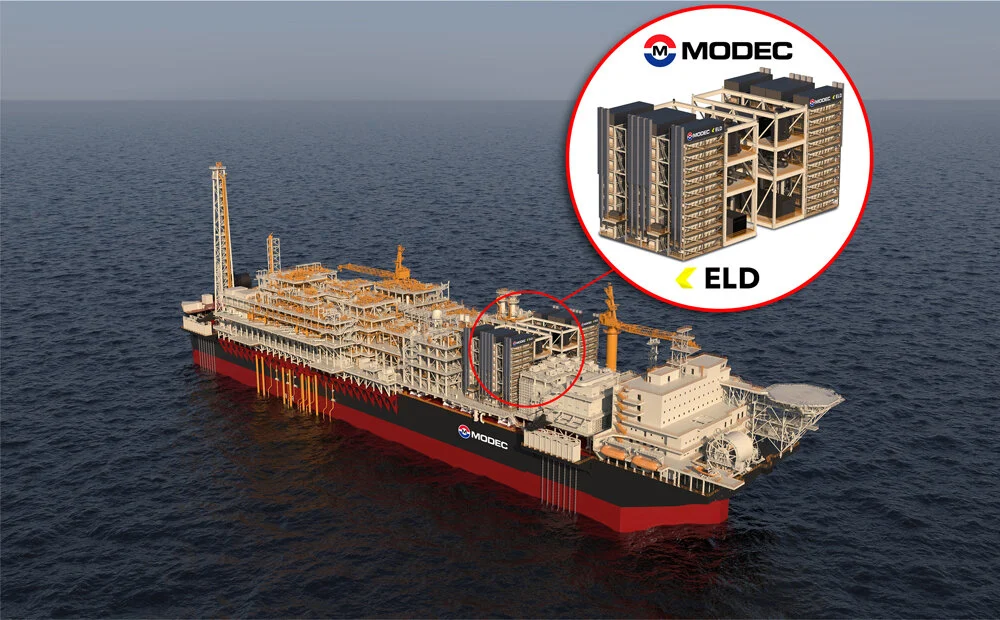
Japan’s MODEC and Eld Energy, a Norwegian fuel cell system company, have cleared a key milestone in the new technology qualification (NTQ) process from the American Bureau of Shipping (ABS), advancing their solid oxide fuel cell (SOFC) power system toward deployment on operating floating production, storage, and offloading (FPSO) units and opening a potential pathway to high-efficiency, lower-emission offshore power generation.
MODEC and Eld Energy have achieved a major milestone in the American Bureau of Shipping’s NTQ process by completing the technology feasibility and concept verification stage for SOFC power systems on FPSOs, confirming the safety, reliability, and regulatory compliance of SOFC technology in an unprecedented real-world offshore application.
Koichi Matsumiya, Chief Technical/Technology Officer of MODEC, commented: “MODEC aims to balance the seemingly conflicting challenges of protecting the global environment and ensuring a stable energy supply by innovative ideas using offshore floating facilities.
“We, together with Eld Energy, are advancing the development of innovative compact low-carbon power system by leveraging the high fuel efficiency of SOFC and their strong compatibility with carbon capture, aiming to expand the power supply solutions for offshore production facilities.”
The Eld Power Module 40kW, developed by Eld Energy, is described as a high-efficiency SOFC system engineered to utilize FPSO-produced gas and alternative low-emission fuels.
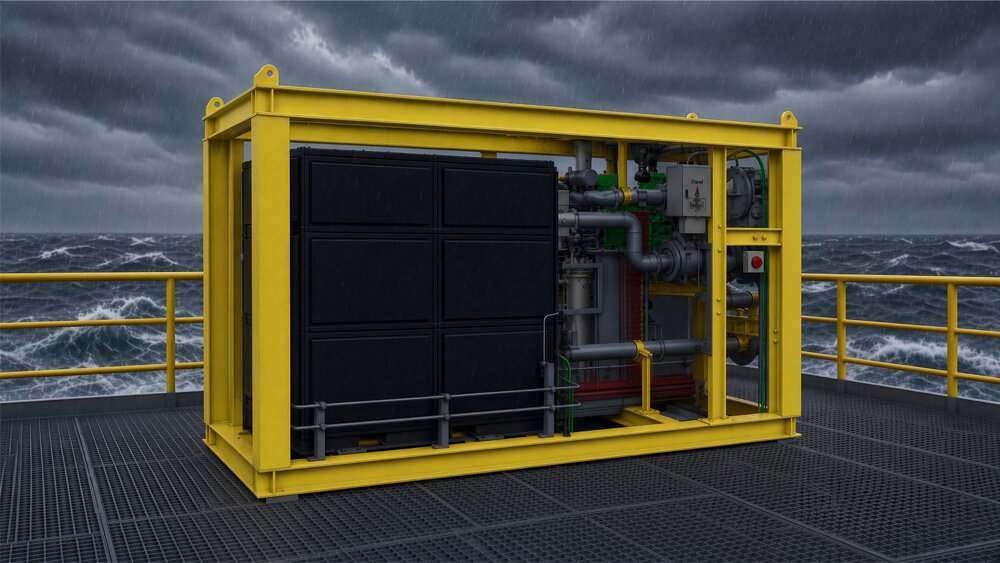
MODEC will integrate this advanced technology into an operating FPSO to monitor the system performance using real produced gas under actual offshore conditions, subject to successful completion of an upcoming NTQ prototype validation stage and associated ABS engineering reviews for installation.
Matt Tremblay, Senior Vice President, Global Offshore Markets of ABS, said: “SOFC technology has real potential to change the emissions profile of FPSO power generation. The ABS NTQ process gives MODEC and Eld Energy a structured way to demonstrate that the technology as claimed and that the risks are understood and managed before it goes offshore.
“The milestones they have achieved to date reflect serious, systematic engineering work, and that’s the kind of progress that moves this technology closer to routine offshore use.”
The outcome from the offshore pilot test campaign is expected to support subsequent phases, including scaling to a 120 kW module with readiness for seamless integration with carbon capture systems and ultimately toward a multi-MW Class solution.
According to the Japanese company, key risk assessment, including HAZID, HAZOP and FMEA, as well as independent ABS review, were conducted before the offshore pilot test.
The SOFC-based power generation system is designed to operate using produced gas on FPSOs and hydrogen-rich gas recycled from an integrated carbon capture system. The overall power system efficiency is expected to reach up to approximately 70%.
Hans Fredrik Lindøen-Kjellnes, CEO of Eld Energy, remarked: “This milestone shows that our novel offshore power generation concept can meet demanding safety standards of the industry.
“Early engagement with the Class society has been very helpful in bringing the product forward. This marks a significant step towards decarbonization of offshore operations.”

Power Your Brand With Offshore Energy ⤵️
Take the spotlight and anchor your brand in the heart of the offshore world!
Join us for a bigger impact and amplify your presence at the core hub of the offshore energy community!
