


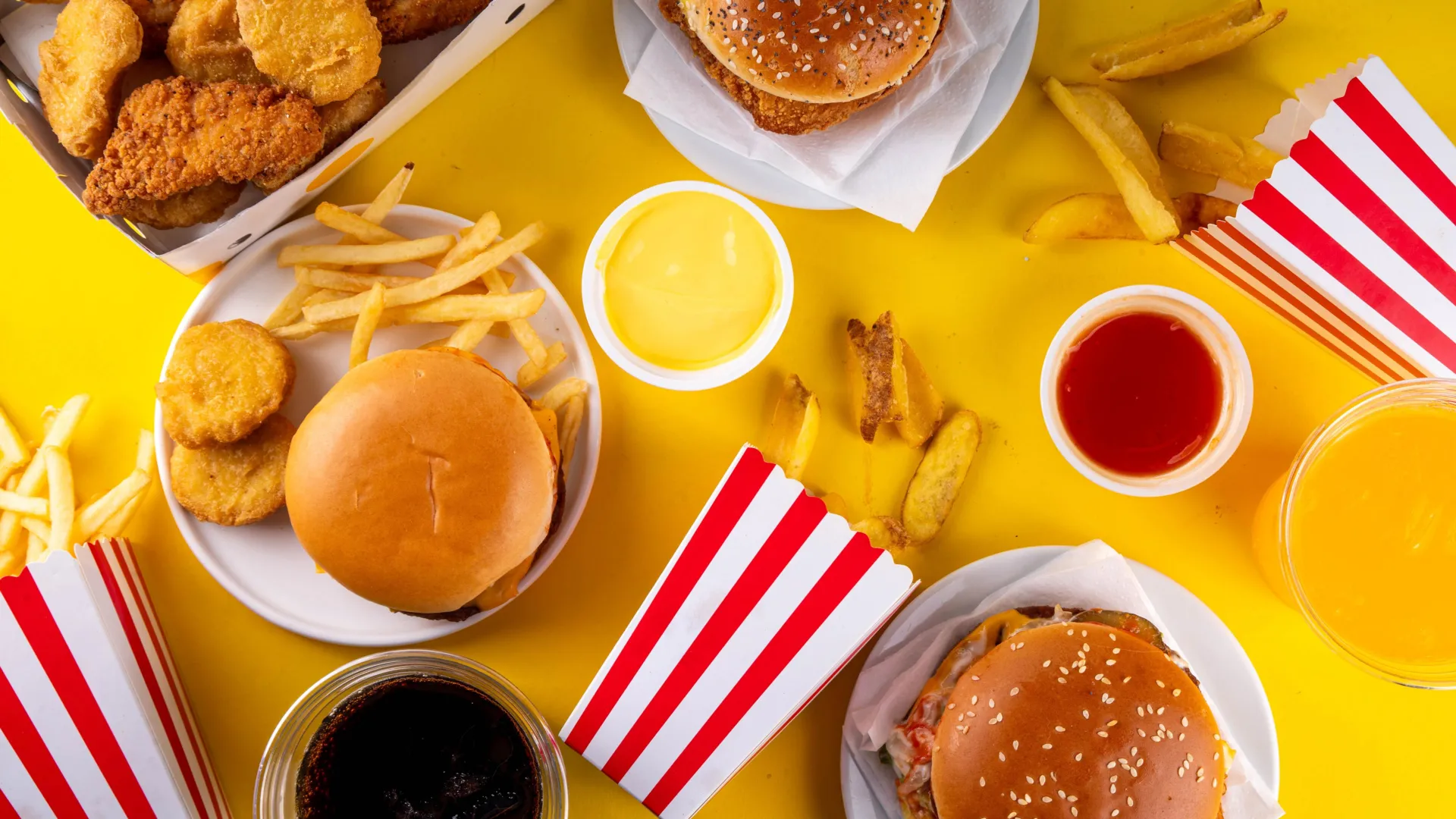
A massive study involving more than 460,000 Americans is challenging assumptions about ultra-processed foods and colorectal cancer. Researchers found that eating more ultra-processed food (UPF) was not associated with a higher overall incidence of colorectal cancer (CRC). However, the findings revealed an important distinction: Some types of ultra-processed foods were linked to lower cancer rates, while others were associated with higher rates.
The research, led by Erikka Loftfield of the National Cancer Institute and published October 15 in the open-access journal PLOS Medicine, suggests that the health effects of ultra-processed foods may depend heavily on what those foods actually contain.
Ultra-processed foods account for more than half of the calories consumed by American adults. These products have attracted increasing scrutiny because of their potential connections to chronic diseases, including colorectal cancer (CRC). Yet the category includes a remarkably diverse assortment of foods, making it difficult to judge their health effects as a single group.
For example, some ultra-processed whole grain and dairy products have been associated with a lower risk of colorectal cancer, while processed meats have been linked to a higher risk. This raises an important question about whether the level of processing alone is a useful indicator of a food’s potential health effects.
A Massive Study Tracks Cancer Risk for Nearly 19 Years
To investigate these differences, researchers examined health and dietary records from 461,682 Americans who were between 50 and 71 years old when they joined the NIH-AARP Diet and Health Study in 1995 and 1996.
At the beginning of the study, participants completed questionnaires describing how frequently they consumed different foods. Researchers used these responses to estimate each person’s intake of ultra-processed foods.
Participants were then tracked through 2018, with a median follow-up period of 18.8 years. This allowed the team to examine how dietary patterns were associated with the development of colorectal cancer over nearly two decades.
The results showed no overall association between total ultra-processed food consumption and colorectal cancer incidence. In other words, participants who consumed more ultra-processed foods did not, as a group, experience higher rates of colorectal cancer.
However, a closer examination of individual food categories revealed a much more complicated picture.
Some Ultra-Processed Foods Linked to Lower Cancer Risk
The researchers found that higher consumption of whole grains, fiber, dairy products, and calcium from ultra-processed food sources was associated with a lower incidence of colorectal cancer.
Meat from ultra-processed sources showed the opposite pattern, with greater consumption associated with higher cancer incidence.
The team also examined what might happen when ultra-processed foods were replaced with less processed alternatives. Their analysis found that substituting minimally processed foods for 10% of ultra-processed food intake by weight was associated with a 2% lower incidence of colorectal cancer.
These findings suggest that the nutritional characteristics of individual foods may be more informative than simply classifying everything as ultra-processed. Foods placed in the same broad category can have very different associations with cancer risk.
Why the Findings Come With Important Limitations
Despite the study’s large size and lengthy follow-up period, the researchers caution that its conclusions may not apply equally to everyone.
Most participants were older, white Americans, meaning the findings may not accurately reflect the experiences of younger adults or more racially and ethnically diverse populations.
Another important limitation involves how dietary information was collected. Participants reported their eating habits only once, at the beginning of the study. Researchers therefore could not account for changes in individual diets over the following decades.
The availability and variety of ultra-processed foods also increased during that time. As a result, the initial dietary assessments may have underestimated participants’ actual consumption during the study period.
Because the research was observational, it also cannot establish whether particular foods directly increase or decrease cancer risk.
What the Results Mean for a Healthy Diet
Rather than treating all ultra-processed foods as equally harmful, the findings support evaluating foods according to their nutritional content and specific health associations.
The results also align with existing dietary recommendations for colorectal cancer prevention, which encourage eating whole grains, fiber, dairy products, and calcium-rich foods while limiting processed meat.
Loftfield explains:
“In this large population of older US adults, we did not observe an association between total ultra-processed food (UPF) intake and colorectal cancer incidence; however, when we looked at food groups, like whole grains, dairy, and meat, by UPF or non-UPF source, we found that associations were in line with current dietary guidance for colorectal cancer prevention such that higher whole grain and dairy but lower meat intakes were associated with lower colorectal cancer incidence. “
Ultimately, the study highlights why the label “ultra-processed” may not tell the whole story. When it comes to colorectal cancer, the kinds of foods people eat appear to matter more than their processing category alone.
Research Funding and Disclosures
The study was funded by the Intramural Research Program of the National Cancer Institute, National Institutes of Health (EL). Additional information about the program is available at the National Cancer Institute website.
Authors LA, CPO, HGH, LML, SZ, RS, and EL are current or former employees of the National Cancer Institute’s Intramural Research Program. The funding organization did not participate in designing the study, collecting or analyzing data, deciding whether to publish the findings, or preparing the manuscript.
