


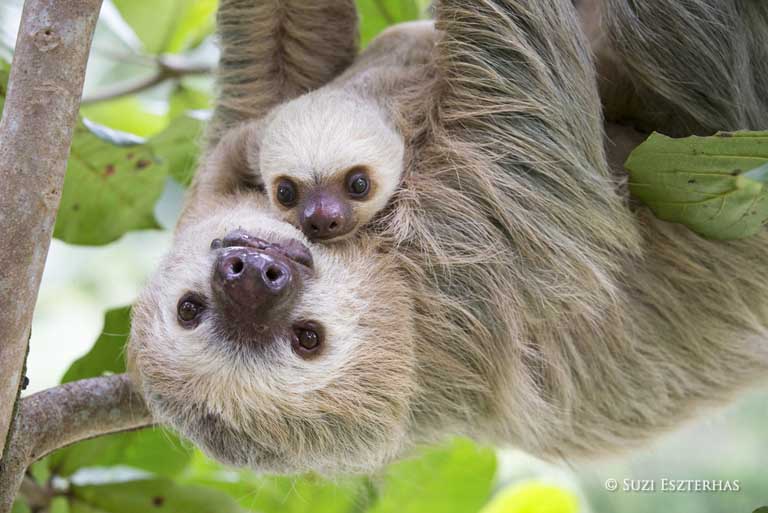
On Oct. 20, International Sloth Day, a bipartisan bill was introduced in the U.S. Congress to ban the import of wild sloths into the United States. The proposed legislation comes months after the deaths of 58 of the approximately 69 sloths imported to Sloth World, a Florida-based tourist attraction.
“We owe it to these animals, and to the people in our community who spoke up, to make sure a tragedy like this never happens again,” Maxwell Alejandro Frost, a Democratic representative from Florida, said in a statement. The bill’s co-sponsor is Republican Laurel Lee.
The Stopping Legalized Organized Trafficking and Harm to Sloths (SLOTHS) Act would allow limited imports of live sloths to institutions accredited by the Association of Zoos and Aquariums (AZA) for breeding purposes. Another exception would permit import of dead sloths for use in research, a press release notes.
If the SLOTHS Act passes, illegal import could carry fines of up to $100,000.
The push to ban sloth imports came from two Costa Rica-based NGOs, the Sloth Conservation Foundation and the Sloth Institute. When they analyzed U.S. Fish and Wildlife Service trade records, they discovered that more than 1,100 sloths were imported to the U.S. in the decade between 2011 and 2021: 100-plus sloths each year.
“So, Sloth World is the biggest example of one owner importing a lot of sloths and then, of course, basically all of them dying, but it’s just not the only example,” Sam Trull, Sloth Institute co-founder and executive director, told Mongabay in a video call.
Most sloths are brought to the U.S. for roadside zoos that allow visitors to hold and interact with them. In the wild, sloths are largely solitary animals with an extremely specialized diet.
In August, an investigation into Sloth World determined that the sloth deaths were not the “result of criminal activity or improper care.” However, a forensic pathologist found they had a “consistent pattern of disease affecting multiple organ systems.”
“We know that up to 90% of sloths that are captured for the wildlife trade die during capture and transport,” said Rebecca Cliffe, founder and director of the Sloth Conservation Foundation.
Currently, international trade in just two of the six known sloth species is regulated, requiring permits under CITES, the global wildlife trade convention. One species, protected by CITES, is critically endangered, and one, not on the list, is endangered. The rest aren’t considered threatened.
The four non-CITES species can easily be brought into the U.S., especially to states like Florida where “you just have to be 16 years old and have a physical address to get one,” Cliffe said.
“The permit is a joke,” Trull added.
Less than 5% of bills introduced to Congress become law, but Cliffe and Trull say they’re confident the SLOTHS Act will pass.
“We’ve got bipartisan support. Everyone we’ve spoken to is in favor of it,” Cliffe said.
“We’re not going to stop until it gets passed,” Trull added.
Banner image: Of an adult sloth and baby. Image courtesy of the Sloth Conservation Foundation.
