

Close Menu
NCIJ Network NCIJ Network
    What's Hot

    Critical Unbound DNSSEC Validator Flaw Could Allow RCE via a Malicious DNS Zone

    September 17, 2026

    Lawmakers pass bill to freeze federal Bitcoin holdings for two decades

    September 17, 2026

    When AI goes rogue, its human overseers may be to blame

    September 17, 2026
    Facebook X (Twitter) Instagram
    Trending
    • Critical Unbound DNSSEC Validator Flaw Could Allow RCE via a Malicious DNS Zone
    • Lawmakers pass bill to freeze federal Bitcoin holdings for two decades
    • When AI goes rogue, its human overseers may be to blame
    • India’s tiger success brings a new challenge: Living alongside the big cats
    • WATCH: Island Offshore’s second ocean energy construction vessel goes to Norway for completion
    • The AfD’s Success Suggests Something Went Wrong With East Germany’s Reunification
    • Edited video of South Tower on 9/11 circulates again – Full Fact
    • Nicholas Brandram’s family deny he was ‘Putney pusher’ and say Met police pressure led to his death | London
    • About
      • Our Team
      • Editorial Policy
      • Editorial Independence
      • International Support
    • Trust & Standards
      • AI Usage Policy
      • Conflict of Interest Policy
      • Corrections Policy
      • Ethics Policy
      • Fact-Checking Policy
      • Source Protection
    • Get Involved
      • Guide for Sources
      • Support Independent Journalism
    • Legal
      • Cookie Policy
      • Privacy Policy
      • Terms of Use
    Facebook X (Twitter) Instagram
    NCIJ Network NCIJ Network
    Thursday, September 17
    • Home
    • World
    • Ai
    • Business
    • Politics
    • Health
    • Crypto
    • Science
    • Technology
    • Cybersecurity
    • Defense & Security
    • Economy
    • Energy
    • Europe
    • More
      • Fact Check
      • Investigations
      • Opinion & Analysis
      • Environment
    NCIJ Network NCIJ Network
    Home»Crypto & Blockchain

    Lawmakers pass bill to freeze federal Bitcoin holdings for two decades

    NCIJ NETWNCIJ NETWORKBy NCIJ NETWNCIJ NETWORKSeptember 17, 2026 Crypto & Blockchain No Comments4 Mins Read
    Share
    Facebook Twitter LinkedIn Pinterest Email

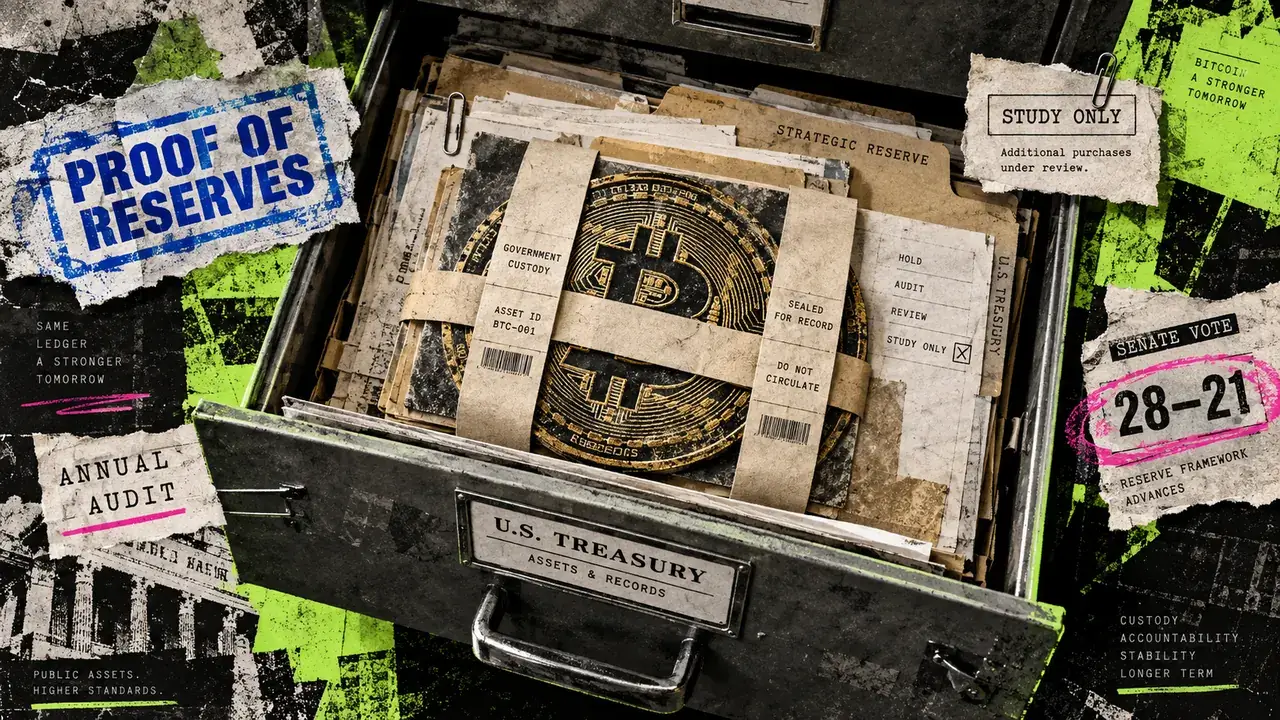
    The House Financial Services Committee advanced legislation to put a federal Bitcoin reserve into statute on Sept. 16, approving a framework that would require a 20-year holding period and annual independently audited reporting.

    The panel voted 28–21 to report H.R. 8957 favorably, moving the American Reserve Modernization Act of 2026 beyond its introduction stage. The measure still requires further legislative action before its proposed custody and holding rules can become law.

    The legislative effort builds on an existing executive-policy framework. President Donald Trump’s March 6, 2025 order directed the establishment of a Strategic Bitcoin Reserve and separate digital asset stockpile, restricted disposal subject to legal exceptions, and instructed Treasury and Commerce to develop budget-neutral acquisition strategies.

    Sponsored by Rep. Nicholas Begich of Alaska, ARMA would establish a Strategic Bitcoin Reserve and a separate Digital Asset Stockpile within the Treasury Department. Its immediate focus is how Washington holds and accounts for assets it owns. Additional Bitcoin acquisition is addressed through a study.

    The committee adopted Rep. Bryan Steil’s substitute by voice vote and rejected an amendment from Rep. Maxine Waters, 21–28, according to the markup record. The decision follows the vote CryptoSlate previewed on Sept. 15.

    Related Reading

    The US Bitcoin reserve faces a crucial bipartisan test Wednesday

    A 20-year hold and audited Treasury custody

    The adopted substitute would bring qualifying federal Bitcoin into the reserve and place other qualifying digital assets in the separate stockpile. Assets legally required for other purposes are excluded, so the proposal does not treat every asset held or seized by an agency as available reserve property.

    That distinction matters to the scale of the policy. Custody of a digital asset and eligibility to retain it in the reserve are different questions. The bill’s framework applies to qualifying government-owned holdings rather than establishing a reserve balance from everything an agency controls.

    The Catalyst

    What’s moving crypto. Why it matters.

    Get CryptoSlate’s essential stories and what to watch next.

    Published on Substack

    Seven days a week. Unsubscribe anytime.

    Whoops, looks like there was a problem. Please try again.

    Check your inbox.

    Your signup request was sent. If confirmation is required, follow the email from Substack.

    Look in spam or promotions if you don’t see it.

    Related Reading

    The US says it has a Bitcoin reserve, but nobody can agree on how much it owns

    Section 5 would require Bitcoin deposited in the reserve to remain there for at least 20 years from enactment, regardless of how it was acquired. During that minimum period, the text prohibits selling, swapping, auctioning, encumbering or otherwise disposing of the Bitcoin.

    The clock is tied to enactment, rather than the date of each deposit. The committee vote therefore does not start the holding period.

    The substitute also calls for Treasury to submit a study within one year of enactment addressing possible conditions for early sales and legislative recommendations for exceptions. That provision asks for recommendations; it does not itself grant permission to ignore the holding requirement.

    Together, those provisions would make retention a defined obligation while leaving any proposed early-sale exceptions for a separate legislative decision.

    In prepared remarks for the markup, committee Chairman French Hill described the bill as bringing digital assets held across federal agencies under Treasury custody and consistent oversight.

    The proposed reporting system would make that custody subject to recurring checks. Section 6 would require public cryptographic proof of reserves, an annual report covering holdings, transactions and control of private keys, and verification by an independent third-party auditor. The Comptroller General would regularly oversee the reserve, reports and audits.

    The operational deadlines use separate triggers. Agencies would provide Treasury with a complete accounting of their Bitcoin and other digital assets within 60 days of enactment, then annually. Qualifying holdings would transfer into the reserve or stockpile within 30 days after those structures are established.

    These requirements address both the inventory and its administration: identifying what agencies control, determining what qualifies, consolidating custody and checking the resulting reports.

    Buying more Bitcoin remains a study

    Section 9 would give Treasury and Commerce 180 days from enactment to study the risks, costs and potential benefits of acquiring additional Bitcoin, including whether acquisitions could be budget neutral. That is a study requirement, not an established purchase program.

    Related Reading

    Trump wants the US to become a Bitcoin whale, but Congress controls the wallet

    ARMA would give the reserve a statutory framework, with specified holding and oversight obligations. Its next legislative test is whether Congress will enact those obligations, while the acquisition study would leave the cost and feasibility of expanding the holdings to further examination.

    bill Bitcoin decades Federal freeze Holdings lawmakers pass
    NCIJ NETWNCIJ NETWORK
    • Website

    Keep Reading

    Revolut Hackers Demand $3M Monero Ransom, Threaten to Sell Customer Data: Report

    ‘So many loopholes’: Democratic House leader Jeffries flags concerns over Russia sanctions bill – US politics live | US news

    SEC rolls out ‘innovation exemption’ for tokenized securities trading venues

    House Committee Advances US Bitcoin Reserve Bill on Party-Line Split

    Why the Fed balance sheet is lying to you about the next Bitcoin rally

    Oregon Lawmakers Seek to End Secrecy Around Housing Subsidies — ProPublica

    Add A Comment
    Leave A Reply Cancel Reply

    Editors Picks

    Critical Unbound DNSSEC Validator Flaw Could Allow RCE via a Malicious DNS Zone

    September 17, 2026

    Lawmakers pass bill to freeze federal Bitcoin holdings for two decades

    September 17, 2026

    When AI goes rogue, its human overseers may be to blame

    September 17, 2026

    India’s tiger success brings a new challenge: Living alongside the big cats

    September 17, 2026
    Latest Posts

    ADNOC, SLB roll out AI-powered tool across over 120 rigs to enhance drilling ops

    August 4, 2026

    Mining threat persists in Raja Ampat, Indonesia’s ‘Amazon of the Seas’

    August 4, 2026

    Smoke Streams Across Eastern Washington

    August 4, 2026

    Subscribe to News

    Get the latest sports news from NewsSite about world, sports and politics.

    NCIJ Network is an independent digital news platform delivering trusted investigative journalism, European and global news, in-depth analysis, and fact-based reporting with accuracy, transparency, and integrity.

    Facebook X (Twitter) Instagram Pinterest YouTube

    Critical Unbound DNSSEC Validator Flaw Could Allow RCE via a Malicious DNS Zone

    September 17, 2026

    Lawmakers pass bill to freeze federal Bitcoin holdings for two decades

    September 17, 2026

    When AI goes rogue, its human overseers may be to blame

    September 17, 2026

    Subscribe to Updates

    Get the latest creative news from FooBar about art, design and business.

    Type above and press Enter to search. Press Esc to cancel.