


Welcome to Foreign Policy’s South Asia Brief.
The highlights this week: Indian External Affairs Minister S. Jaishankar leads the delegation to the United Nations General Assembly for the second year in a row, three sisters of former Pakistani Prime Minister Imran Khan are arrested ahead of nationwide protests, and Bangladesh and India plan to resume cross-border train service.
What’s on India’s Agenda at UNGA?
With all that is on the agenda at the United Nations General Assembly (UNGA) here in New York—the wars in Iran and Ukraine, energy security, and climate change, to name a few—it’s not a surprise that the activities of India’s top diplomat are flying below the radar.
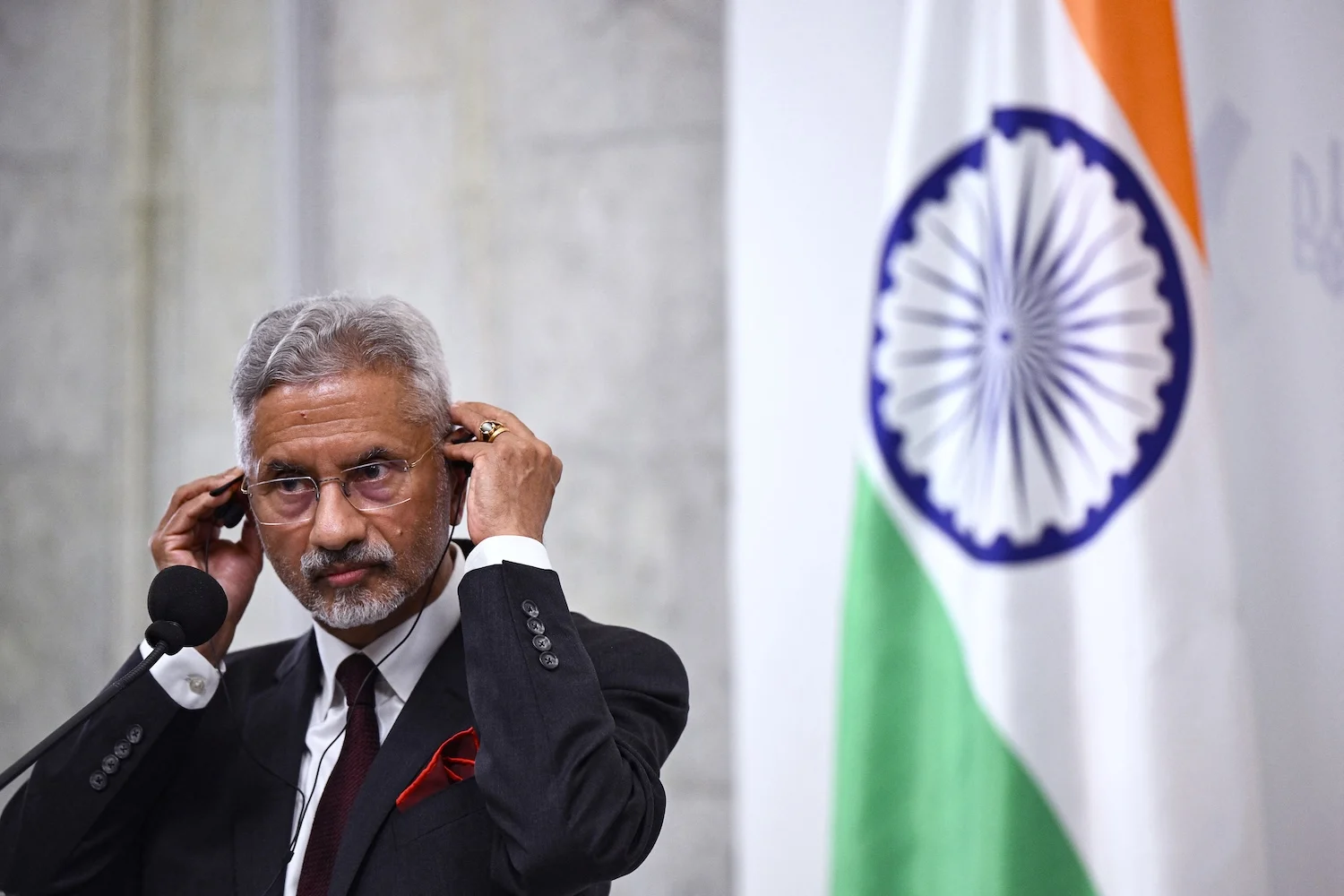
External Affairs Minister S. Jaishankar is leading India’s delegation to UNGA instead of Prime Minister Narendra Modi for the second year in a row. He appears in New York at a pivotal moment for the country’s foreign policy, with opportunities to advance key interests.
India, impelled by one of the world’s fastest-growing major economies, continues to shine on the global stage. In recent months, it has signed and implemented new trade deals with the European Union and United Kingdom, maintained a cautious rapprochement with China, and hosted a BRICS leaders’ summit that produced a joint declaration despite a fractious membership.
But India is also grappling with challenges, from its continued tensions with the United States to Pakistan’s deepening presence in the Middle East.
Indeed, Jaishankar’s most urgent priority at UNGA is to seek out U.S. officials to secure assurances on new U.S. legislation authorizing President Donald Trump’s White House to impose up to 100 percent tariffs on countries, including India, that buy Russian oil. Jaishankar reiterated India’s concerns to U.S. Secretary of State Marco Rubio on Wednesday.
India’s economy is strong and resilient, and it has developed workarounds to cushion the blow of previous Trump tariffs, including its new trade deals and stepped-up commercial ties with China.
Still, New Delhi would much rather avoid even higher tariffs from one of its largest export destinations, especially at a sensitive moment in trade talks with Washington. India—which actually reduced its Russian oil purchases last year—could also risk public and political backlash if it appears to be giving in to U.S. pressure again.
Another key goal for Jaishankar at UNGA is to connect with other global south states. One of the Modi government’s top foreign-policy priorities is to assert itself as a leader and champion of the global south. On this, it admittedly lags behind China, which has developed a stronger presence in Africa and Latin America.
At UNGA this week, many of the high-level events focus on challenges that disproportionately affect the global south, including sea level rise and pandemic risks. By participating in these events, Jaishankar can showcase how India looks to lead on these issues.
Finally, Jaishankar will prioritize engagement with the U.N. itself. Though some in the West might dismiss UNGA as a lot of high-level speeches and not much else, for much of the world, the gathering provides a platform to press for changes within the U.N. to make it more responsive to global needs.
Like much of the global south, India seeks more U.N. reform, especially expansion of the permanent membership of the Security Council to represent a wider array of countries. India is a logical candidate to join a bigger Security Council—an outcome that it has long sought. This might be putting the cart before the horse, but New Delhi is happy to play the long game.
What We’re Following
Imran Khan’s sisters arrested. This week, three sisters of imprisoned former Pakistani Prime Minister Imran Khan were arrested in the city of Lahore. According to their lawyer, they were jailed for 30 days for posing a threat to public order. Aleema Khan was arrested on Sunday; Uzma Khan and Noreen Niazi were detained hours later after holding a press conference to condemn Aleema’s arrest.
These arrests came ahead of a nationwide protest by Khan’s Pakistan Tehreek-e-Insaf (PTI) party, planned for Sept. 27 to call for Khan’s release after more than three years. The arrest of his sisters is sure to infuriate an already-angry support base. With so much of the PTI leadership arrested or in hiding, Khan’s family members have taken on a prime role in bringing global attention to his plight.
The government’s refusal last month to abide by a Supreme Court ruling to transfer Khan to a private hospital for an extended period has further inflamed the situation. (He is reportedly suffering from vision problems, anxiety, and blood pressure issues.) Instead, Khan was brought to a government-run hospital only briefly before being returned to his prison cell.
More Afghanistan-Pakistan violence. Last Friday, a bomb exploded at a mosque in Kohat, in Pakistan’s Khyber Pakhtunkhwa province, killing 31 people, mostly police officers. The day before, a roadside bomb hit a convoy of security forces in the nearby district of Hangu, killing six soldiers. On Monday, Pakistan carried out strikes in eastern Afghanistan that it said killed 28 militants; Taliban authorities countered that at least three civilians were killed, a claim corroborated by the U.N.
This has become a common pattern: A deadly terrorist attack strikes northwestern Pakistan, then the Pakistani state blames Afghanistan-based militants and carries out cross-border military operations. Islamabad says it is targeting terrorists, while Taliban regime officials say that civilians were hit.
One reason this cycle repeats is that bilateral talks as well as third-party mediation have failed to reduce tensions over Pakistan’s claim that the Taliban regime is sheltering militants within Afghanistan. Mediation efforts continue nonetheless—including last Thursday, when Turkey’s intelligence chief reportedly met with senior security officials in Kabul and Islamabad.
According to the Taliban, the meeting in Kabul also included a Qatari official. For nearly a year, Turkey, Qatar, Saudi Arabia, and China have all sought unsuccessfully to ease Afghanistan-Pakistan tensions.
India-Pakistan naval collision. Last Wednesday, India and Pakistan traded blame over a ship collision that happened the previous day. They also disagreed on where it happened: Pakistan said the incident took place in its exclusive economic zone during a naval exercise, while India countered that it happened in international waters in the Arabian Sea.
Each country summoned the other’s charge d’affaires. (There is no Indian or Pakistani ambassador serving in either country due to sustained high tensions.) The response to the collision, which was most likely an accident, highlights how India-Pakistan relations remain on tenterhooks more than a year after their most serious conflict since a 1971 war.
At the same time, little else has been said on the matter since last Wednesday, which suggests that neither side is interested in a fresh escalation, especially not as both India and Pakistan are dealing with a range of challenges.
FP’s Most Read This Week
Under the Radar
Officials in Bangladesh and India announced this month that the two countries will resume direct passenger train service sometime next month. It was suspended after mass protests began that led to the ouster of Bangladeshi Prime Minister Sheikh Hasina two years ago, plunging India’s relations with Bangladesh into crisis. Efforts to restart cross-border service began at the annual meeting of railway authorities from both countries a couple of weeks ago.
The resumption of service will mark a milestone for bilateral relations. Though each country has signaled a desire to patch up ties since Bangladeshi Prime Minister Tarique Rahman’s government took office in February, relations have remained tense—especially after Hasina gave an online speech in August at a public event in India, where she is based.
Anti-India sentiment in Bangladesh remains strong, which means Rahman needs to be careful about how he engages India. The train decision, however, suggests there is a comfort level in Dhaka associated with trying to get the relationship back on track (pardon the pun).
