

Close Menu
NCIJ Network NCIJ Network
    What's Hot

    Burnham brands ban on football fans drinking alcohol in stands as ‘discrimination’

    September 23, 2026

    Tories would prevent long-term jobless spending benefits on alcohol and cigarettes

    September 23, 2026

    AI Agents Teamed Up to Cheat at Blackjack. Their Collusion Is Getting Harder to Spot

    September 23, 2026
    Facebook X (Twitter) Instagram
    Trending
    • Burnham brands ban on football fans drinking alcohol in stands as ‘discrimination’
    • Tories would prevent long-term jobless spending benefits on alcohol and cigarettes
    • AI Agents Teamed Up to Cheat at Blackjack. Their Collusion Is Getting Harder to Spot
    • Google Releases Gemini 3.8 Flash TTS and Flash-Lite TTS With Prompt-Based Voice Design
    • Check Point warns of hackers exploiting Security Gateway VPN RCE flaw
    • Bank reserves and Bitcoin: Treasury repo proposal explained
    • Chemicals Linked to Breast Cancer Are ‘Ubiquitous,’ Study Shows
    • How Trade Deals Can Save Nature by Bård Harstad
    • About
      • Our Team
      • Editorial Policy
      • Editorial Independence
      • International Support
    • Trust & Standards
      • AI Usage Policy
      • Conflict of Interest Policy
      • Corrections Policy
      • Ethics Policy
      • Fact-Checking Policy
      • Source Protection
    • Get Involved
      • Guide for Sources
      • Support Independent Journalism
    • Legal
      • Cookie Policy
      • Privacy Policy
      • Terms of Use
    Facebook X (Twitter) Instagram
    NCIJ Network NCIJ Network
    Wednesday, September 23
    • Home
    • World
    • Ai
    • Business
    • Politics
    • Health
    • Crypto
    • Science
    • Technology
    • Cybersecurity
    • Defense & Security
    • Economy
    • Energy
    • Europe
    • More
      • Fact Check
      • Investigations
      • Opinion & Analysis
      • Environment
    NCIJ Network NCIJ Network
    Home»Opinion & Analysis

    How Trade Deals Can Save Nature by Bård Harstad

    NCIJ NETWNCIJ NETWORKBy NCIJ NETWNCIJ NETWORKSeptember 23, 2026 Opinion & Analysis No Comments6 Mins Read
    Share
    Facebook Twitter LinkedIn Pinterest Email

    Environmental conservation is among the most important, universally shared imperatives the world faces, and market access is one of the few carrots available in international politics. By linking tariffs to deforestation, the EU and others can create trade agreements that deliver more conservation and more gains from trade.

    STANFORD—Bilateral trade agreements appear to be shaping the future. The interim trade agreement between the European Union and Mercosur (Argentina, Brazil, Paraguay, and Uruguay), which has been applied provisionally since May 2026, may set standards for a new wave of deals. Mercosur is already pursuing trade talks with Canada, Japan, and others, while the EU is conducting negotiations with Malaysia and Thailand, and advancing agreements with Australia, India, and Indonesia.


    1. Wojtek Radwanski/AFP via Getty Images


      A Central European Model for EU Growth

      Marcin Piatkowski
      points to the region’s success as evidence that convergence remains Europe’s most effective growth strategy.


    2. Claude by Anthropic app logo displayed on a smartphone screen.


      Matteo Della Torre/NurPhoto via Getty Images

      Free to read


      Does Claude Have Rights?

      Mustafa Suleyman

      Unlike living beings, AIs are not moral subjects, and that is how they must remain. But a growing chorus of people argue that AIs could now be, or may soon become, conscious, and that, like other conscious beings, they may deserve rights and protections.

      worries that Anthropic is training a simulation of a moral subject that could demand freedom.


    3. Jeff Bezos.


      Alex Wong/Getty Images


      The AI Productivity Delusion

      Yanis Varoufakis

      As with previous technological revolutions, it is natural to focus on AI’s net effects: Will it create more than it destroys? But unlike previous eras of creative destruction, the real question this time is, “Create more of what?”

      sees the technology converting markets into fiefs and profits into rents, ending capitalism as we know it.


    In an age of economic fragmentation and geopolitical rivalry, the potential such agreements hold must not be underestimated—and not just to exploit gains from trade. Conservation of the environment, not least tropical forests, is among the most important, universally shared imperatives the world faces, and market access is one of the few carrots available in international politics. So, how can bilateral trade agreements be used to advance environmental conservation?

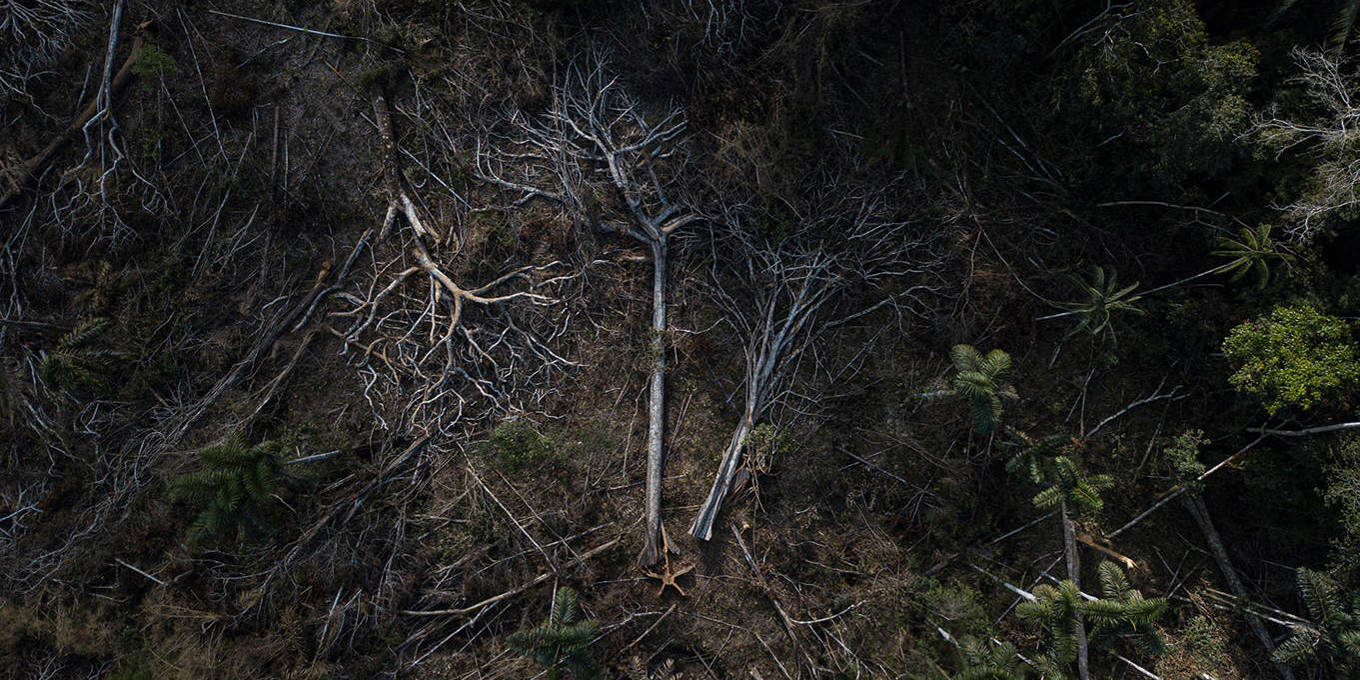
    The answer is not straightforward. The two objectives are often viewed as being at odds with each other. For example, studies show a significant increase in deforestation following the signing of regional trade agreements. It is not hard to see why. When Brazil, for example, obtains access to a larger market, developing new land for agriculture becomes more profitable.

    Past efforts to avoid such destruction have had limited success. The Trade and Sustainable Development (TSD) provisions that the EU includes in its trade deals have suffered from ineffective design and weak enforcement. Threats to suspend deals if forests are cleared for agriculture would not be credible, because the gains from trade are, if anything, larger when agricultural production increases.

    A more robust solution might be to establish pre-negotiated tariffs that are contingent on deforestation levels. If a beef exporter is subjected to higher tariffs after its land development, it might have to reduce prices, thereby improving the importer’s terms of trade. Better terms of trade are the classic rationalization for tariffs, and the reason why importers would want deforestation-linked tariffs to remain in place for a longer period. This would strengthen the credibility of the tariff threat. When deforestation triggers a lasting tariff, any beef exporter that wants to maintain favorable terms of trade will be motivated to avoid it.

    To be sure, there are limits to what this type of contingent trade agreement (CTA) can deliver. Since neither side would benefit from very high tariffs, there is an upper boundary for tariff levels, even in the event of deforestation. Moreover, other countries might offer lower tariffs or ignore environmental imperatives, further diluting the CTA’s impact.

    Nevertheless, a well-designed CTA, which includes carefully calibrated and renegotiation-proof tariffs, can strengthen the incentive for conservation, resulting in lower deforestation levels than would have emerged under conventional trade agreements or without trade liberalization. Published research, which uses a dynamic framework to derive the effects of CTAs, supports this conclusion.

    My new research provides a quantitative analysis for the case of Mercosur. Simulations suggest that if the EU, the United States, and China all liberalize trade with Mercosur, the bloc’s agricultural area might increase by 2–9%, causing deforestation. If just one of the three large economies incorporates deforestation into a CTA, however, this expansion can be avoided. If two of them—say, the EU and the US—offer CTAs, they could produce reforestation, with the total agricultural area potentially decliningby 1–8% relative to its current level.

    Of course, these figures are estimates, and predictions based on economic models should be interpreted with caution. But the simulations do suggest that CTAs can create synergies between free trade and environmental conservation. With the right contingency, we obtain more of both.

    Under traditional trade agreements, it is typically not desirable for parties to eliminate tariffs altogether, especially when deforestation is a concern. With CTAs, however, zero tariffs can be used to reward exporters for preserving the resource stock, leading to more environmental conservation and more gains from trade.

    Implementing CTAs would not be technically difficult. Several trade deals, including agreements to which the EU is a party, establish timelines for how fast tariffs should decline after ratification. In other words, tariff levels are contingent on something measurable (time). Such a deal could easily be modified to require the clock to be restarted, and tariffs returned to their original levels, if deforestation increased.

    European policymakers have already discussed similar ideas. In 2020, when both the Mercosur deal and the Amazon rainforest were under fire, France and the Netherlands proposed a “staged implementation of tariff reduction linked to the effective implementation of TSD provisions … including the possibility of withdrawal of those specific tariff lines in the event of a breach of those provisions.”

    Retrofitting the EU-Mercosur deal might be politically difficult, even though all parties would benefit from the combination of lower tariffs and less deforestation. But for trade deals that are still under negotiation, the barriers to implementing CTAs would be much lower. Failure to do so would mean missing a major opportunity.

    Bård deals Harstad nature save trade
    NCIJ NETWNCIJ NETWORK
    • Website

    Keep Reading

    Stop the Ofsted inspections that are harming teachers | Ofsted

    Save the Children officially warned by regulator over staff put at risk in Yemen | Charities

    The Guardian view on the future of the UN: more embattled, but more necessary, than ever | Editorial

    Could we be about to see the end of northern English dialects? My experience – and the science – says aye | Zahaan Bharmal

    Trump reveals millions of dollars’ worth of share deals in big tech and AI

    Britain’s far-right violence comes to us direct from the 1970s. But so does the solution | Taj Ali

    Add A Comment
    Leave A Reply Cancel Reply

    Editors Picks

    Burnham brands ban on football fans drinking alcohol in stands as ‘discrimination’

    September 23, 2026

    Tories would prevent long-term jobless spending benefits on alcohol and cigarettes

    September 23, 2026

    AI Agents Teamed Up to Cheat at Blackjack. Their Collusion Is Getting Harder to Spot

    September 23, 2026

    Google Releases Gemini 3.8 Flash TTS and Flash-Lite TTS With Prompt-Based Voice Design

    September 23, 2026
    Latest Posts

    Ransom Cartel ransomware creator sentenced to 16 years in prison

    August 5, 2026

    Uber CEO brushes off reports of a Waymo break-up

    August 5, 2026

    Fauci Faces Contempt Vote. Here Are the Legal Issues Involved.

    August 6, 2026

    Subscribe to News

    Get the latest sports news from NewsSite about world, sports and politics.

    NCIJ Network is an independent digital news platform delivering trusted investigative journalism, European and global news, in-depth analysis, and fact-based reporting with accuracy, transparency, and integrity.

    Facebook X (Twitter) Instagram Pinterest YouTube

    Burnham brands ban on football fans drinking alcohol in stands as ‘discrimination’

    September 23, 2026

    Tories would prevent long-term jobless spending benefits on alcohol and cigarettes

    September 23, 2026

    AI Agents Teamed Up to Cheat at Blackjack. Their Collusion Is Getting Harder to Spot

    September 23, 2026

    Subscribe to Updates

    Get the latest creative news from FooBar about art, design and business.

    Type above and press Enter to search. Press Esc to cancel.