


- Indonesia’s long-debated Agrarian Reform Regulation Law was approved on Sept. 22.
- The legislation establishes a framework for resolving agrarian land disputes, restoring land rights and redistributing land, but details of how the law will operate remain unclear.
- A coalition of civil society groups have raised concerns about the final draft of the bill, saying it could limit land redistribution and make it difficult to resolve conflicts involving state-controlled land.
- The test of the new legislation will be whether it changes conditions for farmers, Indigenous communities, fisherfolk and other groups affected by land conflicts, says the coalition.
JAKARTA — Indonesia’s parliament has passed a law intended to resolve long-running land conflicts and curb land concentration, but civil society groups say provisions in the final draft could limit redistribution, leave state-controlled land difficult to challenge and expose some land occupants to criminal charges.
The House of Representatives, known as the DPR, approved the Agrarian Reform Regulation Law on Sept. 22, after lawmakers and the government agreed on the bill the previous day. The law establishes a framework for resolving structural conflicts over agrarian land ownership, restoring land rights and redistributing land, among other aims. The final enacted text has not yet been made publicly available, leaving some details of how the law will operate unclear.
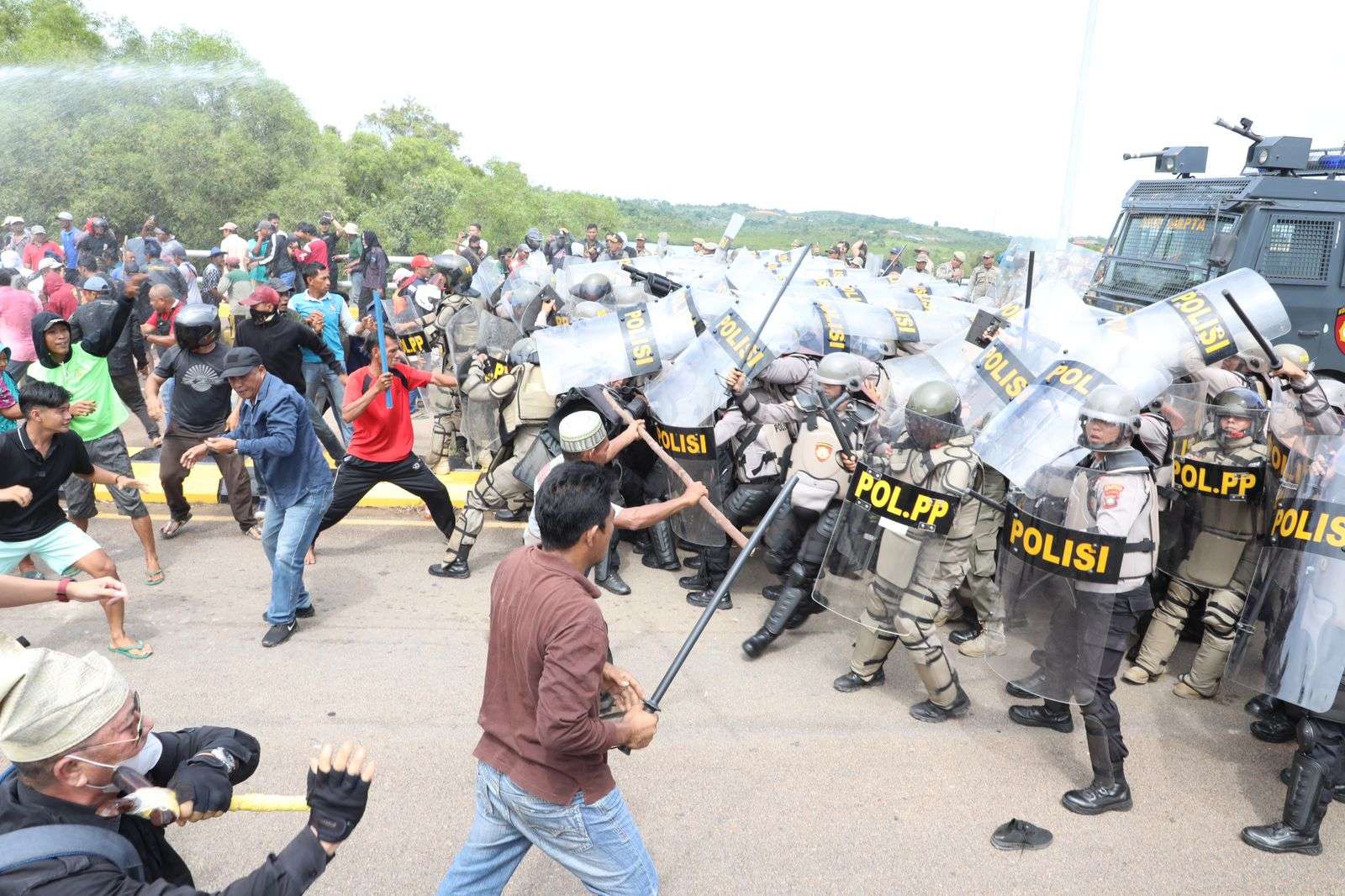
The debate over the efficacy and the implementation of the law comes amid a long-standing pattern of land disputes in Indonesia. The Agrarian Reform Consortium (KPA), an advocacy group, reportedly recorded 3,234 agrarian conflicts affecting 7.4 million hectares (18.3 million acres) and 1.8 million households between 2015 and 2024.
KPA and other advocates have argued that many conflicts arise from overlapping government authority, land allocations and competing claims involving communities, companies and state institutions.
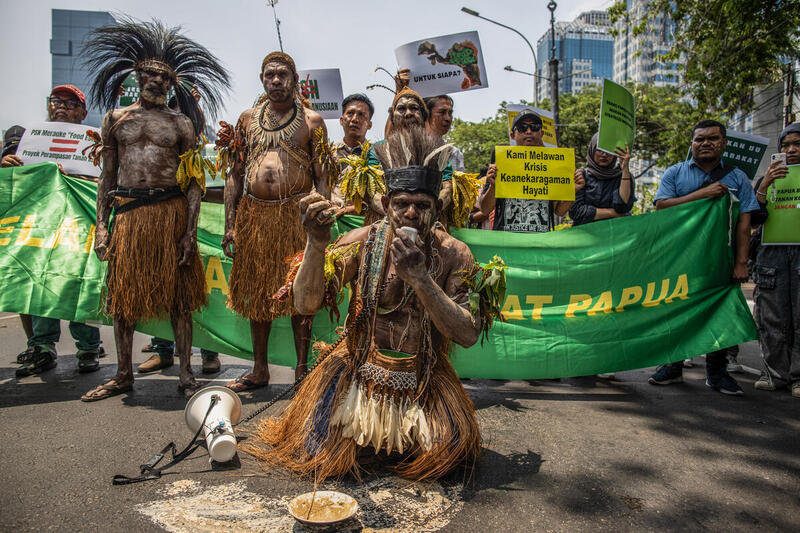
Indigenous communities, farmers and fisherfolk can be affected when their customary or livelihood areas overlap with concessions, state-designated land or infrastructure projects.
The new law is intended to address what lawmakers describe as fragmented authority and regulations that have complicated conflict resolution.
The parliament said the bill’s provisions include land-use planning and controls, mechanisms for resolving conflicts and restoring rights, and limits on landholding intended to prevent land from becoming concentrated again.
New body to coordinate reform
A central feature of the bill is a new national body for agrarian reform.
The law establishes the Agrarian Reform Implementation Institution (Lembaga Penyelenggara Reforma Agraria or LPRA), which will be directly accountable to the president.
According to the parliament, the LPRA will have authority over planning, implementation, monitoring and the resolution of agrarian conflicts.
According to local media reports, Agrarian Affairs and Spatial Planning Minister Nusron Wahid has said the LPRA will mediate communal agrarian conflicts, including disputes involving corporations and state-owned enterprises.
The law also provides for a separate supervisory council, tasked with ensuring participation, transparency, accountability and effectiveness in the implementation of agrarian reform.
Muhammad Khozin, a member of the parliament’s Legislative Body, has said the proposed agency is meant to coordinate work across government sectors, including forestry, transmigration, home affairs and the National Land Agency. He has described fragmented regulations and policies as one of the roots of structural agrarian conflicts, citing cases in which land status or records held by different government agencies overlap.
Advocacy group KPA welcomed the passage of the law and the plan for a dedicated institution, describing the measure as a step toward genuine agrarian reform. The group has long argued that conflict resolution needs a body able to work across sectors, rather than relying only on existing land-administration mechanisms.
The parliament has also presented the bill as more than a land-certification program, which tends to focus on handing out certificates on existing small plots and thus doesn’t resolve deep structural land inequality
In a Sept. 22 statement, it said the law is intended to change agrarian structures, prevent redistributed land from becoming concentrated again and prioritize groups including farmers, landless people, Indigenous communities, women and poor communities.
Land limits and state-controlled areas
The bill provides for minimum and maximum limits on landholding, taking into account factors such as land availability, population density, poverty, environmental carrying capacity and regional size, according to lawmakers’ descriptions during deliberations.
It also seeks to apply cumulative limits to affiliated businesses, a measure intended to prevent companies from evading a ceiling by splitting holdings among related entities.
But a civil society coalition monitoring the bill says determining these maximum limits will ultimately be up to the government through future regulation.
In an article on online legal platform Hukumonline, the coalition argues that the practical effect of the limits could, therefore, be dependent on later executive decisions. The coalition also said the Sept. 19 draft of the law exempts certain categories of entities, including state-owned and regional government-owned companies, cooperatives and publicly listed companies.
The coalition has separately raised concerns about provisions for identifying land that can be used for agrarian reform.
It says the last draft required authorities to take account of land considered strategically important to national interests, while moving language on the social function of land controlled by the state, ministries, state-owned companies and security institutions out of the main articles and into the explanatory section.
The coalition fears that land held as state assets or used for strategic purposes could therefore be harder to consider for restitution or redistribution.
The concern is particularly acute, the coalition says, where the state itself is involved in a dispute.
As reported by Hukumonline, it cited longstanding contested land cases in villages and sub-districts, such as Rancapinang, Bara-Baraya, Lekok and Nguling, Rumpin and Pundenrejo, including cases involving land controlled by state institutions.

Questions over independence and review
The coalition also questions whether a body accountable directly to the president can resolve conflicts impartially when government agencies or state institutions are among the parties to a dispute.
“Without an independent institution, conflict-of-interest rules, representation of affected communities, and guarantees of judicial review, the state could potentially act simultaneously as a party, examiner and arbiter of the resolution,” Muhammad Isnur, chair of the Indonesian Legal Aid Foundation (YLBHI), said as quoted by Hukumonline. The coalition says the draft does not clearly provide for an objection process, or procedural rules or a judicial review for people adversely affected by the body’s decisions.
The DPR’s public statements emphasize the need for a stronger institution with authority to coordinate conflict resolution.
On Sept. 19, lawmaker Siti Aisyah argued that the body should be able to take corrective action, not merely coordinate between agencies. She questioned the government’s position that the agency should not have such powers, citing a case in which a transmigration settlement had certificates but was later treated as forest area by the forestry ministry. Transmigration is a government program to relocate people from densely populated areas to less populated ones, but relocation to forest areas isn’t possible because these areas are typically reserved for forestry purposes, such as conservation.
Mimin Dwi Hartono, a senior staff member at Indonesia’s human rights commission, Komnas HAM, meanwhile, has said decisions by the new body must remain subject to review, particularly when they affect land rights, Indigenous communities or the revocation of rights.
In an article published by Kompas, he argues for objection mechanisms and access to independent courts, alongside oversight and transparency.
In a YLBHI video, Edy Kurniawan, a YLBHI manager for economic, social and cultural advocacy, argues that an agrarian court should play a role in resolving conflicts to prevent abuse of power.
The coalition’s position is that the law should provide a clear and independent route for affected people to challenge decisions, rather than leaving them dependent on an agency whose final authority and review mechanisms are not yet clear.

Short deliberations draw criticism
The coalition has also criticized the speed and transparency of the legislative process.
The parliament says its working committee met with 55 parties, including academics, practitioners, nongovernmental organizations, companies and relevant ministries and agencies to discuss the legislation, and that lawmakers and the government discussed 596 items on the government’s list of proposed changes.
The coalition, however, says the deliberations were too rushed to allow affected communities to examine the draft, provide meaningful input and learn how their concerns were handled.
The working committee’s intensive discussions ran from Sept. 17 to 21, and the bill was approved at the DPR’s plenary session on Sept. 22.
“What we want to say is that even good intentions will always have bad consequences if they are pursued through processes that are non-transparent, non-participatory and extremely rushed,” Edy said in the YLBHI video.

Criminal provisions and conditional protection
The civil society coalition had also warned about criminal provisions in the bill, saying that they could expose people to prosecution while land rights remain disputed.
The new law limits criminal sanctions to the misuse of land designated for agrarian reform, known as Tanah Objek Reforma Agraria (TORA), according to a report by news outlet Katadata.
This includes three types of criminal penalties, such as transferring land rights to obtain a benefit for themselves or another person, evading landholding restrictions, and threatening to transfer control of a TORA recipient’s land, with the maximum sentence reaching eight years in prison or a fine of up to 200 million rupiah (around $11,150).
The draft, seen by Mongabay, also includes protections for agrarian-reform beneficiaries, community advocates and people defending their land rights, but the coalition says these protections were conditional on conduct being judged to have been undertaken in “good faith”.
It argues that without objective criteria, the condition could leave too much discretion to law-enforcement authorities.

Plantation land and profit-sharing
The draft’s treatment of plantation land is another point of contention.
The coalition says the bill requires holders of cultivation rights (Hak Guna Usaha or HGU) and plantation business permits to surrender at least 20% of the relevant land area for agrarian reform, but allows the obligation to be replaced by a payment or profit-sharing arrangement equivalent to 20% of profits if the land is not handed over.
It says this could turn a land-transfer obligation into a benefit-sharing scheme without changing who controls the land.
The coalition says HGU holders who had not yet met the 20% obligation would have one year to do so.
Indigenous Peoples Bill remains pending
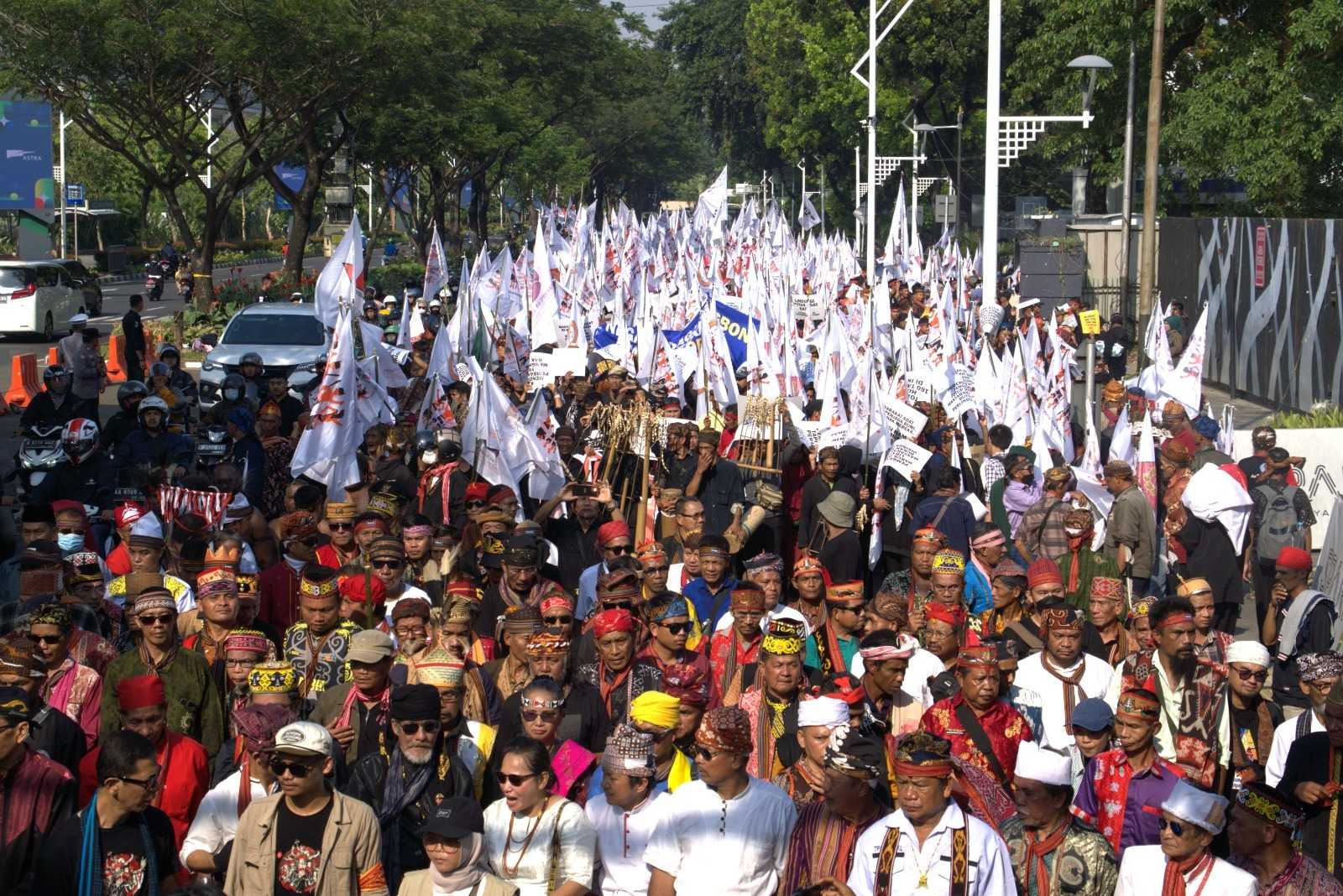
The passage of the agrarian reform law has renewed calls from Indigenous rights advocates for parliament to pass a separate Indigenous Peoples Bill, which has been in legislative limbo for more than 16 years.
The bill was first included in the DPR’s priority legislation list in 2010 and has since been added and removed several times. In 2026, it was again listed as a priority bill, and a working committee was formed in February, according to Veni Siregar, coordinator of a civil society coalition monitoring the legislation.
Veni told Kompas that the bill’s deliberations remain far from complete.
The coalition has discussed issues including definitions, customary territories, procedures for recognition and protection, FPIC, Indigenous women’s rights, a proposed commission, remedies for rights violations and criminal provisions.
Agung Wibowo, executive coordinator of NGO HuMa Indonesia, argues that the agrarian reform law is no substitute for a law specifically recognizing Indigenous peoples and their rights. As reported by Kompas, he says that treating customary territories as objects for redistribution risks framing land as something granted by the state, rather than recognizing Indigenous communities’ pre-existing rights and returning territories taken from them.
“[Indigenous] communities whose territories are controlled by concessions are not asking for land to be distributed,” Agung says. “They are demanding its return. Accepting customary territories as objects of agrarian reform means exchanging existing rights for rights that are granted, and positioning the state as a giver rather than as a party returning what was taken.”
He also emphasizes that customary territories encompass more than land, including springs, coastal areas, small islands, waters and seas used as fishing grounds. The distinction matters, he is reported as saying, because a land redistribution framework may not address the full range of rights and resources at stake in customary territories.
The parliament says the agrarian reform law prioritizes Indigenous communities among groups eligible for reform and includes provisions concerning the protection of customary land.

The proof is in the pudding
Now that the law has been passed, KPA has urged the government to make 1.76 million hectares (4.3 million acres) of disputed lands identified and mapped by the group and its partner organizations an initial focus of implementation.
The locations include disputed land involving state-owned and private plantation companies, forestry enterprises, state-owned assets, abandoned land and problematic concessions, KPA says.
For KPA, the law is a milestone after years of advocacy, but the test will be whether it changes conditions for farmers, Indigenous communities, fishers, women and other groups affected by land conflicts.
Its impact will depend on the final rules, the new institution’s powers and safeguards, and whether communities can obtain remedies when their rights have been violated, Dewi of KPA says in a KPA press release shared with Mongabay.
“The passage of the Agrarian Reform Regulation Law is an important achievement,” she says. “But the people will not measure victory by the sound of the gavel in the parliament building.”
“True victory will come when farmers get their land back, Indigenous peoples regain their living territories, fishers can protect their villages and fishing grounds, women obtain equal rights to land, victims of criminalization obtain justice, agrarian conflicts are resolved, land monopolies are corrected, and people live more prosperous lives on their land and agrarian resources.”
Banner image: Clashes between local residents and security forces during a protest against a plan to build the world’s second-largest glass and solar panel factory on Rempang Island, Indonesia, on Sept. 7, 2023. Image courtesy of BP Batam.
FEEDBACK: Use this form to send a message to the author of this post. If you want to post a public comment, you can do that at the bottom of the page.
Cite this article
Hans Nicholas Jong (2026). Indonesia passes agrarian reform law amid concerns over land protections. Mongabay Conservation news. DOI: https://doi.org/10.66709/news-331043

