


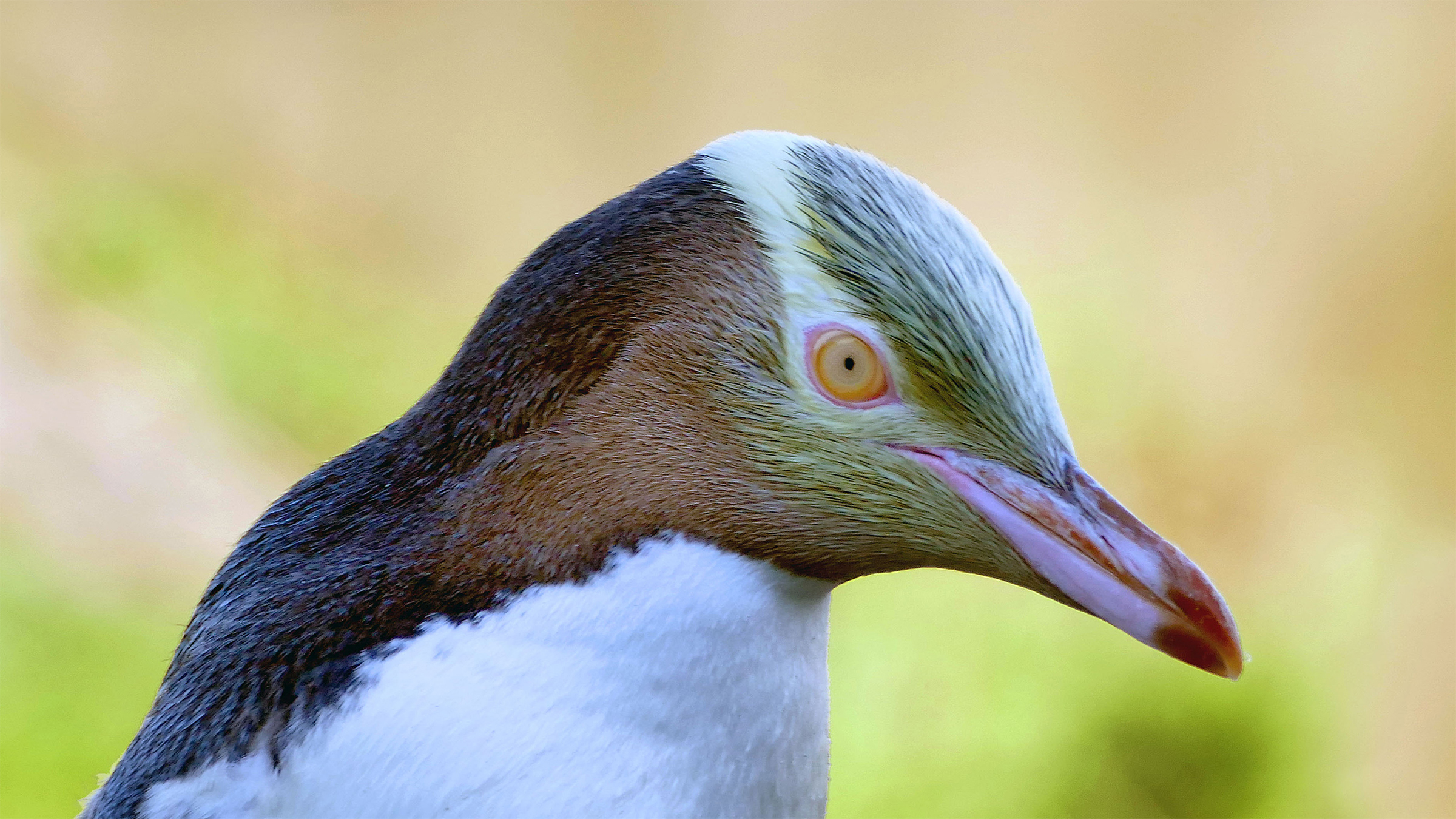
- Yellow-eyed penguins, found only in Aotearoa New Zealand, are at risk of extinction.
- The “mainland” population is down to 117 breeding pairs, having declined more than 80% since the 2008-2009 breeding season; the only other population, which lives on New Zealand’s subantarctic islands, is believed to be larger but isn’t well surveyed.
- Set-net fishing, a type of gillnet fishing, has been one of several factors in the population decline.
- Following pressure from conservationists but over the objections of fishers, New Zealand’s government recently banned set-net fishing around the Otago Peninsula and established an annual fishing-related mortality limit of four yellow-eyed penguins.
OTAGO PENINSULA, Aotearoa New Zealand — Sandfly Bay was long a key nesting area for yellow-eyed penguins (Megadyptes antipodes), noisy, pink-footed birds that spend long days foraging at sea. But this wild beach on the Otago Peninsula, like others nearby, has gone quiet. In 2024, the last breeding-age female at Sandfly Bay, who’d been consistently producing chicks for a dozen years, drowned in a fishing net.
Fishing has been one of many factors driving the species, which is only found in Aotearoa New Zealand, toward extinction. In the 2008-2009 breeding season, there were 739 breeding pairs in the “mainland” New Zealand population, which includes pairs on nearby islands. But the population has dropped since then to 117 pairs — a decline of more than 80%. These figures don’t account for yellow-eyed penguins on New Zealand’s remote southern islands, which are poorly surveyed.
The IUCN, the global wildlife conservation authority, listed the species as endangered in its last assessment, in 2020, when the mainland population was still twice what it is now. Several experts told Mongabay that the species’ chances of survival are slim, though most said they still had faith.
“I think I’d always like to say that there’s hope because otherwise why do you do what you do, but things are pretty dire,” Trudi Webster, a marine scientist who’s worked on research and conservation of the species for the past decade, told Mongabay.
A number of organizations are working to save the yellow-eyed penguin, and much of the conservation concern has centered on set-net fishing. Set nets act as a vertical wall anchored in the water that catches fish by their gills or entangles them. They’ve drowned numerous yellow-eyed penguins. Over the objections of fishers, the New Zealand government recently opted to make a set-net closure around the Otago Peninsula permanent and set an annual fishing-related mortality limit of four penguins. Conservationists say it’s not enough.

A treasured species, a multitude of threats
Yellow-eyed penguins are an iconic species in New Zealand, appearing on the $5 bill and drawing tourists to Otago. Stuffed yellow-eyed penguins even greet travelers at the airport in Dunedin, the area’s main city.
The species is often called hoiho, a Māori name meaning “noise shouter.” For Kāi Tahu, the Māori tribe whose traditional territory includes the southeast of the South Island, hoiho is a taoka, or treasured species, with deep cultural significance. The penguins are “navigators [that] arrived in a similar way to ourselves,” Hoani Langsbury, a prominent local conservationist and member of Te Rūnanga o Ōtākou, a branch of Kāi Tahu, told Mongabay.
“We have an affinity with those species that have managed to travel to our coastline and then adapt and stay here for a long period of time,” said Langsbury, who’s a trustee with the local nonprofit Yellow-Eyed Penguin Trust, among other roles. He added that it was sad “that our children that come after us are probably never going to even know those species were here,” referring to hoiho.

Scientists have traditionally divided yellow-eyed penguins into two populations: the mainland or, more officially, “northern” population that, confusingly, lives primarily on New Zealand’s South Island, and the “southern” population that lives on remote islands farther south.
The southern population, comprised of penguins at the Auckland Islands and Campbell Island, diverged from the mainland thousands of years ago. There seem to be more penguins there than in the mainland population, but the population hasn’t been studied recently. Genomic research published in the journal Nature Ecology & Evolution in May found that the penguins actually comprise three distinct lineages — mainland, Auckland and Campbell — and proposed recognizing each as a separate subspecies.
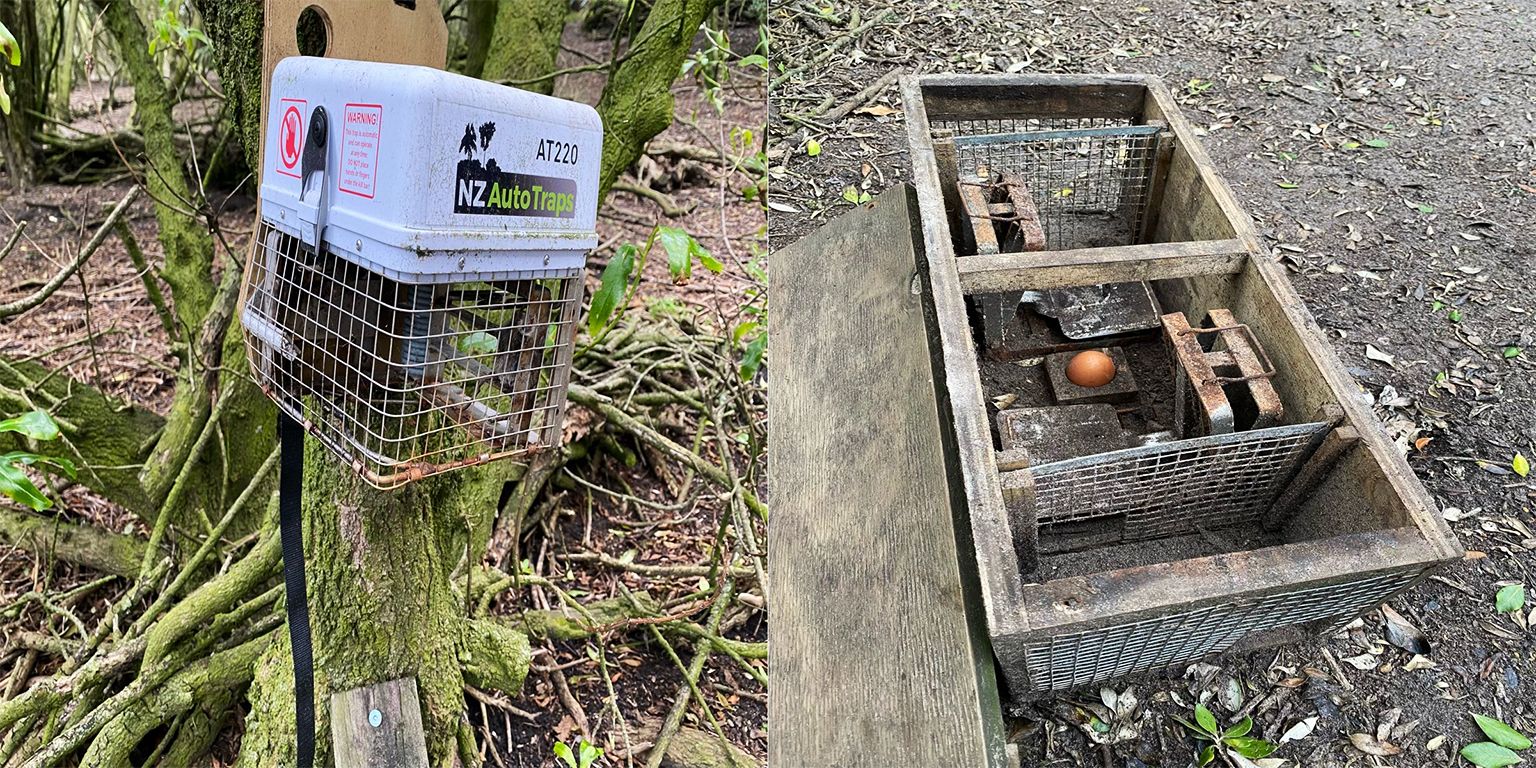
The penguins face a wide array of threats. These include predation by non-native land animals such as dogs, cats, weasels and rats. Langsbury, for his part, helped steer a massive yearslong project to eradicate possums, long ago introduced for their fur, from 10,000 hectares (roughly 25,000 acres) of the Otago Peninsula, which was completed in March. That effort wasn’t aimed solely at helping penguins, but efforts to reduce terrestrial pressures on them have been far-reaching at many nesting sites. Penguin Rescue, for example, is a local nonprofit that manages a large share of the remaining mainland population at three nesting sites near the town of Moeraki. The organization traps predators and maintains fencing to protect penguins from them and from human disturbance.

Two diseases have plagued mainland yellow-eyed penguin chicks in recent decades. One is diphtheritic stomatitis, first identified in 2002, which causes lesions and plaques in chicks’ mouths that can prevent them from eating and breathing. The other is respiratory distress syndrome (RDS), which was first identified in 2019 and causes severe breathing difficulties, killing more than 90% of chicks that catch it. And enough catch it that it’s a serious problem: RDS has been killing 25-40% of mainland chicks since 2021, according to Janelle Wierenga, head of wildlife management at the Otago Peninsula Eco Restoration Alliance (OPERA), a private reserve that includes a penguin rescue center. The hemorrhaging in the lungs can make it look like they’re filled with blood in necropsies, Wierenga said. The diseases aren’t known to affect the southern population, she said.
Penguin Rescue and the OPERA are part of a loose network of organizations that manage the species on the ground. So is Wildlife Hospital Dunedin, which, among other roles, treats or monitors nearly every mainland chick for both diseases.
“It’s still quite intensive management,” Wierenga told Mongabay, saying it was necessary to keep mortality rates down.


Caught in a set of debates
If it’s hard for conservationists to control what yellow-eyed penguins experience on land, the marine environment presents its own challenges. For one, their diet has in recent decades shifted away from juvenile red cod (Pseudophycis bachus), which has become less available due to warming seas and fishing pressure, and toward larger blue cod (Parapercis colias), which can be difficult for adults to regurgitate to their chicks.
Yet the marine issue that scientists and conservationists wanted to speak to Mongabay about was a threat they do see as preventable: set-net fishing, a form of gillnet fishing that is often called set gillnetting outside of New Zealand. (Set nets are anchored in place; other kinds of gillnets can drift.) Gillnets can be selective by size but are “not very species selective,” according to the U.N. Food and Agriculture Organization. This means they pose a significant bycatch risk.
Since October 2019, 18 mainland yellow-eyed penguins have died in set nets, according to Fisheries New Zealand (FNZ), the government regulator. The real toll could be higher, as not all incidents are necessarily reported, though FNZ has had onboard cameras on all set net vessels in the southeast since October 2023 that incentivize fishers to report all unintended catch.


Experts said relatively few mainland chicks successfully run the gauntlet of threats they face on land and fledge into the marine environment, so when those that do are then killed by fishing gear, it’s particularly damaging to the population. Webster, the marine scientist, said the bycatch numbers might not look like much but when you consider how low the population numbers are, they are “actually a big problem.”
Ursula Ellenberg, a teaching fellow at the University of Otago Department of Marine Science, said this was the threat that could most directly be addressed through policy change.
“We can stop killing them in set nets tomorrow,” Ellenberg told Mongabay.
FNZ has taken action. In September 2025, it instituted a temporary ban on set-net fishing out to about 8 nautical miles (14.8 kilometers) from the shore around the Otago Peninsula; this ultimately stayed in effect for a year. (A prohibition on set-net fishing within 4 nm (7.4 km) of the shore already existed to protect endangered Hector’s dolphins (Cephalorhynchus hectori).) On Sept. 16, 2026, the 8nm closure became permanent, following a July announcement. Separate new rules that will take effect Oct.1 set an annual fishing-related mortality limit of four yellow-eyed penguins. This comes with an “escalating response framework” enabling FNZ to take progressively stronger action each time there’s yellow-eyed penguin bycatch. However, the rules don’t include an automatic fishery closure if the limit of four is exceeded.

Chanel Gardner, a frequent spokesperson for the local fishing industry and a director of Harbour Fish, one of the area’s main seafood businesses, told Mongabay that the temporary ban had already caused one family to stop fishing, taking a vessel out of the set-netting fleet. “It’s just super sad for everybody,” she said. Set-netting can “get painted with a very unfair brush when people don’t understand the local conditions,” she added.
She said the method is a targeted way to fish for rig (aka lemonfish, Mustelus lenticulatus), elephantfish (Callorhinchus milii) and school shark (Galeorhinus galeus), all used in fish and chips, a common and inexpensive meal in New Zealand.
Gardner said fishers go to the “nth degree” to protect yellow-eyed penguins and had called for a smaller, more targeted closure area. But their pleas “weren’t really given any weight because the emotional connotation of hoiho and that it’s so endangered and so precious really has overtaken the science and the pragmatism of it,” she said.
Gardner and other industry representatives have argued that yellow-eyed penguins wouldn’t recover even if set-net fishing ceased entirely. Conservationists dispute this interpretation and emphasize the importance of protecting individuals that have survived long enough to forage at sea and potentially breed.
Conservationists have themselves expressed frustrations with the new government rules, calling them inadequate. Forest & Bird, a prominent New Zealand conservation group, had pushed for a 14-nm (about 26-km) closure along the country’s entire southeastern seaboard; WWF-New Zealand made a similar proposal. Yellow-eyed penguins are known to travel as far as 27nm (50 km) offshore — or even further at Campbell Island — though they’re usually found within the range Forest & Bird proposed. Meanwhile, Otago is just one of several areas in the southeast that the penguins occupy; conservationists point out that there have been at least four set-net deaths near Rakiura (aka Stewart Island), one of the islands included in the mainland population, since 2021.
“The set net closure zone includes only a small part of the foraging range of hoiho,” Yolanda van Heezik, a zoology professor at the University of Otago, told Mongabay in an email.
“Given the parlous state of the population, losing 4 birds to the fishing industry per year is too many – if any one of them is a super-breeder, then it’s a catastrophe,” she added, referring to research that she co-authored showing that a small number of yellow-eyed penguins make a disproportionate contribution to future generations. In March, she co-authored an opinion piece in a local newspaper arguing that every breeding adult should be considered a potential super-breeder.
The Environmental Law Initiative, a New Zealand-based NGO, has argued that the escalation framework provides “little reassurance [because] there is no guarantee of a regulatory response, and if there was one, it would presumably only be in place for however long was left within the fishing year.”

Another threat?
In recent months, three birds found dead in New Zealand, none of them penguins, tested positive for H5N1 bird flu, raising concerns that an outbreak could affect more species including yellow-eyed penguins. Bird flu has caused penguin die-offs elsewhere in recent years; for example, at least 2,300 gentoo penguins (Pygoscelis papua) died of H5N1-related complications in the Falkland Islands in late 2024 and early 2025.
However, the last confirmed detection in New Zealand was on Aug. 21 and the three cases were outside the yellow-eyed penguins’ range. Moreover, yellow-eyed penguin nesting pairs are dispersed rather than packed into colonies, which could make them somewhat less vulnerable to bird flu than other penguin species, according to Ellenberg, the teaching fellow.
Ellenberg said the biggest threats to the species are longstanding, and she’s seen their effects firsthand. She shared the story of a male yellow-eyed penguin in the mid-to-late 2010s on Whenua Hou (aka Codfish Island), one of the islands included in the mainland population. He and his mate nested alongside old-growth forest, just beside a hut where Ellenberg would stay, and she would hear their loud “flirting” and banter with their chicks. Then the female disappeared. Yet the male couldn’t let go.
“For years he’d be there setting up, getting the nest ready, being ready for his partner to return, and every night he would walk down,” Ellenberg said, starting to cry and struggling to get her words out. “He would walk down to greet his partner at the beach. She would never come back, of course.”


Banner image: A yellow-eyed penguin. Image courtesy of Bernard Spragg via Flickr (CC BY 2.0.)
New Zealand put fishing boats under camera surveillance. Will it stay the course?
Citations:
Guhlin, J., Wierenga, J. R., Douglas, J., Swindells-Wallace, P., Langsbury, H., Webster, T., … Geoghegan, J. L. (2026). Population genomics of yellow-eyed penguins uncovers subspecies divergence and candidate genes linked to respiratory distress syndrome. Nature Ecology & Evolution, 10(7), 1329-1341. doi:10.1038/s41559-026-03062-w
Stein, A. M., Young, M. J., Darby, J., Seddon, P. J. … Van Heezik, Y. (2016). Evidence for high inter-generational individual quality in yellow-eyed penguins. PeerJ, 5, e2935. doi:10.7287/peerj.preprints.2386v1
Feedback: Use this form to send a message to the author of this post. If you want to post a public comment, you can do that at the bottom of the page.
Cite this article
Edward Carver (2026). As yellow-eyed penguins disappear, conservationists focus on deaths in fishing nets. Mongabay Conservation news. DOI: https://doi.org/10.66709/news-331013

