


NY-17: Second in a series on the environmental stakes of one of the nation’s most fiercely contested congressional races.
Nancy Vann’s resolve has become the subject of a local jingle. Its chorus goes: “If she can do it, so can we.”
Vann, 78, moved to Peekskill, 40 miles north of New York City, after September 11, 2001. Brown & Wood, the law firm at which she worked, occupied five floors of the World Trade Center. She watched both towers fall before her 10:30 a.m. call-in.
Over the next 10 years, her dawn and sunset hours were spent on the Metro-North, a commuter railroad, the Hudson River unspooled alongside.
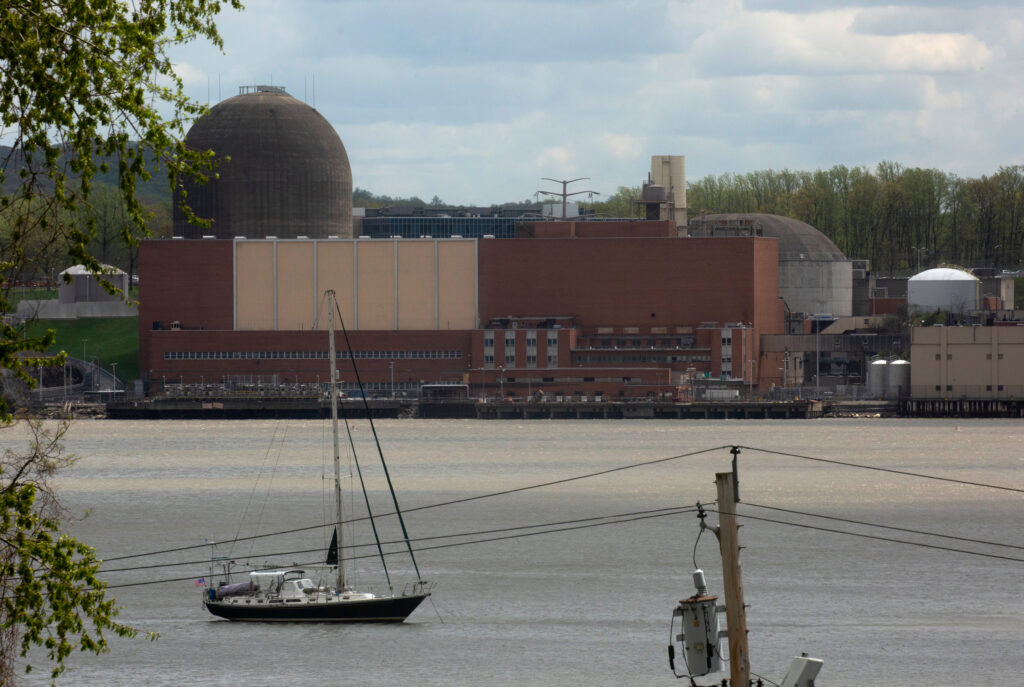
Vann was no stranger to the Hudson Valley; since the late ‘90s, she had owned a summer cabin in a co-op community in neighbouring Buchanan. Her cabin lay just half a mile from Indian Point Energy Center, a nuclear power plant on the river’s eastern bank. Indian Point, she later learned, had possibly been considered as a target by the 9/11 hijackers.
The nuclear plant, formerly owned by Louisiana-based Entergy, and since acquired by Holtec International, is presently being decommissioned, the years-long process of permanently retiring a facility. How that process is going and what, exactly, it might lead to are points of contention as the Trump administration aggressively pushes a rebirth for America’s nuclear industry.
That debate has become particularly fraught in New York’s 17th Congressional District, where the plant’s future could become an issue in one of the most closely contested House races this November.
Susan Shapiro, an environmental attorney and resident of the district, called Indian Point “the elephant in the room in our region.”
Candidates have opposing views on what should become of the site. Cait Conley, the Democratic challenger, wishes to see the decommissioning progress, while incumbent Republican Mike Lawler, a veteran party official in New York, has advocated for Indian Point’s reopening, and recently took Department of Energy Secretary Chris Wright to the site.
“The fact is, there’s no better-positioned site for energy generation in the Hudson Valley than Indian Point,” he told the New York Post in a recent interview.
Nuclear energy sits firmly under Lawler’s “all-of-the-above” energy strategy to improve grid reliability and lower utility costs. Conley, meanwhile, is not decidedly anti-nuclear, but calls the site “broken and decrepit” on her campaign website, which lists “Stopping Mike Lawler’s drive to reopen Indian Point” as a policy priority. A decorated combat veteran and national security official in the Biden administration, she has not publicly taken a position on the plant’s decommissioning.
“I really wanted the Democrats to weigh in on this, but they seemed to be avoiding it,” said Erik Lindberg, a resident of Peekskill.
With Republicans controlling the House by a narrow 218-213 margin, Democrats’ chances for retaking the chamber are considered good—and this district, in the affluent suburbs of New York City, is considered one of their best chances for picking up a Republican-held seat. Whether nuclear power becomes a decisive issue may depend on how voters weigh its potential benefits for energy costs against concerns about public health.
Vann had never paid close attention to Indian Point, or the nuclear issue, until 2014, when she read that Enbridge, a major Calgary-based pipeline company, planned to build a 42-inch gas pipeline beneath her property. It was also within roughly 100 feet of the nuclear plant’s emergency backup generators and switchyard. It was then that she became involved, first in the pipeline fight, then in the battle over Indian Point.
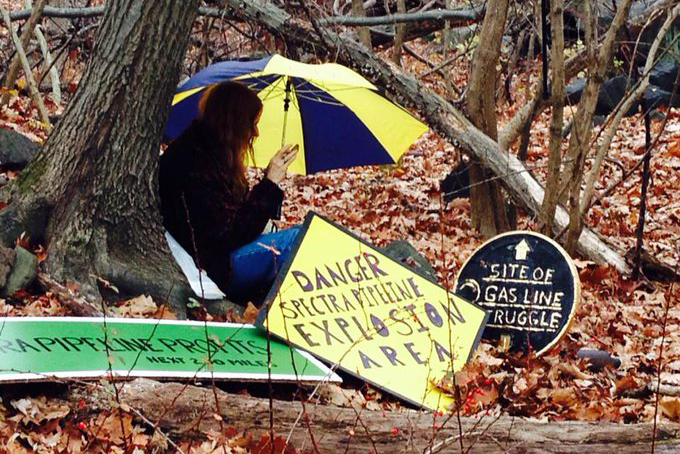
Today, she sits in on six to seven weekly calls about nuclear sites in various stages of transition. There are plants undergoing decommissioning, like Indian Point and San Onofre, in California; others, once slated for closure, that remain in operation, like California’s Diablo Canyon; and “zombie nukes,” like Michigan’s Palisades and Pennsylvania’s Three Mile Island, that are today being brought back online following permanent shutdown. In New York, Gov. Kathy Hochul ordered the construction of an “advanced nuclear power plant,” the first in decades.
Indian Point occupies one of the most densely populated nuclear sites in the United States, with roughly 20 million people within a 50-mile radius. The reactors sit near the Ramapo Fault, a minor seismic zone. They used the Hudson River for cooling water and the controlled release of wastewater.
The strong activist base in the community has long made for an activist versus industry dynamic. In turn, they have been blamed for the plant’s closure.
Ultimately, Indian Point’s unsustainable operating costs led to its shutdown in 2021. Entergy also faced years of litigation over the plant’s license renewal, including lawsuits brought by New York State and environmental groups like Riverkeeper.
Over the years, the plant leaked radioactive waste into groundwater, vented an estimated 600,000 gallons of radioactive steam into the atmosphere, spilled some 3,000 gallons of dielectric fluid and 100 gallons of oil into the river and on occasion raised nearby water temperatures by 15 degrees, killing fish and triggering environmental concerns.

A recent study led by Harvard University’s T.H. Chan School of Public Health found higher cancer mortality rates in counties near operating nuclear plants.
Seven years after moving to Peekskill, Vann was diagnosed with duodenal cancer, a rare and aggressive disease; doctors discovered a grapefruit-sized tumor in her small intestine. She has also had seven cats die, each from cancer.
“It doesn’t prove anything,” Vann said. “But it leaves a bad feeling.”
Then-Gov. Andrew Cuomo pushed to shutdown Indian Point despite the plant providing high-paying, unionized jobs, 400 of which were lost when it closed. Unions today form a key part of Lawler’s political base, in a district where a third of residents live in a union household.
A fund intended to cushion communities from the loss of Indian Point’s tax revenue—$32 million for local municipalities and school districts—is financed by ratepayers. Lawler has seized on this, and made Indian Point’s closure a campaign issue, accusing Conley of bowing down to climate activists and having no energy plan.
“Reopening the Indian Point Energy Center would restore reliable, affordable, carbon-free energy while reducing our reliance on fossil fuels and lowering emissions,” he wrote in a recent Facebook post, citing a recent report from the New York Public Service Commission.
Indeed, following the closure of Indian Point, New York increased its consumption of readily available gas to make up the shortfall, and electricity-sector emissions rose 22 percent from 2019 to 2022.
The Future of Nuclear Power
The Trump administration has pledged to “reestablish the United States as the global leader in nuclear energy,” with the goal of expanding U.S. nuclear generating capacity from roughly 100 gigawatts in 2024 to 400 GW by 2050.
President Donald Trump’s executive order, “Ordering the Reform of the Nuclear Regulatory Commission,” calls for extending the licenses of the existing nuclear fleet and encouraging the “reactivation of prematurely shuttered or partially completed nuclear facilities,” arguing that a stronger domestic nuclear industry is necessary for U.S. competitiveness, particularly with China.
In response to Trump’s executive orders, the Department of Energy revised its process to expedite the review, approval and construction of advanced reactors. The new standard allows applicants and the DOE to “negotiate” requirements to achieve safe and secure design, construction and operation as efficiently as possible, “using the minimum requirements necessary” to meet that goal.
The administration’s approach has drawn criticism from former regulators. Gregory Jaczko, who chaired the NRC under President Obama, said the executive order looked “like someone asked an AI chatbot, ‘How do we make the nuclear industry worse in this country?’”
Despite a 2026 report by the Government Accountability Office that recommends the NRC address its shortcomings in considering the risk increase from climate change as part of its license renewal process, the NRC voted 3-2 against adopting recommendations to more comprehensively evaluate these risks.
“The NRC is driving the licensing process through the rearview mirror,” said Paul Gunter, a nuclear reactor specialist and director of Beyond Nuclear, a nonprofit which advocates ending the use of nuclear power.
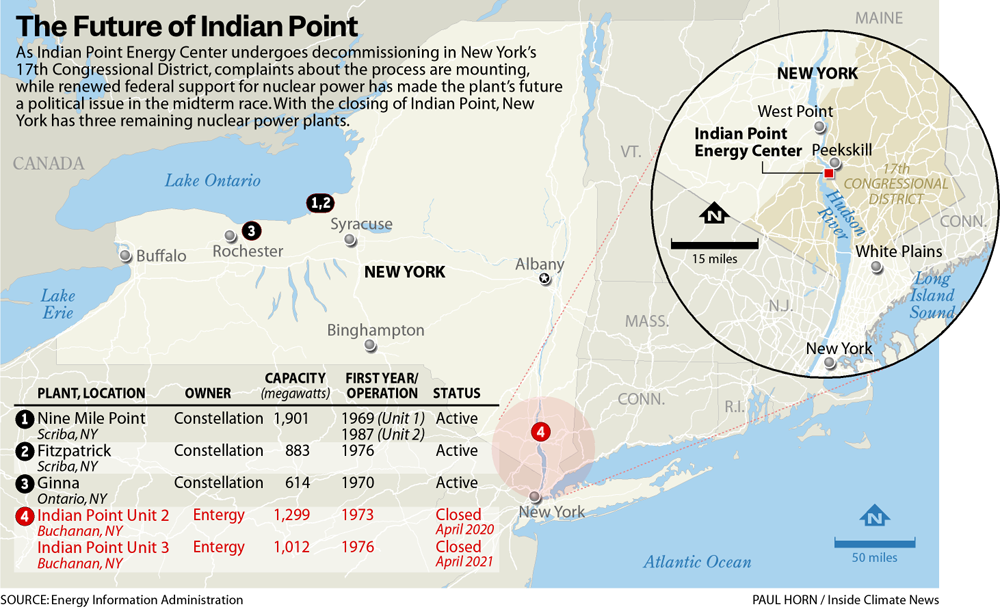
For opponents of Indian Point’s closure, the administration’s pro-nuclear power policies have renewed speculation about the future of the site. Wright has called the plant’s closure “a foolish political decision,” raising questions over whether Indian Point could be considered one of the “prematurely shuttered” facilities eligible for revival. Doing so, however, would require approval from five parties—the Village of Buchanan, the Hendrick Hudson School District, New York State, Westchester County, and the Town of Cortlandt—the latter three of which have stated their opposition.
Even as concerns over costs, safety and decommissioning remain, investment in nuclear energy is accelerating. Meta, Microsoft and Google are among the companies looking to nuclear power to meet the energy demands of artificial intelligence, despite the industry’s long construction timelines and high costs.
“Nuclear power of any size, small or large, is going to face the same problems of the inability to reliably control the cost and control the time in which they can project to finish. And these are two key factors that are antithetical to addressing climate change,” said Gunter.
Holtec’s Decommissioning of Indian Point
Vann’s voice has a slight waver. Speaking on the future of Indian Point, it doesn’t falter.
“There are two signed contracts,” she said, referring to agreements with Entergy and Holtec that require unanimous consent before the site could be revived for nuclear generation. “For Mike Lawler to stand there, at Indian Point, and call for its reopening, he is saying they will ignore the law. He cannot do that. And we will take them to court if they try.”
At most hurdles, Vann’s recourse is the law. She is not shy about taking matters to court. This resolve is steeped in her steadfast belief that law, the Constitution, will, and has, delivered American progress.
Vann is now involved in the oversight of the plant’s decommissioning by Holtec, a company specializing in spent-fuel storage, small modular reactors and, more recently, nuclear plant decommissioning. Holtec acquired the plant from Entergy in 2021 despite Attorney General Letitia James filing to intervene, stating Holtec did not “possess the financial qualifications necessary to complete such a risk-intensive project.”
This story is funded by readers like you.
Our nonprofit newsroom provides award-winning climate coverage free of charge and advertising. We rely on donations from readers like you to keep going. Please donate now to support our work.
Decommissioning involves removing nuclear fuel, cleaning up radioactive contamination, dismantling structures and releasing the land for other public or industrial uses. Holtec has overseen this work, and the $2.3 billion-plus trust fund financed by utility customers that pays for it, with some opacity.
Residents and activists say they feel left out of decision-making, unsure how their money is being spent. A decommissioning oversight board exists to monitor the process, but critics question whether it has provided sufficient scrutiny. Former Gov. Cuomo directed the New York State Department of Public Service to establish the board to protect the financial, environmental and physical interests of local communities affected by the plant’s closure.
“It’s like a shotgun marriage. Some things, they are very forthcoming on, others, like the trust fund, they are not,” said New York State Sen. Peter Harckham, a Democrat, who represents the area and serves as chairman of the state Senate Committee on Environmental Conservation.
“We see the balances have gone down significantly. What was that spent on? Is that a typical expenditure for this point in the process? It’s hard to get clarity,” he added.
Since 2021, the fund has declined by approximately 32 percent. Holtec’s estimated completion date stretches into 2062.
What Comes Next?
The federal government’s increasingly pro-nuclear stance has already affected Indian Point’s decommissioning, state officials say.
“After the federal election two years ago, it’s a whole new NRC crew, and they are much less committal than the last group,” said Harckham.
“I don’t know whether that’s going to be a process of just establishing mutual trust or if it reflects the political focus of the new administration: pro-nuclear, and communities be damned,” he added.
However, despite Hochul’s broader support for expanding nuclear energy, she has remained opposed to reopening Indian Point, and any future nuclear use of the site would require state approval.
Shapiro notes communities’ reliance on the NRC’s proactive environmental protection standards.
“With the NRC basically abdicating all responsibilities, the state has to provide the oversight,” she said. “In every state, I think nuclear power will become a state’s rights issue.”
Holtec has never completed a nuclear power plant decommissioning project. That worries critics who question whether decommissioning has become a pathway to acquiring reactors as assets rather than dismantling them. Holtec recently filed to go public, in a deal that could raise up to $900 million, and its S-1 filing expresses interest in eventually redeveloping Indian Point as a data center, warehouse or for residential use.
Holtec told Inside Climate News that it is not looking to restart the plant, nor is it in discussions with any developers. “We are evaluating all options … with the focus remaining on the safe, efficient decommissioning of the facility,” a spokesperson wrote.
While most involved in overseeing Indian Point’s decommissioning are unconvinced it could be slated for a restart, the community’s greatest fear is what happens if Holtec burns through the fund before the cleanup is complete.
“That leaves us with a Superfund site that technically is the government’s responsibility, so it becomes our responsibility,” said Lindberg, the Peekskill resident.
Oversight mechanisms are also limited. The local oversight board has neither subpoena power nor any legally binding authority. Holtec is not even required to attend its meetings. Technically, under decommissioning law, the trust fund belongs to Holtec, and while the company must report fund balances, it is not required to disclose transactions.
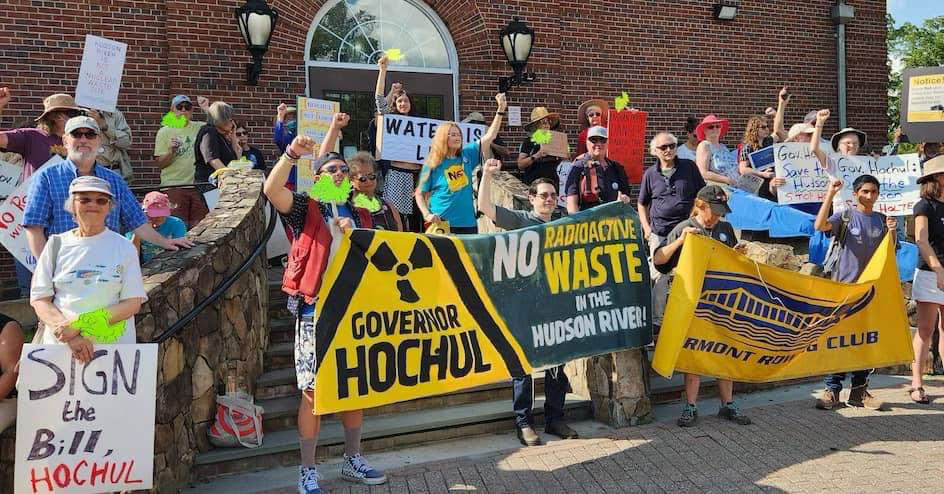
Those concerns intensified when Holtec announced plans to discharge approximately 45,000 gallons of treated radioactive wastewater into the Hudson River. New York’s Save the Hudson Act, passed in 2023, prohibited the discharge. However, a federal judge later overturned the law, giving Holtec permission to proceed. The decision has since been appealed, but the Trump administration’s weakening of federal Clean Water Act protections has raised additional questions about the appeal’s outcome.
Transparency has also become a point of contention. “After we passed the Save the Hudson Bill, communication with Holtec kind of shut off,” said Harckham.
Vann put it plainly: “They have not been transparent at all,” she said.
On the House race, Vann, an elected member of the Peekskill Democratic Committee, expressed excitement about Cait Conley speaking out on the issue. She was largely impressed with all of the Democratic primary candidates.
“We’re all getting behind Cait because even if she didn’t come out against Indian Point reopening, even if it was still up in the air, Mike Lawler has said he wants to reopen it. It’s a no-brainer.”
Vann has long been a leader in the district’s fight for environmental justice. Her resolve has become the subject of the local jingle—“if she can do it, so can we!”—performed live in bars at fundraisers or during protests over environmental issues.
Robert May, author of the song, describes her as a kind of a “mother hen.”
He remembers her home, the meeting place for organizers of the anti-pipeline campaign, as “command central.” Activists participating in direct action would commute from the city and crash in sleeping bags in her living room.
The movement, she emphasizes, is not about her, or any other individual. Still, that movement has become a voting bloc, challenging those who see a return to nuclear power as the answer to the bipartisan challenge of energy affordability.
About This Story
Perhaps you noticed: This story, like all the news we publish, is free to read. That’s because Inside Climate News is a 501c3 nonprofit organization. We do not charge a subscription fee, lock our news behind a paywall, or clutter our website with ads. We make our news on climate and the environment freely available to you and anyone who wants it.
That’s not all. We also share our news for free with scores of other media organizations around the country. Many of them can’t afford to do environmental journalism of their own. We’ve built bureaus from coast to coast to report local stories, collaborate with local newsrooms and co-publish articles so that this vital work is shared as widely as possible.
Two of us launched ICN in 2007. Six years later we earned a Pulitzer Prize for National Reporting, and now we run the oldest and largest dedicated climate newsroom in the nation. We tell the story in all its complexity. We hold polluters accountable. We expose environmental injustice. We debunk misinformation. We scrutinize solutions and inspire action.
Donations from readers like you fund every aspect of what we do. If you don’t already, will you support our ongoing work, our reporting on the biggest crisis facing our planet, and help us reach even more readers in more places?
Please take a moment to make a tax-deductible donation. Every one of them makes a difference.
Thank you,

Fellow
Leana Carbonez is a fellow at Inside Climate News. Born in London, she studied History at the University of Cambridge, and recently graduated from Columbia’s Graduate School of Journalism. She is interested in exploring Americans’ manifold understandings of ‘nature’ and the ways these perceptions are shaped by, and serve, political ideologies. She hopes to continue pursuing investigative projects while working across a variety of journalistic mediums.
