


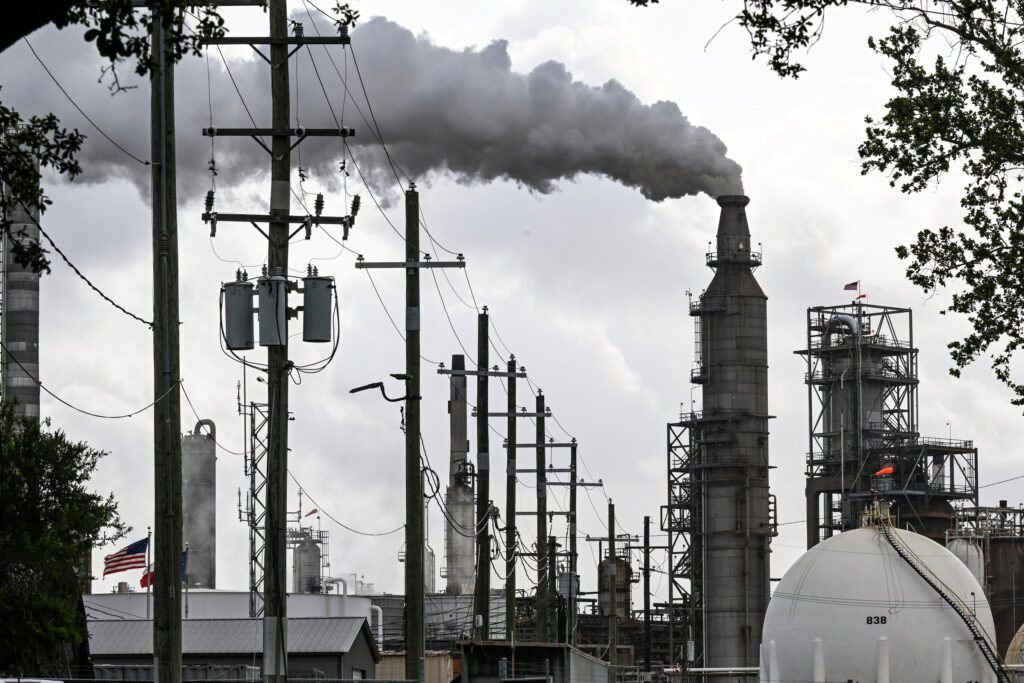
In 2016, current Democratic candidate for Congress Leticia Gutierrez lived six miles from a refinery owned by the Brazilian oil company Petrobras in Pasadena, part of the greater Houston area. The plant accrued thousands of dollars in fines from the Texas Commission on Environment Quality for violations including the release of dangerous air pollutants like sulfur dioxide and nitrogen oxides that coated the significantly Hispanic area bordering the plant, where Gutierrez and her two children lived.
Her eldest son developed an upper respiratory illness as a child and, according to Gutierrez, it wasn’t until she spoke to several pediatricians that she was able to identify the source of her son’s ailment as pollution from the nearby petrochemical facilities along the Houston Ship Channel. A decade later, the same environmental issues that plagued Gutierrez’s community have become central to her campaign platform as she makes a bid in a newly redrawn congressional district that is reliant on fossil fuel to power its local economies by providing more than one million jobs.
“I’m all for making money, but it shouldn’t be on the backs of our children’s health,” Gutierrez told Inside Climate News.
As Election Day approaches, Gutierrez and her Republican challenger, Alex Mealer, have taken clear stances on the industry and its impacts. Gutierrez has focused much of her campaign on the disparate health and environmental ramifications that spawn from living near petrochemical facilities. Mealer, a former oil and gas finance executive, emphasizes her plans to expand employment at those facilities and strengthen the district’s fossil fuel businesses.
This will be the first general election since Texas’ 9th district was redrawn to favor Republicans last year. The election could determine control of the House. A recent poll from the University of Houston shows Mealer, who was endorsed by President Donald Trump in the primary, with a six point lead over Gutierrez, and 10 percent of voters still undecided. Mealer defeated state Rep. Briscoe Cain in the Republican primary runoff. Gutierrez secured her own party’s nomination against five opponents in March.
According to Renee Cross, the senior executive director and a lead researcher behind the poll at the University of Houston’s Hobby School of Public Affairs, the gap between the candidates is considerably narrower than expected, particularly in a newly redrawn district.
“It went from a +26 Democrat district to a +9 Republican. Well, +9 is not tremendous, but it still gives the edge to Republicans,” Cross said. “So the fact that Gutierrez is only 6 points behind is pretty remarkable, not only based on those voting trends but also based on the amount of money that Mealer has had to advertise to get people aware not only of her, but aware of her opponent’s alleged weaknesses.”
Gutierrez and Mealer fall on opposite sides of the oil and gas industry, with Mealer alleging that Gutierrez’s concerns for refineries’ effects on public health will undermine job growth in the oil and gas sector that powers the state of Texas. Gutierrez has denied the assertion.
“My response has always been the same, even as I’ve been doing this work prior to me campaigning: advocating for cleaner air and cleaner environmental standards actually creates jobs,” Gutierrez said. “It doesn’t do away with them. As a matter of fact, this Trump administration’s rollback of a lot of the protections have been put in place for decades by Republicans,” she said, referencing former President George H.W. Bush’s 1990 amendments to the Clean Air Act.
Mealer has expressed plans to expand domestic energy production in an effort to knock down gas and electricity costs and boost local economies. She’s also announced plans to grow the Houston Ship Channel, which accounts for 18.5 percent of the state’s GDP.
Throughout the campaign, Gutierrez has courted working class families, drawing on her background as a single mother and the immigrant daughter of farm laborers. She has pledged to tackle affordability and environmental issues, like the disproportionate impact of poor air quality near Port Houston. Labor organizations, including the Texas Gulf Coast Area Labor Federation and the Texas chapter of the Service Employees International Union, have endorsed her.
This story is funded by readers like you.
Our nonprofit newsroom provides award-winning climate coverage free of charge and advertising. We rely on donations from readers like you to keep going. Please donate now to support our work.
The Texas Health and Environment Alliance declined to comment on the election but said the organization has worked with Gutierrez for years and witnessed her advocacy in the Houston area.
Though Gutierrez has never held public office, in her role as government affairs director at the advocacy group Air Alliance Houston, she supported legislation designed to improve environmental standards in the region, including Senate Bill 763, which called for a more efficient review of air quality standard permits.
In her role at Air Alliance, she also supported HB 1730, which proposed a collaborative health study from the University of Houston to determine the health outcomes caused by forever chemicals in partnership with the Railroad Commission of Texas, the TCEQ and the Department of State Health Services. According to Gutierrez, following a fire at a storage tank in 2019, chemicals from the foam used to combat the blaze seeped into the Houston Ship Channel, raising the contamination level above that allowed by the EPA.
Mealer, who did not respond to requests for comment, has remained relatively quiet on climate and environmental issues in her own campaign, a decision that Cross said makes sense given that, while Mealer has maintained a strong positive position toward the oil and gas industry, residents in the 9th district still grapple with its health effects, including higher cancer risks.
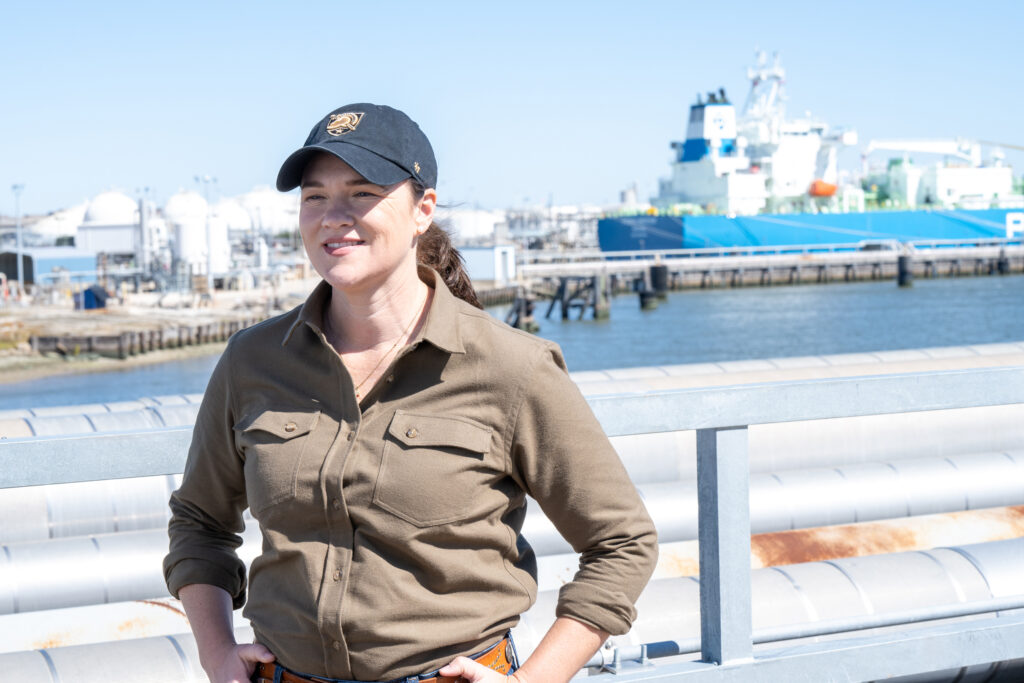
Both candidates have stated that they would work to improve disaster preparedness, which has become an increasingly necessary focus as irregular weather patterns linked to climate change have hit Texas cities and towns.
Gutierrez has said that, if elected, she would request funding from the Federal Emergency Management Agency for “timely and equitable” aid following natural disasters and outlined plans to establish a rapid-response team and mobile assistance centers equipped with multilingual communications. She’s also shared plans to implement drainage and weatherization measures.
“These catastrophic weather patterns are becoming the norm, and we need more investment to make sure that we are prepared, whether it’s with solar or with making sure that your house is energy efficient [or] making sure that if your electricity goes out, that you have a backup generator or something to make sure that your food doesn’t spoil after you just went to the groceries,” she said.
Mealer has pledged to direct state and federal funds to finish flood mitigation projects near Lake Houston, an area that experienced significant flooding during Hurricane Harvey in 2017.
Mealer has not publicly expressed a position on health care. However, Gutierrez told Inside Climate News that she believes there needs to be an overhaul of how health care is administered in the state. “We need to have health care for all once and for all. I can tell you that my insurance premiums have gone through the roof, yet the access to care has gone down. And that’s not just me. That’s mothers out here that are having to also do bake sales and GoFundMes to be able to afford their child’s prescription, their medical needs.”
Data centers have become another point of contention in Texan politics, including in Harris County. Currently, there are more than 45 data centers in the county and more are pending. Citing concerns about data centers’ effects on air, water and energy usage, some elected officials have called for stricter oversight, including Harris County Attorney Abbie Kamin and county commissioners Adrian Garcia and Lesley Briones, each of whom is seeking reelection this November.
In past interviews, Gutierrez has not explicitly stated her position on the fast development of artificial intelligence data centers fuelled by natural gas.
Mealer, however, has expressed strong support for the buildout of AI, though she’s also called for the industry to be regulated. “Artificial intelligence (AI) will shape the future of national security, economic power, and American leadership in the world,” Mealer wrote on her campaign’s website.
“I think that most Republicans in Texas are going to try to just stay in the middle at this point on data centers, at least until after the election and until January when the Texas legislature meets,” Cross said. “So I fully expect that, and Alex Mealer at this point may be supportive, but open to the possibility of regulation.”
Mealer also emphasized the role that she believes AI will play in regards to competition with China, stating that the United States needs to bolster its support for AI to stay ahead. According to the Texas Tribune, Mealer has been financially backed by PACs such as Defending Our Values, which has called for stricter regulations regarding AI usage.
For Gutierrez, her campaign has been built on the tenet that the build out of jobs does not necessarily have to come at the expense of residents’ health.
“Yes, we want to be open for business. Yes, we want to welcome commerce,” she said. “But it’s actually affecting our GDP in a negative way when you consistently make communities out here sick, when cancer clusters are continuing to expand, when folks are grappling with access to healthcare coupled with the things that are making them sick.”
About This Story
Perhaps you noticed: This story, like all the news we publish, is free to read. That’s because Inside Climate News is a 501c3 nonprofit organization. We do not charge a subscription fee, lock our news behind a paywall, or clutter our website with ads. We make our news on climate and the environment freely available to you and anyone who wants it.
That’s not all. We also share our news for free with scores of other media organizations around the country. Many of them can’t afford to do environmental journalism of their own. We’ve built bureaus from coast to coast to report local stories, collaborate with local newsrooms and co-publish articles so that this vital work is shared as widely as possible.
Two of us launched ICN in 2007. Six years later we earned a Pulitzer Prize for National Reporting, and now we run the oldest and largest dedicated climate newsroom in the nation. We tell the story in all its complexity. We hold polluters accountable. We expose environmental injustice. We debunk misinformation. We scrutinize solutions and inspire action.
Donations from readers like you fund every aspect of what we do. If you don’t already, will you support our ongoing work, our reporting on the biggest crisis facing our planet, and help us reach even more readers in more places?
Please take a moment to make a tax-deductible donation. Every one of them makes a difference.
Thank you,
