


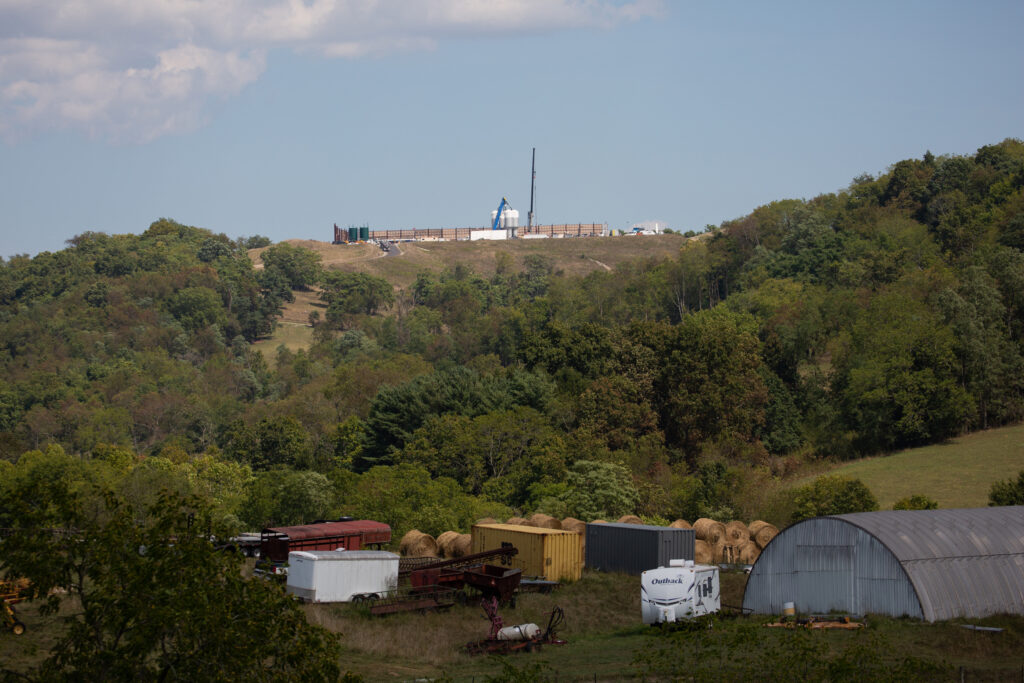
Environmental groups and citizens are urging Pennsylvania regulators to increase the minimum amount of protective buffer space between gas wells and homes, schools and water sources. The issue has taken on new urgency as the AI data center buildout spurs more demand for natural gas.
On Wednesday, a coalition of environmental and community groups held an event at the state capitol to draw attention to their concerns. They complain they’ve been waiting two years for the Department of Environmental Protection to move forward with a petition they filed in 2024, urging the agency to increase minimum setback requirements.
Katie Weber lives in Hanover Township, Washington County and went to Harrisburg because she’s concerned about plans to build a large cluster of data centers powered by an on-site natural gas plant near her home.
“We are united and our message is clear,” Weber said. “We do not want data centers, and we do not want fracking anywhere near our homes, our schools or our daycares.” The day before, activists argued for a three-year moratorium on data centers in another rally at the capitol.
Gov. Josh Shapiro had been an early proponent of the AI buildout in the state, but shifted his stance earlier this year as public opposition mounted. He has signed executive orders aimed at putting some limits on data centers, including having them “build, bring online, or buy incremental electric capacity” to power their facilities. The goal is for data center builders to foot the bill for the increased power demand instead of Pennsylvania ratepayers.
More Data Centers, More Natural Gas
Environmental advocates, like Lisa Graves-Marcucci of the Environmental Integrity Project, worry Shapiro’s efforts will push data center builders to rely more heavily on natural gas to power the facilities—leading to more pollution on site and negative environmental and health impacts from increased shale gas production.
“We’ve realized now that fracking will fuel the data centers,” said Graves-Marcucci. “Communities that already have a lot of fracking could see an increase, or communities that don’t have fracking may get some. It’s all the more reason we need these protective setback distances.”
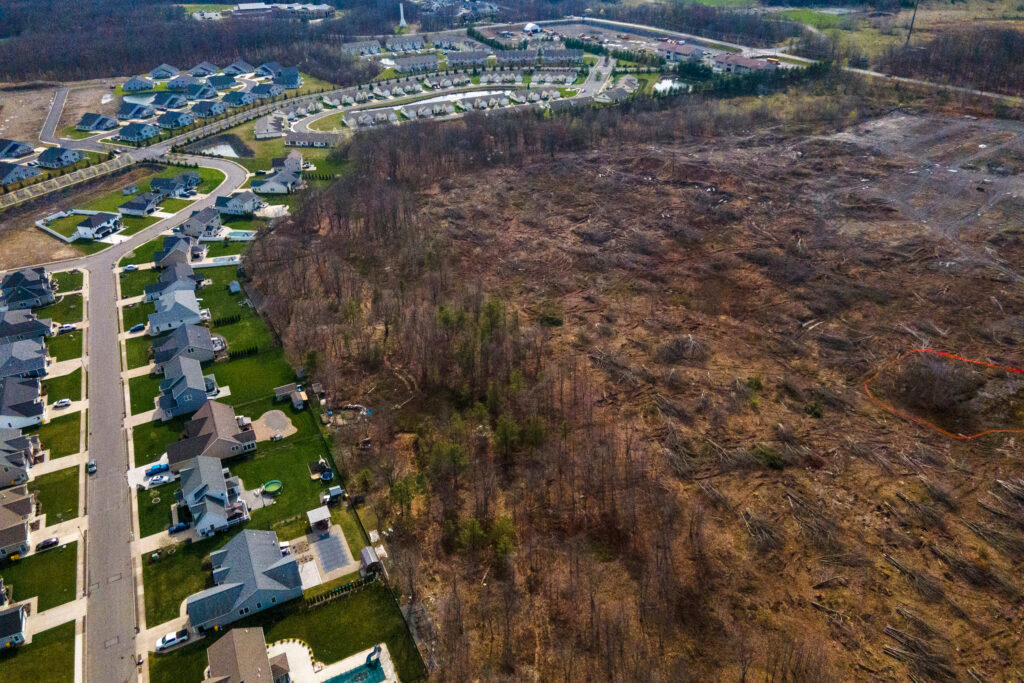
Environmental groups argue a growing body of peer-reviewed research shows more space would provide more protection from potential health harms, including chronic stress, excessive noise and light, poor air quality, vehicle accidents, explosions and chemical spills.
Two years ago, the coalition of groups filed what’s called a petition for rulemaking with the state Department of Environmental Protection’s Environmental Quality Board— asking regulators to evaluate whether the existing setback requirements could be expanded. For example, under current law, a gas well could be 500 feet from a home.
“We are looking for a common-sense protective setback of one kilometer, which is a little over 3,000 feet,” said Gillian Graber, executive director of Protect PT, a community group for Westmoreland and Allegheny counties. “The current setback is very old and out of date.”
Their petition also calls for greater distances between gas wells and buildings serving vulnerable populations like schools or hospitals. David Hess, a former secretary of the Department of Environmental Protection, who authors a blog covering state environmental issues, views the push to increase the setbacks as reasonable.
“We’ve been shale gas drilling here in Pennsylvania for more than 20 years, and to not look at those kinds of issues, like setbacks and other things, would be a huge oversight,” Hess said. “We’ve learned a lot from these operations and how they impact people living next to them. If anyone thinks 500 feet is adequate to deal with any of the issues, I think they’re kidding themselves.”
In 2018 Colorado expanded its oil and gas well setback requirements to be 1,000 feet from schools. A 2020 grand jury report about fracking in Pennsylvania led by then Attorney General Josh Shapiro recommended 2,500 foot setbacks for buildings and 5,000 feet for schools and hospitals.
DEP spokesman Neil Shader said the agency is continuing to review the petition.
“DEP thoroughly reviews all petitions submitted, along with the other associated materials submitted with the petition, before delivering a recommendation to the EQB,” Shader wrote in an email. “This particular petition included several scientific studies, which DEP is reviewing using in-house experts (including a toxicologist) to be able to deliver a fully informed recommendation to the EQB.”
The Marcellus Shale Coalition, a natural gas industry trade group, argues the DEP lacks the legal authority to increase the setback requirements via this rulemaking petition, because those limits are already spelled out in state law, and any changes would have to go through the legislature.
Patrick Henderson, vice president of government affairs and communications at the Marcellus Shale Coalition, previously worked in Republican Gov. Tom Corbett’s administration and helped update the state’s oil and gas law in 2012, in response to the drilling boom.
“That process Governor Tom Corbett put forth was the product of an advisory commission that he appointed with environmental, industry, local government officials and academia to develop,” said Henderson. “Those setback requirements derived a lot from that input.”
Lisa Graves-Marcucci of the Environmental Integrity Project, said the environmental groups are hopeful DEP will respond to them before the end of the year.
“There is no draft rule,” she pointed out. “We’re just waiting for the formality for them to say they’ve reviewed the petition. We believe it merits the full process of rulemaking.”
About This Story
Perhaps you noticed: This story, like all the news we publish, is free to read. That’s because Inside Climate News is a 501c3 nonprofit organization. We do not charge a subscription fee, lock our news behind a paywall, or clutter our website with ads. We make our news on climate and the environment freely available to you and anyone who wants it.
That’s not all. We also share our news for free with scores of other media organizations around the country. Many of them can’t afford to do environmental journalism of their own. We’ve built bureaus from coast to coast to report local stories, collaborate with local newsrooms and co-publish articles so that this vital work is shared as widely as possible.
Two of us launched ICN in 2007. Six years later we earned a Pulitzer Prize for National Reporting, and now we run the oldest and largest dedicated climate newsroom in the nation. We tell the story in all its complexity. We hold polluters accountable. We expose environmental injustice. We debunk misinformation. We scrutinize solutions and inspire action.
Donations from readers like you fund every aspect of what we do. If you don’t already, will you support our ongoing work, our reporting on the biggest crisis facing our planet, and help us reach even more readers in more places?
Please take a moment to make a tax-deductible donation. Every one of them makes a difference.
Thank you,
