


NY-17: First in a series on the environmental stakes of one of the nation’s most fiercely contested congressional races.
The Hudson River bisects New York’s 17th Congressional District, with basalt bluffs lining its western bank 40 miles north of New York City.
The district, which includes Putnam and Rockland counties, as well as parts of Dutchess and Westchester, boasts acres of protected parkland. Its lakes and reservoirs feed the Croton Watershed, a significant source of New York City’s drinking water.
This fall, the 17th district is among the most closely watched House races in what many consider the most consequential midterm elections in American history. The Cook Political Report has the district as one of 18 House “Toss-Up” races, and rates it as one of only two with a Democratic lean. This makes it one of the Democrats’ best pickup opportunities, with Republicans holding a slim 218–213 majority in the House.
The race pits Republican incumbent Mike Lawler against Democrat Cait Conley, a veteran and national security expert. She won 49.5 percent of the vote in the June 23 primary, beating Rockland state legislator Beth Davidson, who took 31.8 percent.
With President Donald Trump’s net approval rating at minus-30 among New York voters, according to polling by The Economist, Democrats hope to win over moderate Republicans.
“I am willing to cross party lines and vote for Cait Conley,” said William Knox, a resident of Dutchess County who supported Lawler in both 2022 and 2024. “He has consistently voted along lines that support the president’s agenda, rather than voting in ways that would support us, his constituents.”
Should Democrats win both the House and Senate, the midterms could put Trump’s political future in jeopardy and determine whether the United States returns to the emissions-reduction path set by the Biden administration. As it stands, Climate Action Tracker rates U.S. climate action as “Critically Insufficient.”
As the campaign has worn on, both candidates have sought to cast the other in a partisan light: Conley has painted Lawler as a lapdog of Trump’s “Make America Great Again” agenda, while Lawler has labeled Conley a Democrat allied with New York’s “radical, far-left socialists.” The race has become a mudslinging contest, rife with half-truths, over the Hudson Valley’s pocketbook issues.
Conley has focused her campaign on affordability issues, tying higher gasoline and grocery prices to Lawler’s support for Trump’s war with Iran. Lawler, meanwhile, has blamed Albany Democrats and Gov. Kathy Hochul for soaring utility costs driven by the closure of Indian Point Energy Center, the district’s retired nuclear power plant, and New York’s climate law.
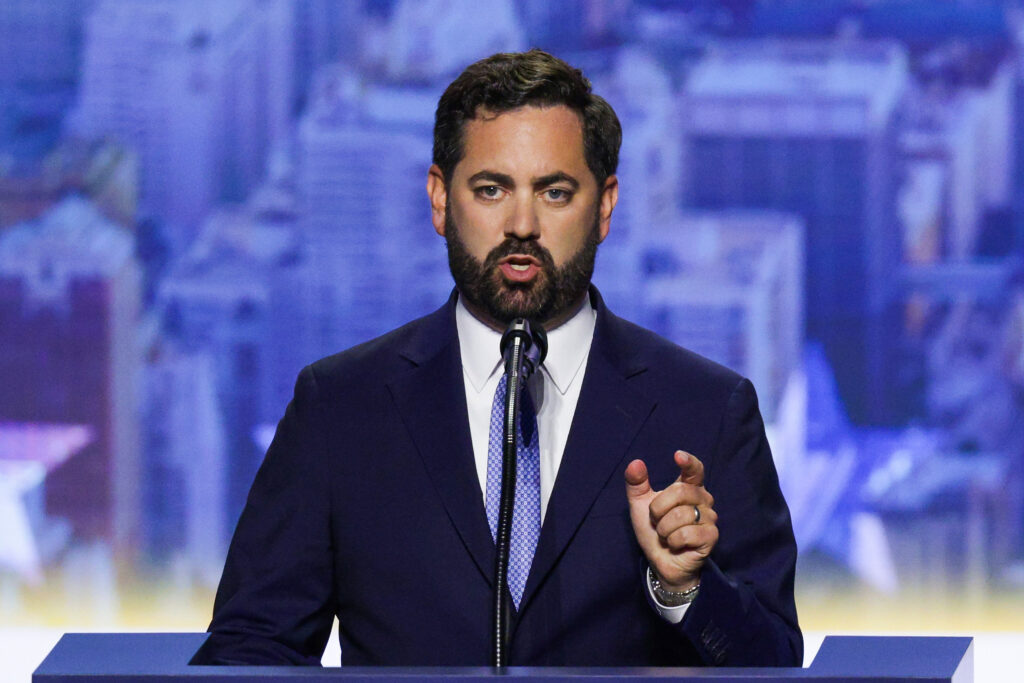
Data centers are another flashpoint. Rockland, where Lawler lives, has five. Lawler has seized on growing public unease over AI, spotlighting more than $328,000 in payments from two AI surveillance companies disclosed in Conley’s financial filings. He has turned a remark made in April, isolated from its context and since clarified by Conley, into a campaign cudgel; her comment, “we need data centers,” anchors a new campaign ad. Conley, in turn, has pointed to Lawler’s record, accusing him of helping turn Rockland into a data-center hub, highlighting campaign donations from Big Tech.
The campaigns have devoted considerable energy to undercutting each other’s claims, while poring over one another’s records.
Lawler won his second term in 2024, picking up 52.1 percent of the vote. He was one of only three Republicans to win a congressional district that Democrat Kamala Harris won in her unsuccessful run for the presidency.
Democrats will be buoyed in the tight race by a sizable voter registration advantage in the district. As of February 2026, there were 194,295 registered Democrats and 138,421 Republicans, widening the gap since the 2024 election.
Many environmentalists across the district are looking for change.
“I’m concerned with the direction in which things are going. And I’m not looking for perfection,” said Kate Schlott, who serves on the Ossining Environmental Advisory Council.
Many of NY-17’s environmental assets are already blighted or under threat:
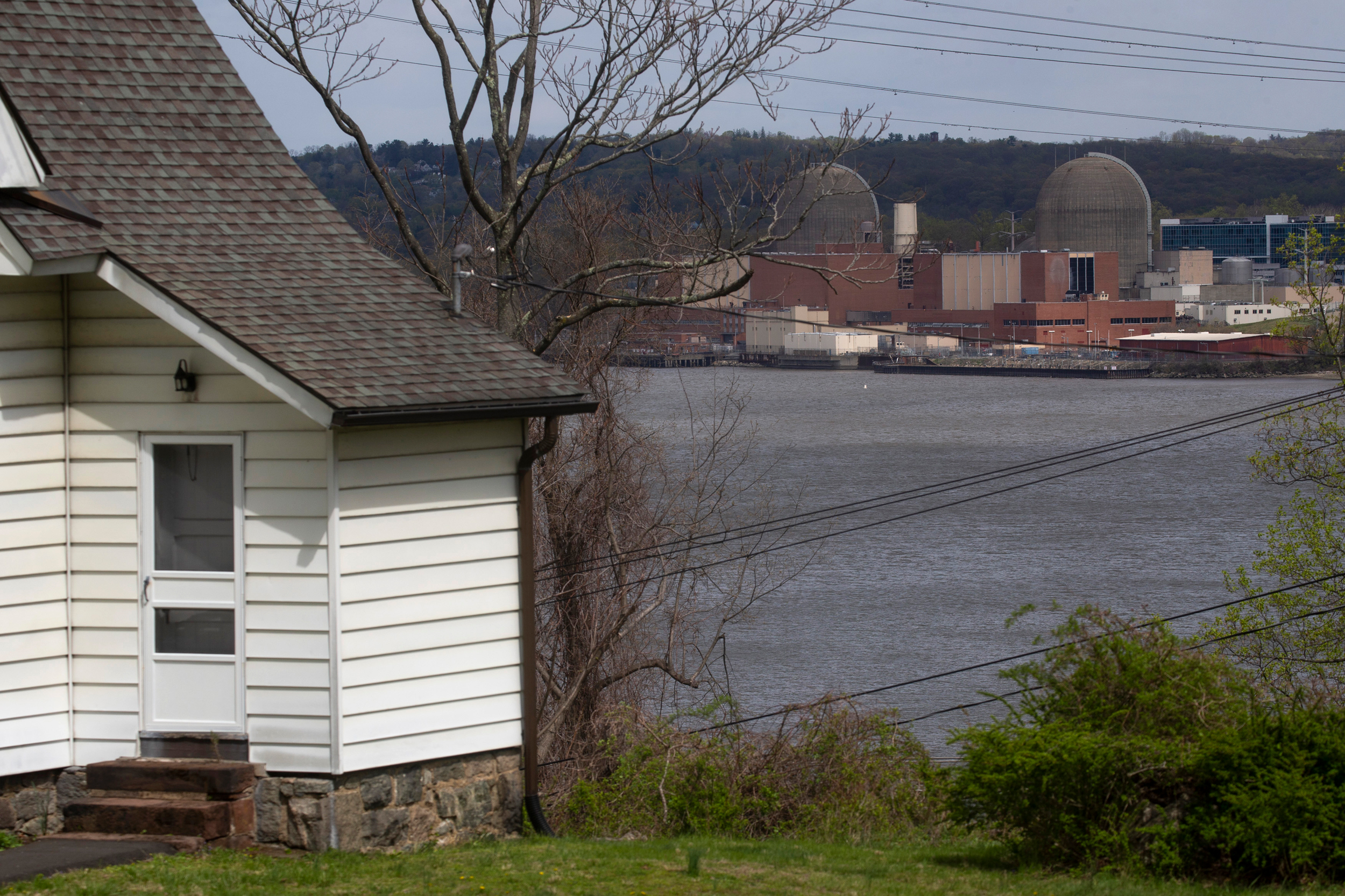
- In the village of Buchanan, in Westchester County, Indian Point is undergoing a $2.3 billion decommissioning project. During its more than 50 years of operation, the plant routinely discharged low levels of treated radioactive wastewater into the Hudson River. But plans to release roughly 45,000 gallons of radioactive wastewater during decommissioning, approved by a court but now under appeal, along with calls to reopen the plant, have made Indian Point a hot political issue ahead of the November elections.
- PFAS, man-made “forever chemicals,” contaminate Rockland County’s drinking water, with the Trump administration moving to roll back limits on some PFAS.
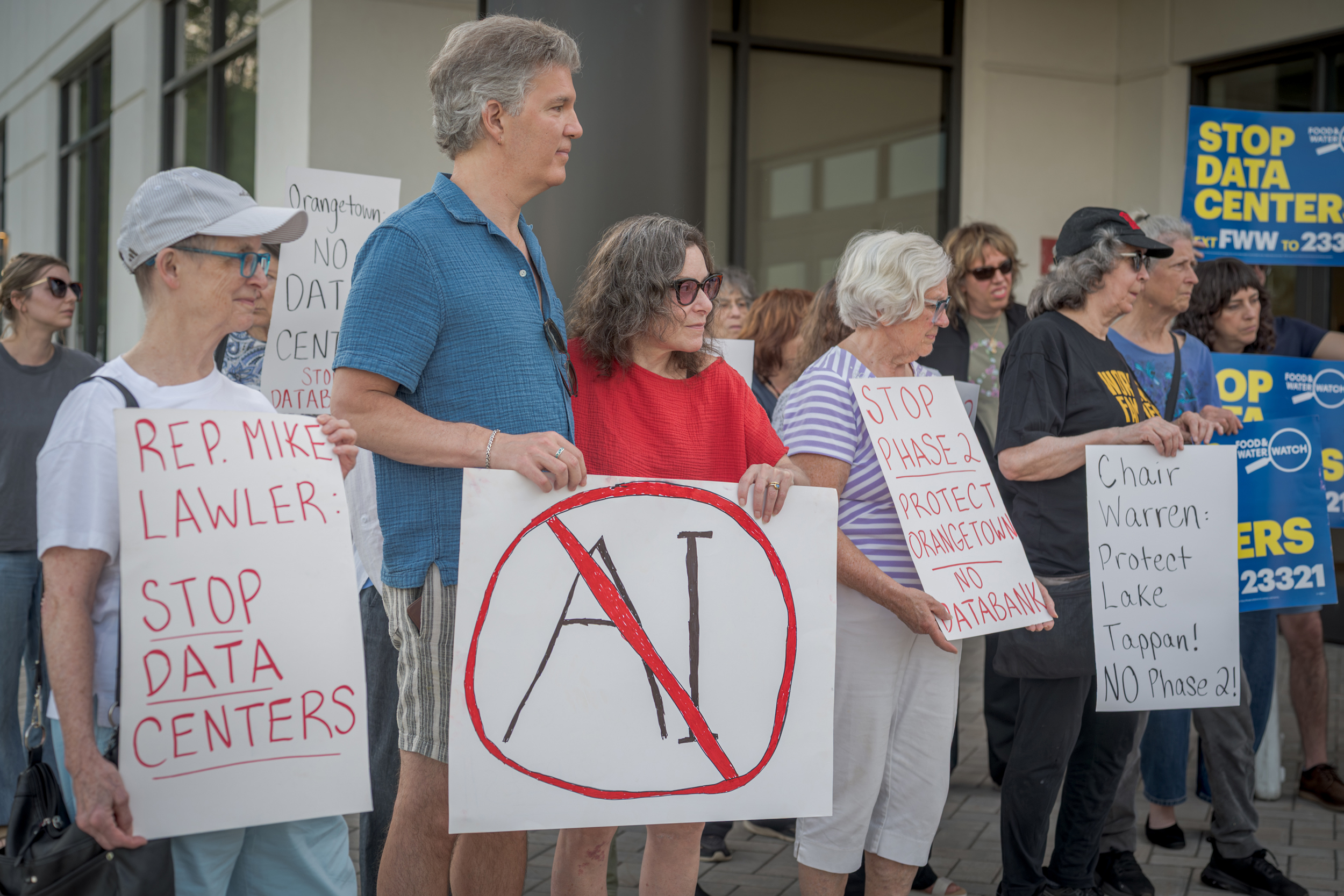
- A data center in Orangetown, in Rockland County, has plans for a tax-subsidised expansion. The town has passed its own data center moratorium, but it does not apply to the project, and concerns surrounding noise pollution, diesel backup generators and the potential for contaminating the adjacent Lake Tappan Reservoir have mobilized local residents.
- In early 2025, Politico reported that $26 million in Biden-era clean energy and climate funding was cut from the district by the Trump administration, including a $19.7 million IBM project set to characterize, track and mitigate methane emissions.
Throughout Conley’s campaign, she has argued that the climate crisis is a national security threat, not simply an environmental issue, a position couched in her experience as director for counterterrorism on the National Security Council during the Biden administration.
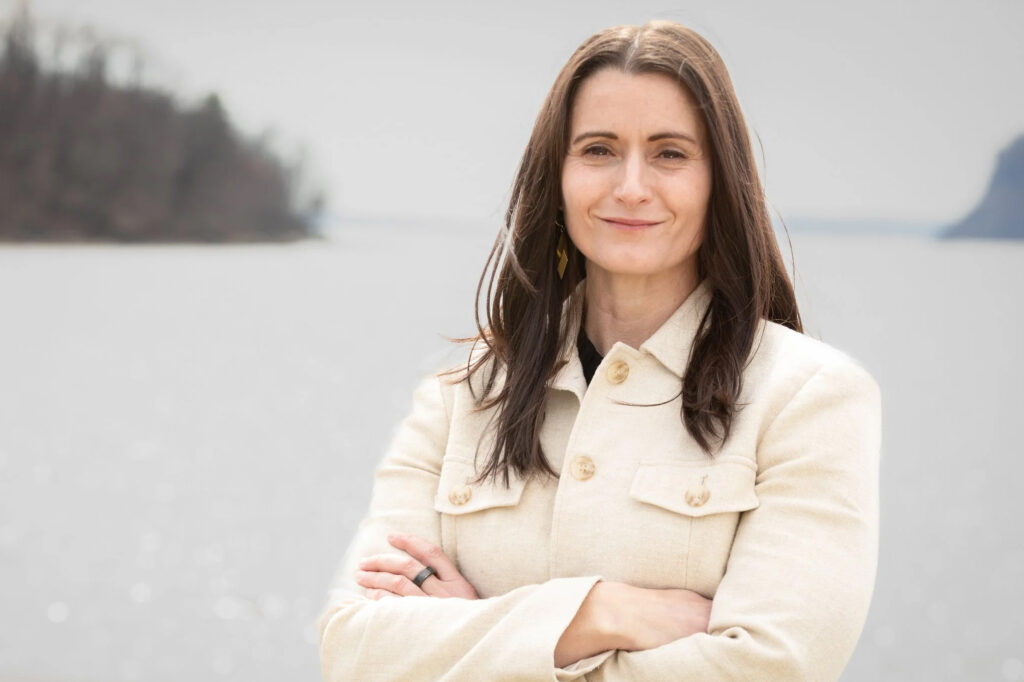
Conley opposes cuts to federal residential solar tax credits, supports reinstating clean energy grant programs and has called for modernizing the electric grid. She has also advocated moving away from fossil fuels in favor of solar, geothermal and wind power, while calling for greater accountability from utility companies, promising to haul them into public hearings and subpoena their records.
Conley does not oppose data centers outright.
“My policy on data centers has been very clear. If they’re going to be built, they need to be a net positive for the communities, not extorting the communities that they’re being built in,” she said in an early September interview on CNN’s “State of the Union.”
This story is funded by readers like you.
Our nonprofit newsroom provides award-winning climate coverage free of charge and advertising. We rely on donations from readers like you to keep going. Please donate now to support our work.
Lawler, who appeared on the same CNN program, emphasized the importance of preserving local authority over data-center development. Asked about his vote for the House version of the One Big Beautiful Bill Act, which would have barred state and local governments from regulating AI systems, he pointed to the provision’s removal from the final bill and his record of preserving local zoning authority.
He argued that New York’s decision to shut down nuclear plants, ban natural-gas extraction and block pipeline construction is part of the reason New York is struggling to deal with the issue of data centers.
“It’s my opponent, Cait Conley, who is bought and paid for by AI and Big Tech,” he said.
Conley opposes reopening Indian Point, unlike Lawler, who recently brought Energy Secretary Chris Wright to the site. She argues that the plant’s closure reflected the safety standards and technological limitations of its era.
She has not taken a broadly anti-nuclear position. Her stance may reflect a shift in public opinion: about 60 percent of Americans now favor building nuclear power plants, up from 43 percent in 2020, according to a 2025 Pew Research Center survey. And companies like Meta, Microsoft and Amazon are turning to nuclear energy to power their data centers.
After two terms in Congress, Lawler has a more concrete environmental record for voters to consider.
The League of Conservation Voters, which tracks members of Congress’ voting records on environmental legislation, gave Lawler a 12 percent score for 2025. He voted in favor of the environment just four of 33 times, the group found. This marks a decline from his score of 18 percent in 2024 and 19 percent in 2023.
Still, among New York’s seven House Republicans, Lawler, former executive director of the New York State Republican Party, was tied with U.S. Rep. Nick LaLota for the highest 2025 score. He also ranked among the highest-scoring House Republicans nationally. He has supported clean air and water legislation, co-sponsoring the NJ-NY Watershed Protection Act in 2023, which would have established an annual $20 million fund to keep the Hudson River clean, and supporting New York’s Environmental Bond Act, which makes $4.2 billion available for environmental and community projects.
He has also secured $35.9 million in funding for 17 projects across the district, the majority supporting environmental infrastructure, including clean-water and wastewater projects, PFAS treatment, stormwater management and dam rehabilitation aimed at reducing the risk of pollution and flooding.
Lawler has been less supportive of green energy investments, arguing that New York’s climate policies place an undue burden on taxpayers. He was among a group of House Republicans who urged leaders to preserve clean-energy tax credits, warning that eliminating them could jeopardize investments and projects in their districts, but ultimately voted for the One Big Beautiful Bill Act that rolled back many of those subsidies. He has called for the repeal of the state’s landmark Climate Leadership and Community Protection Act.
In op-eds, he pits “basic economics and science” or “commonsense” against “fad green energy policies” advanced by what he calls “far-left” ideologues.
“I am somehow anti-environment for wanting to expand natural gas and nuclear—nonsense,” Lawler wrote.
Lawler co-chairs the House’s Extreme Heat Caucus and the Appalachian National Scenic Trail Caucus, and belongs to the Climate Solutions Caucus, PFAS Task Force and Conservative Climate Caucus. The latter advocates for an energy strategy that emphasises the continued use of fossil fuels—which are damaging the climate, with disastrous effects for New York and the rest of the world—alongside emerging technologies.
Before entering Congress, Lawler was a registered lobbyist and executive director of New Yorkers for Affordable Energy, a natural-gas advocacy group whose backers included utilities and fossil-fuel interests. And, in this election cycle, Lawler has received campaign donations from a range of oil and gas interests, including $10,000 from Koch Inc.; $5,000 from California-based utility company Edison International; $4,500 from Williams Cos.; and $1,000 from Entergy, the former owner of Indian Point. He has also received personal contributions from industry executives and owners, including $8,300 from the owner of Sunshine Gasoline, a Florida-based oil retailer; $7,000 from the chairman of United Refining Co., based in Warren, Pennsylvania; and $9,500 from the president of Texas Crude Energy.
Conley is part of Unrig Washington, a program in which candidates reject corporate PAC money. While Conley’s campaign website lays out her approach to “Fighting Climate Change as a National Security Priority,” she has not made the issue a major focus of her campaign.
Neither the Conley nor Lawler campaign responded to requests for comment.
Conley and Lawler will face off in a televised debate on Sept. 28 at 8 p.m. Eastern on News 12, followed by another on Oct. 14 at 7 p.m. on PIX11. As the general election draws closer, many are hoping the debates will force the candidates to take clearer, more specific positions on the environmental issues facing the district.
About This Story
Perhaps you noticed: This story, like all the news we publish, is free to read. That’s because Inside Climate News is a 501c3 nonprofit organization. We do not charge a subscription fee, lock our news behind a paywall, or clutter our website with ads. We make our news on climate and the environment freely available to you and anyone who wants it.
That’s not all. We also share our news for free with scores of other media organizations around the country. Many of them can’t afford to do environmental journalism of their own. We’ve built bureaus from coast to coast to report local stories, collaborate with local newsrooms and co-publish articles so that this vital work is shared as widely as possible.
Two of us launched ICN in 2007. Six years later we earned a Pulitzer Prize for National Reporting, and now we run the oldest and largest dedicated climate newsroom in the nation. We tell the story in all its complexity. We hold polluters accountable. We expose environmental injustice. We debunk misinformation. We scrutinize solutions and inspire action.
Donations from readers like you fund every aspect of what we do. If you don’t already, will you support our ongoing work, our reporting on the biggest crisis facing our planet, and help us reach even more readers in more places?
Please take a moment to make a tax-deductible donation. Every one of them makes a difference.
Thank you,

Fellow
Leana Carbonez is a fellow at Inside Climate News. Born in London, she studied History at the University of Cambridge, and recently graduated from Columbia’s Graduate School of Journalism. She is interested in exploring Americans’ manifold understandings of ‘nature’ and the ways these perceptions are shaped by, and serve, political ideologies. She hopes to continue pursuing investigative projects while working across a variety of journalistic mediums.
