


The race to secure critical minerals has intensified at the same time as the international community has recognized the need for more sustainable and responsible mining practices. Translating the resulting frameworks and guidelines into concrete action will require consolidating Global South policy and advocacy networks.
YOGYAKARTA—Interdependence may be the theme of this year’s annual meeting of the Intergovernmental Forum on Mining, Minerals, Metals, and Sustainable Development (IGF), held in Geneva on October 12–14, but competition between countries to secure transition minerals remains intense. This scramble could have dire consequences for mineral-producing countries if it undermines sustainability standards and prevents equitable cost- and benefit-sharing between and within countries.
The International Energy Agency estimates that, to achieve net-zero emissions, demand for critical minerals will triple by 2030 and quadruple by 2040. Mineral-rich countries, aware of the “resource curse,” are seeking ways to retain control over their reserves. In a bid to promote domestic value addition and meet their economic-development objectives, many of these countries are pursuing export bans on critical raw materials.
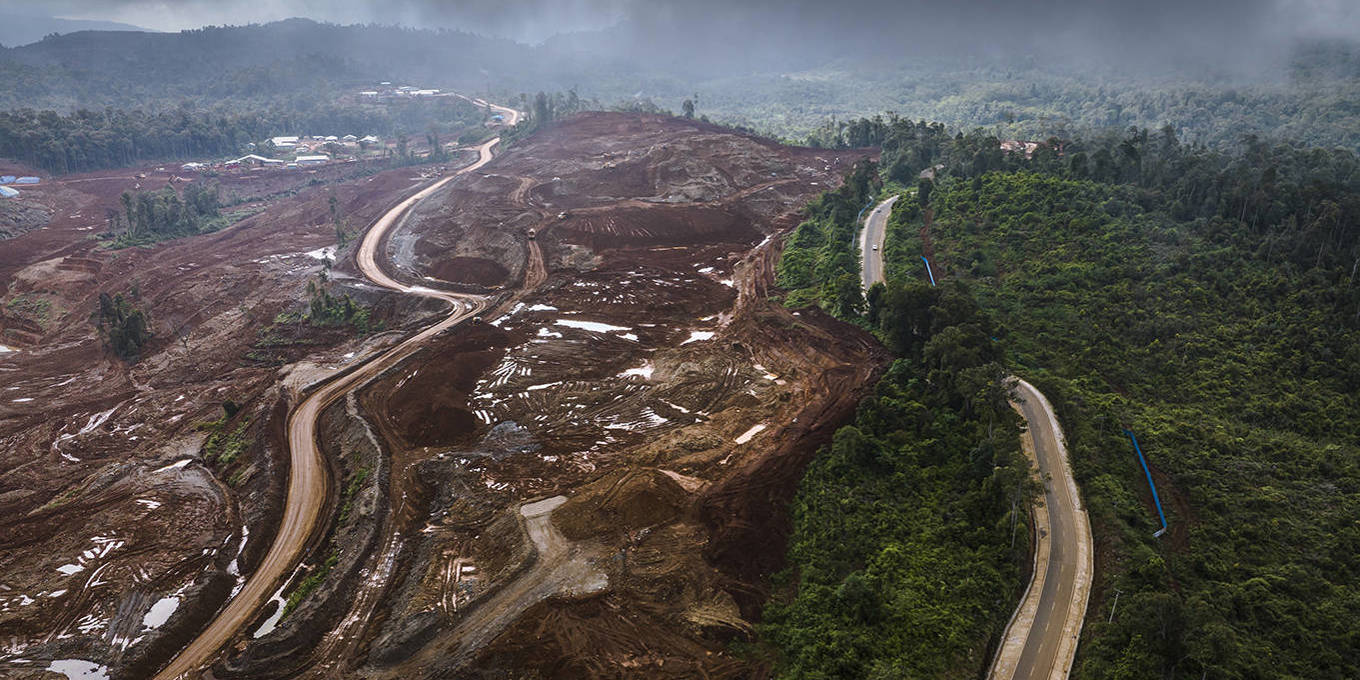
But Indonesia’s experience as one of the first countries to implement such a ban shows that downstream industrialization is not a cure-all. It can come with substantial environmental and social costs, and the benefits are not always shared equitably with the local communities that often bear the greatest burden of extraction and processing. And while extraction, smelting, and processing have boosted economic growth in Indonesia’s three nickel-rich provinces, they have not contributed significantly to the national economy. Frontier-making—the act of transforming marginal areas into centers of resource extraction—can create new “sacrifice zones” when not accompanied by robust regulation and democratic oversight.
Meanwhile, the emphasis on sustainable mining has never been greater at the global level. In 2024, the United Nations Secretary-General’s Panel on Critical Energy Transition Minerals released a set of guiding principles that underscore the need for a new paradigm rooted in justice and equity, and for mining to benefit host countries and local communities. Regional frameworks, including the African Union’s Africa Mining Vision, its follow-up guidelines and frameworks, and the ASEAN Principles for Sustainable Minerals Development, reflect similar commitments.
These agreements are sidelined, however, when countries pursue bilateral agreements that prioritize market access over all else. Consider the uneven treatment of nickel and palm oil in the EU–Indonesia Comprehensive Economic Partnership Agreement. The European Union has strict sustainability standards for palm oil, but not for nickel, even though both sectors can cause significant social and environmental degradation.
The best way to put principles into practice is to consolidate Global South policy and advocacy networks. This would enable policymakers, civil society, and local communities to share their experience with mineral extraction and processing and their proposals for making the sector more equitable and environmentally responsible.
There is a genuine desire among policymakers in the Global South to share the lessons learned from their successes and failures. The Natural Resource Governance Institute’s South–South Transition Minerals Learning Platform has facilitated the dissemination of policy insights among government officials from Indonesia, Chile, Zambia, the Democratic Republic of the Congo, and other countries. While they share the same goal—to build more inclusive, resilient, and prosperous societies using mineral wealth—the platform enables a deeper understanding of how variations in commodities, domestic political economies, and value-chain positions require different strategies, rather than a one-size-fits-all approach.
Equally important are transnational or transcalar advocacy networks that connect civil-society groups across the Global South. They, too, can provide a platform for sharing experience and knowledge, while also strengthening collective action and extending accountability beyond national borders. By producing wide-ranging evidence of social and environmental abuses linked to mineral extraction, smelting, and processing, domestic advocacy actors can bypass governments and companies that do not adequately support local communities and directly seek out international allies to apply outside pressure.
Here, again, Indonesia provides a useful example. The prominent Indonesian NGO WALHI, together with Friends of the Earth Japan, mobilized more than one hundred organizations to urge Vale Indonesia’s shareholders to act on alleged human-rights abuses at the Sorowako nickel project. Some shareholders, including Vale, Sumitomo Metal Mining, and Mitsui & Co., responded by exerting pressure on the company when the government failed to do so effectively.
Similarly, campaigners from Mighty Earth, Climate Rights International, and Global Witness attracted investors’ attention by alleging widespread abuses in Indonesia’s nickel extraction and processing industry. They urged electric-vehicle battery and car producers to comply with social and environmental standards and due-diligence obligations. Weda Bay Nickel has since expressed interest in complying with Initiative for Responsible Mining Assurance standards, and some automakers have imposed stricter requirements on nickel suppliers.
This global pressure—which includes Publish What You Pay Indonesia raising concerns about the country’s nickel governance at the 2025 OECD Forum on Responsible Mineral Supply Chains—has forced the Indonesian government’s hand. After assessing the gap between its regulatory framework and three global standards, the government is preparing ESG (environmental, social, and governance) guidelines to help firms identify which Indonesian regulations meet the requirements of global standards in the nickel supply chain.
Advancing inclusion in transition-mineral supply chains—the goal of the IGF meeting—requires strategies for translating lofty declarations into concrete action. This can be achieved by bringing together and strengthening Global South policy and advocacy networks. Existing South–South cooperation mechanisms can expand their reach to facilitate policy learning on critical minerals, while domestic civil-society groups can deepen their global connections to put a spotlight on mining-related environmental destruction and human-rights abuses. Many pieces of the puzzle are already in place; now it is time to put them together.
