


Founder’s Briefs: An occasional series where Mongabay founder Rhett Ayers Butler shares analysis, perspectives and story summaries.
In Clayoquot Sound, in the Canadian province of British Columbia, a partnership between the Tla-o-qui-aht First Nation, the Redd Fish Restoration Society, and West Coast Kelp is helping rebuild degraded kelp forests, reports contributor Jennifer Cole for Mongabay.
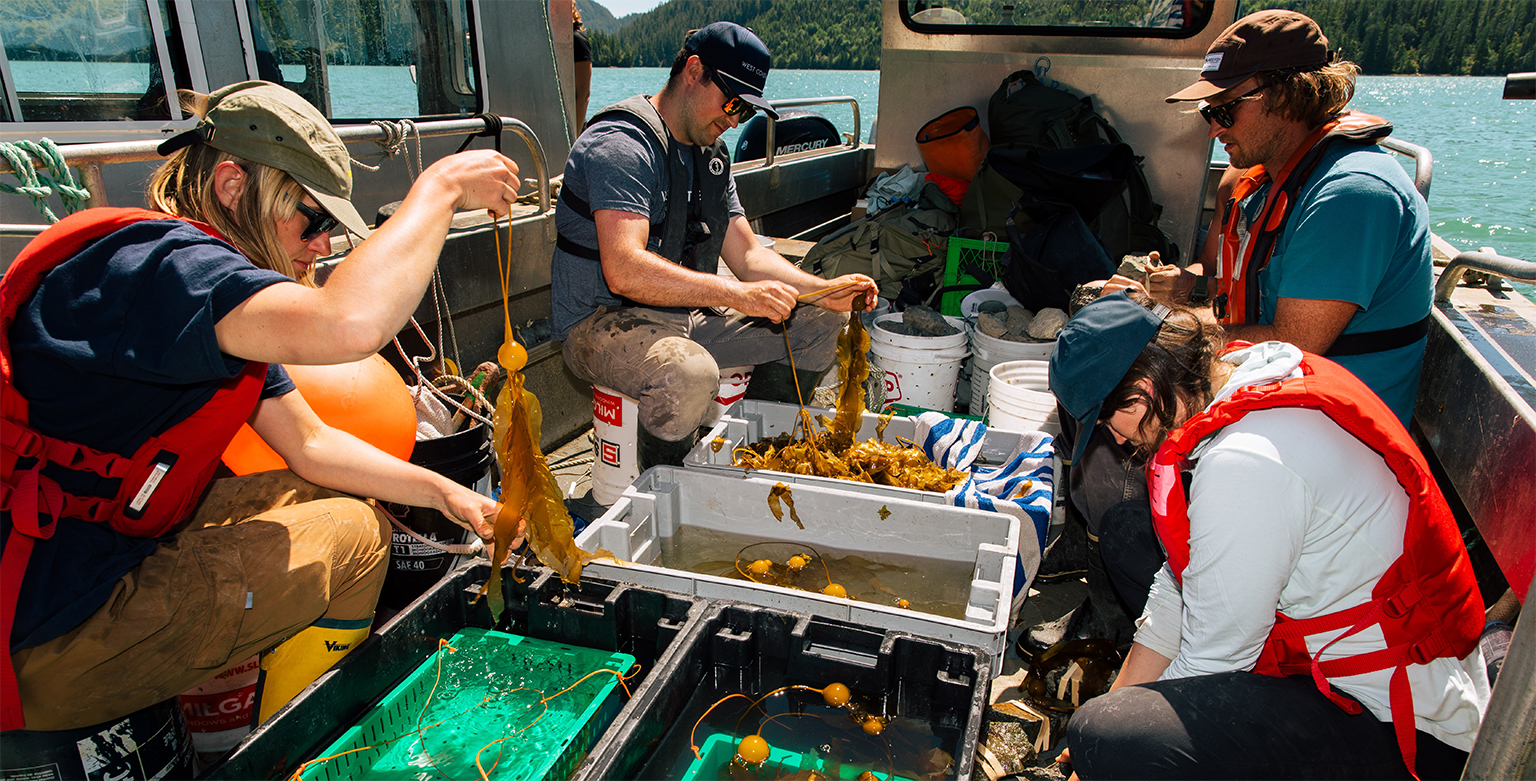
The initiative, launched in early 2026, has established a nursery to grow young bull kelp (Nereocystis luetkeana) and giant kelp (Macrocystis pyrifera) beyond the reach of grazers such as sea urchins. Sections are then harvested and transplanted to sites around Clayoquot Sound.
So far, the area replanted is small — 4,200 square meters (45,208 square feet), or the size of about 10 basketball courts — but the project may help show how kelp forests can be restored more effectively.
“We know that kelp creates habitat, but we don’t have numbers to associate with that, and we want to be able to determine the actual benefit,” Emily Fulton, the marine program manager for the Redd Fish Restoration Society, told Mongabay.
Fulton said traditional knowledge preserved in Tla-o-qui-aht oral history has helped the project identify where to plant.
“My ancestors had a system of reciprocity where they knew not to take too much, and we were always giving back,” said Tatt Charlie, a tribal guardian of the Tla-o-qui-aht. “So, to have that balance is what we’re trying to achieve with our territories. It’s really interesting to see that these are the baby steps we need to take to set it back to pre-contact 300 years ago.”
For now, the nursery offers a small test of whether restoration can help return an old relationship between people, kelp, and the coast.
Read the full story by Jennifer Cole here.
Banner image: Project team members prepare juvenile bull kelp for transplanting in Clayoquot Sound. Image courtesy of Graeme Owsianski/Redd Fish Restoration Society.
