


- Wildlife crimes are committed by a wide range of offenders, from local people who may stumble upon a salable animal to professional poachers and middlemen traffickers and all the way up to kingpins behind the trade that rule over international trafficking syndicates.
- The NGO Wildlife Crime Prevention Zambia investigated how and why people incarcerated for wildlife crimes in the country got involved in this black-market industry. They found that opportunity was the major driver.
- About one-third of the jailed respondents said or implied they would not be involved in poaching or wildlife trade when they were freed.
- Experts note that helping offenders find work after they’re released could be one way to lower the risk of wildlife crime recidivism. Wildlife Crime Prevention Zambia recently completed a pilot program aimed at connecting inmates with family before their release and helping them plan for ways to generate legal income after prison.
The man in the Zambian prison recalled how he ended up there.
He’d been approached by someone who had an uncle in the capital, Lusaka, who was willing to buy ivory and pangolin scales. He gave the man a phone and a number to reach him.
“He promised that the money I would get would enable me to build a house and take my children to school,” the man said.
The story of this inmate — who was eventually arrested and incarcerated for an elephant-related offense — drives home an important truth. Wildlife crime is a multifaceted industry fueled by various participants with a slew of motives, ranging from local people who may occasionally capture and sell an animal to middlemen who handle logistics to heavily armed poaching gangs and the kingpins that rule over large international syndicates.
The lower-level links in the chain are simpler to catch and prosecute, but are easily replaceable, so their arrest does little to stop poaching.
The NGO Wildlife Crime Prevention (WCP) Zambia, in partnership with Copperbelt University, recently interviewed more than 300 inmates imprisoned for wildlife offenses in the country to learn how and why people on the lower rungs of the industry took their first steps into wildlife crime.
“We wanted to understand better the drivers of the more grassroots-levels offenders and why they get involved — and how we might avoid them being involved again,” said one of the study’s authors, who needed to remain anonymous so not to endanger their ability to investigate wildlife crime.
Digging into the data
Zambia is both a source country for wildlife products and part of a significant trade route for illegal contraband, in part because it’s bordered by eight other countries. Those who are incarcerated for wildlife crime make up about 7% of the nation’s total prison population, according to the researchers, and wildlife crime carries a range of penalties depending on the infraction and species involved.
A first-offense conviction for hunting in a protected area without a license could result in three to 10 years in prison. More serious offenses, like illegal possession of trophies from a protected species or elephant- and rhino-related crimes, could land an offender in prison for five to more than 20 years.
The research team interviewed 302 inmates in 32 correctional facilities, gathering demographic data and asking open-ended questions like “how did you come to be here?”
The study was approved by the Zambia Correctional Service (ZCS), which had not responded to a request for comment from Mongabay by the time of publication.
About half the respondents were middle-aged, more than 41 years old, and all but nine were men. An overwhelming majority were first-time offenders, but a third said they had previously been involved in wildlife crime without being caught.
Respondents were imprisoned for a variety of offenses, which the researchers grouped into seven broad categories: bushmeat hunting; elephant, pangolin, and rhino poaching; illegal fishing; firearm-related wildlife crimes; and another, general category. Some cases involved multiple crimes.
Bushmeat-related offenses were the most common, followed by those involving protected species like pangolins, elephant ivory and other trophies.

The team found that opportunity was a key piece of the wildlife crime puzzle: 40% of respondents said it was the driving factor in their involvement. For another 16%, the main motivation was their circumstances at the time, including existential needs like food or medical care.
“I heard from many people that pangolins bring money,” one respondent said. “I wanted to build a house. In Mozambique on my way to sell tomatoes I stumbled upon a pangolin.”
Many of the offenders were subsistence farmers whose livelihoods were unpredictable, making them vulnerable to unexpected medical bills or other life expenses, according to the study.
“There’s no social safety net here,” our anonymous source noted. “You can’t go to the bank and get a loan. People generally aren’t saving up. Unless you’ve got a wealthy relative in town, there’s really not many other opportunities.”
The researchers didn’t ask inmates directly if they intended to continue poaching or trafficking when they got out of prison, but they did ask about their prison experience, future intentions and reasons for wanting (or not) to reoffend. Most respondents didn’t make their intentions clear either way, but roughly a third indicated that they wanted to avoid involvement in wildlife crime in the future.
About 5% expressed either an intent to reoffend or concern about the possibility of being drawn back into the trade.
One inmate pointed to a lack of other income sources, saying, “If I leave this place with nothing to do, I am afraid of going back to crime.” Another said that “finding [themselves] in bad company” would be a challenge.

Some respondents did not seem to recognize the validity of the law. “Poaching is ‘fake,’” one said. Others planned to seek legal avenues to stay in the market. “When released I will get a license for my wife to trade in bushmeat,” one person said.
Most of the men interviewed (80%) weren’t worried about stigma or acceptance by family and their community upon release. About half of the female respondents were uncertain or afraid about how they’d be received back home, but with just nine women taking part in the study, the authors acknowledged that this couldn’t be considered a pattern.
Meredith Gore, an environmental crime researcher at the University of Maryland in the U.S. who was not involved in this study but has studied wildlife crime in Zambia, said while the research focused primarily on men, it’s still useful.
She called the gender dimension of wildlife crime “an under-tapped topic.”

More questions than answers
Helping inmates find a legal way to make a living after release calls for uniquely tailored approaches, one author said, since offenders will reenter society with different levels of social support, economic opportunity and financial responsibilities.
WCP Zambia recently completed a six-month pilot project that helped offenders connect with family before their release; the results will soon be published. This allowed them to start thinking about how they will make a living and what they will need to do, said study lead author Emma Richards, a wildlife criminologist.
She offered an example. “You can have somebody doing a carpentry project in prison, but if they get out and they’ve got no access to carpentry tools, what have you really achieved?” she said.
As part of the program, WCP Zambia has offered released offenders equipment for crop and livestock farming and start-up help to open small grocery stores.
Gore said she thinks better economic reintegration could reduce wildlife crime, “especially if you listen to local people about what they want.”
“The idea is that it’s a different alternative,” she said. “Prison doesn’t really do anything to address the post-release reality.”
When it comes to understanding stigma around wildlife crime in Zambia, researchers “can’t assume imprisonment for a wildlife offence carries the same social meaning in every community,” Richards wrote in an email. And since the team interviewed incarcerated offenders about their expectations, it’s unknown how those people will be treated upon release.
However, since this survey indicated that stigma doesn’t seem to be much of an issue for men convicted of wildlife offenses, Gore said this could increase the chances of offenders returning to it.
It’s evidence that in Zambia, wildlife crime “isn’t fitting a standard criminology model,” Gore said, and raises an important issue. “Should we be using standard recidivism models to understand wildlife crime in the first place?” she asked.
This was the first study of its kind to be done in Zambia, and the researchers said it “raised more questions than it answers.” But they hope it can be a useful starting point, and in all of it, they emphasized the importance of viewing wildlife crime offenders with humanity.
“They’re not just a group of evil people who kill elephants,” one researcher said.

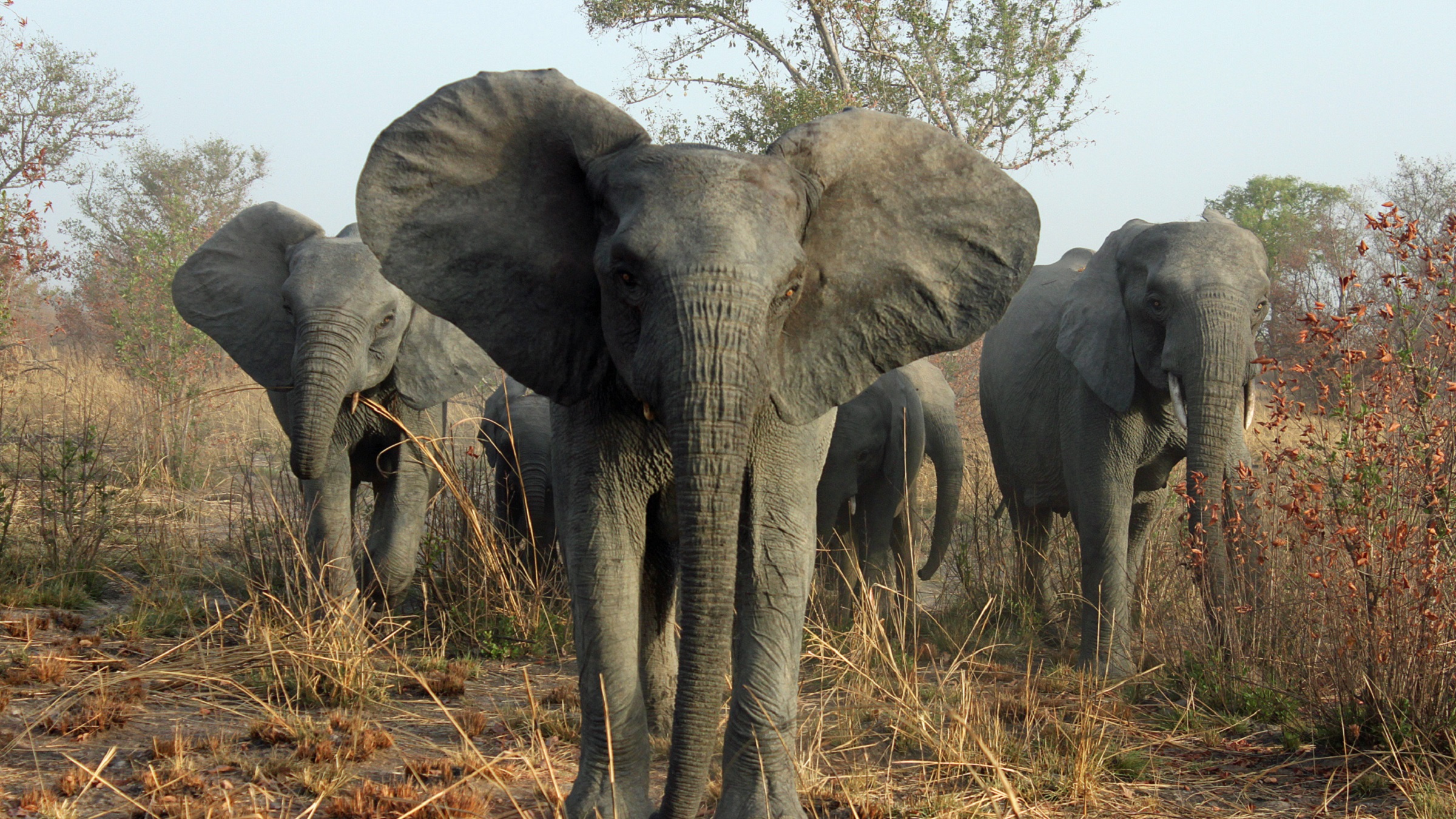
Banner image: Poachers killed an estimated 100,000 elephants between 2010 and 2012 in Africa, according to the U.S. Fish nd Wildlife Service. In some countries, including Zambia, governments and conservationists are trying to find new ways to combat poaching — like understanding motivations and trying to provide alternative, legal employment. Image by Fawaz.tairou via Wikimedia Commons (CC BY-SA 3.0).
More to explore:
Zambia seizes half-ton of ivory in major illegal wildlife crime operation
Tech alone won’t stop poaching, but it’s changing how rangers work
Citation:
Richards, E., Davies, S., Namposya, S., … Chilambwe, D. (2026). Recidivism, opportunity, and deterrence in wildlife crime: Evidence from Zambia. International Journal of Law, Crime and Justice, 86. 100881. doi:10.1016/j.ijlcj.2026.100881
FEEDBACK: Use this form to send a message to the author or editor of this post. If you’d like to post a public comment, you can do so at the bottom of the page.
Cite this article
Alex Megerle (2026). ‘How did you come to be here?’ Study digs into origins of Zambian wildlife crime. Mongabay Conservation news. DOI: https://doi.org/10.66709/news-329983

