


A Republican TV ad cherry-picks parts of last year’s budget reconciliation law, known as the One Big Beautiful Bill Act, to overstate the impact of the law or distort Georgia Sen. Jon Ossoff’s record.
The ad from One Nation never mentions the OBBBA – a partisan bill that received no Democratic votes in the House and Senate. The law is only referenced in small print in the ad as “roll call vote #372” – the source of Ossoff’s vote on July 1, 2025, against the bill.
The One Nation ad says the Democratic senator “doesn’t care about people like us” and makes these claims:
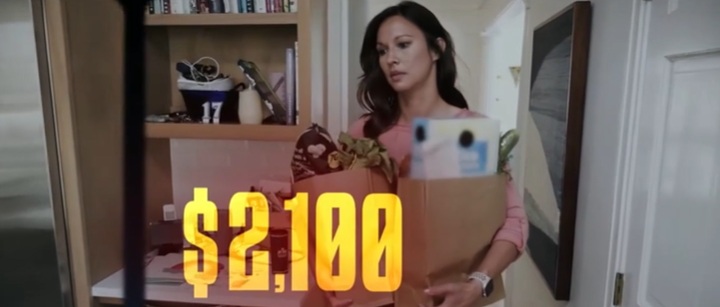
- Ossoff “supported” a $2,100 “tax increase.” The OBBBA extended the 2017 individual tax cuts that were due to expire. But the amount used in the ad refers to an average that’s skewed by large tax savings for wealthy taxpayers. It also doesn’t account for other changes in the law, such as cuts to Medicaid and food assistance, that will reduce income for low-income Americans.
- Ossoff voted “to gut your child tax credit.” The law increased the maximum tax credit from $2,000 to $2,200 per child. But millions of low-income children aren’t eligible for the full amount. Also, Ossoff has a history of supporting the CTC, including voting in 2021 to raise the maximum to $3,600, even for families who don’t earn enough to pay federal taxes.
- Ossoff “voted for higher taxes on Social Security recipients earning under $75,000.” The law provided an additional $6,000 tax deduction for taxpayers 65 and older, but not all seniors earning less than $75,000 were eligible for it.
Lawmakers’ votes are ripe for campaign attack ads from both parties, which can highlight only certain aspects of legislation, leaving out other provisions that may be the basis for lawmakers supporting or opposing the bills.
Ossoff has said he opposed the OBBBA largely because of Medicaid cuts and other changes in the law that will result in millions of Americans losing insurance, while providing $4.5 trillion in net tax cuts that largely benefit wealthy taxpayers. (More on that later.)
In a report to constituents, Ossoff boasted that he “fought the ‘One Big Beautiful Bill’s’ (OBBB’s) trillion-dollar cut to Medicaid” because “70% of Georgia seniors in nursing homes are on Medicaid, half of all births in Georgia are covered by Medicaid, and 40% of all children in Georgia are covered by Medicaid.”
Ossoff also said he opposed the law because it cut food assistance and clean energy initiatives.
One Nation is a 501(c)(4) “dark money” nonprofit – so named because it doesn’t have to publicly disclose its funding sources. It is affiliated with the Senate Leadership Fund, a super PAC founded by allies of Sen. Mitch McConnell to support Republican candidates.
So far, One Nation has spent about $145 million this campaign cycle – including more than $9 million on the anti-Ossoff ad, which has been airing on broadcast and cable TV, as well as streaming platforms, since July 30, according to the ad-tracking service AdImpact. Ossoff is running against Republican Rep. Mike Collins.
The 2017 Tax Cuts
Before addressing the claims in the TV ad in more detail, it’s worth taking a look back at how we got here.
In his first term, Trump signed the Tax Cuts and Jobs Act in 2017 that made sweeping changes to the U.S. tax code – such as cutting business and individual tax rates and providing more generous tax credits, including doubling the maximum child tax credit to $2,000 per child. At the end of 2025, the individual income tax cuts and child tax credit in the TCJA were due to expire – setting off a partisan debate during the 2024 campaign over the expiring taxes and tax credits.
While Trump called for extending all of the expiring tax cuts and promised new ones, Democratic presidential candidate Kamala Harris proposed an economic plan that focused on cutting costs and “cutting taxes for more than 100 million working and middle-class Americans.”
Specifically, Harris promised that “no one earning less than $400,000 a year will pay more in taxes,” which would require her to extend the Trump tax cuts to at least that level. Her plan also called for increasing the maximum child tax credit to $3,600 per child.
Of course, Trump won and his economic plan was enacted. But it’s worth noting that both candidates were promising to address the expiration of the 2017 child tax credit and individual income tax cuts — two of the issues raised in One Nation’s ad.
Individual Income Taxes
The One Nation ad opens with a woman carrying groceries into her home and another woman shaking her head and disapprovingly looking at her grocery bill. “$2,100. That’s three months of groceries,” the ad’s narrator says. “$2,100. That’s the tax increase Jon Ossoff supported.”
The ad cites a May 7, 2024, analysis by the Tax Foundation as its source for the $2,100 figure. But we could not find that figure in the 2024 report, which wasn’t an analysis of the OBBBA but rather possible options for ways to extend the expiring 2017 tax cuts.
However, the Tax Foundation did write an analysis of the OBBBA that was published Feb. 10. It also published a separate article two weeks later based on that analysis that said “relative to prior law,” which would have expired at the end of 2025, “[i]ndividual tax changes in OBBBA reduce tax liability by $2,272 on average in 2026.”
In an email, Erica York, a senior economist at the Tax Foundation and a co-author of the report, confirmed that $2,272 is “[o]ur most current estimate.”
But there are two important caveats with that estimate. The $2,272 figure only reflects the bill’s impact on individual income taxes, not other changes in the law, and the amount is a national average. Actual tax savings vary greatly depending on income.
Estimates from the Tax Policy Center last year showed that the average tax cuts by income group in 2026 would be $150 for households earning less than about $35,000, about $1,800 for those earning between $67,000 and $119,000, and $21,000 for households earning nearly $500,000 to a little more than $1 million. The TPC post, by nonresident fellow Howard Gleckman, noted that the estimates only factor in the OBBBA’s tax revenue provisions. “Low-income households end up worse off after taking into account the bill’s spending cuts,” he wrote.
In a July 8, 2025, report, the Penn Wharton Budget Model calculated the distributional effects of the “total value of the legislation,” including those spending cuts, on a conventional basis and on a dynamic lifetime basis. (The dynamic distributional analysis considers the law’s impact over a lifetime and accounts for the economic impact on the overall economy.)
Either way, the model found that the new law largely benefits wealthy taxpayers.
“On a conventional basis, households in the first income quintile lose about $885 in 2030, reflecting net reductions in taxes and transfers, including cuts to Medicaid and SNAP,” the report said, referring to the Supplemental Nutrition Assistance Program, which was formerly known as food stamps. That same income group would lose an average of $165 in 2027, the report said.
“As spending cuts deepen over time, lower income households come out worse off,” the Penn Wharton Budget Model report said. Table 5 shows an average loss in 2030 of $1,090 for the second income quintile. That means that 40% of taxpayers – those with annual incomes of up to $52,999 – would see a reduction in average income in 2030.
“The top 10% of the income distribution receives about 80 percent of the total value of the legislation,” the Penn Wharton Budget Model report said of its conventional analysis, noting that under current tax law the top 10% “pay about 70% of all federal taxes.”
“On a dynamic lifetime basis, lower-income households and some in the middle class are worse off, as are all future generations,” the report went on to say. “The losses for lower-income groups are primarily driven by a reduced social safety net and lower wages associated with a lower capital stock, while losses for top-income groups are entirely the result of lower wages,” the report said of future generations.
We reached out to One Nation about the Penn Wharton Budget Model report and the 2024 Tax Foundation analysis cited in the ad, but we did not receive a response.
(We should also note, since the ad shows the grocery shoppers unhappy with the price of groceries, that those people mostly didn’t receive a new income tax cut, but rather avoided a tax increase that would have occurred if the 2017 tax provisions expired.)
Child Tax Credit
The ad next describes Ossoff as “ambitious and liberal,” saying he “voted with national Democrats to gut your child tax credit.”
Like the ad’s claim of a tax increase, this is also a reference to Ossoff’s vote against the OBBBA. There was no separate vote on a child tax credit.
As we referenced earlier, the 2017 TCJA doubled the CTC to a maximum of $2,000, and it was due to expire at the end of 2025. If it expired, the amount of the CTC would have reverted to the pre-2018 maximum of $1,000 per child. The OBBBA made the CTC permanent and increased the nonrefundable portion of the tax credit from $2,000 to $2,200. (The phrase “nonrefundable” means that families who don’t owe at least $2,200 in taxes do not get the full credit. The law capped the “refundable” portion of the tax credit for such families at $1,700.)
A Tax Policy Center analysis of the child tax credit in the new law found that “the lowest-income families are the least likely to benefit from the CTC,” adding that “families with low incomes also receive, on average, the smallest CTC benefit.” For example, those with “expanded cash income” of less than $10,000 would receive an average of only $250 from the child tax credit. (See figure 1.)
(A technical note: The TPC model’s “expanded cash income” is defined as a “broad measure of pre-tax income,” including government benefits such as food assistance.)
The TPC also noted that “roughly 17 million children live in families that do not receive the full $2,200 per child CTC because their families’ earnings are too low.”
While it is true that Ossoff did not vote for the OBBBA, the senator did vote for the COVID-era American Rescue Plan in March 2021 that increased the maximum child tax credit for one year from $2,000 to $3,600 per child. That law also made the CTC fully refundable.
The fully refundable CTC has been credited with significantly reducing child poverty.
“The 2021 Child Tax Credit (CTC) expansion was one of the largest one-year increases in aid to low- and middle-income families in US history,” Jacob Bastian, an assistant professor at Rutgers University and a nonresident senior fellow at the Brookings Institution, recently wrote for the Tax Policy Center. “Importantly, the expanded credit was fully refundable, so the lowest-income families who owed little or no federal income tax could receive it in full. The CTC expansion helped reduce child poverty to a record-low 5.2 percent.”
Collins, Ossoff’s Republican challenger, did not take office until January 2023, so he was not in the House of Representatives for the vote on the American Rescue Plan – which received no Republican support in the House. Like the OBBBA, the ARP was a large piece of legislation that lawmakers may have opposed for various reasons.
In a March 2021 letter to then-President Joe Biden, a group of senators – including Ossoff – urged Biden to make the one-year expansion of the fully refundable child tax credit permanent in his next recovery plan.
Social Security Taxes
During the 2024 president campaign, Trump promised that he would eliminate taxes on Social Security retirement benefits. That didn’t happen, but the Trump-backed OBBBA did include a provision that provided an additional $6,000 tax deduction for individual taxpayers 65 and older. (The bonus senior deduction is $12,000 for couples).
The new deduction will gradually phase out, beginning at $75,000 in income for individuals and $150,000 for married couples filing jointly. It expires in 2028.
Ossoff’s vote against the OBBBA is referenced when the One Nation ad says, “He even voted for higher taxes on Social Security recipients earning under $75,000.”
The ad doesn’t make this clear, but many Social Security recipients aren’t eligible for the new law’s additional tax deduction. That’s largely because many seniors already do not pay federal income taxes, as the Bipartisan Policy Center noted in an article last year on the new deduction.
Bipartisan Policy Center, June 12, 2025: The additional $6,000 tax deduction for seniors will not benefit households with taxable income below the enhanced standard deduction. Because Social Security benefits—a major source of income for older Americans—are not counted in taxable income … for approximately half of beneficiaries (and only partially counted in taxable income for the other half), the increased standard deduction in OBBB means that many older Americans with low income will not receive any benefit from the additional deduction.
According to the IRS, the standard deduction for seniors 65 and older in the 2025 tax year was $17,750 for single filers and $34,700 for married couples filing jointly.
A Tax Policy Center analysis last year estimated that the new senior deduction will benefit about 46% of all seniors. In addition to seniors who already pay no federal income tax, the Tax Policy Center said “Social Security recipients younger than 65 don’t qualify.”
“Higher-income seniors also are excluded because the extra deduction phases out starting at $75,000 for singles and $150,000 for joint filers, and it is gone entirely at $175,000 for singles and $250,000 for couples,” the Tax Policy Center report said.
The Treasury Department reported that more than 35 million seniors claimed the new bonus deduction this year. We don’t know how many of them were also Social Security recipients, but about 57 million Americans receive Social Security retirement benefits.
Ossoff and the One Big Beautiful Bill
During the debate on the OBBBA, Ossoff focused mostly on the bill’s changes to Medicaid and its failure to address the Affordable Care Act’s enhanced premium tax credit that was due to expire at the end of 2025.
In an October 2025 report, the nonpartisan Congressional Budget Office projected that OBBBA’s Medicaid provisions “will increase the number of people without health insurance by 7.5 million in 2034.” More than two-thirds of them — about 5.3 million able-bodied adults between age 19 and 64 who have no dependents under the age of 14 — will not be able to satisfy or verify a requirement that they perform at least 80 hours each month of “community engagement” to remain eligible for Medicaid, beginning Jan. 1, 2027. Community engagement activities include work, job training, education and community service, the CBO report explained.
KFF, an independent health policy research organization, published an analysis a few weeks after the OBBBA became law that said changes to Medicaid will “reduce federal Medicaid spending over a decade by an estimated $911 billion.” As we’ve written, the Medicaid savings will largely come from the tightened work and reporting requirements.
Additional savings will come from “restricting state-directed payments to hospitals, nursing facilities, and other providers,” the KFF analysis said.
What are state-directed payments? The Commonwealth Fund explains that the Centers for Medicare & Medicaid Services since 2016 has allowed states in certain circumstances to use state-directed payments to require Medicaid managed care plans to increase provider rates for nursing homes, hospitals and other providers.
“State-directed payments play a key role for hospitals and other providers that serve Medicaid patients, bridging the gap between base Medicaid rates and the actual cost of care,” the Commonwealth Fund report said.
Ossoff co-sponsored an amendment to the OBBBA that would have stripped the provision on state-directed payments from the bill, calling it a threat to patient care and the financial viability of nursing homes and hospitals that rely on Medicaid funding. The attempt failed.
After Vice President JD Vance in his role as Senate president cast the tie-breaking vote to pass the OBBBA in the Senate, Ossoff called the bill “a disaster” for Georgia and the U.S.
“It guts the Medicaid program and puts nursing homes and hospitals at risk. It will drive up health insurance premiums for working and middle-class families in Georgia, and it takes a hatchet to the fast-growing [green energy] industry that is driving Georgia’s economic development,” Ossoff said.
As for the ACA, the CBO said in an August 2025 letter to three House committee chairmen that 2.1 million would lose coverage because of the new law’s changes to the Affordable Care Act marketplace — including a tougher verification process that “requires people to actively affirm their eligibility to enroll in marketplace coverage and to claim the premium tax credit.”
The OBBBA also did not address the looming expiration of the enhanced ACA premium tax credits, which reduce health care costs for people who buy insurance on the ACA marketplace. As we’ve explained, the enhanced tax credits were due to expire under Democratic-passed legislation; the issue was a separate matter from the expiring 2017 tax cuts, though Democrats wanted an extension to be part of the OBBBA.
Ossoff offered an amendment that would have extended the enhanced ACA premium tax credits. To pay for extending them, the amendment would have raised the income tax rate on households with taxable income of more than $10 million. The amendment failed in a party-line vote and the enhanced tax credits ended on Dec. 31, 2025. As a result, ACA out-of-pocket premiums have increased by an average of 58% in 2026, according to KFF.
We take no position on the OBBBA, but there is more to the new law and Ossoff’s record than Georgia voters get in the One Nation ad.
Editor’s note: FactCheck.org does not accept advertising. We rely on grants and individual donations from people like you. Please consider a donation. Credit card donations may be made through our “Donate” page. If you prefer to give by check, send to: FactCheck.org, Annenberg Public Policy Center, P.O. Box 58100, Philadelphia, PA 19102.
