


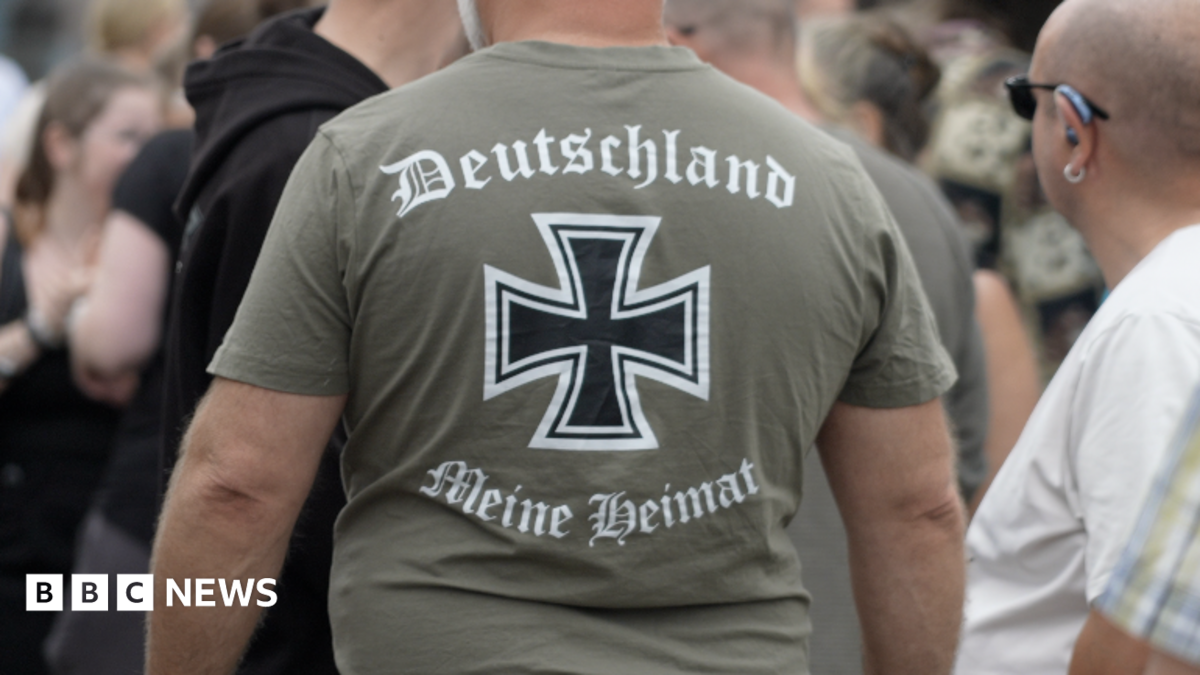
The AfD has consistently rejected allegations of extremism or comparisons to National Socialism.
In 2024 there were renewed calls to ban the party, after it emerged that senior figures – including Ulrich Siegmund – were among those at a gathering attended by Austrian far-right activist, Martin Sellner.
Sellner has a neo-Nazi past that he has since described as a folly of youth.
He is now known for championing the concept of remigration: an increasingly slippery term but one widely understood to mean mass deportations, or the pressured removal of people with a migration background.
The AfD has insisted its “remigration” policy would be lawful and focus on deporting, for example, criminals and those in the country illegally.
When the BBC asked Ulrich Siegmund if he was still in touch with Sellner, he said he had not seen him since the single meeting, which happened in Potsdam just outside Berlin in 2023.
Some critics of the party are clear that the AfD’s plans for Saxony-Anhalt carry echoes of National Socialism, including its pledge to cut financial support for “anti-German” art.
The Nazi regime held a tight grip over all spheres of Germany’s cultural life, most notably displaying works it deemed unacceptable at the “Degenerate Art Exhibition” in 1937.
“How can somebody say it’s not German enough, and what does it mean?” asks Frank Martin Widmaier, director of a local theatre in the town of Eisleben.
Like the majority of theatres in Germany, Widmaier’s playhouse is heavily reliant on state funding. He finds the AfD’s plans both vague and menacing.
“This is playing with Nazi propaganda,” he says. “To threaten people, to threaten the institutions.”
The AfD says that, while the law protects artistic freedom, taxpayer cash should mainly support art that helps cultivate a German identity.
