


- As the U.N. Convention on Biological Diversity’s 17th summit kicks off in Yerevan, Armenia, on Oct. 19, conservationists say more needs to be done in Africa.
- To meet the global goal of 30 by 30, around 15% more of Africa’s terrestrial and marine territory needs to be protected.
- Funding remains a substantial hurdle as highlighted at the recent oceans conference in Kenya where a review of funding pledged to protect Africa’s oceans since 2014 found $14.3 billion was promised, but only $5.8 billion delivered.
As the U.N. Convention on Biological Diversity’s 17th summit opens in Yerevan, Armenia, on Oct. 19, what’s at stake for Africa?
In 2022, parties signed the Kunming-Montreal Biodiversity Framework, agreeing to maintain, restore, and substantially increase the area of natural ecosystems and end human-induced extinction of threatened species; to sustainable use of biodiversity; to fair and equitable sharing of both monetary and non-monetary benefits derived from genetic resources; and to establish adequate means to implement the framework — including finance, scientific cooperation and building capacity of all parties.
The summit, which runs through Oct. 30, marks the halfway point to the deadlines for a first set of 23 action-oriented global targets.
The progress report is not encouraging: Fewer than half of countries say they are on track to meet their self-designed biodiversity targets.
“The report shows that many of the critical elements of progress, including finance, capacity, cooperation and data — are still missing in action,” U.N. Secretary-General António Guterres said in a press release accompanying the organization’s State of Biodiversity Action report.
Three of the world’s “megadiverse” countries are in Africa: The Democratic Republic of the Congo, Madagascar and South Africa make the list of 17 countries that are each home to at least 5,000 of the world’s plant species that are endemic. None of the three met the initial 2024 deadline for a national biodiversity strategy as set out under Kunming — South Africa still hasn’t submitted an action plan.
The headline goal — to see 30% of the earth’s water and land protected by 2030 — is running behind schedule. Overall, around 15% more of Africa’s terrestrial and marine territory would need to be protected.
Mongabay has reported on how evidence continues to accumulate that protection for biodiversity also produces long-term benefits to local communities; one study of marine protected areas set up by the Tanzanian government in the 1990s in response to faltering fisheries shows how they have helped villagers nearby to diversify their income and raise their living standards.
In some parts of the continent, new models of protected areas that strike a balance between nature and people are benefiting both. More than half of Kenya’s large mammals live outside of national parks or reserves, spurring the growth of community-led and private conservancies.
These experiences are obviously contingent and won’t simply “scale up,” but they point to potential benefits of well-planned expansion of protected areas. On the other hand, there are significant risks if formal protection of biodiversity is extended without the active involvement of Indigenous peoples and local communities.
“Around the globe, protected areas have led to widespread evictions, hunger, ill health and human rights violations,” Stefania Carrer, a litigation and advocacy officer at Minority Rights Group, told Mongabay in 2024, ahead of COP 16 in Cali. “MRG is concerned that the push to achieve the 30 by 30 target will result in an increase of fortress conservation projects worldwide, inevitably leading to more of these grievous rights violations.”
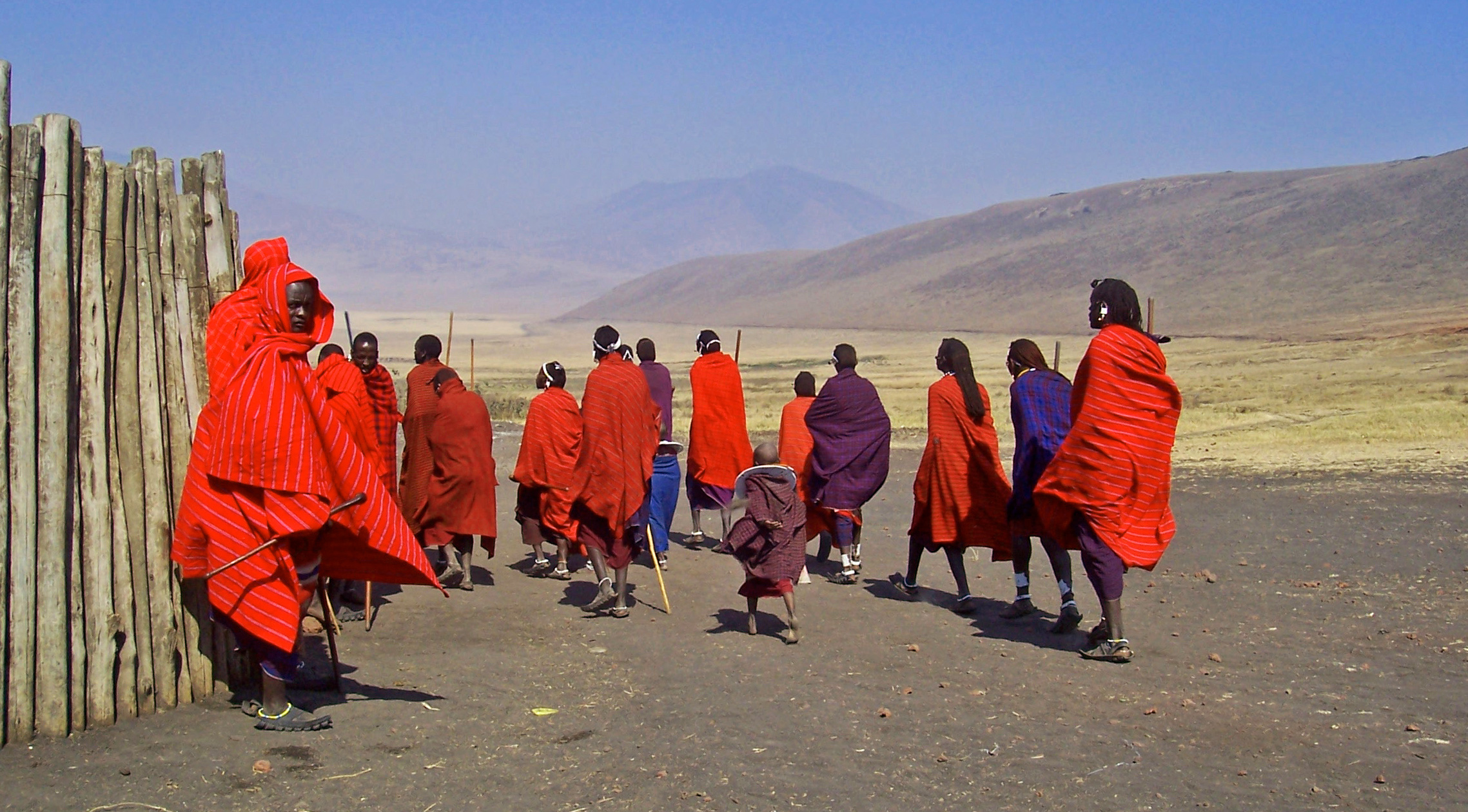
The Cali COP took place as Indigenous Maasai faced violent eviction from their homes in the Ngorongoro Conservation Area. Last month, U.N.’s Committee on the Elimination of Racial Discrimination repeated calls to end the evictions and restore rights and access.

A ‘whole of society’ approach
The U.N.’s State of Biodiversity report acknowledges that the framework’s goals won’t be achieved by government action alone, and calls for meaningful recognition of the rights and needs of women, youth and Indigenous peoples in planning, implementing and monitoring progress.
Advocates for Indigenous communities continue to press for stronger recognition and protection of their collective rights to land and resources in Yerevan. They say that IPLCs, whose lives and livelihoods are directly/intimately connected to the landscapes in question, should be recognized not just as “stakeholders,” but as rights-holders.
OECMs — “other effective area-based conservation measures” that now make up around 5% of protected areas worldwide — have been advanced as a format for conservation that could better recognize local communities’ needs and rights, allowing them to continue sustainable fishing, forestry and agriculture in areas recognized under 30×30 scorekeeping.
Africa’s governments point to the failure of promised finance, including the $20 billion in annual public international finance flowing from Global North to Global South countries that was supposed to have materialized by 2025. (The scale of this funding to protect biodiversity is dwarfed by the estimated $2 trillion per year spent on subsidies for activities that harm the environment. The GBF framework includes a target to reduce this by $500 billion a year by 2030, but a 2025 deadline for simply identifying harmful incentives was missed. According to the International Institute for Sustainable Development (IISD), less than half of parties to the CBD have even mentioned reducing harmful subsidies in their self-reporting.)
Still, the OECD says that biodiversity funding, particularly from international public sources increased by 94% from 2018-2020 to 2023-2025. In a recent report, the organization found that current figures are just over $16 billion per year. The total spending on biodiversity, including public domestic and international spending, as well as private streams, comes to between $75-92 billion a year — well shy of https://www.cbd.int/gbf/targets/19 the GBF target of $200 billion a year by 2030.
The most recent oceans conference, held in Mombasa, Kenya in June, provided an illustration of the problem facing African governments juggling competing priorities with often limited budgets — a review of funding pledged to protect Africa’s oceans since 2014 found $14.3 billion was promised, but only $5.8 billion delivered.

Who actually receives the money is also being debated. “In the global context, there is a move to localize conservation funding and decision-making,” Resson Kantai Duff, portfolio funding director at U.S.-based nonprofit Maliasili, told Mongabay in 2023. “Multilateral environmental agreements are recognizing the pivotal role Indigenous people and local communities are playing in addressing climate change and conservation challenges.”
Maliasili published a report examining the relationship between big international NGOs and local organizations and communities in Africa. African conservation leaders surveyed for the report described how some collaborations hold them back and how they could be changed to give local people greater power.
This is something the International Indigenous Forum on Biodiversity has taken up as it pushes for the Kunming-Montreal Global Biodiversity Framework to recognize Indigenous and Traditional Territories as a separate pathway alongside other forms of protected areas or OECMs, paving the way for more funding to be channeled directly to Indigenous communities.
“Nature won’t thrive on good intentions,” U.N. Secretary-General Guterres said in the release. “Guided by the evidence in this report, we can halt and reverse biodiversity loss and secure the natural foundations upon which all human life and prosperity depend.”
Banner image: Maasai at the Ngorongoro Conservation Area. Image by Omar Gurnah via Flickr (CC BY-NC-ND 2.0).
Our Ocean Conference in Kenya ends with $6.4 billion in pledges, review of past promises
Feedback: Use this form to send a message to the author of this post. If you want to post a public comment, you can do that at the bottom of the page.
Cite this article
Ashoka Mukpo, John Cannon, Latoya Abulu, Terna Gyuse (2026). Finance and Indigenous rights top Africans’ agenda as biodiversity summit opens in Yerevan. Mongabay Conservation news. DOI: https://doi.org/10.66709/news-333161

