


- Governments gathering for COP17 in Yerevan will review progress toward biodiversity targets due in 2030, after failing to fully achieve any of the previous agreement’s 20 targets.
- Protecting wildlife requires sustained funding and support for people whose conservation work can expose them to violence or political retaliation.
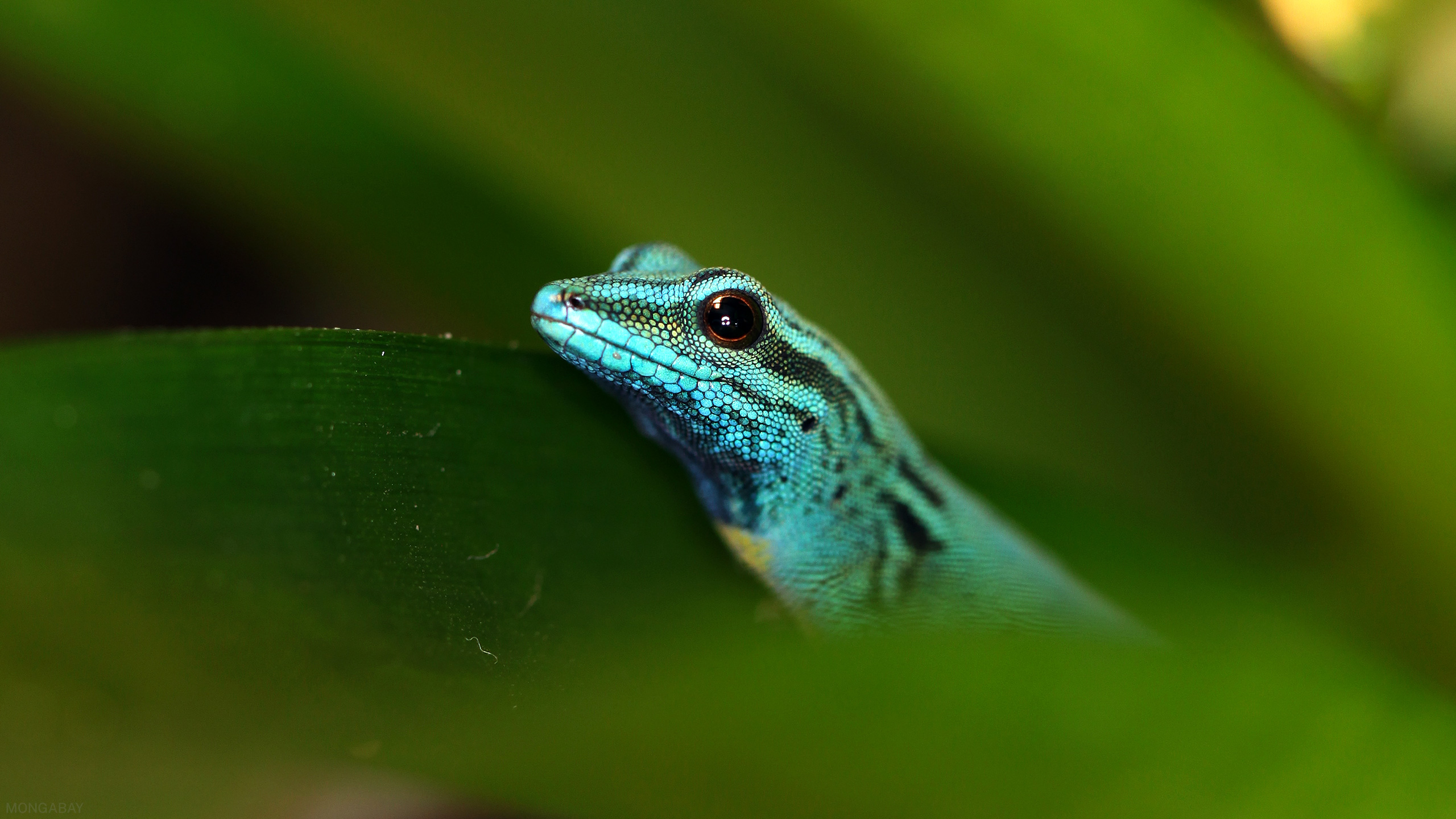
- The recovery of Tanzania’s electric-blue gecko shows how trade restrictions and years of habitat restoration can help a threatened species rebound.
- Jane Goodall encouraged people to act locally. Governments can help those efforts last by providing funding and protection.
An old elephant can remember where to find water when the usual pools have dried. Her death leaves the herd with fewer ways to survive a drought. As elephants travel, they also carry seeds in their guts, depositing them far from the trees where they fed. In a forest emptied of large birds and mammals, trees may stand for decades after the animals that carried their seeds have disappeared. The canopy still looks intact.
Delegates gathering in Yerevan, Armenia, for the U.N.’s COP17 biodiversity talks will assess countries’ progress toward slowing these losses. Some of the damage will be difficult to measure within a negotiating cycle.
Other absences are already permanent. The slender-billed curlew, last photographed in Morocco in 1995, was declared extinct in 2024. The vaquita and the Sumatran rhino still survive, though both could disappear within the next decade. A child born today may grow up knowing them through archival footage of the last few animals or AI-generated simulations.

Warming seas give bleached corals less time to recover between heatwaves. Now, the stress is severe enough to kill even the colonies, whose structures provide shelter for fish and other reef animals. An exceptionally strong El Niño is developing in the Pacific, adding to the heat already accumulating in the atmosphere and oceans, with the prospect of drought and fire in tropical forests.
Wars currently consume budgets and attention, while authoritarian governments restrict the freedoms on which environmental protection depends. Reporting illegal clearing or challenging a mining concession can become dangerous work. Freedom House has recorded 20 consecutive years of declining global freedom. Satellite images can reveal where forests are being cleared. Acting on that evidence may mean confronting people with weapons or political impunity.

That on-the-ground enforcement is also entirely at the mercy of whoever holds office. For example, Brazil’s deforestation rate has fallen for five consecutive years to a record low, but an upcoming election in Brazil could put as much as 95% of the Amazon under governments favoring mining and agribusiness. The officials enforcing forest protections today may soon answer to leaders who want them relaxed.
International agreements have struggled to withstand such pressures. The 1992 Rio Earth Summit established the climate and biodiversity conventions and set in motion the desertification convention adopted two years later. Governments gained institutions through which to negotiate and coordinate action. Forest clearing and species losses continued. By 2020, however, not a single one of the 20 Aichi biodiversity targets had been fully achieved globally.
In Yerevan, governments will conduct their first global review of progress under the Kunming-Montreal biodiversity framework, adopted in 2022. Its commitments include conserving 30% of land and seas by 2030 and restoring degraded ecosystems. Only four years remain before that deadline. Countries must now account for what has happened since they agreed to those goals.

Funding is critical to turn commitments into action on the ground. Creating a protected area commits someone to years of paying staff and negotiating with neighbors, often while confronting powerful commercial interests, and sometimes criminal networks. Indigenous communities defending their territories need funding they can actually access. Governments also continue to subsidize activities that damage the ecosystems they have promised to protect. The negotiations concern how to pay for conservation while reducing those incentives for destruction.
The conference gives countries an opportunity to explain where their efforts are falling short and what they intend to change. Its value will depend on what follows at home, through budgets and enforcement. A forest can lose much of its wildlife while remaining within a protected boundary. A declaration alone offers little protection to the people trying to prevent that loss.
The recovery of a tiny electric-blue gecko in Tanzania shows what sustained, multifaceted conservation work can achieve. Collectors supplying the pet trade cut down the screwpines where the animals lived. International commercial trade was banned in 2017, and captive breeding helped reduce demand for wild geckos. In Kimboza forest, villagers and rangers worked with ecologist Charles Kilawe to remove invasive Spanish cedar, which was displacing native habitat. Since 2016, they have cut down nearly 100,000 invasive trees and planted thousands of native trees each year. Fires have declined, and the gecko population is recovering.
Forests can regrow with less intervention, provided nearby trees supply seeds and animals survive to carry them. Protecting elephants, birds, and other seed dispersers can help forests recover long after clearing stops.

Jane Goodall understood how easily the scale of destruction could make people feel there was little point in trying. When she met my children, she crouched to their level to listen. Learning my son had started a trash cleanup at his school, she told him he was an inspiration.
The earnestness with which she said it brought him joy and gave him a sense that he could make a difference. Jane is gone now, another elder lost. She spent much of her life encouraging people to act where they lived. Many have done so, often with little support. The governments represented in Yerevan can give their work the funding and protection it needs to last.
Header image: A Williams electric blue day gecko (Lygodactylus williamsi). Image by Rhett Ayers Butler / Mongabay.

