


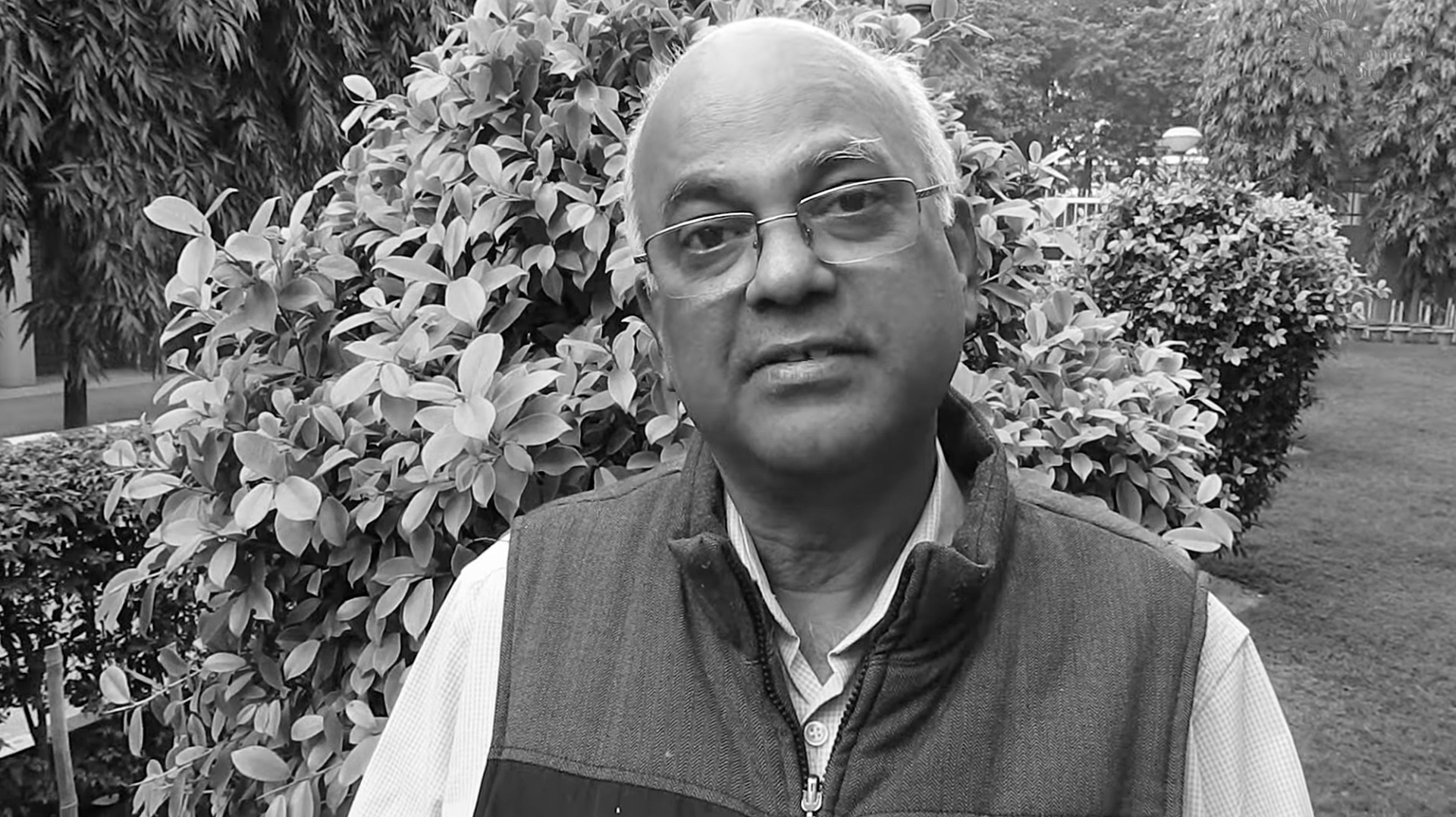
- Father Robert Athickal helped a small group of schoolchildren in Patna turn local tree-planting efforts into one of India’s largest student environmental movements.
- Tarumitra trained generations of young people to restore degraded land, protect native species, practice organic farming, and organize around environmental problems.
- Athickal combined Jesuit teaching with Indian philosophy, arguing that humans had moral obligations toward animals, plants, rivers, soils, and other forms of life.
- By trusting students with real responsibility, he showed how modest, local action could grow into a movement involving hundreds of thousands of young people.
The first members had no office, no money, and little authority. They were schoolchildren in Patna, a crowded city on the Ganges, worried about the trees being cut around them. They met after class, visited other schools, planted saplings, and spoke to anyone willing to listen. Some traveled by bicycle to carry their message farther. Their organization had a name, Tarumitra, meaning “Friends of Trees,” though for a time it consisted mainly of students and a small circle of adults helping them.
Among those adults was a Jesuit priest who believed that children could be trusted with serious work. Father Robert Athickal, who died on July 19th, aged 73, spent nearly four decades developing that idea. From its beginnings in Patna in 1988, Tarumitra grew into one of India’s largest student environmental movements. It established groups in schools and colleges across the country, trained generations of young campaigners, and created a reserve for threatened plants from the Gangetic plain.
Athickal had few of the resources usually available to someone building a national organization. There was no large funder behind the project and no government mandate. He relied on his position as a Jesuit teacher, the cooperation of schools, and his ability to persuade students and adults that local environmental problems deserved their attention.
Tarumitra’s early campaigns were designed to be practical and easy to reproduce. Students cleaned neglected plots, planted roadside gardens, and turned former garbage dumps into what they called “Oxygen Belts.” Other school groups could follow the same model without specialist equipment or much money. The work made environmental damage visible and gave students something specific to repair.
Planting a tree often led to other questions. Why had another tree been felled? What happened to the waste produced by a school or neighborhood? Why were native species disappearing? Athickal wanted environmental education to involve observation and responsibility. Students were not expected merely to learn about ecological problems. They were expected to take part in addressing them.
He gave them considerable room to lead. Athickal described the adults involved in Tarumitra as guides who directed students’ enthusiasm toward environmental work. Young people represented the movement at meetings, organized school units, led demonstrations, and explained its work to other students. Devopriya Dutta, who later became Tarumitra’s coordinator, regarded him as her mentor. Other participants also went on to become environmental organizers.
Athickal remained important to the movement’s growth. Colleagues recalled his ability to draw teachers, religious sisters, volunteers, officials, and journalists into its work. His clerical position helped him gain access in some settings. His persistence helped turn those introductions into relationships that lasted beyond a single campaign.
In 1994 the Jesuits provided Tarumitra with ten acres at Digha, on the outskirts of Patna. The land became a biological reserve, planted largely by children between the ages of 12 and 15. It eventually held hundreds of varieties of trees and plants, including species disappearing from northern India. Nurseries, organic farms, and facilities for student camps were added over time.
Athickal treated the reserve as a place where ecological ideas could be tested in daily life. It was part forest, part school, and part religious community. He called it an ashram, drawing on an Indian tradition of places set apart for study and reflection. Students could observe how soil, insects, plants, water, and human labor were connected. They could also eat food grown without synthetic chemicals and consider how choices about farming, energy, and waste affected the land around them.
His environmental thinking drew together Indian philosophy and Catholic theology. He often referred to the Sanskrit idea of vasudhaiva kutumbakam, the world as one family. For Athickal, that family included animals, birds, fish, trees, and other forms of life. He called this “universal cousinship,” expressing his belief that human beings had obligations toward the rest of the natural world.
He also drew on Catholic teaching about creation and on writers who placed human history within the longer history of the universe. In retreats he helped conduct, ecological science became part of religious reflection. Forests, rivers, soils, and species belonged to creation, and damage to them had moral as well as material consequences.
These ideas were expressed through ordinary practices. Athickal encouraged people to reduce waste, use energy carefully, grow food responsibly, and protect nearby plants and animals. In one account of Tarumitra’s work, he described the planting of its forest and its experiments with organic farming as “slow work but very rewarding.” Much of what he achieved depended on that willingness to continue when results could be measured only over years.
Tarumitra eventually reached hundreds of thousands of students. It gained consultative status with the United Nations and sent young representatives to international gatherings. Athickal received awards and an honorary degree, though most of the movement’s work continued through school groups responding to problems in their own communities.
He stepped down from Tarumitra’s leadership in 2019. The organization had by then become larger than its founder. Former students were running programs, mentoring younger participants, and carrying its methods into other institutions and regions.
Athickal had begun by asking a small group of schoolchildren to notice what was disappearing around them and to take responsibility for a piece of it. Some planted trees. Some organized campaigns. Some stayed with the work into adulthood. The authority they lacked at the beginning mattered less once they had learned how to use the time, knowledge, and numbers they possessed.
Banner image: Father Robert Athickal S.J. Jesuit Conference of India

