


I addressed a group of more than 100 European ambassadors recently on the big challenges facing the continent this year and next. My main point to these senior diplomats was that, perhaps counterintuitively, Europe’s biggest external challenges over the next 12 months will come from Russia and China, rather than the US.
Europe’s relationship with Trump’s America remains difficult. The US president has weakened confidence in Nato, raised new transatlantic trade tensions and introduced uncertainty into everything from US support for Ukraine to his territorial designs on Greenland. Yet paradoxically, and notwithstanding Trump’s latest tariff threats over the EU’s outreach to Canada, the transatlantic relationship is becoming the more stable part of Europe’s external environment. Not stable, but more stable.
Compared with Russia and China, Europe’s disputes with Washington remain somewhat bounded – and largely negotiable. Ukraine’s rapidly expanding drone capabilities, its military innovation and battlefield experience have made Kyiv a more valuable partner for Washington. US defence companies are also benefiting from Europe’s military support for Ukraine and rearmament against Russia. The US, Denmark and Greenland now say they have struck a deal to allow the US to develop a significant military presence on Greenland. The devil will be in the detail, but they have much stronger incentives to reach an accommodation than to allow the issue to become a lasting source of confrontation.
Trade tensions more broadly will persist, particularly over European regulation of American tech companies. The same is true of Nato, which has lost credibility because of Trump’s frequent admonishments. Nonetheless, these disputes are among countries with deeply interconnected security and economic interests. The risks posed to Europe by Russia and China are more structural – and increasingly point towards escalation.
Russia is becoming more dangerous because it is becoming weaker. The Kremlin is running out of cheap and politically painless ways to finance its war in Ukraine. Its original budget assumptions for 2026 have been overtaken by events. Military spending continues to rise, driven not only by the need for equipment but by the growing cost of recruiting soldiers for the frontline and paying compensation to casualties.
How Vladimir Putin funds his war is now the battlefield behind the battlefield. Further tax increases would damage an economy that, outside the military sector, is approaching recession. Borrowing has become more expensive, while public spending – on everything from schools and hospitals to infrastructure – is being squeezed to preserve the war effort.
Rather than push Putin towards compromise, Russia’s economic challenges are likely, initially at least, to produce the opposite effect. If he expects his economic position to worsen next year, the Kremlin has a powerful incentive to improve its military position now. That means escalation in Ukraine and against Nato. This explains the recent impromptu visit to Moscow by the CIA director, John Ratcliffe.
In Ukraine, Russia is likely to accelerate its mobilisation efforts and engage in heavier attacks on Ukrainian cities and infrastructure, intensifying its efforts to undermine Ukraine’s economy and civilian morale this winter. The coming months will also see an escalation of Russia’s hybrid warfare activity against Nato countries.
China presents a different but equally serious challenge. For years, Europe has debated whether China is competing fairly. That argument is essentially over. A broad consensus now exists that China’s subsidies, industrial overcapacity, undervalued exchange rate and export-led economic model require a political response. The question is no longer whether Europe should defend itself against unfair Chinese competition, but how far it is prepared to go.
Beijing, meanwhile, has reached a very different conclusion. It increasingly sees Europe’s trade-defence measures, industrial policy and economic security agenda as an attempt to constrain China’s growth.
The European commissioner for trade and economic security, Maroš Šefčovič, and his Chinese counterpart, Wang Wentao, met in late June and committed to resolving a number of outstanding issues by October. That may delay confrontation. It is unlikely to avert it.
China is not going to abandon its use of industrial subsidies, the exchange rate or its export-led growth model. These are central features of China’s economic-strategy, and not subject to negotiation. Equally, the EU is not going to retreat from its economic security agenda. The union is developing investment controls, procurement restrictions and new industrial and trade-defence instruments. Although formally country-agnostic, many are clearly directed towards China.
Every European measure to reduce dependence on China is therefore likely to prompt a Chinese response, while every Chinese retaliation will strengthen the political case in Brussels to go further. That makes compromise harder, and escalation between the two sides more likely over the medium term.
after newsletter promotion
The most likely outcome is managed confrontation, rather than a full-scale trade war. The EU will expand targeted restrictions limiting China’s access in additional sectors. China will respond with selective tariffs, procurement barriers, regulatory pressure on European companies and tighter controls on critical minerals. Both sides will try to increase pressure without losing control.
Europe has leverage, too. China remains extraordinarily dependent on access to the EU single market, one of the world’s last large and wealthy export destinations. Europe can withstand coercion – if its governments remain united.
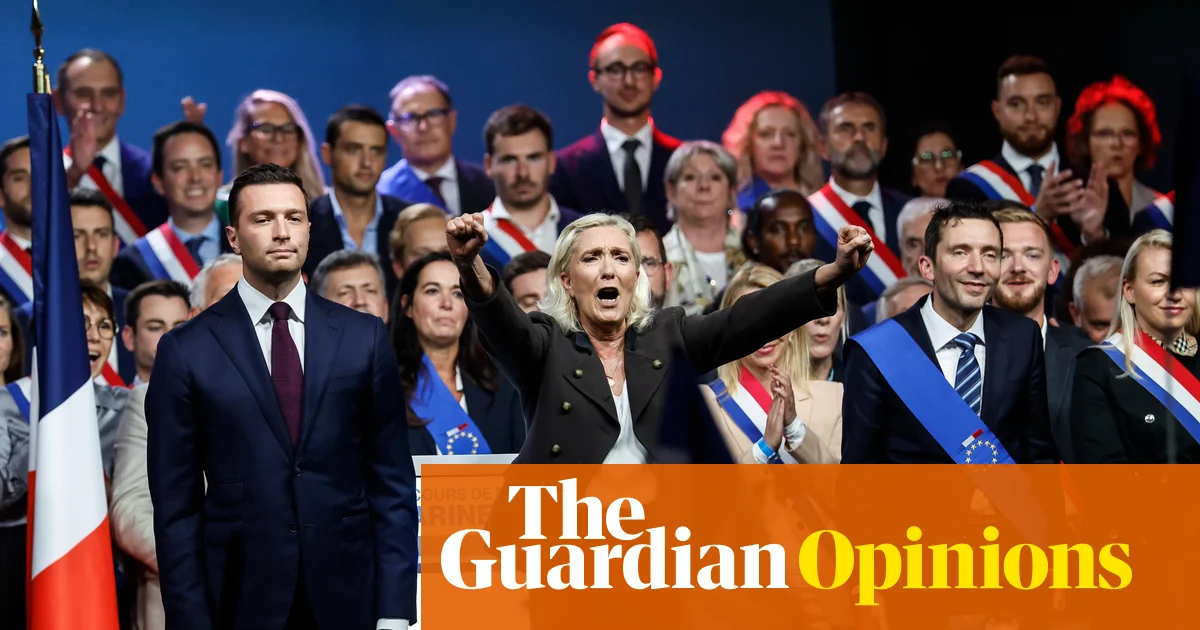
That is why France’s presidential election next year could prove more consequential for Europe than any decision taken in Washington, Moscow or Beijing. Far-right leader Marine Le Pen has a credible path to victory. She is scoring 35% to 38% in first-round polling at present, and is a more formidable candidate than her younger lieutenant, Jordan Bardella, who many assumed would be the Rassemblement National’s candidate in next year’s race. Her prospects will depend heavily on whether France’s fragmented centre can unite behind a single candidate. If it cannot, Le Pen could face the hard-left renegade Jean-Luc Mélenchon in the second round – and would probably win.
A Le Pen presidency would be profoundly disruptive for Europe. She would probably oppose further support for Ukraine, obstruct sanctions against Russia, undermine the bloc’s approach to China and initiate battles with Brussels over Schengen, fiscal rules, electricity pricing and the single market. Her threat to withhold France’s contribution to the EU budget could plunge the union into an unprecedented financial and constitutional crisis.
Europe’s external challenges, while substantial, are manageable. But the decisive variable is Europe itself: whether it can maintain the political coherence required to deal with the US, Russia and China. A Le Pen victory would call that coherence into question, precisely when Europe needs it most.
