


- Climate change is causing drought to worsen globally which can increase the spread of water-dependent infectious disease, an effect known as the drought-disease paradox.
- Researchers in a recent study concluded that proximity promotes spread: When water sources dry up or shrink, animals and pathogenic microorganisms concentrate in the remaining water sources, allowing easier transmission.
- As drought deepens worldwide, scientists say a better understanding of the workings of the drought-disease paradox, conservation, vector control and vaccination will be required to help forecast and combat infectious disease outbreaks.
- They say that tracking pathogen response to drought could help predict future disease outbreaks. Introducing mosquito-eating dragonflies to minimize disease transmission is one example of an ecological approach to curbing infectious disease at its source.
As climate change intensifies, drought is widening globally, causing alterations in water-dependent pathogen patterns, leaving scientists scrambling to understand how infectious disease transmission is evolving.
They’ll need to act quickly to predict and prepare for future outbreaks: In 2025, annual drought affected approximately 30% of the globe’s land surface, a near doubling of area since 2000. Currently, one child dies every 90 seconds from a waterborne disease.
Many species of microorganisms are known to infect humans via waterborne illnesses or via hosts like mosquitoes that need water to reproduce. So, it was long thought that when drought shrank or dried up water sources, infectious disease would decrease.
Scientists now know this isn’t true, and a recent paper sheds light on the ecological processes defining this drought-disease paradox.
“When people think about drought, they think about water shortage, wildfire, loss of agriculture, et cetera,” study co-author Pieter Johnson, a disease ecologist at the University of Colorado Boulder in the U.S. told Mongabay in a phone interview. “But drought is also influencing how plants and animals interact, including how they interact with parasites,” and also which among those pathogens might be winners or losers as drought spreads.
The review paper published in the journal Trends in Ecology & Evolution examined 100 previous studies focusing solely on aquatic diseases caused by parasites and pathogens that critically depend on water for some or all of their life cycles. The researchers found that, while drought can hinder some water-dependent pathogens, it can increase the risk of certain infectious diseases, despite a decrease in water availability.
The drought-disease paradox occurs in a zone somewhere between a water source’s typical levels and its total drying up, study co-author Tara Stewart Merrill, an aquatic disease ecologist at the Cary Institute of Ecosystem Studies in the U.S. told Mongabay in a video interview. But determining top pathogenic competitors in that in-between zone is tricky.
“In that middle area, where water is limited but not entirely gone, we see this counterintuitive sweet spot where there’s an increase in aquatic disease,” Stewart Merrill explained. That’s because aquatic diseases rely not only on water but also proximity to spread: When sources shrink, and others nearby dry up, animals including pathogenic disease hosts crowd the remaining sources, increasing the ease and likelihood of transmission. Shrinking water sources also concentrate disease-causing microorganisms.

‘Seeing aquatic disease rise during drought’
During and after droughts, the complexity of aquatic habitats can become very simplified, Johnson said. “You can have fewer predators, fewer competitors, and more nutrients or organic resources,” he explained, “all of which can do things like fuel mosquito growth.”
Many mosquito-borne diseases can increase during drought, even though there’s less water in the landscape. “If drought leads to smaller pools of standing water that we know mosquitoes really love, and if those pools (because of drought), lose species that either eat the mosquitoes or compete with the mosquitoes, then overall mosquito emergence rates can actually increase,” Stewart Merrill said, “which could lead to more vectors on the landscape, which means more chances of those vectors encountering a reservoir host and then transmitting that infection to people.”
A separate 2026 study, for example, found that drought and mosquitoes combined to play a key role in the 2017 urban yellow fever outbreak in Brazil. “There hadn’t been yellow fever in an urban population in nearly a century, and it also aligned with a once-in-a-century drought,” Jamie Caldwell, a researcher at Princeton University in the U.S. who led the research, told Mongabay in a video interview.
Normally, yellow fever is only present in Brazil’s forests. But several circumstances led to the 2017 outbreak: Deforestation and intensive land use change, combined with the 2014-2017 Brazilian drought (the worst in at least 80 years) caused forest-dwelling mosquitoes (genus Haemagogus), howler monkeys (genus Alouatta), and marmosets (genus Callithrix) to leave their typical habitats and encroach upon urban areas in search of water. They brought yellow fever with them. The outbreak infected more than 2,000 people, killing 700.
Caldwell noted that vaccination, vector control and conservation will all be needed to create a strong buffer against future outbreaks.
“Seeing aquatic disease rise during drought might come as a surprise, but we do not need to be caught off guard by this outcome,” Stewart Merrill said. “By establishing a central theory for how drought shapes host-parasite interactions, I think that outbreaks like yellow fever in Brazil could be anticipated and mitigated, if not completely prevented.”
Divergent disease responses to drought can be explained via three recurring mechanisms, Stewart Merrill explained: “How drought brings hosts together to increase transmission; how [drought] changes water quality in ways that influence host survival, pathogen survival, and the likelihood of infection; as well as how [drought] can remove host and pathogen populations by eliminating whole water bodies.”

Reintroducing predators can help, researchers say
Stewart Merrill offered an example of how altered ecology can both cause and curb a disease outbreak: In 1986, the completion of the Diama Dam on the Senegal River in Africa caused a schistosomiasis outbreak among residents of the river basin. Schistosomiasis, an acute and chronic disease, spread by freshwater snails via parasitic blood flukes (Schistosomes), had never been reported in the area before. Disease-positive examinations rose from 1.9% to 71.5% between 1988 and 1989. Why? The dam had blocked native river prawns (Macrobrachium vollenhovenii), predators of the infected snails, from migrating upstream.
That problem was solved when river prawns were reintroduced to parts of the Senegal River, causing the abundance of infected snails in those areas to drop by 80%, infections to decrease by approximately 18%, and roughly 50% fewer parasite eggs to be detected in infected people. The reintroduction also came with economic benefits.
“When the prawns get to a certain size, they stop eating snails, but they’re still big honking prawns, so people actually fish and eat them,” Stewart Merrill said. “It’s this win-win, where wealth increases, food availability increases, and disease decreases.”
As river prawns are to snails, dragonflies (Anisopteras) are to disease-carrying mosquitoes. Young dragonfly nymphs live underwater and feast on mosquito larvae. As adults, each dragonfly can eat dozens of mosquitoes daily.
But 16% of all dragonfly and damselfly species are at risk of extinction, partly due to industrial agriculture practices in North America and Europe, deforestation throughout Asia and South America, and dwindling water levels due to global drought.
Understanding this predator-prey relationship in terms of the drought-disease paradox can lead to disease reductions: A 2023 meta-analysis found that the intentional reintroduction of dragonfly species worldwide could control mosquito populations and the transmission of the illnesses they spread including West Nile disease and St. Louis encephalitis.
The review study in Trends in Ecology & Evolution noted that the operation of the drought-disease paradox has been reported for other diseases, including anthrax, hemorrhagic disease, cholera, trypanosomiasis, dengue, whirling disease and black spot disease. An increase in avian botulism can also be linked to drought, Johnson said.

Stewart Merrill believes during waves of drought that ecological solutions (similar to the reintroduction of prawns and dragonflies) could be deployed to minimize disease transmission, benefiting both human populations and wildlife.
But researchers will need to move quickly to keep up with the spread of water-related disease in an age of escalating drought. In the past 30 years, 77.6% of global lands “experienced drier conditions” than in the previous 30 years.
“We are expecting to see [ongoing] shifts in the types of parasites and diseases that predominate in a drying world,” Johnson said in a press release. “Some infections will disappear in certain places, but under different conditions, transmission can become so intense that it offsets the loss of infection elsewhere.”
Understanding the shifting pathogenic landscape imposed by climate change-induced drought, deforestation, agriculture and other human causes will be imperative for understanding pathogenic winners and losers, and for identifying and preparing for future disease trends.
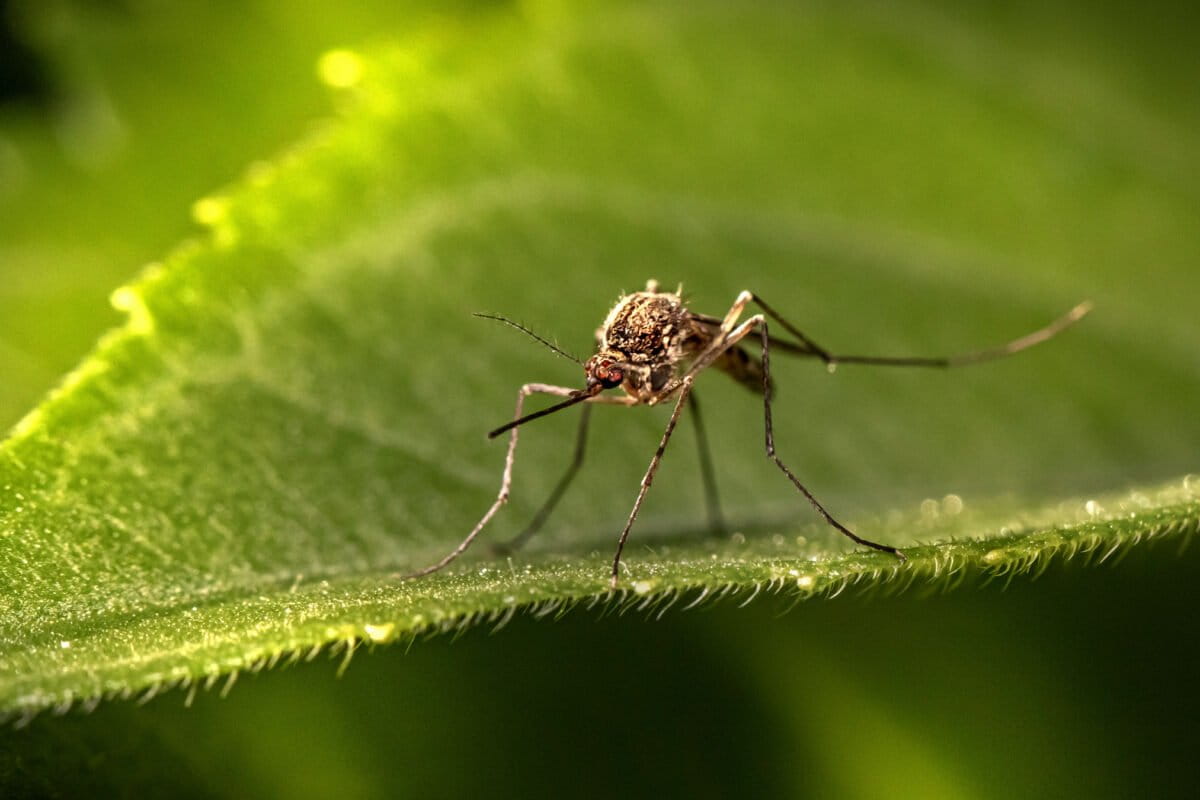
Banner image: In Brazil, the country’s first urban yellow fever outbreak in more than 80 years was triggered by record drought, along with deforestation and other land use change. Among the disease transmitters were forest-dwelling mosquitoes and mammals that moved into urban areas in search of water. Scientists say a better understanding of ecological changes during drought could aid in forecasting and combatting infectious diseases. Image by Erik Karits via Unsplash.
Evidence builds showing climate change could be intensifying El Niño events
Citations:
Johnson, P., & Stewart Merrill, T. (2026). Plagued by drought: How water scarcity reshapes host–parasite interactions. Trends in Ecology & Evolution. doi:10.1016/j.tree.2026.07.002
Caldwell, J. M., Grenfell, B., Vecchi, G., & Rosser, J. I. (2025). Drought dynamics explain once in a century yellow fever virus outbreak in Brazil with implications for climate change. Science Advances, 12(33), eadz6832. doi:10.1101/2025.02.25.640139
Sokolow, S. H., Huttinger, E., Jouanard, N., Hsieh, M. H., Lafferty, K. D., Kuris, A. M., … De Leo, G. A. (2015). Reduced transmission of human schistosomiasis after restoration of a native river prawn that preys on the snail intermediate host. Proceedings of the National Academy of Sciences, 112(31), 9650-9655. doi:10.1073/pnas.1502651112
Priyadarshana, T. S., & Slade, E. M. (2023). A meta‐analysis reveals that dragonflies and damselflies can provide effective biological control of mosquitoes. Journal of Animal Ecology, 92(8), 1589-1600. doi:10.1111/1365-2656.13965
FEEDBACK: Use this form to send a message to the author of this post. If you want to post a public comment, you can do that at the bottom of the page.

