


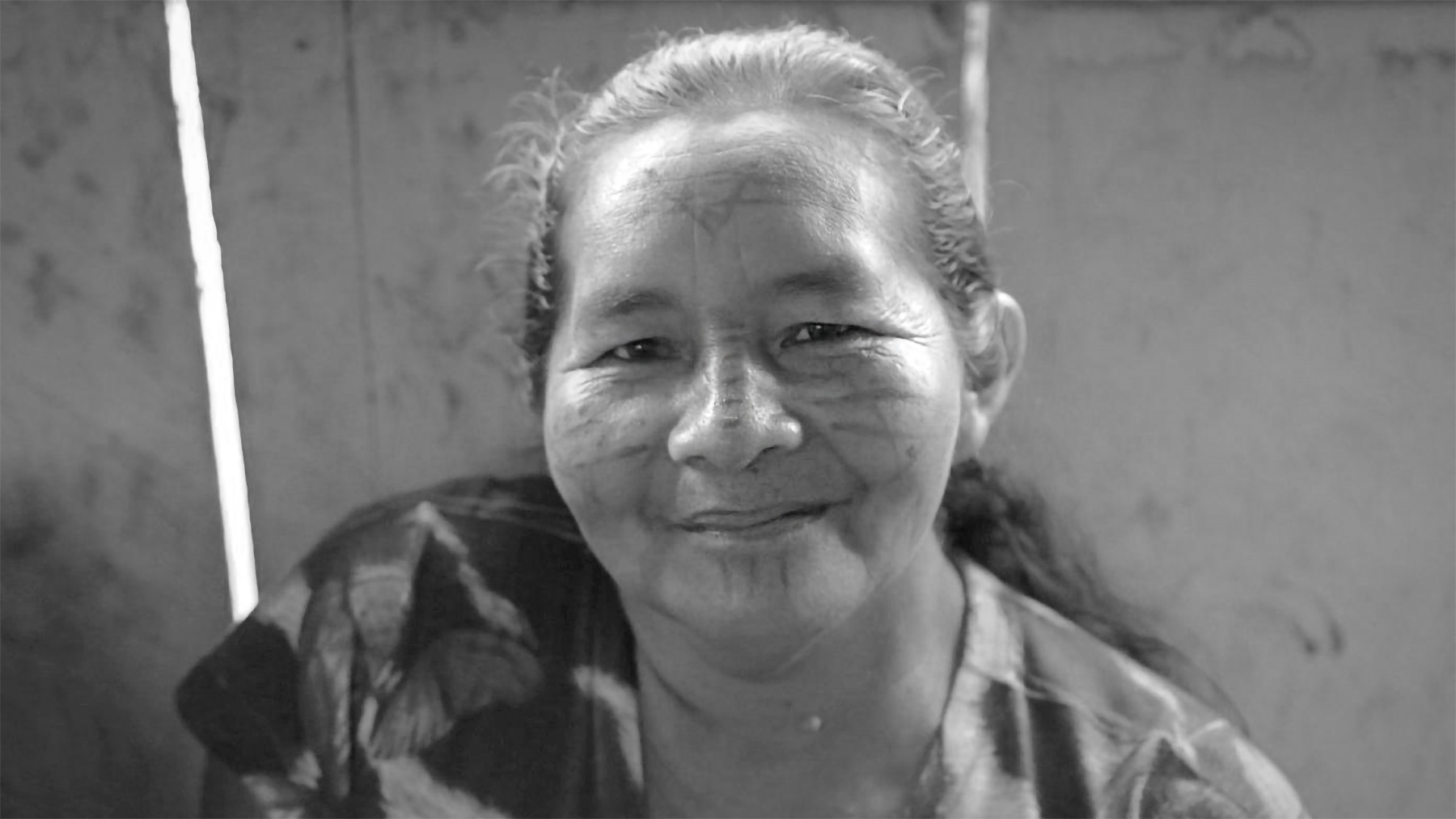
- Doña Oscarina Caldas Azevedo was a Desana master ceramicist, farmer, teacher, and Indigenous environmental researcher from Brazil’s upper Rio Negro region.
- As the first woman to serve as an Indigenous Environmental Management Agent on the Tiquié River, she helped bring women’s agricultural knowledge into environmental monitoring.
- She documented crop cycles, rainfall, river levels, and community life, while cultivating 18 varieties of cassava and preserving knowledge of ceramics, medicinal plants, and ritual practice.
- Through teaching, research, publications, and international forums, she worked to ensure that younger generations could continue applying and expanding this knowledge.
Before clay could be taken from the earth, permission had to be sought. “Grandmother, are you there?” the potter would ask. “I am your granddaughter. I have come to find you.”
The words were addressed to Di’i Mahso, Grandmother Clay, who taught women how to find the right material and craft the first cooking vessels. Oscarina Caldas Azevedo knew these words and the deep ecological obligations behind them.
A master ceramicist of the Desana people, farmer, and pioneering Indigenous environmental researcher, Azevedo died on July 4th in her home community of Cunuri, in the Brazilian Amazon. Known as Doña Oscarina, her life’s work proved that traditional Amazonian cosmology, women’s agricultural knowledge, and modern climate science were inseparable.
Born in 1967 in Santa Ana do Médio Tiquié, in the upper Rio Negro region of Amazonas state, she grew up in Cunuri beside the Tiquié River—a landscape where communities are linked by waterways, family ties, and shared languages.
She entered the local school at five. At 13, she moved to the Salesian mission school in Pari Cachoeira. During a holiday two years later, she met Rafael Azevedo. They were advised to marry and spent more than four decades together.
Their home became a place of farming, research, ceremony, and instruction. Oscarina cultivated cassava, medicinal plants, and other crops. She made ceramics and taught younger women how to find and prepare clay, shape vessels, and fire them. Rafael carried knowledge of ritual practice. Their work was closely shared.
Oscarina’s skill as a potter placed her within a network of women who sustained ceramic traditions across the Uaupés basin. She contributed to Cerâmica Tukano, a book recording the techniques, stories, and meanings involved in the craft. She also taught at exchanges between Indigenous women from Brazil and Colombia.
Her lessons explained more than how a pot was made. Stories established where the practice came from and the duties that accompanied it. The clay had to be approached correctly. The rules protected the potter, the material, and the vessel. Each pot belonged to a history carried through repeated work.
Oscarina was also concerned about knowledge that remained undocumented. In 2016 she joined the network of Indigenous Environmental Management Agents, known as AIMAs, on the Tiquié River. For a long period, she was its only woman.
She argued that women’s observations were necessary to understand environmental change. Men and women often worked in different places and followed different parts of the agricultural cycle. Without women, a monitoring network would miss much of what happened in fields, gardens, kitchens, and the preparation of food.
Her presence altered the work of the network. Colleagues recalled that she was not intimidated by its male members. She spoke firmly, explained patiently, and expected her knowledge to be treated seriously. She showed that women’s agricultural experience was not supplementary information. It was part of the evidence.
The AIMA work required regular observation. Oscarina and Rafael monitored crop cycles, rainfall, river levels, food production, family events, and community labor. She kept diaries that combined detailed records with personal reflections. In one entry, she described cassava plants in flower and bees moving among them. She wrote of how much she loved her field. The same account recorded the smoke, heat, and strain of burning a plot.
She cultivated 18 varieties of cassava and understood how each responded to soil, weather, care, and processing. She also spoke of the plant as a living presence. Cassava prospered when treated well and suffered when neglected. Soil preparation, ritual blessing, rainfall, plant health, labor, and food processing formed part of the same system. Her authority came from years of observing these connections and judging what they required.
She wanted that knowledge to circulate beyond her own community. Oscarina contributed to editions of Aru, an intercultural research journal. She visited biocultural collections at the Ethnological Museum in Berlin, the Royal Botanic Gardens, Kew, and the British Museum. She attended exchanges in Colombia, the International Congress of Ethnobiology, and COP30 in Belém.
These journeys gave her a wider audience, though they did not change the basis of her authority. She spoke from experience in the fields and from the knowledge she had received from older women. She addressed researchers, museum staff, Indigenous leaders, and international audiences on climate change, territory, women’s expertise, and the Indigenous movement.
Those who heard her speak described her ability to communicate across cultures. Friends remembered her indignation at social injustice and her insistence on the importance of Indigenous political struggles. One colleague called her a diplomat of the Rio Negro, able to move between different settings while remaining direct about what she believed.
They also remembered her humor. People who stayed in her home or traveled with her spoke of her generosity, affection, and patience. She could explain difficult ideas without making the listener feel foolish. She enjoyed conversation and was generous with her time.
Her ambitions for her work were clear. In an interview during the final year of her life, she said that AIMAs were researchers as well as mentors. She wished she could write more easily. She did not know, she said, how many books she already had in her head.
Some of that knowledge reached the page through her diaries, articles, and contributions to books. Much of it was conveyed through demonstrations, conversations, shared work, and the instruction of younger women.
Oscarina worried that younger people were becoming detached from agriculture. Schooling had changed children’s lives in the region, and many spent less time learning in the fields. Reading about cassava could not teach a person how to judge the condition of a plant. Looking at a finished pot revealed little about the decisions and obligations that preceded it.
She responded by continuing to teach. She recorded what she saw, took younger women through the work, traveled to exchanges, spoke at conferences, and returned to her fields. Her research began with observation and gained value when others learned how to carry it out for themselves.
The request to Grandmother Clay belonged to that work. It preserved the account of where pottery came from and reminded the potter how to approach the place from which the material was taken.
“Grandmother, are you there?”
Oscarina had taught others the words. They would have to keep asking.
Cite this article
Rhett Ayers Butler (2026). Doña Oscarina, master ceramicist, documented Indigenous knowledge along the Tiquié River. Mongabay Conservation news. DOI: https://doi.org/10.66709/news-324719

