


- A new study found seamounts in Chile’s Juan Fernández Archipelago remained degraded 25 years after bottom trawling took place there, while an ecologically similar seamount outside of the archipelago, where no bottom trawling had been recorded, continued to support deep-sea habitats, including coral and sponge communities.
- The researchers also found that the degraded seamounts in the archipelago had become inundated with sea urchins, which they hypothesized could be preventing the recovery and regrowth of coral communities.
- While the lead author of the study said the research points to the destructiveness of bottom trawling, an outside expert said bottom trawling is not as destructive in some other marine environments, such as sandy, naturally dynamic seabed habitats.
- While the study’s authors call for protection of these surveyed seamounts, experts acknowledge that protection may not be enough if destruction has already occurred.
The scars of bottom trawling are still visible on seamounts in Chile’s Juan Fernández Archipelago, even 25 years after the fishing practice took place in the area, according to a new study.
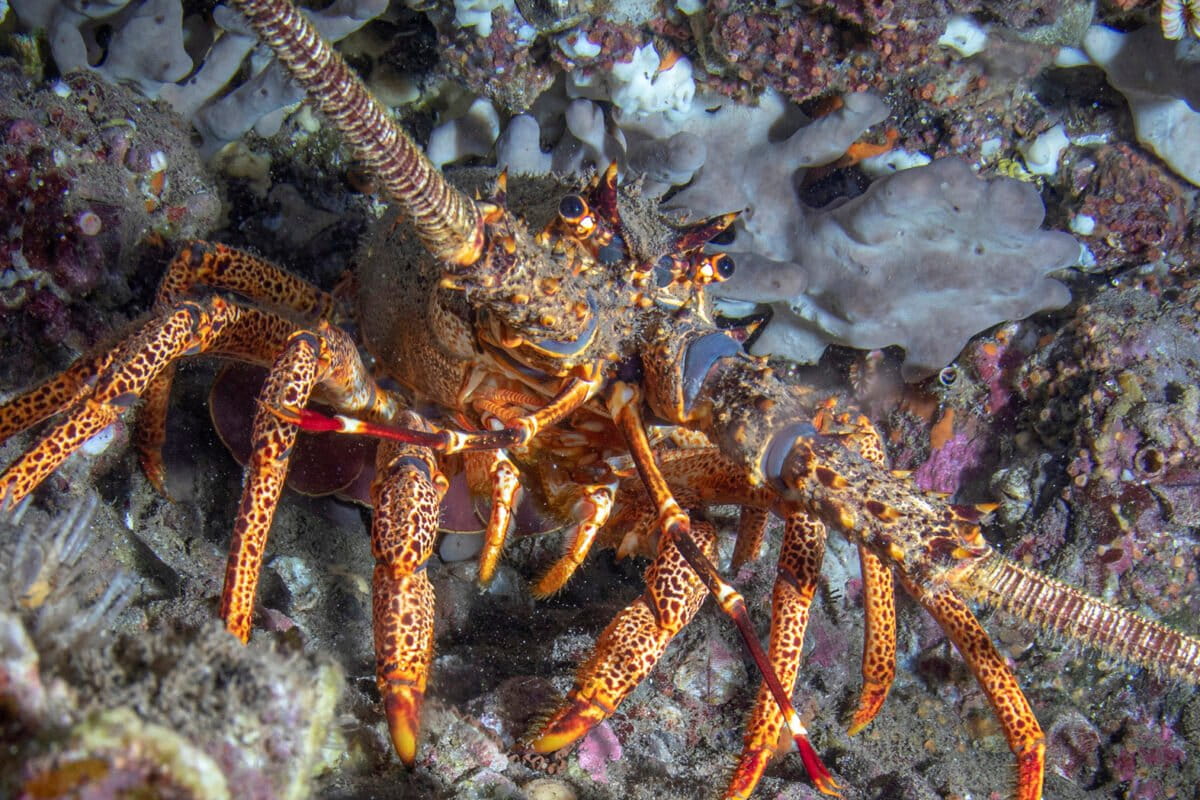
In 2024, scientists from Chile and the U.S. used remotely operated vehicles aboard the Schmidt Ocean Institute’s research vessel R/V Falkor to survey four seamounts, underwater mountains that rise up from the seafloor, off Chile’s coast. Three of the seamounts are located in the Juan Fernández Archipelago, a cluster of volcanic islands that has one of the highest known rates of marine endemism on the planet. An estimated 62% of the reef fish species of Juan Fernández and the neighboring Desventuradas Islands are found nowhere else in the world. Other unique endemic species include the Juan Fernández fur seal (Arctocephalus philippii) and the Juan Fernández rock lobster (Jasus frontalis).
The fourth study site was the Solito Seamount, located north of the Juan Fernández Archipelago and known to harbor similar marine communities.
In the late 1990s and early 2000s, fishers conducted bottom trawling on the Juan Fernández seamounts, dragging weighted nets across the seafloor to catch orange roughy (Hoplostethus atlanticus) and alfonsino (Beryx decadactylus), long-living, deep-sea fish. After catches dwindled, these fisheries collapsed and the trawling stopped. Later, in 2015, Chile permanently banned bottom trawling on all of its seamounts. At Solito, by contrast, the study, published in July in Deep Sea Research, found no evidence that bottom trawling had ever occurred.
Twenty-five years after bottom trawling had taken place on three Juan Fernández seamounts, the researchers found that these sites experienced significant ecological changes, including declines in live coral cover, biodiversity and habitat complexity, along with signs of physical damage to the seafloor. Not only that, but the scientists observed that these seamounts had become overrun with oval-shaped cactus sea urchins (Dermechinus horridus), which appeared to be preying on corals near the trawled areas. This led the authors to hypothesize that the urchins could be “delaying the recovery and growth of cold-water coral colonies.”

On the other hand, the Solito Seamount appeared healthy, continuing to support deep-sea habitats, including coral and sponge communities.
“Bottom contact trawling destroys habitat, but it also generates a high level of bycatch,” Ignacio Petit, a marine researcher for marine conservation group Oceana and lead author of the study, told Mongabay. “It’s probably the most destructive fishing method that industry uses worldwide.”
“The immediate impact [is that] bottom trawling nets remove and destroy everything in their path,” Petit added. “And then, you have a long-term, ecological impact that is, in this case, the domination of sea urchins in these trawled areas.”
Petit said one of the most striking differences between the Juan Fernández seamounts and the Solito Seamount was the near absence of sea urchins at the Solito site.
“We saw that in pristine environments there are no or few sea urchins, so it was a huge difference,” Petit said, referencing the Solito Seamount.”

Differing ecological responses
Justin Tiano, a marine ecologist and fisheries scientist at the Dutch Wageningen Marine Research institute who was not involved in the research, told Mongabay the study was “scientifically interesting”, especially the hypothesis about urchins suppressing the growth of new corals. In a follow-up email, he added that the paper documents “one of the worst-case scenarios in regards to bottom trawl impacts.”
“Biogenic reefs are generally sensitive to bottom fisheries disturbance as they build complex 3D habitats outside the seabed that can be directly impacted by bottom-trawl gears,” Tiano said. “Slow growing deep sea corals, as you can imagine, are especially vulnerable. However, I do think that it is important not to generalize and extrapolate these results for all seabed habitats.”
For instance, Tiano said that he believes that sandy, naturally dynamic seabed habitats dominated by faster-growing species tend to be less vulnerable to the impacts of bottom trawling and can recover more quickly.
“This does not mean that bottom-trawling there has no impact in those systems but that the ecological consequences and recovery timescales are much different,” he said.
Recovery could take ‘centuries’
José Cabello, senior regional director of Latin America and the Caribbean at Island Conservation, a group that works on conservation efforts for the Juan Fernández Archipelago, told Mongabay that the findings of the paper were “well received” by those living on Juan Fernández’s largest island, Robinson Crusoe.

“The findings resonate strongly with local fishers and residents, who have long opposed bottom trawl fishing because of its devastating impacts on the archipelago’s unique marine ecosystems,” Cabello said.
Cabello said the study also indicates that stopping harmful activities, such as bottom trawling, may not ultimately be enough to protect ecosystems.
“More than 20 years after the bottom trawl moratorium, the study shows that these vulnerable habitats still bear the legacy of past disturbance, emphasizing that creating marine protected areas or banning destructive fishing practices, while essential, does not by itself guarantee ecosystem recovery,” Cabello said. “This reinforces the importance of preventing degradation before it occurs and supporting long-term conservation, monitoring, and adaptive management.”
The study authors recommend long-term monitoring of the Juan Fernández seamounts and protection for the Solito Seamount, which currently remains unprotected. They also note that the Chilean government and local communities have made significant progress toward protecting the waters surrounding the Juan Fernández Archipelago and the Desventuradas Islands through “several large-scale Marine Protected Areas.”
The Juan Fernández Archipelago itself still lacks formal protection, however, since efforts to establish a marine protected area (MPA) there were stalled by the new government earlier this year. Chile’s Ministry for the Environment did not respond to Mongabay’s questions about the current status of the MPA.
But even with protections in place, Petit said he believes the recovery of the deep-sea ecosystems in the Juan Fernández Archipelago that were impacted by bottom trawling may take centuries to recover.
“Recovery is going to happen someday, but are we going to be alive when this happens?” he said. “We don’t know.”

Banner image: The Juan Fernández rock lobster (Jasus frontalis), an endemic species in the Juan Fernández Archipelago. Image by Marcelo Andrés Rojas González via iNaturalist. (CC BY-NC 4.0).
Elizabeth Claire Alberts is a senior staff writer for Mongabay and was a 2024-2025 fellow with the Pulitzer Center’s Ocean Reporting Network. Find her on Bluesky and LinkedIn.
Citation:
Petit, I., Tapia-Guerra, J., Gaymer, C., Sellanes, J., Castro-Contreras, M., Gallardo, M., … Payá, I. (2026). Impacts of bottom trawl fishing in the Juan Fernández ridge, Chile. Deep Sea Research Part I: Oceanographic Research Papers, 230, 104723. doi:10.1016/j.dsr.2026.104723
Cite this article
Elizabeth Claire Alberts (2026). Decades after bottom trawling, Chilean seamounts remain degraded. Mongabay Conservation news. DOI: https://doi.org/10.66709/news-325552

